Nepal Solo Trekking 2026: New Rules & Permit Guide
25, Mar 2026 | Khilak Budhathoki
For decades, the "Two-Person Rule" was the biggest hurdle for adventurers dreaming of Nepal’s most mysterious landscapes. If you wanted to see the walled city of Lo Manthang or the high passes of Manaslu, you had to find a partner or stay home. That just changed. On March 22, 2026, the Nepal Department of Immigration (DoI) officially removed the minimum group requirement for restricted areas. Whether you are a solo photographer, a researcher, or a traveler who simply prefers the peace of the mountains alone, the doors to Nepal's "Hidden Kingdoms" are finally open to you.
Nepal has officially removed the two-person minimum for Restricted Area Permits. Here is everything you need to plan your solo trek permit costs, application steps, and destination breakdowns.
Quick Answer
As of March 22, 2026, Nepal's Department of Immigration (DoI) allows solo foreign trekkers to obtain a Restricted Area Permit (RAP) without a second companion. This applies to Upper Mustang, Manaslu Circuit, Tsum Valley, Dolpo, Nar Phu Valley, and Kanchenjunga, among others. A licensed Nepali guide remains legally mandatory at all times, and all permits must be processed through a registered trekking agency. Permits are now fully digital and can be applied for before you arrive in Nepal.
Quick Facts: Nepal Solo Trekking Restricted Areas 2026
|
Item |
Detail |
|
Effective date |
22 March 2026 |
|
Solo trekking permitted |
Yes — two-person minimum officially removed New |
|
Licensed guide |
Mandatory at all times (unchanged) |
|
Agency booking |
Required — no direct DoI applications by individuals |
|
Permit application |
Fully digital via Nepal Visa Number or Submission ID New |
|
Pre-arrival payment |
Now available via Visa Application Submission ID New |
|
Guide-to-trekker ratio |
Maximum 7 trekkers per guide New |
|
Zones covered |
15 zones across 13 districts |
|
Processing time |
1–3 business days |
|
TIMS card |
Being phased out in many restricted zones but confirm per route |
What Changed for Solo Trekking in 2026: Before vs. After
The revised policy was developed in collaboration between the Department of Immigration and the Trekking Agencies' Association of Nepal (TAAN), which had long argued that the two-person requirement was suppressing tourism revenue and generating widespread informal workarounds trekkers registering under group permits but travelling independently.
|
Rule |
Before March 2026 |
From March 22, 2026 |
|
Minimum group size |
2 foreign trekkers |
1 solo fully permitted Changed |
|
Licensed guide |
Mandatory |
Still mandatory (unchanged) |
|
Agency booking |
Required |
Still required (unchanged) |
|
Permit application method |
Paper-based, in-person Kathmandu |
Fully digital via Nepal Visa Number Changed |
|
Pre-arrival payment |
Not available |
Available via Visa Application Submission ID Changed |
|
Guide-to-trekker ratio |
Not standardised |
Maximum 7 trekkers per guide Changed |
|
TIMS card |
Required for most areas |
Being phased out in many restricted zones — confirm per route |
What "Solo Trekking" Actually Means for 2026 in Nepal (Important)
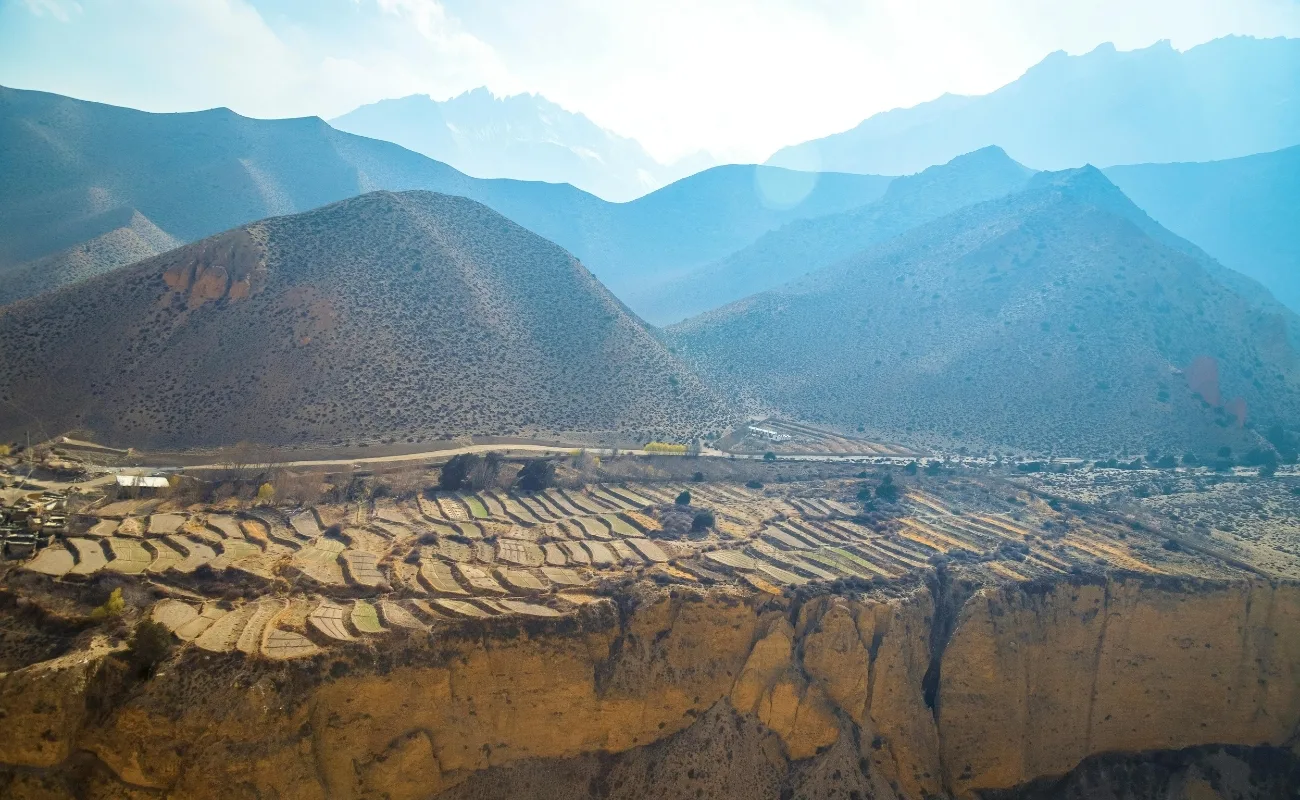
Solo permit does not mean fully independent trekking. Here is exactly what changed and what did not.
What you can now do
-
Apply for a Restricted Area Permit as a single person with no second foreign trekker required
-
Set your own dates with no dependency on other travellers
-
Trek at your own pace, with your own itinerary and rest days
-
Apply for and pay permits digitally before arriving in Nepal
What remains required
-
A government-licensed Nepali guide mandatory and enforced at every checkpoint
-
All permits arranged through a registered trekking agency
-
Travel insurance covering helicopter rescue and high-altitude evacuation
The practical trade-off for solo trekkers: As a solo trekker, you absorb the full guide cost (~$25–35/day) rather than splitting it with a partner. For a 14-day trek, that is approximately $350–$490 more than travelling as a pair. In exchange, you get complete scheduling independence, zero compromise on pace, and your guide's undivided attention. For trekkers who have been delaying trips for months waiting to find a partner, this trade-off is usually immediately worthwhile.
Where You Can Trek Solo in Nepal: Restricted Areas Covered
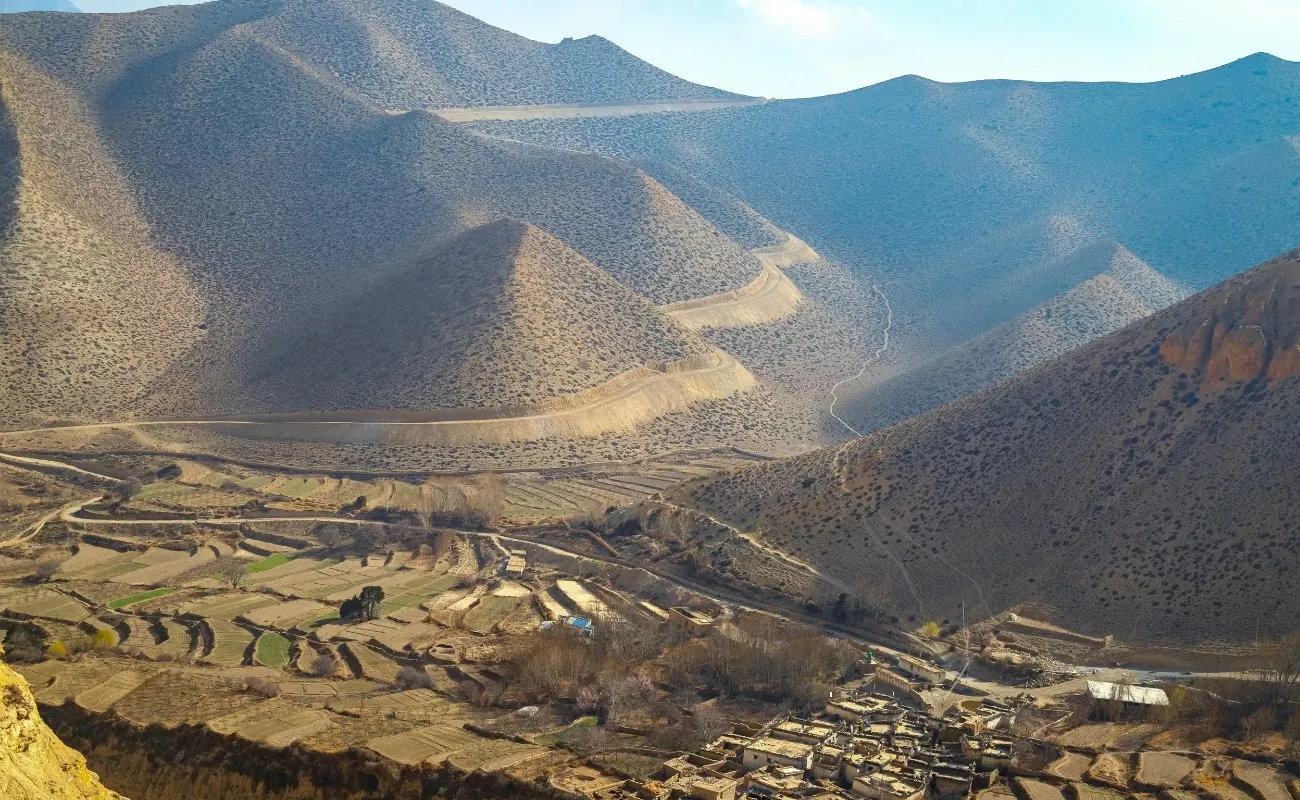
The 2026 policy opens 15 zones across 13 districts of Nepal. Here are the top-rated destinations for solo travelers:
1. Upper Mustang: "The Forbidden Kingdom"
-
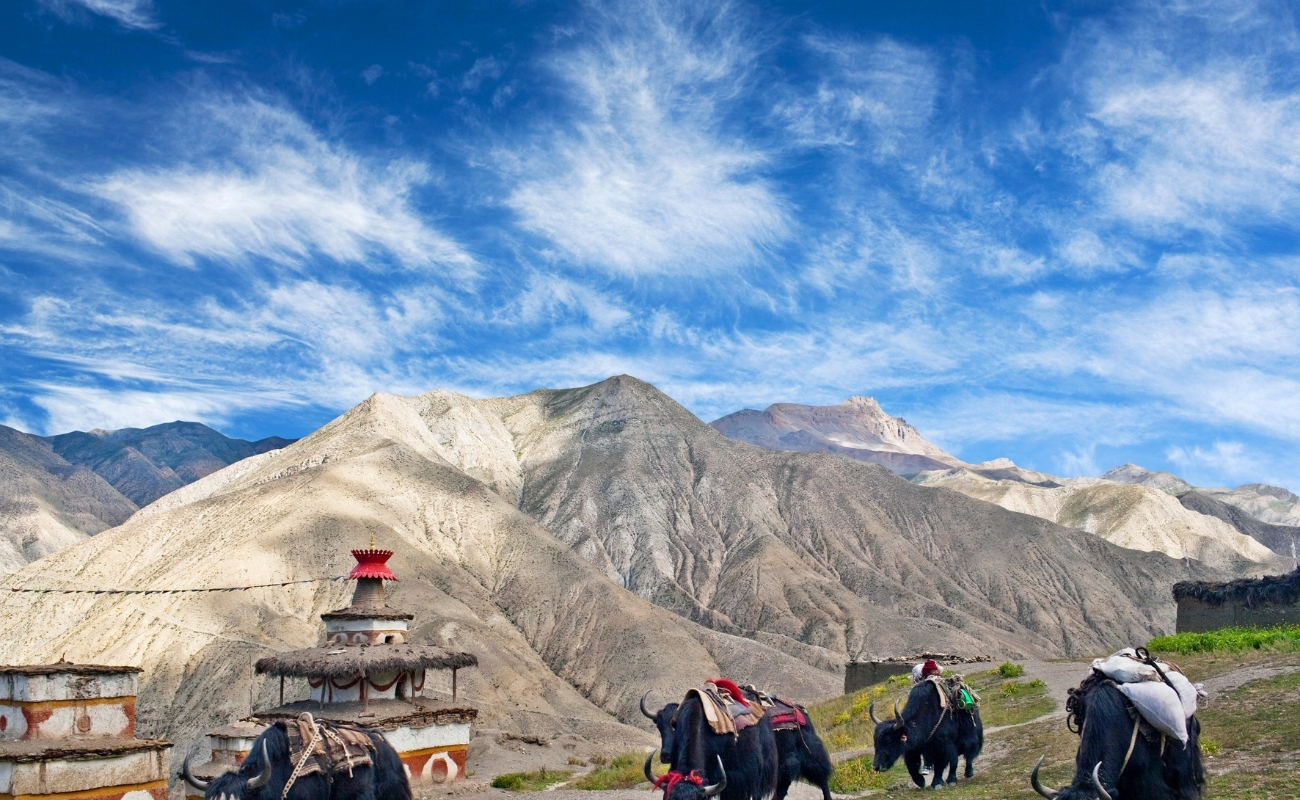
Highlight: Lo Manthang (3,810m), ancient cave monasteries, and Tibetan culture.
-
Terrain: Red eroded cliffs and trans-Himalayan desert.
-
Insider Tip: June–August is the best time. It sits in a rain shadow, offering dry trails and the Yartung Festival while the rest of Nepal faces monsoon.
-
Difficulty: General mountain fitness.
2. Manaslu Circuit & Tsum Valley
-
Highlight: Circles the world’s 8th highest peak; Larkya La Pass (5,160m).
-
Vibe: The "new Annapurna" spectacular scenery without the crowds.
-
Tsum Valley: A spiritual side-trip to a hidden pilgrimage sanctuary.
-
Difficulty: Prior high-altitude experience recommended.
3. Upper & Lower Dolpo
-
Highlight: Phoksundo Lake and the ancient Shey Gompa.
-
Vibe: True wilderness. Upper Dolpo is a camping expedition; Lower Dolpo is more accessible.
-
Culture: Home to the pre-Buddhist Bon religion.
-
Difficulty: Experienced high-altitude trekkers only.
4. Nar Phu & Kanchenjunga
-
Nar Phu: Medieval stone villages and the high Kang La Pass (5,320m).
-
Kanchenjunga: The world’s 3rd highest peak. Remote, minimal infrastructure, and genuine wilderness in the far east.
2026 Permit Cost for Solo Trekkers in Nepal
|
Destination |
Permit Fee (RAP) |
Duration/Season Notes |
|
Upper Mustang |
$50 / day |
No minimum days |
|
Manaslu Circuit |
$100 / week |
Peak: Sep–Nov ($75 off-peak) |
|
Tsum Valley |
$100 / week |
Peak: Sep–Nov ($75 off-peak) |
|
Upper Dolpo |
$500 (10 days) |
Then $50 per additional day |
|
Nar Phu Valley |
$100 / week |
Peak: Sep–Nov ($75 off-peak) |
|
Kanchenjunga |
$20 / week |
Best value for long-duration treks |
|
Lower Dolpo |
$10 / week |
Most affordable restricted zone |
Additional Mandatory Fees
-
ACAP/MCAP: ~$23–$30 per zone.
-
Licensed Guide: Mandatory ($25–$35/day average).
-
Agency Service: Varies by itinerary (includes digital permit processing).
Required Additional Conservation Permits
|
Permit |
Applicable Area |
Fee |
|
ACAP (Annapurna Conservation) |
Upper Mustang, Nar Phu, Manaslu exit via Dharapani |
NPR 3,000 (~$23) |
|
MCAP (Manaslu Conservation) |
Manaslu Circuit, Tsum Valley |
$30 USD |
|
KCAP (Kanchenjunga Conservation) |
Kanchenjunga |
NPR 2,000 (~$15) |
|
Shey Phoksundo National Park |
Upper & Lower Dolpo |
Confirm with agency |
|
TIMS Card |
Most areas (phasing out) |
Being removed in 2026 but confirm per route |
Budget Breakdown for Solo Trek in Nepal
|
Cost Item |
Estimated (USD) |
|
Restricted Area Permit (14 days × $50) |
$700 |
|
ACAP permit (one-time) |
$23 |
|
Licensed guide (14 days × $30/day) |
$420 |
|
Porter — optional (14 days × $22/day) |
$308 |
|
Teahouse accommodation (~$20/night) |
$280 |
|
Meals (~$30/day) |
$420 |
|
Domestic flights (KTM–Pokhara–Jomsom return) |
$300–$380 |
|
Travel insurance (helicopter rescue cover) |
$80–$150 |
|
Total estimated range |
~$2,531–$2,681 |
Prices vary by season, accommodation preference, and service level. Contact us for a confirmed, itemised quote for your specific dates.
How to Apply for Solo Trekking Permit: Step-by-Step Process for 2026
The permit process is now fully digital and can be completed before you arrive in Nepal. Here is exactly how it works.
1. Choose your destination and dates
Decide on your restricted area destination and realistic timeframe. Consider altitude, fitness level, and available days. Not sure which area suits you best? That is exactly what a pre-trip consultation with us covers.
2 Contact a registered trekking agency
Individual trekkers cannot apply directly at the Department of Immigration counter. Only government-registered agencies can submit RAP applications. Your agency bears full legal responsibility for emergency evacuation and rescue logistics.
3 Prepare your documents
You will need: passport copy (photo page), two passport-size photographs, a full trek itinerary (your agency prepares this), proof of travel insurance covering helicopter rescue, and your Nepal Visa Number (if already in Nepal) or Visa Application Submission ID (if applying before arrival).
4 Digital submission and payment
Your agency submits all documents through the DoI's online system. If you are outside Nepal, you can pay permit fees in advance using your Visa Application Submission ID a new feature introduced with the March 2026 reform.
5 Processing — 1 to 3 business days
Standard processing through the DoI digital system takes 1–3 business days. We recommend starting the process at least two weeks before your departure for peak season treks, and 3–6 months in advance for October departures.
6 Receive and carry your permit
Permits are collected in Kathmandu before departure. Carry physical copies of all permits and your passport throughout your trek. Your guide manages checkpoint registration at each official station along the route.
Best Season for Each Restricted Area of Nepal
Choosing the right season is the single most effective way to improve your restricted area experience and the insight that separates extraordinary from merely good.
|
Season |
Best For |
Avoid |
Notes |
|
Spring (Mar–May) |
Manaslu, Tsum, Kanchenjunga, Nar Phu |
— |
Rhododendrons in bloom. Apply 2–3 months ahead for popular routes. |
|
Monsoon (Jun–Aug) |
Upper Mustang, Upper Dolpo, Nar Phu |
Manaslu, Kanchenjunga |
Rain shadow regions stay dry. Lowest crowds, lowest teahouse rates. Yartung Festival (Aug). |
|
Autumn (Sep–Nov) |
All restricted areas |
— |
Sharpest mountain views of the year. October is peak globally. Book 3–6 months ahead. |
|
Winter (Dec–Feb) |
Upper Mustang (lower sections), Lower Dolpo |
Larkya La, Kang La (may be snow-blocked) |
Lowest permit fees. Cold but accessible for experienced trekkers. Confirm high pass conditions. |
The monsoon secret for restricted area trekkers: Upper Mustang and Upper Dolpo sit in Nepal's rain shadow zone, a meteorological phenomenon that keeps them dry while the rest of Nepal receives its heaviest rainfall. June, July, and August offer stable trekking conditions, empty trails, lower accommodation rates, and the spectacular Yartung Festival in Lo Manthang. This is the most underused planning insight for solo trekkers visiting these regions.
Safety, Your Guide, and What Your Agency Is Responsible For
The guide mandate exists for reasons that go beyond regulatory compliance. In Nepal's restricted areas, your licensed guide is your most important asset and your registered agency's responsibilities are legally enforceable.
|
Responsibility |
What It Means for You |
|
Navigation |
Restricted zones have minimal trail signage, unmarked crossings, and high-altitude terrain where errors carry serious consequences. Your guide knows the route. |
|
Emergency evacuation |
Your registered agency bears full legal responsibility for helicopter rescue and evacuation coordination. Helicopter evacuations cost $2,000–$5,000 and must be arranged within hours. |
|
Altitude monitoring |
Your guide monitors acclimatisation daily and makes the decision to descend if needed. Solo trekkers benefit from having professional assessment rather than making those calls alone. |
|
Cultural access |
In Tsum Valley, Upper Mustang, and Dolpo, your guide is interpreter and cultural liaison. These communities are welcoming but that welcome is built through local relationships, not tourist infrastructure. |
|
Checkpoint registration |
Your guide handles all checkpoint registrations. Entering a restricted area without a valid permit results in immediate fines and removal from the zone. There is no unmonitored access. |
Travel insurance is required, not optional: Insurance covering helicopter rescue and high-altitude evacuation (to at least 5,000m) is a legal requirement for permit approval. It is also non-negotiable from a safety standpoint. Confirm your policy covers helicopter evacuation to the altitudes of your specific route before applying for your permit.
Pros & Cons of Solo Trekking in Restricted Areas of Nepal
Pros
-
Full flexibility
-
No waiting for partner
-
Personalized experience
Cons
-
Higher cost
-
Mandatory guide (not fully independent)
Frequently Asked Questions
Can I trek Upper Mustang or Manaslu without a guide in 2026?
No. A licensed Nepali guide is compulsory under the 2026 rules for all restricted areas. The policy change removes the second-trekker requirement, it does not remove the guide requirement. Guides are verified at every official checkpoint along the route.
Do I need to be in Nepal before I can apply for my permit?
No. The 2026 digital system allows trekkers outside Nepal to begin the application process using a Nepal Visa Application Submission ID and pay fees before arrival. Your registered trekking agency handles all submissions.
How long does the online permit take to process?
Standard processing through the DoI digital system is 1–3 business days. For peak season treks (especially October), start the process at least 2 weeks before departure and ideally 3–6 months in advance.
Is solo trekking safe for female travellers in Nepal's restricted areas?
Yes. Nepal's restricted areas have very low crime rates, and your guide is your companion and safety presence throughout the trek. Female guides are available on request mention this preference when contacting your agency.
Can I combine multiple restricted areas on one permit?
Some combinations are possible the Manaslu Circuit and Tsum Valley are commonly combined on one permit structure. Others require separate permits. Your agency will advise on the most efficient permit structure for your specific itinerary.
Is the TIMS card still required in 2026?
TIMS is being phased out in many restricted areas as part of the 2026 digitalisation of the permit system. Requirements vary by route. Confirm the current requirement for your specific destination before departure.
Do I need prior Himalayan trekking experience for restricted areas?
It depends on your destination. Upper Mustang (max 3,810m) is the most accessible restricted area and suitable for trekkers with general mountain fitness. Manaslu Circuit (Larkya La 5,160m), Nar Phu (Kang La 5,320m), and Dolpo (5,000m+) require prior high-altitude experience and solid physical conditioning.
What happens if I enter a restricted area without a permit?
Checkpoints are staffed and strictly enforced. Entry without a valid permit results in immediate fines and removal from the restricted zone. There is no informal or unmonitored access.
Ready to Plan Your Solo Restricted Area Trek?
The 2026 policy change removes the biggest administrative barrier for solo international trekkers. Our team processes all permits, assigns your licensed guide, and provides a full cost breakdown usually within 24 hours.
Customise Your Solo Trek View Manaslu Package
For more information: WhatsApp: +977 9843052075 | info@himalayatrekkingnepal.com
