- 21, Jan 2026 | Khilak Budhathoki
The Annapurna Base Camp Trek in Spring (March–May) is a Himalayan trekking route in Nepal that leads from the lower foothills through Gurung villages, rhododendron and oak forests, the Modi Khola gorge, and the alpine Annapurna Sanctuary to Annapurna Base Camp at 4,130 meters. Spring is a particularly significant trekking period because conditions change progressively from the colder, snow-affected trails of March to the more stable conditions of April and the warmer, increasingly humid weather of May. The journey combines high mountain scenery with seasonal natural features, including crimson rhododendron forests around Ulleri and Ghorepani, the Poon Hill sunrise panorama, views of Machhapuchhre and Annapurna South, and the 360-degree mountain amphitheater surrounding Annapurna Base Camp. Each month offers a different balance of snow, trail conditions, visibility, flowering periods, temperatures, rainfall, and trekking crowds.
 Planning an Annapurna Base Camp Trek in spring requires more than choosing a departure month. Trekkers need to understand altitude gain up to 4,130 meters, acclimatization and Acute Mountain Sickness, daily walking distances, changing conditions between the lower valleys and alpine zone, appropriate clothing and trekking gear, accommodation and food at teahouses, required permits, fitness preparation, and the advantages of a suitable itinerary. March can require additional preparation for snow and ice above 3,500 meters, April generally provides the strongest combination of clear mornings and improved trail conditions, while May requires greater flexibility because of pre-monsoon rain and afternoon cloud development. This guide covers the complete spring ABC Trek experience, including weather by month, mountain visibility, rhododendron bloom timing, route and trail conditions, difficulty, altitude management, packing, wildlife, teahouses, food, permits, itineraries, and guided trekking arrangements.
Why Is Spring Considered an Ideal Season for the Annapurna Base Camp Trek?
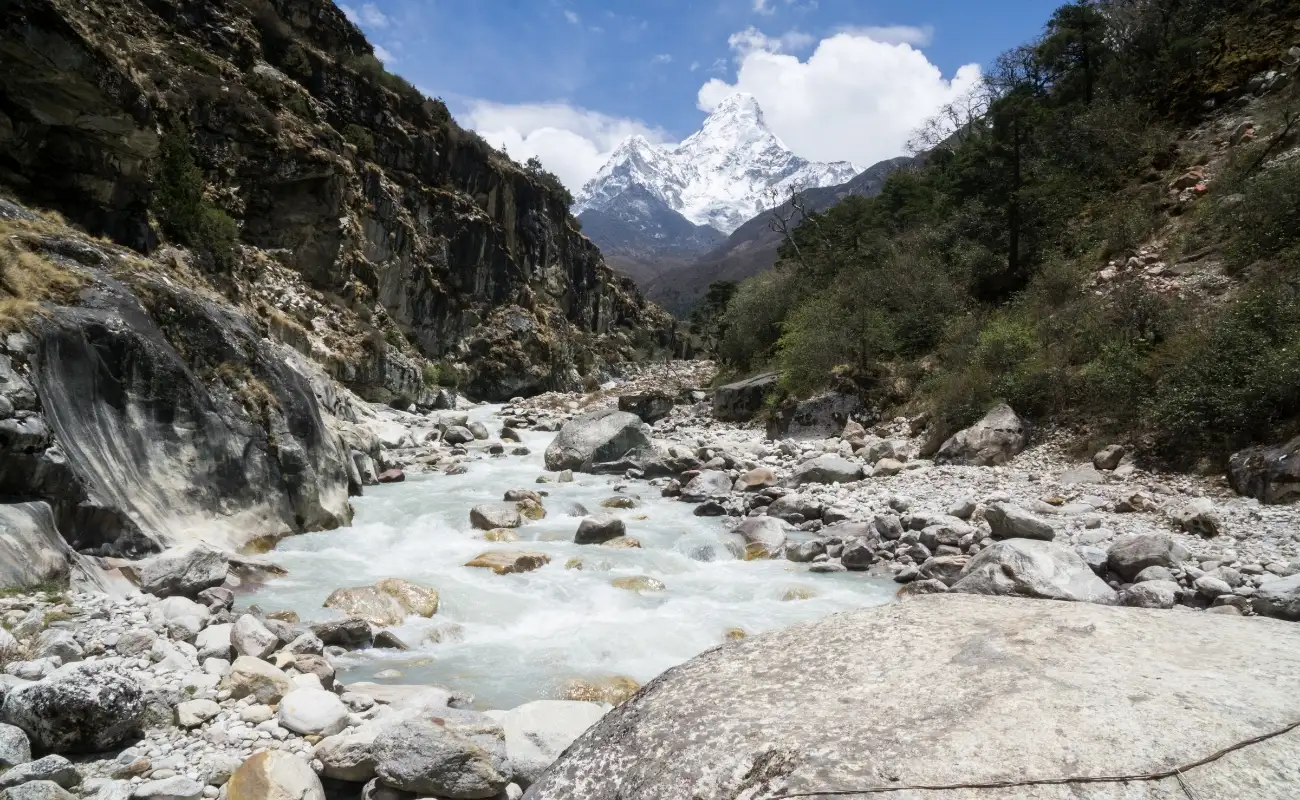
Spring (March–May) is the ideal season for the Annapurna Base Camp Trek because it delivers stable weather, peak rhododendron bloom across 32 native species, consistent mountain visibility before 11:00 AM, and manageable trail temperatures across all elevation zones from 1,070m to 4,130m.
Three converging factors make spring the preferred season for most experienced Himalayan trekkers. Temperatures are moderate and physically manageable. Trails above 3,500m are either clear or clearing. The biological spectacle of Nepal's densest rhododendron forests in full bloom transforms the lower and mid-altitude trail sections into one of the most visually distinctive trekking environments anywhere in the world.
What Weather in Annapurna Base Camp Can You Expect During March, April, and May?
Weather conditions across the three spring months differ significantly by elevation and time of month:
March weather profile:
-
Annapurna Base Camp (4,130m): Morning temperatures range from -8°C to -3°C; daytime highs reach 3°C to 7°C
-
Ghorepani (2,860m): Mornings at 0°C to 5°C; afternoons at 10°C to 15°C
-
Nayapul trailhead (1,070m): Warm and clear at 18°C to 24°C
-
Late snowfall is possible above 3,500m in the first three weeks of March
-
Wind chill is the primary physical challenge at altitude in early spring
April weather profile:
-
The most stable month in the spring window
-
ABC daytime temperatures range from 4°C to 10°C
-
Ghorepani and Chomrong sit comfortably at 14°C to 20°C
-
Morning skies are consistently clear through mid-morning
-
Light evening rainfall begins in late April in lower valleys
May weather profile:
-
Pre-monsoon moisture builds progressively through the month
-
Morning views at ABC remain excellent until approximately 10:00 AM
-
Afternoon cloud cover increases daily from early May onward
-
Rainfall in lower valleys below 2,000m is common by mid-May
-
Leeches appear on lower trail sections from Nayapul to Tikhedhunga from early May
The practical implication: trekkers prioritizing maximum mountain clarity choose April. Those seeking fewer trail crowds and a colder alpine experience choose early March.
How Clear Are the Mountain Views on Annapurna Base Camp in Spring?
Mountain visibility in spring is excellent between 6:00 AM and 10:30 AM on most days across all three months.
At Annapurna Base Camp, trekkers stand inside a 360-degree amphitheater of peaks exceeding 7,000m. The six peaks visible from the base camp on a clear spring morning:
-
Annapurna I (8,091m): The 10th highest peak in the world; faces directly north from ABC
-
Annapurna South (7,219m): Visible from the camp's southern aspect
-
Hiunchuli (6,441m): The most prominent peak directly above the camp on the southwest
-
Machhapuchhre (6,993m): Nepal's sacred unclimbed peak; its fishtail summit defines the approach route
-
Gangapurna (7,455m): Visible from the northeast rim of the sanctuary
-
Annapurna III (7,555m): Flanks the eastern sanctuary wall
In April, morning visibility windows are the longest of any non-monsoon month. In May, cloud formations consistently obscure views by 1:00 PM. Trekkers who leave MBC for ABC at 6:00 AM in May arrive during the optimal visibility window before afternoon cloud development.
What Makes Spring Rhododendron Blooms Special on the Annapurna Trail?
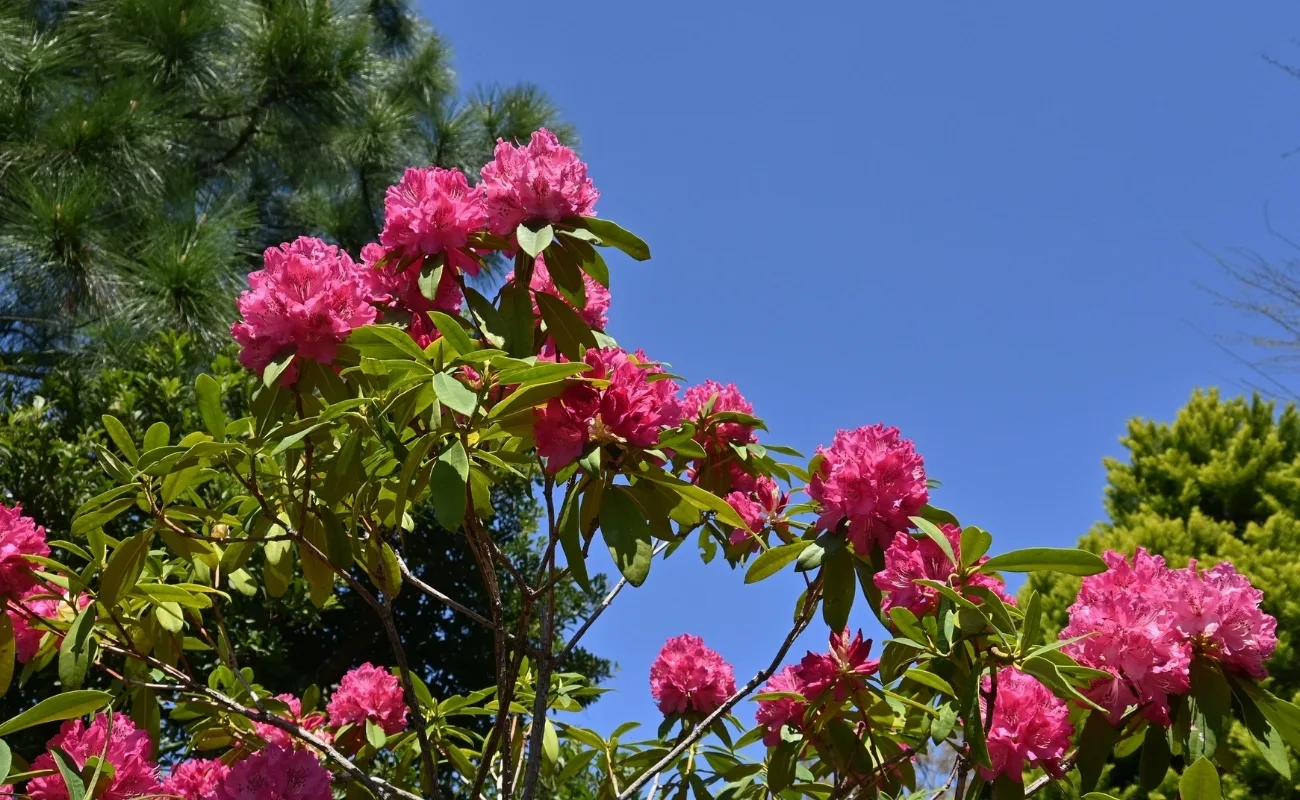 The rhododendron bloom is the defining biological feature of the Annapurna Base Camp Trek in spring. Nepal's national flower (Rhododendron arboreum) blooms in layers by elevation, creating a moving window of color that follows trekkers upward through the Annapurna Conservation Area.
The bloom follows a precise elevation gradient:
|
Elevation Zone |
Peak Bloom Period |
Dominant Species |
|
Below 1,800m |
Late February to mid-March |
Pink and white rhododendron varieties |
|
1,800m–2,500m |
Mid-March to early April |
R. arboreum (crimson) |
|
2,500m–3,000m |
Early April to late April |
R. arboreum and R. campanulatum |
|
3,000m–3,500m |
Late April to mid-May |
R. campanulatum (mauve and white) |
The Annapurna Conservation Area hosts the vast majority of Nepal's 33 native rhododendron species. The canopy density between Ulleri (1,960m) and Ghorepani (2,860m) is the highest rhododendron forest concentration on any major trekking route in the country.
What makes the spring bloom genuinely distinct: the combination of crimson rhododendron canopy framing direct views of Machhapuchhre's fishtail summit creates photographic conditions that are seasonally irreplaceable. No other trekking route in Nepal delivers this combination at scale.
What Is the Annapurna Base Camp Trek Route Like in Spring?
The Annapurna Base Camp Trek route follows the Modi Khola valley from the foothills north of Pokhara to the glacial amphitheater at 4,130m. The standard round-trip route covers approximately 110 kilometers and takes 7 to 12 days depending on pace, acclimatization stops, and the chosen variant.
Which Villages and Landscapes Does the Spring Route Pass Through during Annapurna Base Camp Trek?
The standard route passes through eight main settlements across four distinct landscape zones.
The eight key route settlements:
-
Nayapul (1,070m): Standard trailhead; 1.5 hours by road from Pokhara
-
Tikhedhunga (1,540m): First overnight stop; famous for its stone staircase ascent toward Ulleri
-
Ghorepani (2,860m): Rhododendron heartland; gateway to Poon Hill sunrise viewpoint (3,210m)
-
Tadapani (2,630m): Forest camp on the ridge between Ghorepani and Ghandruk
-
Ghandruk (1,940m): The largest Gurung village on the route; renowned for stone-paved streets and traditional architecture
-
Chomrong (2,170m): Gateway to the Annapurna Sanctuary; permits checked here
-
Himalaya Hotel (2,920m): Teahouse cluster at the bamboo zone's upper boundary
-
Machhapuchhre Base Camp (3,700m): Final stop before Annapurna Base Camp; panoramic views of the full sanctuary
The four landscape zones:
-
Subtropical terraced farmland (below 1,800m): Rice and millet terraces, lower-altitude rhododendron species, traditional Gurung villages with stone architecture
-
Mid-altitude rhododendron and oak forest (1,800m–3,000m): Dense multi-species forest, prayer flags on ridge crossings, trail through persistent canopy cover
-
Bamboo and transitional upper forest (3,000m–3,500m): Tall bamboo stands dominating the Modi Khola gorge walls, progressively colder trail conditions
-
Alpine and glacial zone (3,500m–4,130m): Open rocky terrain, snowfields (March), glacial moraines, the complete Annapurna panorama
How Does the Annapurna Trail Change Between March, April, and May?
Trail conditions shift measurably across the three-month spring window.
March trail conditions:
-
Residual winter snowpack covers sections above 3,500m
-
Icy patches are common at Deurali (3,230m) and Machhapuchhre Base Camp in weeks one through three of March
-
Micro-spikes or crampons are required above 3,500m in early March
-
Below 3,000m, trails are dry and firm throughout the month
-
The Modi Khola river runs at relatively low volume during March snowmelt transition
April trail conditions:
-
Snowmelt clears most high-altitude sections by the second week of April
-
The path between Himalaya Hotel (2,920m) and ABC is typically snow-free by April 10–15
-
Overall trail surface conditions in April are the best of the spring window
-
The bamboo zone path between Bamboo (2,310m) and Himalaya Hotel has firm, dry surface
-
This is the month with the highest teahouse occupancy rates on the route
May trail conditions:
-
Snow-free throughout the route by early May
-
Pre-monsoon moisture creates muddy sections in the bamboo zone
-
Leeches are active on lower trail sections from Nayapul to Tikhedhunga from early May
-
The Modi Khola river volume increases significantly as glacial melt accelerates
-
Afternoon cloud cover builds to approximately 60% on most days by late May
What Mountain Views Can You See Along the Annapurna Base Camp Route?
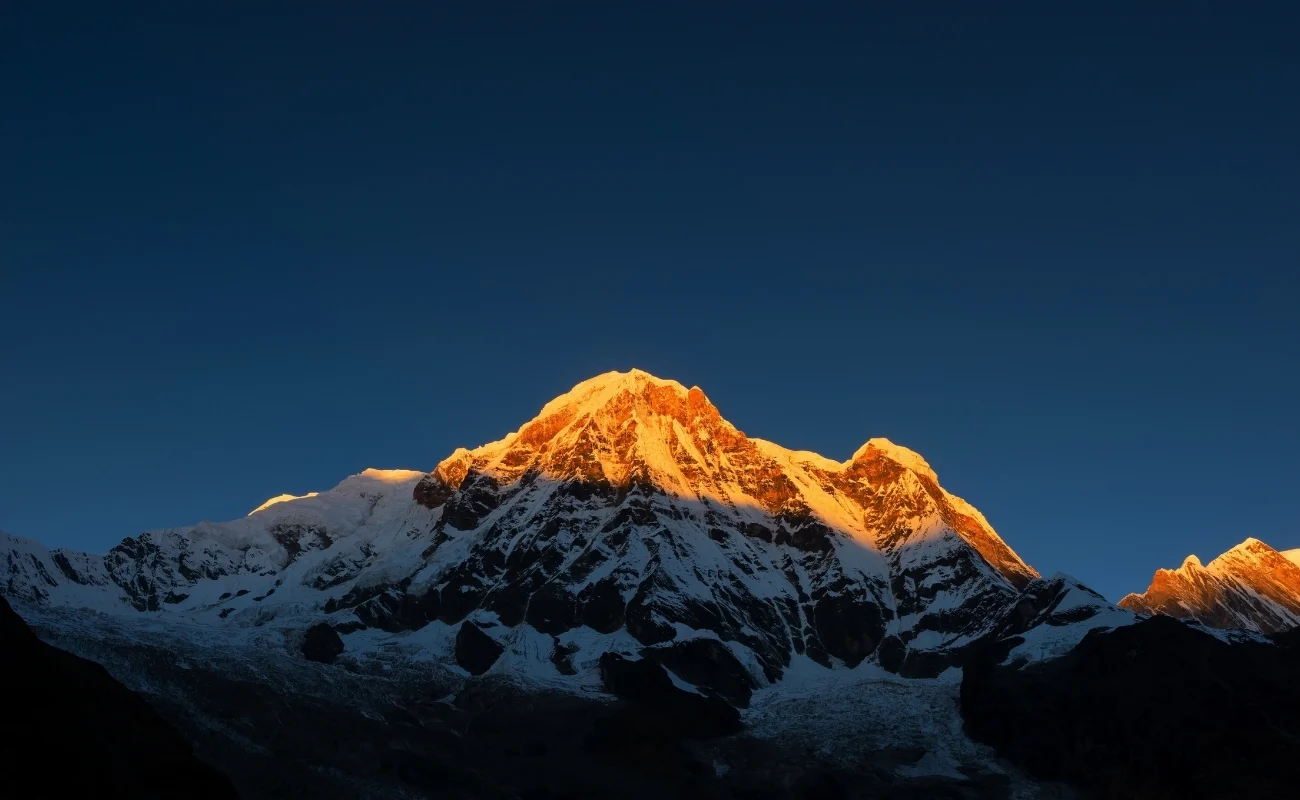
The ABC route delivers six distinct mountain viewpoints before the base camp itself. Most trekkers underestimate how much high-quality mountain photography is possible before reaching ABC.
Six major route viewpoints and the peaks they reveal:
-
Poon Hill (3,210m): Sunrise panorama of Dhaulagiri (8,167m), Annapurna I through IV, Nilgiri (7,061m), and Tukuche Peak (6,920m), the widest mountain panorama on the trek
-
Tadapani ridge (2,630m): Direct face-to-face view of Annapurna South across the Modi Khola valley
-
Chomrong village (2,170m): Clear views of Hiunchuli and Machhapuchhre across the gorge; a sunrise viewpoint that rivals Poon Hill for photographic impact
-
Deurali pass (3,230m): Unobstructed views south down the Modi Khola valley combined with first direct sightlines into the Annapurna Sanctuary
-
Machhapuchhre Base Camp (3,700m): First complete view of the full Annapurna Sanctuary amphitheater; Machhapuchhre towers directly overhead
-
Annapurna Base Camp (4,130m): The complete 360-degree mountain panorama with six peaks above 7,000m simultaneously visible
How Difficult Is the Annapurna Base Camp Trek in Spring?
The Annapurna Base Camp Trek is rated moderate to challenging. Spring provides the most manageable conditions of the four trekking seasons. Altitude gain, daily distance, and cumulative elevation change still demand genuine physical fitness and structured preparation.
How Much Daily Walking Is Required for Annapurna Base Camp trek?
A standard 10-day ABC itinerary requires 5 to 8 hours of walking per day across 8 to 15 kilometers of trail.
The five most demanding day-stages on the route:
|
Day |
Route Segment |
Elevation Change |
Walking Hours |
|
Day 2 |
Tikhedhunga to Ghorepani |
+1,320m gain |
6–7 hours |
|
Day 4 |
Tadapani to Chomrong (via Chuile) |
-400m / +600m |
6 hours |
|
Day 7 |
Dovan to Machhapuchhre Base Camp |
+920m gain |
6–7 hours |
|
Day 8 |
MBC to Annapurna Base Camp |
+430m gain |
2.5–3 hours |
|
Day 9 |
ABC descent to Bamboo |
-1,820m descent |
7–8 hours |
The Day 9 descent is where the majority of knee injuries on the ABC Trek occur. Trekking poles reduce knee joint stress on descent stages by approximately 25%. Every trekker planning the ABC Trek benefits from poles, regardless of fitness level.
What Elevation Challenges Should You Expect on Annapurna Base Camp?
The maximum elevation on the trek is 4,130m at Annapurna Base Camp. Acute Mountain Sickness (AMS), defined as the onset of headache combined with at least one of nausea, fatigue, dizziness, or poor sleep, becomes statistically significant above 2,500m.
Four elevation benchmarks to plan around:
-
3,000m (Ghorepani): First point where mild headaches appear in approximately 20% of trekkers; a rest day here is optional but reduces acclimatization risk
-
3,230m (Deurali): Exposed, wind-exposed section; rest on arrival is recommended before the following morning's ascent
-
3,700m (Machhapuchhre Base Camp): The elevation where AMS symptoms are most frequently reported on the ABC route; mandatory rest before proceeding
-
4,130m (Annapurna Base Camp): The trek's summit; most trekkers spend one night here and begin descent early the following morning
Spring advantage over other seasons: stable air pressure combined with warmer daytime temperatures reduces physiological AMS risk compared to December–February trekking. The classic acclimatization rule applies: ascend no more than 300–500m per day above 3,000m, and schedule one dedicated rest day at either Chomrong (2,170m) or Himalaya Hotel (2,920m).
How Can You Prepare for the Annapurna Base Camp Trekking Conditions?
Physical preparation for the ABC Trek in spring requires 8 to 12 weeks of structured conditioning before departure.
Three most effective preparation methods:
-
Cardiovascular base building: 30–45 minutes of sustained aerobic exercise (running, cycling, or swimming) four days per week for 8 weeks. This builds the aerobic base capacity required for sustained walking at reduced oxygen levels above 3,000m.
-
Uphill stair training with a loaded pack: 60–90-minute sessions of stair climbing with an 8–12kg pack, three times per week. This directly mimics the quad and calf demands of the trail's ascending stages.
-
Long-distance weekend hikes: 15–20km hikes with cumulative elevation gain above 800m train the body for multi-hour sustained effort on uneven terrain. These sessions also identify any footwear fit or pack adjustment issues before the trek.
Nepali trekkers based in Pokhara (820m) or Kathmandu (1,400m) carry a partial altitude acclimatization advantage for the lower trail sections. International trekkers arriving from sea-level destinations (Europe, North America, Southeast Asia, Australia) benefit from two to three days of rest in Pokhara before beginning the trek.
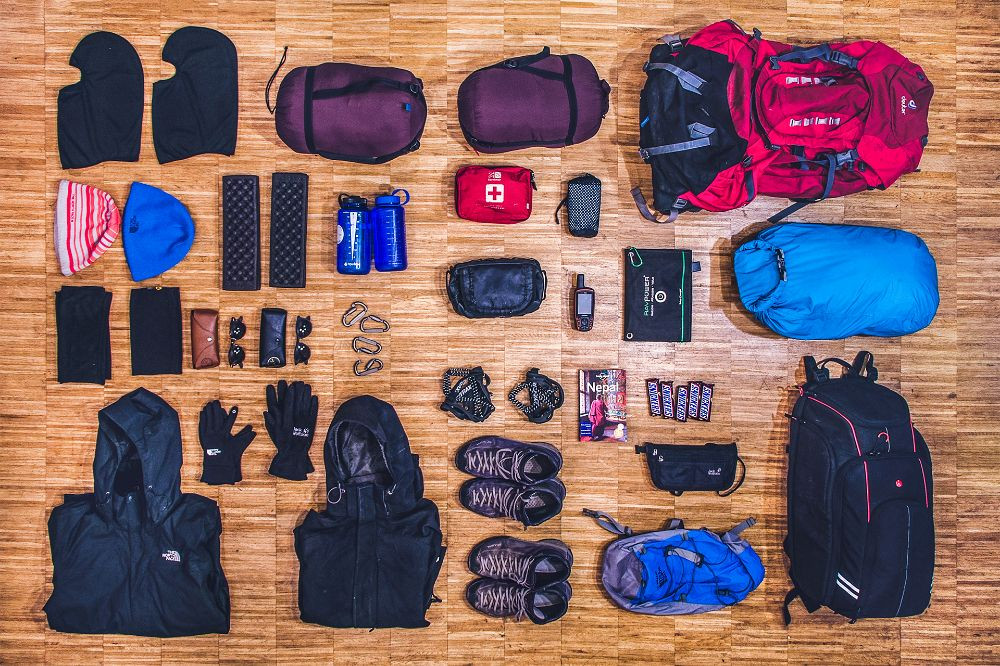
What Should You Pack for the Annapurna Base Camp Trek in Spring?
Packing for the ABC Trek in spring requires managing three temperature zones simultaneously: warm subtropical trails below 2,000m, cool mid-altitude forest between 2,000m and 3,500m, and cold alpine conditions at 4,130m where nighttime temperatures drop to -8°C in April.
Which Clothing Layers Are Useful for Changing Temperatures?
The seven-layer clothing system for the spring ABC Trek:
-
Moisture-wicking base layer (top and bottom): Merino wool or synthetic polyester. Worn throughout the entire trek. Merino wool manages odor better over 10-plus days; synthetic dries faster after perspiration.
-
Insulating mid-layer (fleece or lightweight down vest): Required from Chomrong (2,170m) upward. A 200-weight fleece handles the mid-altitude temperature range effectively.
-
Waterproof and windproof outer shell: Essential above 3,000m in all three spring months. April requires it for rain protection from late afternoon showers; May demands it for daily rainfall.
-
Insulated jacket (down or synthetic fill): Worn at ABC (4,130m) at night and during early morning departure. Down is warmer per gram; synthetic maintains warmth when wet, a relevant factor in May's pre-monsoon conditions.
-
Convertible trekking trousers (zip-off style): The temperature swing from 25°C at Nayapul to -5°C at ABC at night makes zip-off convertible trousers the most functional single clothing item on the packing list.
-
Warm hat and gloves: Non-negotiable above 3,500m across all three spring months. Wind chill at Deurali and MBC reduces the effective temperature by 5–10°C below the air temperature reading.
-
Lightweight camp footwear (sandals or packable shoes): Teahouses require shoe removal at entry; a light pair of sandals significantly improves evening comfort after long walking days.
The most common packing mistake on the spring ABC Trek: overpacking warm-weather clothing for the first three days below 2,000m and underpacking insulation layers for the final three days above 3,500m. Pack for the summit temperature, not the trailhead temperature.
What Trekking Gear in Annapurna Base Camp Is Important for March, April, and May?
Essential gear by month and priority level:
|
Gear Item |
March |
April |
May |
|
Trekking poles |
Critical |
Important |
Important |
|
Micro-spikes / light crampons |
Required above 3,500m |
Not needed after April 10 |
Not needed |
|
Waterproof trekking boots |
Essential |
Essential |
Essential |
|
Gaiters |
Useful in snow |
Optional |
Optional |
|
UV400 polarized sunglasses |
Essential |
Essential |
Essential |
|
Headlamp with spare batteries |
Essential |
Essential |
Essential |
|
Sleeping bag rated to -10°C |
Essential |
Essential |
Recommended |
|
Water purification system |
Essential |
Essential |
Essential |
The sleeping bag rated to -10°C is the single most impactful comfort item for the ABC overnight stay. Teahouses supply thin blankets, but the combination of high altitude, thin teahouse walls, and cold temperatures at 4,130m makes a quality sleeping bag the difference between restorative sleep and a miserable night before the descent.
Should You Pack Rain and Sun Protection for Spring ABC Trek?
Yes, both rain and sun protection are required for a complete spring ABC Trek, and both are used simultaneously across different elevation zones on the same day.
Sun protection requirements:
-
UV radiation intensity at 4,130m is 40–50% higher than at sea level
-
SPF 50+ broad-spectrum sunscreen applied every two hours on exposed skin
-
UV-protective lip balm to prevent high-altitude lip cracking and sunburn
-
UV400 sunglasses prevent snow blindness on reflective snowfields in March and April
Rain protection requirements:
-
A dedicated waterproof rain cover for the trekking pack (backpack covers are not always included with rented packs)
-
A lightweight waterproof-breathable jacket or rain poncho is mandatory from Ghorepani onward in April and throughout May
-
Waterproof bag liners or dry bags for electronics, documents, and sleeping bag inside the pack
Nepali trekker advantage with umbrellas: Many experienced Nepali trekkers carry a compact travel umbrella. It provides instant rain cover on the trail and doubles as shade on lower exposed sections during warm morning walking below 2,000m, a dual-use item undervalued by most international trekkers.
What Are the Main Highlights of Annapurna Base Camp in Spring?
The five defining highlights of the Annapurna Base Camp Trek in spring are the rhododendron forests, the glacial amphitheater at base camp, the Poon Hill sunrise panorama, the Gurung village cultural experience in Ghandruk, and the Modi Khola gorge walk through the Annapurna Sanctuary entrance.
Where Can You See the Best Rhododendron Forests on the ABC Route?
The four best rhododendron forest sections on the ABC route, ranked by visual density and bloom impact:
-
Ulleri to Ghorepani (1,960m–2,860m) The most concentrated rhododendron forest on the entire route. The two-hour ascent through this section in late March, when R. arboreum is at peak crimson bloom, is among the most photographed single trail segments in Himalayan trekking. The canopy closes overhead on the upper sections, creating a tunnel of red.
-
Ghorepani to Tadapani (2,860m–2,630m) Mixed rhododendron and oak forest on the ridge traverse. The combination of pink and red species frames direct views of Annapurna South between the tree canopy, views that appear and disappear as the ridge trail undulates.
-
Tadapani to Ghandruk (2,630m–1,940m) Descent through transitioning rhododendron canopy, moving from upper-altitude crimson species to lower-altitude pink varieties. The views of Annapurna South open progressively as the forest thins near Ghandruk.
-
Chomrong to Bamboo (2,170m–2,310m) Lower-altitude pink and white rhododendron species frame the entrance to the upper Modi Khola valley. This section marks the transition from cultural landscape into the wilder gorge environment.
Bloom timing precision matters: a trekker departing Pokhara in the last week of March arrives at the Ulleri–Ghorepani section during the peak crimson bloom window. A trekker departing in mid-April finds the upper sections (above 3,000m) at peak bloom but the lower valleys already transitioning toward green post-bloom foliage.
How Does Annapurna Base Camp Look in Spring?
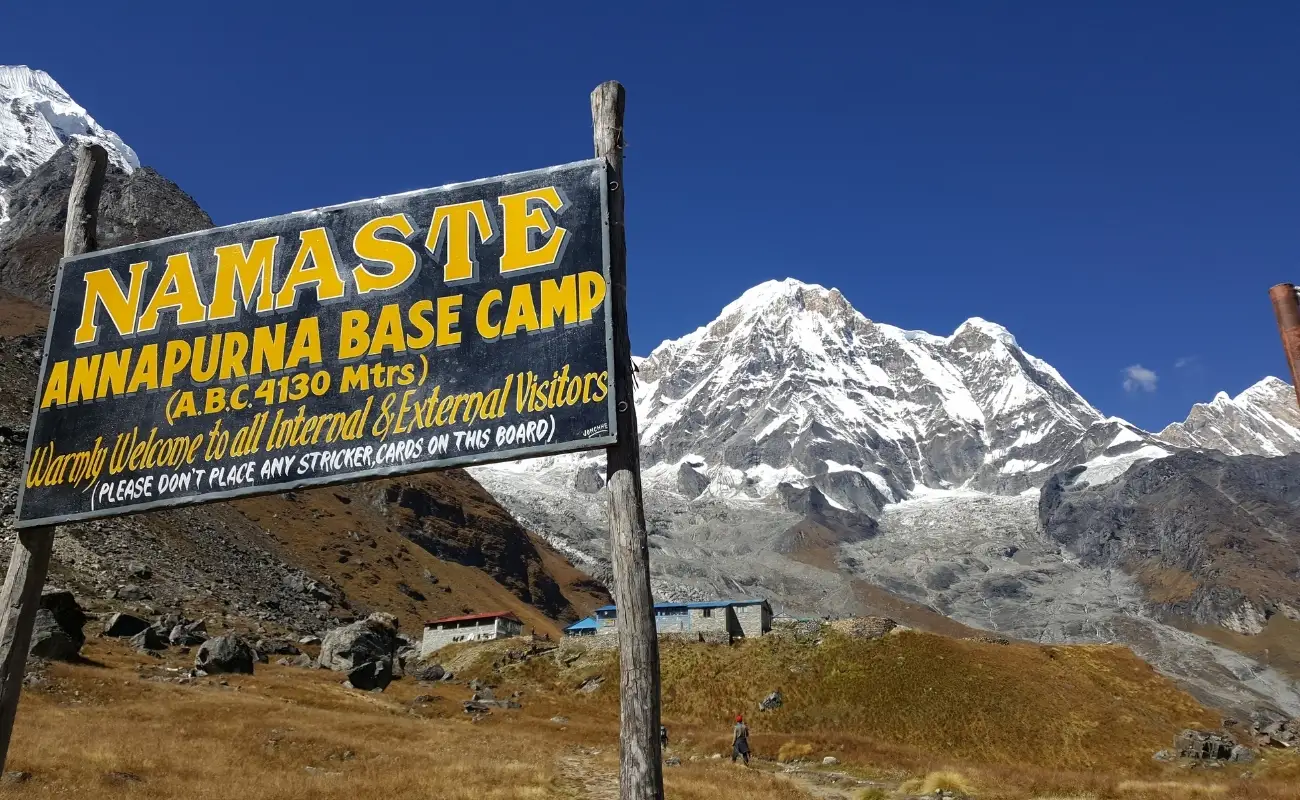
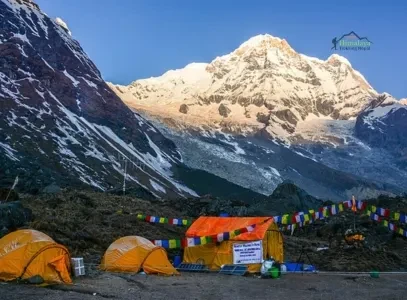
Annapurna Base Camp is a glacial terminal moraine terrain at 4,130m, ringed by a continuous wall of peaks rising 3,000m above the camp floor on three sides. The camp itself is not a single building or facility, it is an open, rocky plateau at the head of the Annapurna Glacier.
-
ABC in March: Snowfields cover 60–80% of the camp terrain. The surrounding peaks carry heavy fresh winter snow, creating dramatic high-contrast white-and-blue visual conditions. The glacier above is visible as a continuous ice field. Overnight temperatures at the camp drop to -10°C.
-
ABC in April: Snowmelt retreats progressively. Rocky sections of the terminal moraine become exposed by mid-April, revealing glacial debris terrain. The Annapurna Glacier, which is retreating measurably each year by an average of 6–8 meters annually, is visible as a fractured ice mass above the camp. Morning light on the surrounding peaks creates the most photographed conditions of the spring season.
-
ABC in May: The camp terrain is largely snow-free. Meltwater streams cross the moraines, and small glacial ponds form at the camp's lower edge. Pre-monsoon cloud formations build by 10:30–11:00 AM on most days, creating dramatic shifting light on the surrounding peaks before obscuring the summits by early afternoon.
Which Wildlife and Natural Features Might You Encounter in Annapurna Trail?
The Annapurna Conservation Area is home to 101 mammal species and 478 bird species. Spring is the most active wildlife observation season across all elevation zones.
Eight species commonly observed during a spring ABC Trek:
-
Himalayan Tahr (Hemitragus jemlahicus): Wild cliff-dwelling ungulate observed on rocky sections between Deurali and ABC; groups of 3–15 animals are common
-
Danphe / Himalayan Monal (Lophophorus impejanus): Nepal's national bird; iridescent blue-green and copper plumage; most visible in rhododendron forest sections between 2,500m and 3,500m
-
Red Panda (Ailurus fulgens): Rare; occasionally spotted in bamboo-rhododendron transition zones above Chomrong between 2,500m and 3,200m
-
Langur Monkey (Semnopithecus schistaceus): Common in lower forest sections; frequently observed at Ghandruk and on the Ghorepani approach
-
Himalayan Griffon Vulture (Gyps himalayensis): Soaring in thermals above the Modi Khola gorge; wingspan reaches 2.6 to 3.1 meters
-
Blood Pheasant (Ithaginis cruentus): Nepal's highest-altitude pheasant species; observed near Tikhedhunga and Ulleri in early morning
-
Snow Leopard (Panthera uncia): Extremely rare; tracks and scat occasionally found above 3,800m; direct sightings are exceptional
-
Bar-headed Goose (Anser indicus): Migrating in V-formation over the Annapurna massif during April and May; these geese fly at altitudes exceeding 7,000m during migration
The Modi Khola river, which runs through the gorge from below Machhapuchhre Base Camp to south of Chomrong, is classified among Nepal's fastest-rising seasonal rivers. Watching the river volume change between the ascent and descent, typically a 7–10 day span, demonstrates visible seasonal snowmelt dynamics in real time.
What Should You Know About Accommodation and Food in Spring?
The Annapurna Base Camp Trek route operates entirely on a teahouse infrastructure system. No camping equipment is required on the standard route. All accommodation and food is available at established teahouse stops along the trail.
What Are Teahouses Like Along the Annapurna Base Camp Route?
Teahouses (also called lodges or guesthouses) range from comfortable to basic across the route's eight main stops.
Three-tier quality breakdown by elevation:
Lower trail teahouses (Tikhedhunga, Ghorepani, Ghandruk):
-
Private rooms with attached bathrooms are available at most establishments
-
WiFi available at extra cost (typically NPR 300–500 per day)
-
Hot showers available at NPR 200–500 per shower
-
The best facilities on the entire route; competitive quality drives standards upward in these high-traffic villages
Mid-route teahouses (Chomrong, Bamboo, Dovan):
-
Private rooms available; shared bathrooms are standard
-
Hot showers available at most teahouses at Chomrong; limited above it
-
Room conditions are basic but consistently clean
-
Charging devices for phones and cameras costs NPR 200–300 per charge
Upper route teahouses (Himalaya Hotel, Deurali, MBC, ABC):
-
Dormitory beds and basic private rooms
-
Shared bathroom facilities
-
Hot showers are unavailable above Himalaya Hotel at most establishments
-
Teahouses at ABC are the most basic on the route, thin walls, minimal insulation, no hot water, limited charging
-
The ABC teahouse experience is defined entirely by the mountain environment, not by facilities
Spring booking critical note: The ABC Trek reaches peak occupancy in April. Teahouses at Chomrong, MBC, and ABC fill to capacity on most nights during the first three weeks of April. Advance booking through a registered trekking agency is strongly recommended for any April departure.
What Food and Drinks Are Available During Annapurna Base Camp Trek?
The teahouse menu system along the ABC route is well-established and consistent across the route. Most teahouses offer a standardized menu adapted to high-altitude cooking constraints.
Standard meal options available at most teahouses:
-
Dal Bhat (lentil soup, steamed rice, vegetable curry, and pickle), available at every teahouse at every elevation
-
Noodle soups and fried noodles (Thukpa, chow mein)
-
Tibetan bread with honey, peanut butter, or egg
-
Pasta and pizza (primarily available at lower trail teahouses)
-
Tsampa porridge (roasted barley flour with butter tea), the traditional high-altitude fuel source, available from Chomrong upward
-
Breakfast options: porridge, omelettes, toast, pancakes, and muesli with milk
The Dal Bhat advantage that experienced trekkers use: Most teahouses offer unlimited refills of Dal Bhat for a single fixed price. For a calorie-intensive 7–8 hour walking day, Dal Bhat with unlimited refills delivers more energy per rupee than any other menu item. Experienced trekkers consistently choose Dal Bhat over Western-style menu options for maximum trail performance.
Drinks available on the route:
-
Butter tea (traditional Tibetan-style salt butter tea), available from Chomrong upward; an acquired taste that provides high-altitude warmth effectively
-
Masala milk tea, black tea, and lemon tea
-
Hot lemon with honey (the standard trail remedy for cold onset and altitude discomfort)
-
Coffee (filtered at lower teahouses; instant above Chomrong)
Water management: Treated water and boiled water are purchasable at every teahouse at NPR 100–200 per liter. A personal water purification system, a SteriPen UV purifier, water purification tablets, or a squeeze filter, reduces reliance on purchased water and eliminates plastic waste on the trail.
Food pricing by elevation: A Dal Bhat that costs NPR 450 at Ghandruk costs NPR 700–900 at ABC. Budget NPR 2,500–4,000 per day for all meals and drinks at mid-to-upper route teahouses.
How Can You Plan the Annapurna Base Camp Trek in Spring?
Planning the ABC Trek in spring requires four decisions: itinerary length, permit acquisition, pre-trek fitness preparation, and trek format (fully guided, porter-supported, or independently navigated with a registered guide).
How Many Days Are Recommended for the Annapurna Base Camp Trek?
The recommended itinerary for the Annapurna Base Camp Trek in spring is 10 to 12 days from Pokhara. This duration includes transit days, one acclimatization rest day, and the full round-trip trek from trailhead to ABC and return.
Three standard itinerary options:
|
Itinerary Type |
Total Duration |
Best Suited For |
|
Standard route (Nayapul to ABC and return) |
10 days from Pokhara |
First-time ABC trekkers; moderate fitness level |
|
Express route (via Siwai Khola shortcut) |
7 days from Pokhara |
Experienced trekkers; high fitness; time constraints |
|
Extended Poon Hill variant |
12–13 days from Pokhara |
Trekkers prioritizing maximum rhododendron exposure and the full mountain panorama from Poon Hill |
The 12-day Poon Hill extension is the most popular spring variant specifically because it adds the Ghorepani–Poon Hill section. This section delivers the highest rhododendron forest density and the full Dhaulagiri-to-Annapurna sunrise panorama from 3,210m, conditions that define the spring trekking experience more than any other single day on the route.
What Permits Are Required for Annapurna Base Camp?
Two permits are mandatory for the Annapurna Base Camp Trek:
1. Annapurna Conservation Area Permit (ACAP)
-
Issuing authority: Nepal Tourism Board, Pokhara Tourism Board Office
-
Fee (2025–2026): NPR 3,000 for foreign nationals (approximately USD 22–25); NPR 1,000 for SAARC nationals; free for Nepali citizens
-
Required documents: Two passport-sized photographs and a passport copy (foreign nationals)
-
Processing time: Same-day issuance at Pokhara NTB office
2. TIMS Card (Trekkers' Information Management System)
-
Issuing authority: Registered trekking agencies
-
Fee: NPR 2,000 for foreign nationals; NPR 1,000 for SAARC nationals.
-
Processing time: Same-day issuance
Both permits are checked at multiple mandatory checkpoints starting at the ACAP gate in Nayapul. Original permits are required at all checkpoints, photocopies are not accepted.
2023 regulation update: The Nepal Tourism Board requires all foreign nationals trekking in the Annapurna Conservation Area, including the ABC route, to hire a licensed guide. Independent foreign trekking without a licensed guide is no longer permitted under the 2023 tourism reform policy. This regulation applies to the full Annapurna Conservation Area, including all variants of the ABC route.
What Fitness Preparation Helps Before the Annapurna Base Camp Trek?
Fitness preparation for the Annapurna Base Camp Trek requires 8 to 12 weeks of structured conditioning before the trek start date. Three fitness pillars directly address the specific physical demands of the route:
-
Cardiovascular endurance base: Running or cycling at sustained moderate intensity (zone 2 heart rate training) for 30–45 minutes, four times per week over eight weeks. This builds the aerobic capacity required for sustained walking at the reduced oxygen partial pressure experienced above 3,000m. A resting heart rate below 65 bpm is a reliable indicator of adequate cardiovascular base for the ABC Trek.
-
Leg strength and knee stability: The 1,820m descent from ABC to Bamboo on day nine is the most joint-stressful component of the trek. Quadriceps strength training through squats, step-downs, and reverse lunges directly reduces the injury risk on descent stages. Three strength sessions per week for eight weeks builds adequate knee stability for the full descent load.
-
Load-bearing trail practice: Weekend hikes of 15–20km carrying a 10–12kg loaded pack with 800m or more of cumulative elevation gain. Training with the actual trekking load trains proprioception on uneven terrain, identifies footwear fit issues, and adapts shoulders and hips to pack contact points before day one on the trail.
How Can Himalaya Trekking Nepal Help With an Annapurna Base Camp Trek in Spring?
Himalaya Trekking Nepal is a Pokhara-based trekking operator specializing in Annapurna region treks for both Nepali and international trekkers. The company operates guided ABC treks across all three spring months with season-specific itineraries adapted to March snow conditions, April peak-season demand, and May pre-monsoon weather management.
Can Himalaya Trekking Nepal Arrange a Spring Annapurna Base Camp Trek?
Yes, Himalaya Trekking Nepal arranges complete spring Annapurna Base Camp Trek packages that cover the full range of logistics that determine trek quality and safety.
What Himalaya Trekking Nepal manages for spring ABC treks:
-
Licensed, government-certified mountain guides with season-specific Annapurna route experience
-
All permit procurement (ACAP and TIMS) in advance, eliminating the April peak-season permit office queues that typically take two to three hours in Pokhara
-
Priority teahouse reservations at Chomrong, MBC, and ABC, where April availability disappears weeks in advance
-
Porter support for trekkers who choose to reduce their carried load on the ascending stages
-
Emergency evacuation planning and helicopter rescue coordination, including pre-arranged contacts with Pokhara rescue services
-
Custom itinerary design for different fitness levels, group compositions, and available timeframes within the March–May window
Why a licensed guide changes the spring trek experience:
A licensed Annapurna guide brings three capabilities that independent navigation cannot replicate. Trail condition knowledge from recent descents, particularly relevant in March when snowfield conditions above 3,500m change day by day. Weather pattern reading for the Modi Khola valley, where pre-monsoon cloud development in May follows consistent morning patterns that determine whether to push for ABC or hold at MBC. Altitude management judgment, the ability to assess early AMS symptoms in group members and make authoritative hold-or-continue decisions.
-
For Nepali trekkers: Himalaya Trekking Nepal offers domestic-rate packages with Nepali-language guides and locally oriented itineraries tailored to the preferences and cultural context of Nepali trekking groups.
-
For international trekkers: Full-service packages with English-speaking, government-certified guides cover the complete logistics from Pokhara airport arrival to trek completion and return transport.
-
Recommended next step: Contact Himalaya Trekking Nepal with your specific travel dates, group size, and fitness level. The team provides custom itinerary recommendations based on your departure window within the March–May season, early March snow conditions, April peak-season booking requirements, and late May pre-monsoon weather patterns each carry distinct preparation considerations.
What Are the Key Takeaways About the Annapurna Base Camp Trek in Spring?
The Annapurna Base Camp Trek in spring (March–May) is the most complete trekking experience available in the Annapurna Conservation Area. Spring delivers four compounding advantages that no other season replicates simultaneously: consistent morning mountain visibility, peak rhododendron bloom across 32 native species, accessible trail conditions above 3,500m, and manageable walking temperatures across all elevation zones.
Six key takeaways for planning a spring ABC Trek:
-
April is the optimal departure month for the combination of clear mountain views, full rhododendron bloom at upper elevations, snow-free trail above 3,500m, and the widest range of functional teahouse availability, at the cost of higher trail traffic and peak-season teahouse demand.
-
March delivers the same mountain views with colder, quieter conditions, micro-spikes are required above 3,500m through mid-March, crowds are significantly reduced, and the crimson bloom is at its peak in the Ulleri–Ghorepani section by late March.
-
May is viable but requires weather flexibility, pre-monsoon showers and afternoon cloud buildup are predictable patterns; starting each walking day by 6:00 AM captures the full morning visibility window before cloud development.
-
A 10–12 day itinerary provides the correct pacing for safe acclimatization, includes the mandatory rest day above 3,000m, and eliminates the rushing that causes the majority of AMS cases reported on the ABC route.
-
Both permits (ACAP + TIMS) are mandatory, and foreign nationals trekking in the Annapurna Conservation Area are required by Nepal's 2023 tourism regulations to hire a licensed guide for the full duration of the trek.
-
Packing for three simultaneous temperature zones, from 25°C at the Nayapul trailhead to -8°C at ABC at night, is the most consistently underestimated preparation challenge. Pack for the summit temperature and the coldest night, not for the warm subtropical trailhead conditions on day one.
The Annapurna Base Camp Trek in spring is not the easiest trek in Nepal. By the direct experience of trekkers who have completed it and the assessment of mountain guides who lead it repeatedly, it is the most rewarding moderate-length trek in the country. The cultural immersion through Gurung villages like Ghandruk and Chomrong, the biological spectacle of rhododendron forests at scale, and the raw mountain environment of standing inside the world's 10th-highest peak's base camp amphitheater create a trekking experience with no direct equivalent in the Himalayas or elsewhere.
More About Author

Khilak Budhathoki
Travel Director
Khilak Budhathoki is the co-founder and lead trekking guide at Himalaya Trekking Nepal, a locally owned and operated adventure company based in Kathmandu. Born and raised in the foothills of Nepal, Khilak developed a deep love for the mountains from an early age. With over a deca...
USD$1,400 pp
Our Recommendation
Related Blogs