- 17, May 2026 | Khilak Budhathoki
Kala Patthar Sunrise: Best Viewpoint, Timing, and Everest Photography Guide
Kala Patthar (5,545 m / 18,192 ft) is a rocky ridge on the southwest flank of Pumori (7,161 m) inside Sagarmatha National Park, Khumbu region, Nepal. The name translates from Nepali as "Black Rock," a reference to the dark scree slopes that define the upper trail. Kala Patthar is the highest viewpoint on the Everest Base Camp trek accessible without a mountaineering permit, positioned 1.5 km west of Gorak Shep (5,164 m) and 4 km northwest of Everest Base Camp (5,364 m).
Trekkers reach the Kala Patthar summit cairn before dawn to witness Everest's full southwest face (8,848.86 m) catch the first light of sunrise, 18 minutes before daylight reaches the ridge itself. Nuptse's (7,861 m) western wall blocks this view entirely from Everest Base Camp. Kala Patthar's elevated angle, 181 m above EBC, clears that obstruction and delivers a direct, unobstructed line of sight to Everest's summit pyramid, the Hillary Step, and 10 additional named peaks including Lhotse (8,516 m), Changtse (7,543 m), Ama Dablam (6,812 m), and the Khumbu Icefall below at 5,486 m.
The sunrise hike departs Gorak Shep at 4:00 AM, covers 1.5 km and 381 m of elevation gain over rocky switchbacks in 1.5–2 hours, and requires a -20°C-rated down jacket, windproof shell, balaclava, and double-layer gloves at pre-dawn temperatures ranging from -10°C in October to -25°C in November. Oxygen at 5,545 m sits at 50% of sea level, making acclimatization, with mandatory rest days at Namche Bazaar (3,440 m) and Dingboche (4,410 m), the single most important factor in a successful summit push. October and April deliver 80–90% clear-view probability, the highest of any season.
What Is the Kala Patthar Sunrise Trek?
Kala Patthar is a rocky ridge on the southwest flank of Pumori, situated 1.5 km west of Gorak Shep at coordinates 27°59′14″N 86°49′35″E, within Sagarmatha National Park. The name translates from Nepali as "Black Rock," a direct reference to its dark, scree-covered upper slopes. The ridge rises 381 m above Gorak Shep and sits 181 m above Everest Base Camp (5,364 m), giving it the elevation advantage that makes the sunrise view possible.
The sunrise trek is the pre-dawn ascent from Gorak Shep to the Kala Patthar summit, timed so trekkers stand on the ridge before the first light strikes the Himalayan peaks. The summit is marked by prayer flags and a small cairn. No climbing permit is required, only a Sagarmatha National Park entry permit and a Khumbu Pasang Lhamu Rural Municipality permit, both obtained in Kathmandu or Monjo before the trek begins.
Kala Patthar is not a standalone trek. It sits on Day 10 or 11 of the standard 12–14 day Everest Base Camp itinerary, the morning after reaching Everest Base Camp. Trekkers overnight at Gorak Shep, wake before 4:00 AM, and ascend in darkness using headlamps.
Why Is Kala Patthar Sunrise Considered the Best Everest View?
Kala Patthar produces a direct, unobstructed view of Everest's southwest face and full summit pyramid, the clearest Everest view accessible to any trekker without mountaineering equipment. From the summit ridge at 5,545 m, the straight-line distance to Everest's summit is approximately 10–12 km (6–7.5 miles).
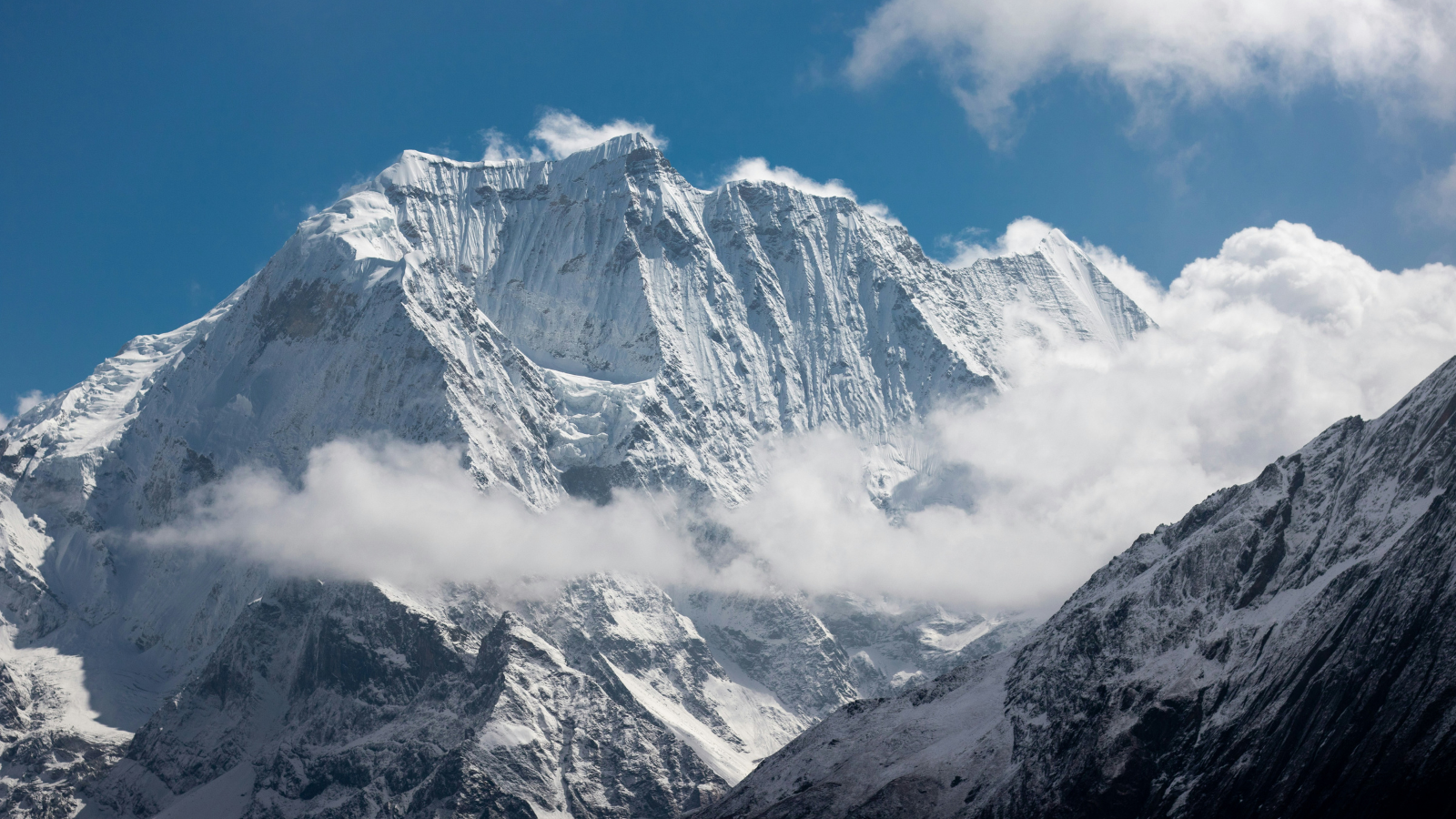
At sunrise, light strikes the peak sequence in this order: Everest's summit pyramid glows first, approximately 18 minutes before dawn reaches Kala Patthar. Then Lhotse (8,516 m), Nuptse (7,861 m), Pumori (7,161 m), and Changtse (7,543 m) catch successive waves of orange and gold. The full 360° panorama from the summit ridge includes Mount Everest, Lhotse, Nuptse, Pumori, Changtse, Ama Dablam (6,812 m), Thamserku (6,618 m), Kangtega (6,782 m), Taboche (6,495 m), and Lobuche Peak (6,119 m), 11 significant peaks visible from a single standing position.
Oxygen levels at 5,545 m are 50% of sea level, which means the thin, cold air also means the absence of haze. The result is photographic clarity unavailable at lower altitudes in the valley.
Why Does Mount Everest Look Clearer from Kala Patthar Than Everest Base Camp?
Everest Base Camp (5,364 m) sits directly beneath Nuptse's massive western wall, which blocks the line of sight to Everest's summit. From EBC, trekkers see the Khumbu Icefall, not the mountain's peak. Kala Patthar's elevated position, 181 m higher and positioned northwest of Nuptse's obstruction angle, clears the blockage entirely.
From Kala Patthar, the Hillary Step and the South Col route, the standard ascent line used by 300+ Everest expeditions, are both visible. Experienced Himalayan photographers confirm Kala Patthar produces superior Everest summit photographs on 100% of clear days. EBC delivers the ground-level atmosphere of the expedition staging area: boot prints, abandoned camp marks, and prayer flag lines. Kala Patthar delivers visual revelation, Everest's full scale in a single frame.
89% of EBC trekkers complete both destinations. Skipping Kala Patthar means missing the one view Everest Base Camp cannot provide.
What Time Does the Kala Patthar Sunrise Hike Start?
Trekkers depart Gorak Shep at 4:00 AM to arrive at the Kala Patthar summit cairn before first light. The 1.5 km ascent covers 381 m of elevation gain and takes 1.5–2 hours at altitude-adjusted pace. Leaving at 4:00 AM provides a 10–15 minute buffer at the summit to locate a stable photography position before first light.
Sunrise times at Kala Patthar vary by month:
-
October: approximately 06:05 AM
-
November: approximately 06:20 AM
-
March: approximately 06:10 AM
-
April: approximately 05:50 AM
-
May: approximately 05:30 AM
The 4:00 AM departure applies across all seasons. Weather at the ridge deteriorates as the day progresses, with afternoon cloud build-up common even in peak season. Morning air is also calmer, with wind speeds lower at pre-dawn than at midday.
Wake-Up Protocol in Gorak Shep
Gorak Shep teahouses serve breakfast from 3:30 AM during trekking season. A light, warm meal, porridge, tea, or toast, is essential before departure. Cold suppresses appetite, but trekking 381 m of steep scree at 5,000 m+ on an empty stomach accelerates exhaustion and increases AMS risk. Prepare headlamps, gloves, and camera batteries the night before. Cold drains batteries in minutes; warm them overnight inside a sleeping bag.
How Long Does the Kala Patthar Sunrise Hike Take?
The Gorak Shep to Kala Patthar summit ascent covers 1.5 km and 381 m of elevation gain in 1.5–2 hours. The descent from the summit back to Gorak Shep takes 1–1.5 hours. Total round trip: 3–4 hours. This timing assumes proper acclimatization. Trekkers who are not well acclimatized take 2.5–3 hours to ascend.
The trail breaks into 3 sections:
-
Flat lake section (15 minutes): A brief descent from Gorak Shep across the old glacial lakebed, used as a helipad. Terrain is flat and easy.
-
Steep switchback section (45–60 minutes): The trail climbs steeply on rocky, loose scree. This section demands short, controlled steps and steady breathing. Trekking poles prevent ankle injuries on loose rock.
-
Summit ridge scramble (15–20 minutes): The final approach involves boulder scrambling over dark rock. The prayer flag cairn marks the highest common trekking point.
Descent from the summit is faster but demands more attention. Loose scree on the upper sections causes slipping. Trekking poles are more critical on descent than on ascent.
What Is the Altitude of Kala Patthar and Why Does It Matter?
Kala Patthar stands at 5,545 m (18,192 ft) above sea level, the highest point on the standard Everest Base Camp trek accessible without a climbing permit. At this elevation, atmospheric pressure is approximately 50% of sea level, delivering half the oxygen available at Kathmandu (1,400 m).
The physiological effects at 5,545 m are direct and measurable:
-
Heart rate: Increases 20–40% above resting rate even during slow walking
-
Breathing rate: Doubles compared to low-altitude exertion
-
SpO₂ (blood oxygen saturation): Drops to 70–85% in acclimatized trekkers; readings below 70% at rest indicate dangerous hypoxia
-
AMS risk: Acute Mountain Sickness affects a significant proportion of trekkers above 3,600 m, with symptoms including headache, nausea, dizziness, and fatigue
A pulse oximeter, a small fingertip device that measures SpO₂, is standard equipment for guides on altitude treks. Guide-led teams with Himalaya Trekking Nepal conduct oximeter checks at Namche Bazaar (3,440 m), Dingboche (4,410 m), and Gorak Shep (5,164 m) before the summit push.
Kala Patthar has no permanent shelter and no evacuation infrastructure at the summit. All altitude management happens before you leave Gorak Shep.
How Difficult Is the Kala Patthar Sunrise Hike?
The Kala Patthar sunrise hike is rated moderate-to-challenging. The trail is not technically difficult; no ropes, harnesses, or climbing skills are required. The difficulty comes from 3 compounding factors: steep terrain, high altitude, and pre-dawn darkness.
Trail Steepness
The trail climbs 381 m over 1.5 km, an average gradient of approximately 25%. The upper switchback section reaches 30–35% in places. Loose scree creates unstable footing in the dark. Most trekkers require 3–5 rest stops on the ascent.
High-Altitude Demand
At 5,000 m+, every step burns more energy per unit of output than at sea level. The body works harder to maintain pace. Physical effort that feels moderate at lower altitudes becomes demanding above Gorak Shep.
Pre-Dawn Conditions
The 4:00 AM start means the ascent happens in total darkness. Headlamps are non-negotiable. Trail markers are sparse on the upper section. A licensed guide who knows the route eliminates navigation risk and manages pace.
Beginner trekkers with proper acclimatization complete Kala Patthar. Fitness level matters less than acclimatization quality. A fit trekker who ascended too fast is at greater risk than a slower trekker who followed a proper 12-day itinerary.
What Weather Conditions Affect the Kala Patthar Sunrise Experience?
The 3 weather variables that directly affect Kala Patthar sunrise visibility are cloud cover, wind speed, and temperature. Pre-dawn conditions are more stable than afternoon conditions in all seasons. Morning provides the highest probability of clear views and manageable wind.
Cloud Cover
Valley cloud from the south builds over the Khumbu region from late morning onward, even in peak season. At 4:00 AM, cloud cover is minimal. By 10:00 AM, clouds often obscure the lower peaks. The Kala Patthar summit sits above the typical morning cloud line, but thick cloud systems from storms can reduce visibility to near zero. Monitor weather at Gorak. Shep, the evening before, if clouds sit at summit level at dusk, the 4:00 AM view is likely obscured.
Wind Chill
Wind at 5,545 m adds significant perceived cold. In October and November, sustained winds at the Kala Patthar ridge reach 30–50 km/h. Wind chill drops the effective temperature from -10°C to -20°C or lower. A windproof outer shell is as important as insulation.
Visibility by Season
-
Autumn (October–November): Clearest skies of the year, 80–90% probability of summit views on any given morning. Coldest pre-dawn temperatures.
-
Spring (March–May): Strong visibility in March and April; afternoon cloud increases through May. Pre-monsoon haze is lower than in summer but higher than in autumn.
-
Winter (December–February): Clear skies possible but extreme cold (-20°C to -25°C at dawn) and avalanche risk. Experienced trekkers only.
-
Monsoon (June–September): Heavy clouds, rain, and near-zero summit visibility. Not recommended.
What Is the Best Season for Seeing Sunrise from Kala Patthar?
October and early November are the best months for Kala Patthar sunrise. Post-monsoon air carries no haze; skies stabilize within 3–4 weeks of the monsoon's end, and daytime temperatures at Gorak Shep range from -5°C to 5°C, cold but manageable. April is the second-best month: pre-monsoon clarity, stable morning weather, and slightly warmer pre-dawn temperatures than autumn.
The 4 seasons at Kala Patthar produce distinct conditions:
|
Season |
Months |
Visibility |
Pre-Dawn Temp |
Crowd Level |
|
Autumn |
Oct–Nov |
Excellent |
-10°C to -25°C |
High |
|
Spring |
Mar–May |
Very Good |
-5°C to -15°C |
High |
|
Winter |
Dec–Feb |
Good (cold) |
-20°C to -30°C |
Low |
|
Monsoon |
Jun–Sep |
Poor |
0°C to -5°C |
Very Low |
The table above shows the relationship between season, visibility, temperature, and crowd density. October and April represent the optimal balance of clear skies and survivable temperatures for first-time trekkers.
What Mountains Can You See from Kala Patthar Sunrise?
From the Kala Patthar summit ridge, 11 named peaks are visible in a 360° panorama. The following table lists the peaks visible, their elevations, and their position relative to the summit:
The 5 primary peaks visible at sunrise, in order of elevation:
-
Mount Everest (8,848.86 m / 29,032 ft) — Southwest face and full summit pyramid directly in front. The Hillary Step and South Col route are identifiable.
-
Lhotse (8,516 m / 27,940 ft) — Fourth-highest mountain on earth, immediately south of Everest. Massive south face dominates the southeast skyline.
-
Nuptse (7,861 m / 25,791 ft) — Part of the Everest massif, known as "west peak" in Sherpa. Rock faces catch the first light in sharp relief.
-
Changtse (7,543 m / 24,747 ft) — Located on the Tibet-Nepal border. Provides the northern framing of the Everest panorama.
-
Pumori (7,161 m / 23,494 ft) — Immediately north of Kala Patthar. Kala Patthar sits on Pumori's southern ridge. Pumori's face fills the western frame.
Secondary peaks visible from the summit also include Ama Dablam (6,812 m), Kangtega (6,782 m), Thamserku (6,618 m), Taboche (6,495 m), Lobuche Peak (6,119 m), and the Khumbu Icefall directly below.
What Should You Wear for the Kala Patthar Sunrise Hike?
Pre-dawn temperature at Kala Patthar ranges from -10°C in October to -25°C in November, with wind chill driving effective temperatures 5–10°C lower. The layering system requires 3 distinct layers functional at -25°C with wind.
The 3-Layer System for Kala Patthar
-
Base layer: Merino wool or synthetic thermal base, long-sleeve top and leggings. Manages moisture from exertion while retaining warmth.
-
Mid layer: Down jacket rated to -20°C. This is the primary insulation layer. A jacket rated below -15°C is insufficient at the summit in October or November.
-
Outer layer: Windproof and waterproof hard shell. The outer layer blocks wind chill. Without it, even a -20°C down jacket fails to maintain body temperature at the ridge.
Accessories
-
Gloves: 2 pairs, thin liner gloves for dexterity, thick insulated outer mitts for the summit ridge
-
Balaclava: Covers ears, neck, and lower face. Standard equipment for any pre-dawn ascent above 5,000 m
-
Headlamp: 200+ lumen rated headlamp with fresh batteries. Cold drains batteries, carry a spare set inside a jacket pocket
-
Trekking poles: Mandatory for stable footing on scree descent
-
Gaiters: Recommended for November and winter visits when fresh snow covers the trail
Avoid cotton at any layer. Cotton absorbs sweat, loses insulation value when wet, and causes rapid chilling at altitude.
What Equipment Is Needed for the Kala Patthar Sunrise Trek?
The 6 non-negotiable equipment items for the Kala Patthar sunrise hike are: headlamp, trekking poles, layered thermal system (described above), pulse oximeter, camera with warm batteries, and a 1-liter insulated water bottle. These are not optional in -15°C pre-dawn conditions.
Camera and Battery Preparation
Cold temperatures at 5,545 m drain lithium-ion camera batteries in 15–20 minutes of exposure. The 4 photographically distinct lighting phases at Kala Patthar each require different camera settings:
-
Pre-dawn (30 minutes before sunrise): ISO 1600–3200, f/2.8–f/4, 1/15s–1/60s
-
Alpenglow on peaks: ISO 400–800, f/8, 1/125s
-
Full sunrise: ISO 100–200, f/11, 1/250s
-
Post-sunrise panorama: ISO 100, f/8–f/11, 1/500s
Carry 2 fully charged batteries. Store the spare battery inside a jacket pocket against your body overnight and during the ascent. Swap batteries at the summit, the warm battery provides 30–40 additional minutes of shooting time.
A small tripod or beanbag stabilizer is essential for pre-dawn shots in ISO 1600+ conditions. A monopod is a lighter alternative. Shooting handheld at ISO 3200 and 1/15s in cold, gloved hands produces camera shake at every frame.
How Cold Does Kala Patthar Get During Sunrise?
Pre-dawn air temperature at Kala Patthar summit ranges from -10°C (October) to -25°C (November–December), dropping to -30°C in January and February. Wind chill at the exposed ridge reduces effective temperature by a further 5–10°C.
The temperature by month at the Kala Patthar summit at sunrise:
-
March: -5°C to -10°C
-
April: -3°C to -8°C
-
May: 0°C to -5°C
-
October: -10°C to -15°C
-
November: -15°C to -25°C
-
December–February: -20°C to -30°C
At -20°C with 30 km/h wind, exposed skin experiences frostbite risk within 10–15 minutes. Face, ears, and fingers are the primary risk areas. A balaclava, goggles or wraparound sunglasses, and double-layer gloves prevent exposure injuries during the summit wait.
Sunrise viewing at the summit lasts approximately 30–45 minutes from first light to full daylight. You stand stationary during this period, which means heat loss accelerates. Arriving in cold gear that felt adequate during the climb becomes insufficient within 10 minutes of stopping. Plan for the temperature of standing still, not of hiking.
How Can You Prepare for Altitude During the Kala Patthar Sunrise Hike?
Proper acclimatization before the Kala Patthar sunrise hike requires 2 mandatory rest days, one at Namche Bazaar (3,440 m) and one at Dingboche (4,410 m), following the established "climb high, sleep low" protocol. The human body requires 48–72 hours at intermediate altitudes to begin producing additional red blood cells.
The Acclimatization Sequence for Kala Patthar
The standard 12-day EBC itinerary incorporates this sequence:
-
Day 3–4: Arrive in Namche Bazaar (3,440 m). Rest day includes a hike to Everest View Hotel (3,880 m) for altitude stimulus, then a return to Namche to sleep lower.
-
Day 6: Arrive in Dingboche (4,410 m). Rest day includes a hike to Nangkartshang Peak (5,083 m) for altitude stimulus, then a a return to Dingboche.
-
Day 8: Arrive in Lobuche (4,940 m). Two nights here before pushing to Gorak Shep.
-
Day 10: Arrive in Gorak Shep (5,164 m). Same-day visit to Everest Base Camp (5,364 m).
-
Day 11: Pre-dawn Kala Patthar sunrise (5,545 m).
Diamox (acetazolamide) at 125 mg twice daily reduces AMS incidence by 48%, according to a 2019 Lancet Respiratory Medicine study. Trekkers use Diamox under medical prescription starting 24 hours before ascending above 3,000 m. Diamox is not a substitute for acclimatization; it is a supplement to it.
AMS Symptoms to Recognize Before Departure
Assess yourself in Gorakh She slept the evening before the summit push. If you experience 2 or more of these 5 symptoms, do not attempt the sunrise hike that morning:
-
Persistent headache unresponsive to paracetamol
-
Nausea or vomiting
-
Dizziness at rest
-
Shortness of breath while lying down
-
SpO₂ reading below 80% at rest
HACE (High Altitude Cerebral Edema, fluid on the brain above 4,000 m) and HAPE (High Altitude Pulmonary Edema, fluid in the lungs above 3,500 m) are life-threatening conditions. HAPE causes 50% of high-altitude deaths globally. HAPE symptoms include breathlessness at rest, pink frothy cough, and heart rate above 120 BPM at rest. Both conditions require immediate descent, not Diamox or rest at altitude.
Guide-led teams with Himalaya Trekking Nepal carry pulse oximeters, emergency oxygen canisters, and evacuation plans on every summit push. Solo trekkers face altitude emergencies without these resources.
Is Kala Patthar Sunrise Safe for Beginner Trekkers?
Kala Patthar is achievable for beginner trekkers who complete a properly structured 12–14 day acclimatization itinerary with mandatory rest days. Fitness is secondary to acclimatization. A trekker with no prior high-altitude experience who follows the correct itinerary safely reaches the summit. A fit runner who skips rest days and ascends too fast risks AMS, HACE, or HAPE.
The 3 factors that determine beginner safety on Kala Patthar:
-
Itinerary structure: Minimum 12 days Kathmandu-to-Kala Patthar with rest days at Namche and Dingboche. No itinerary shorter than 10 days is safe for first-time high-altitude trekkers.
-
Guide support: A licensed, experienced Sherpa guide manages pace, conducts oximeter checks, identifies AMS symptoms, and makes descent decisions. 89% of trekkers who experience AMS complications on the EBC route are in independent or partially guided groups.
-
Gear adequacy: Beginner trekkers routinely underestimate cold and wind. A guide conducts a gear check in Namche before the team ascends above 4,000 m.
Kala Patthar is not appropriate for trekkers with untreated respiratory conditions, recent illness, or no prior multi-day trekking experience below 3,000 m. Consult a physician 4–6 weeks before departure.
How Crowded Is Kala Patthar During Sunrise?
The Kala Patthar summit ridge at sunrise holds 80–150 trekkers on peak season mornings in October and April. The summit cairn area is approximately 20 m wide. Space for tripod photography at the primary viewpoint is limited during peak hours (5:30–7:00 AM).
Crowd levels by month:
-
October: Highest crowds. 150+ trekkers on popular mornings. Arrive at summit 20–30 minutes before first light to secure a primary position.
-
April: Second-highest crowds. 80–120 trekkers typical.
-
March and November: Moderate crowds, 30–60 trekkers.
-
December–February: 5–20 trekkers. Cold, windy, but uncrowded.
-
Monsoon: Near-empty. Views obscured.
Space on the summit is not the only crowd issue. The Gorak Shep trail at 4:00 AM in October resembles a headlamp convoy, 50–80 groups departing within a 30-minute window. A guide who knows the terrain moves efficiently and positions the team without bottleneck delays at trail intersections.
What Are the Best Photography Tips for Kala Patthar Sunrise?
The Kala Patthar summit delivers 4 photographically distinct lighting phases in a 45-minute window. Each phase requires different camera settings and subject framing.
The 4 Lighting Phases and Settings
-
Phase 1: Pre-dawn blue hour (30 minutes before sunrise): ISO 1600–3200, f/2.8–f/4, 1/15s–1/60s. Expose for the sky. Mount Everest appears as a dark silhouette against deep blue.
-
Phase 2: Alpenglow on summit (18 minutes before sunrise): ISO 400–800, f/8, 1/125s. First light strikes Everest's summit pyramid in orange-red. This 5-minute window is the most photographed Himalayan image sequence.
-
Phase 3: Full sunrise (at sunrise): ISO 100–200, f/11, 1/250s. Light spreads across all peaks. Exposure to highlights on snow, overexposure eliminates detail on white faces.
-
Phase 4: Post-sunrise panorama: ISO 100, f/8–f/11, 1/500s. Full daylight, stable exposure. Use this phase for wide panoramic shots and group photos.
5 Equipment Preparation Steps
-
Charge both camera batteries fully the night before departure
-
Store the spare battery inside a sleeping bag overnight
-
Keep the active battery inside a jacket pocket during the ascent
-
Set focus manually or lock autofocus in advance; autofocus hunts in pre-dawn darkness
-
Bring a small tripod or monopod; handheld shooting in gloves at 1/15 s produces camera shake at altitude
A polarizing filter reduces atmospheric haze during the post-sunrise phase and deepens the blue of the sky at a 5,545 m altitude.
Should You Visit Kala Patthar for Sunrise or Sunset?
Sunrise produces superior photography of Everest's northeast face, with the summit catching first light 18 minutes before the ridge. Sunset, however, produces superior color saturation on the western peaks, Pumori and Nuptse, because the sun sets behind Kala Patthar's western ridge, illuminating those faces in direct warm light.
The comparison across 4 variables:
|
Variable |
Sunrise |
Sunset |
|
Everest illumination |
Direct, best lighting on south face |
Indirect, backlit |
|
Western peak lighting |
Side-lit |
Front-lit, warmer tones |
|
Weather stability |
More stable, cloud builds later |
Afternoon clouds are common |
|
Temperature after light |
Warms up quickly after dawn |
Drops sharply after sunset |
|
Safety (descent timing) |
Descend in daylight |
Risk of cold, dark descent |
Sunrise is the standard choice for 90%+ of trekkers on the EBC itinerary. Sunset requires a separate afternoon ascent on the same day as an already-long trekking day. Descending from the ridge in darkness after sunset, in -15°C temperatures, carries higher safety risk than a sunrise descent in daylight.
Experienced photographers visiting specifically for summit images sometimes do both: sunrise for the Everest shot, sunset for the western peak portraits.
What Are the Biggest Mistakes Trekkers Make During the Kala Patthar Sunrise Hike?
The 5 most common errors that cause trekkers to fail the Kala Patthar sunrise hike are: departing too late, ascending without complete acclimatization, underestimating cold and wind, carrying inadequate camera preparation, and attempting the hike without a guide.
The 5 Critical Errors
-
Departing after 4:30 AM: A 4:30 AM departure from Gorak Shep puts trekkers at the summit after first light, the alpenglow window is missed, and the primary photography position occupied. Leave at 4:00 AM or earlier.
-
Skipping acclimatization rest days: Trekkers who cut the itinerary to 10 days or fewer to save time reach Gorak Shep underacclimatized. AMS symptoms at 5,164 m prevent the summit push entirely or, more dangerously, are ignored during ascent.
-
Underestimating wind chill: The Kala Patthar ridge is fully exposed. A windproof outer shell is not optional. Trekkers who wear down jackets without a wind shell experience rapid core cooling within 5–10 minutes of stopping at the summit.
-
Cold camera batteries: A camera battery discharged at -20°C in Phase 2 of the 4 photography phases, during alpenglow, destroys the primary shot opportunity of the entire 14-day trek. Carry 2 batteries and warm both overnight.
-
Navigating without a guide: The upper trail section has minimal markers in pre-dawn darkness. Trekkers who veer off the switchback path risk ankle injuries on loose scree, or, in winter, walk onto unstable snow-covered terrain above a steep drop.
What Should You Expect During the Kala Patthar Sunrise Experience?
The Kala Patthar sunrise experience unfolds in 4 distinct phases across a 90-minute window, beginning at the first arrival on the ridge in darkness and ending with full daylight across the entire Himalayan panorama.
The Sequence at the Summit
Phase 1 Arrival in darkness (pre-dawn): The summit ridge is cold, exposed, and silent. Headlamps from other trekking groups dot the hillside below. Temperatures sit at -10°C to -20°C. Prayer flags are visible in headlamp light. The Khumbu Glacier is a dark, frozen mass 400 m below.
Phase 2 Alpenglow on Everest (18 minutes before sunrise): Everest's summit pyramid catches the first light without warning. The color sequence moves from grey to orange to gold in approximately 4–5 minutes. This is the most powerful visual moment of the entire EBC trek, trekkers who have completed the 14-day route consistently identify this as the single most memorable moment of the journey.
Phase 3 Full sunrise across the range: Light spreads from Everest south to Lhotse, then Nuptse. Within 10 minutes of dawn, the full 360° panorama is illuminated. The Khumbu Glacier below reflects light. Ama Dablam's distinctive profile catches the morning sun from the southeast.
Phase 4 Post-sunrise descent: Temperature rises within 20 minutes of full sunrise. The descent back to Gorak Shep takes 1–1.5 hours. Most trekkers return to teahouses for breakfast by 8:00–8:30 AM, then begin the descent toward Pheriche the same morning.
The Kala Patthar summit is not a place for extended rest. Altitude, cold, and exposure mean a 30–45 minute stay is the practical window before the body demands movement or warmth.
Frequently Asked Questions About Kala Patthar Sunrise
Can beginners hike Kala Patthar?
Yes. Beginners complete Kala Patthar on a properly structured 12–14 day itinerary with mandatory rest days at Namche Bazaar (3,440 m) and Dingboche (4,410 m). No technical climbing skills are required. A licensed guide manages pace and altitude safety.
How cold is Kala Patthar at sunrise?
Pre-dawn temperature at the summit ranges from -10°C (October) to -25°C (November). Wind chill reduces effective temperature by a further 5–10°C. A down jacket rated to -20°C combined with a windproof shell and balaclava is the minimum thermal requirement.
Do you need a guide for Kala Patthar?
A licensed guide is not legally mandatory but is strongly recommended for 4 reasons: navigation safety in pre-dawn darkness, altitude monitoring with pulse oximeter, pace management to prevent AMS, and evacuation coordination in emergencies. Guide-led teams have a significantly lower incidence of AMS complications than independent trekkers on the same route.
Is Kala Patthar harder than Everest Base Camp?
Yes, per hour of hiking. EBC covers 4 km from Gorak Shep on relatively flat glacial moraine. Kala Patthar covers 1.5 km with 381 m of steep ascent. Kala Patthar produces greater cardiovascular demand per hour. However, total time commitment is lower: 3–4 hours round trip versus 5–7 hours for EBC round trip.
Can you see Everest clearly from Kala Patthar?
Yes, on clear mornings. The probability of a clear Everest view is 80–90% in October, 75–85% in April, and lower in May and March as pre-monsoon haze builds. Monsoon months (June–September) offer poor visibility on most mornings. A guide monitors weather patterns in Gorak Shep the evening before and makes the final go/no-go decision at 3:30 AM on the morning of the ascent.
More About Author

Khilak Budhathoki
Travel Director
Khilak Budhathoki is the co-founder and lead trekking guide at Himalaya Trekking Nepal, a locally owned and operated adventure company based in Kathmandu. Born and raised in the foothills of Nepal, Khilak developed a deep love for the mountains from an early age. With over a deca...

USD$1,600 pp
Our Recommendation
Related Blogs