- 19, Apr 2026 | Khilak Budhathoki
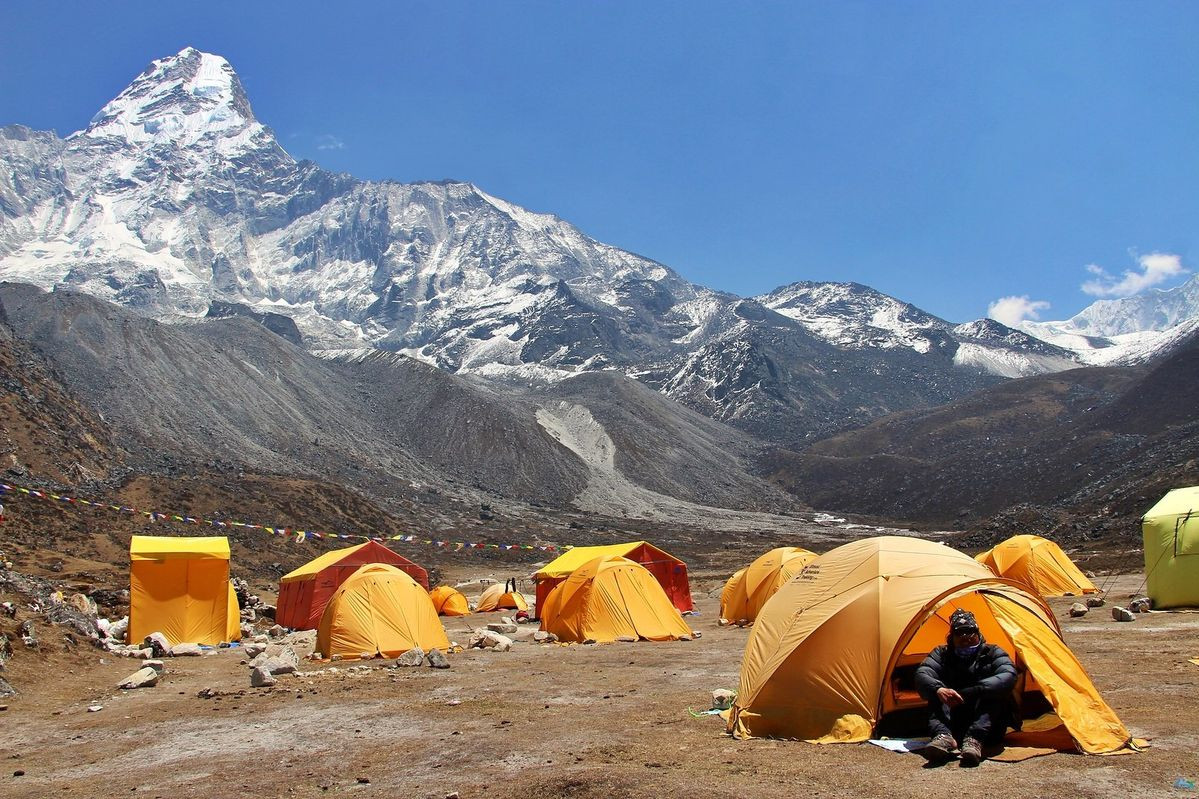
The best time for the Everest Base Camp trek is spring (March to May) and autumn (September to November). Both seasons produce the weather stability, trail accessibility, and mountain visibility that the 130 km Khumbu region route demands. Spring delivers rhododendron blooms, warming temperatures, and an active Everest expedition atmosphere from Lukla at 2,860 m to Base Camp at 5,364 m. Autumn delivers post-monsoon clarity, the sharpest Kala Patthar sunrise visibility of the year, and 8 to 10 consecutive cloud-free morning hours at altitude.
Weather, season, visibility, and monthly conditions each affect EBC trekking success differently. Temperature drops 6.5°C per 1,000 m of altitude gain, making Gorakshep at 5,140 m fundamentally colder than Namche Bazaar at 3,440 m regardless of season. Visibility at Kala Patthar at 5,545 m peaks between 5:30 AM and 9:00 AM in both peak windows and collapses under monsoon cloud cover from June to mid-September. Month-by-month conditions shift from extreme cold in January and February through optimal spring and autumn windows back to monsoon closure and winter onset between November and December.
The 4 seasons, 12 months, daily weather cycles, altitude-specific temperature ranges, and preference-based timing recommendations are covered in full below.
What Is the Best Time to Trek to Everest Base Camp?
The best time to trek Everest Base Camp is October for visibility and April for a balance of weather, trail conditions, and mountain scenery. Spring (March to May) and autumn (September to November) are the 2 peak trekking windows. Both seasons offer stable atmospheric pressure, low precipitation, and clear views of Mount Everest, Lhotse, Nuptse, and Ama Dablam.
Spring and autumn dominate EBC trekking for 3 measurable reasons:
-
Precipitation drops below 30 mm per month in both seasons, compared to 200 mm or more during monsoon months.
-
Visibility extends beyond 50 km on clear days, allowing unobstructed views from Kala Patthar at 5,545 m.
-
Temperature at Everest Base Camp (5,364 m) stays between minus 10°C and plus 5°C during the day, remaining survivable without extreme-cold gear.
The table below shows the 4-season comparison at a glance.
|
Season |
Months |
Avg. EBC Daytime Temp |
Visibility |
Trail Condition |
Crowd Level |
|
Spring |
March to May |
0°C to 5°C |
Good to Excellent |
Dry, clear |
High |
|
Monsoon |
June to August |
5°C to 10°C |
Poor |
Wet, slippery |
Very Low |
|
Autumn |
September to November |
minus 5°C to 5°C |
Excellent |
Dry, clear |
Peak |
|
Winter |
December to February |
minus 20°C to minus 5°C |
Good |
Snow-covered |
Very Low |
Autumn delivers the clearest skies. Spring delivers the most dramatic landscapes. Both windows work for first-time trekkers with proper acclimatization planning.
Why Is Spring (March to May) One of the Best Seasons for the EBC Trek?
Spring is one of the best seasons for Everest Base Camp because stable weather, warming temperatures, and rhododendron blooms from March through May create ideal trekking conditions below 4,000 m. Above 4,000 m at locations like Dingboche and Lobuche, temperatures rise enough to prevent the extreme cold of winter while still keeping trails firm and dry.
What Makes Each Spring Month Different?
March marks the opening of the spring trekking window. Temperatures at Namche Bazaar (3,440 m) average between minus 3°C and 8°C. Trails remain firm. Rhododendrons (Laliguras, the national flower of Nepal) begin blooming below 3,500 m, covering the forests between Phakding and Tengboche in red, pink, and white. Crowd levels are moderate, making March an excellent month for trekkers who prefer quieter teahouses.
April is the most popular single month for EBC trekking. Daytime temperatures at Namche Bazaar reach 10°C to 12°C. Wildflowers extend up to Tengboche Monastery at 3,867 m. Mountaineering expeditions targeting Everest and Lhotse operate from Base Camp, adding a unique atmosphere. Morning visibility from Kala Patthar is sharp, with clear sightlines to the South Col and Everest's summit pyramid.
May completes the spring window. Temperatures continue to rise, and afternoon cloud buildup increases compared to March and April. The pre-monsoon period brings occasional afternoon thunderstorms above 4,500 m. Early May (1st to 15th) retains strong visibility. Late May trekking requires flexible scheduling around afternoon weather windows.
What Are the 3 Key Advantages of Spring Trekking?
Spring trekking offers 3 advantages that autumn does not fully replicate:
-
Botanical scenery: Rhododendron and wildflower blooms are exclusive to spring and create visual contrast against snow-capped peaks.
-
Mountaineering atmosphere: Active summit expeditions on Everest run from April through late May, giving trekkers a rare view of high-altitude climbing operations at Base Camp.
-
Warming temperatures: Rising temperatures make high-altitude nights (above 4,500 m) more manageable for trekkers using standard 3-season sleeping bags.
What Are the 2 Limitations of Spring Trekking?
Spring has 2 measurable limitations compared to autumn:
-
Afternoon haze: Dust and humidity build in the lower Khumbu Valley by late April and May, occasionally reducing midday visibility from Kala Patthar.
-
Crowd concentration: April draws the highest single-month trekker numbers of any season, creating teahouse pressure at Namche Bazaar, Tengboche, and Dingboche.
Why Does Autumn (September to November) Offer the Clearest Conditions on the EBC Trek?
 Offer the Clearest Conditions on the EBC trek.png)
Autumn offers the clearest conditions because the monsoon season, which ends by mid-September, washes dust and haze from the atmosphere. Post-monsoon air in the Khumbu trekking region carries minimal particulate matter, producing visibility that regularly exceeds 60 km from Kala Patthar. This is why October is consistently ranked as the single best month for Everest Base Camp trekking by experienced guides and trekking organizations.
What Happens to Visibility After the Monsoon?
The monsoon (June to mid-September) saturates the atmosphere with moisture. When the monsoon retreats, the Himalayan atmosphere clears rapidly. By late September, the skies over the Khumbu region achieve optical clarity that spring cannot match due to a lower pre-existing dust load. Peaks including Ama Dablam, Makalu, Cho Oyu, and Pumori appear with sharper definition from trail viewpoints during October and November than in any spring month.
What Makes Each Autumn Month Different?
September (second half) is the transition month. The monsoon retreats from the Everest region between September 10th and 20th. Trails begin drying from lower elevations upward. Lush green vegetation covers the landscape after months of monsoon rain. Visibility improves daily through late September, and trekker numbers are still below October's peak.
October delivers peak trekking conditions. Daytime temperatures at Everest Base Camp average between minus 5°C and 2°C. Skies are cloud-free for 8 to 10 hours per day. Teahouses are fully operational throughout the route. The Dashain and Tihar festivals occur in October, offering cultural engagement at villages along the trail. This month carries the highest trail traffic of the year.
November extends clear conditions with falling temperatures. Early November (1st to 15th) retains October-quality visibility. Temperatures at Gorakshep drop to minus 15°C at night by late November. Crowd levels fall sharply after the first week of November, making mid-to-late November an attractive option for trekkers prioritizing solitude with acceptable weather.
What Are the 3 Core Advantages of Autumn Trekking?
Autumn trekking delivers 3 advantages that spring cannot fully match:
-
Post-monsoon clarity: The cleanest atmosphere of the trekking year produces the sharpest mountain photography conditions.
-
Cultural immersion: Dashain, Tihar, and the Mani Rimdu Festival at Tengboche Monastery align with October and November, providing Sherpa cultural experiences unavailable in spring.
-
Stable daily weather patterns: Autumn weather windows are longer and more predictable than spring, with clear mornings extending 2 to 3 hours longer before cloud buildup begins.
Which Season Has the Best Visibility on the Everest Base Camp Trek?
Autumn has the best visibility on the Everest Base Camp trek, with October delivering the clearest conditions of the entire year. Post-monsoon air clarity allows unobstructed views of Mount Everest's summit at 8,849 m from Kala Patthar at 5,545 m, a direct vertical sightline of over 3,300 m across clear air.
How Do Cloud Formation Mechanisms Affect Visibility?
Visibility in the Khumbu region is controlled by 3 atmospheric mechanisms:
-
Dust loading: Spring carries higher dust from wind patterns crossing the Indian subcontinent. Autumn air is dust-cleared by monsoon rainfall.
-
Humidity: Higher humidity in spring and monsoon months scatters light and reduces contrast. Autumn humidity is at its annual minimum.
-
Cloud formation: Both seasons produce morning clarity and afternoon clouds. Autumn clouds form 1 to 2 hours later in the day than spring clouds, extending the visibility window.
When Is Visibility Highest During the Day?
Across all seasons, visibility peaks between 5:30 AM and 9:00 AM. This applies from Namche Bazaar at 3,440 m to Kala Patthar at 5,545 m. Clouds begin forming at lower elevations (2,800 m to 3,500 m) by 10:00 AM to 11:00 AM and at higher elevations by 1:00 PM to 2:00 PM.
Trekkers targeting summit photography from Kala Patthar plan their summit ascent before 7:00 AM. This timing applies in both spring and autumn. In winter, low-humidity air produces the technically clearest skies, but extreme cold and high wind make extended outdoor exposure at 5,545 m hazardous.
What Are the Temperature and Weather Conditions Across the EBC Route?
Temperature on the Everest Base Camp route drops by approximately 6.5°C for every 1,000 m of altitude gain. The route climbs from Lukla to Everest Base Camp, a vertical gain of 2,504 m, producing a theoretical temperature differential of 16°C between the lowest and highest points under standard atmospheric conditions.
The table below shows representative daytime temperatures at 5 key points along the route across 4 seasons.
|
Location |
Altitude |
Spring Daytime |
Autumn Daytime |
Winter Daytime |
Monsoon Daytime |
|
Lukla |
2,860 m |
8°C to 14°C |
6°C to 12°C |
0°C to 5°C |
12°C to 18°C |
|
Namche Bazaar |
3,440 m |
5°C to 12°C |
3°C to 10°C |
minus 5°C to 2°C |
8°C to 14°C |
|
Tengboche |
3,867 m |
2°C to 8°C |
0°C to 6°C |
minus 10°C to 0°C |
5°C to 10°C |
|
Dingboche |
4,410 m |
0°C to 5°C |
minus 2°C to 4°C |
minus 14°C to minus 3°C |
2°C to 8°C |
|
Gorakshep / EBC |
5,140 to 5,364 m |
minus 5°C to 2°C |
minus 8°C to 0°C |
minus 20°C to minus 8°C |
minus 2°C to 5°C |
Night temperatures drop 8°C to 15°C below daytime readings at every elevation. A trekker experiencing 2°C at Dingboche during the day prepares for minus 10°C to minus 13°C overnight in autumn. Proper sleeping bag rating (minimum minus 15°C comfort rating above 4,000 m) is a safety requirement in both peak seasons.
How Does Weather Change with Altitude on the Everest Base Camp Trek?
Weather becomes more severe, more variable, and colder with every 500 m of altitude gain above Namche Bazaar at 3,440 m. Wind speed increases measurably above Dingboche at 4,410 m due to reduced terrain shielding and proximity to the Khumbu Glacier's valley system.
What Are the 3 Key Altitude Thresholds?
The EBC route divides into 3 distinct weather zones:
Zone 1 (Lukla to Namche Bazaar, 2,860 m to 3,440 m): Sheltered valleys moderate wind exposure. Temperature fluctuations follow predictable diurnal cycles. Precipitation falls as rain in spring and monsoon, and as light snow in winter.
Zone 2 (Namche Bazaar to Lobuche, 3,440 m to 4,940 m): Wind exposure increases above Tengboche. Temperatures drop consistently with altitude. Snowfall is possible from October onward above 4,000 m. Oxygen availability at 4,940 m is approximately 55% of sea-level concentration, requiring a minimum 2-day acclimatization stop at Dingboche.
Zone 3 (Lobuche to Gorakshep and EBC, 4,940 m to 5,364 m): Exposed ridge terrain produces wind chill factors 8°C to 12°C below ambient temperature. Conditions at Kala Patthar (5,545 m) include sustained winds of 30 km/h to 60 km/h in spring and autumn. Above this elevation, weather becomes expedition-grade and requires full mountaineering protocols.
What Are the Winter Months Like for EBC Trekking? (December, January, February)
Winter months on the Everest Base Camp route run from December through February. All 3 months share 3 common conditions: night temperatures below minus 15°C above 4,000 m, snow-covered trails above that elevation, and reduced teahouse services above Dingboche. Each month has a distinct position within the winter window.
December
December marks winter onset on the EBC route. Temperatures at Everest Base Camp drop to minus 20°C or below at night. Snow accumulates above 4,000 m from early December onward. Teahouses between Lobuche and Gorakshep reduce operating hours and menu options. Trekker numbers are minimal. Suitable for experienced high-altitude trekkers with full 4-season gear.
January
January is the coldest single month on the EBC route. Night temperatures at EBC reach minus 25°C to minus 30°C. Trails above 4,500 m are fully snow-covered. Lukla flights face cold-weather fog cancellations on an unpredictable schedule. Trekker traffic drops to its annual minimum. Suitable only for experienced cold-weather trekkers with full winter camping gear and prior acclimatization above 5,000 m.
February
February remains cold but shows measurable improvement over January. Daytime temperatures at Namche Bazaar rise to minus 1°C to 5°C. Snow cover persists above 4,000 m. Teahouses maintain reduced hours with limited menu options. Late February marks the beginning of spring preparation across the Khumbu region, with a small number of early-season trekkers arriving by the final week.
What Are the Spring Months Like for EBC Trekking? (March, April, May)
Spring months from March through May form the first peak trekking window of the year. All 3 months share stable daytime temperatures, dry trail surfaces, and clear morning visibility from Lukla to Base Camp. Conditions improve from March through April and deteriorate again in late May as pre-monsoon instability enters the Khumbu region.
March
March opens the spring trekking season. Rhododendron blooms begin below 3,000 m on the trail sections between Phakding and Tengboche. Temperatures warm steadily through the month. Trail conditions are dry and firm from Lukla to Lobuche. Crowd levels are moderate compared to April, making March the best spring month for trekkers who prioritize quieter teahouses and uncrowded viewpoints.
April
April is the peak spring month and the second most popular single month of the year after October. Temperature at Namche Bazaar reaches 10°C to 12°C during the day. Wildflower blooms extend up to Tengboche Monastery at 3,867 m. Mountaineering expedition activity on Everest and Lhotse is at maximum, creating a unique Base Camp atmosphere. Teahouses fill to capacity on peak dates. Book accommodation 6 to 8 weeks in advance for April travel.
May
May covers the late spring window with 2 distinct halves. Early May (1st to 15th) retains April-quality trail conditions and visibility. Afternoon clouds build earlier in the day than in April, reducing the summit photography window at Kala Patthar. Pre-monsoon instability enters the Khumbu region after May 20th, bringing afternoon thunderstorms above 4,500 m. Trek completion by May 20th is the recommended deadline for spring EBC trekking.
What Are the Monsoon Months Like for EBC Trekking? (June, July, August)
Monsoon months from June through August produce the most difficult trekking conditions of the year on the EBC route. All 3 months share continuous cloud cover above 3,000 m, wet and slippery trail surfaces, and near-zero mountain visibility at Kala Patthar and Everest Base Camp. Trekking during monsoon is not recommended for the large majority of visitors.
June
June marks monsoon onset in the Khumbu region. Rainfall reaches 100 mm to 200 mm per month at lower elevations. Cloud cover becomes continuous above 3,000 m by mid-June. Trail surfaces from Lukla through the lower Khumbu valley accumulate surface runoff. Leech activity appears on vegetation at trail level below 2,500 m. Not recommended for EBC trekking.
July
July is the monsoon peak month and the worst single month for EBC trekking. Monthly precipitation is at its annual maximum across the Khumbu region. Lukla flights face repeated multi-day cancellations. Visibility at Kala Patthar drops to near zero on most days. Landslide risk increases on lower trail sections between Lukla and Namche Bazaar. Not recommended.
August
August continues monsoon peak conditions with one measurable shift: early withdrawal signals appear in the final week of the month, with occasional clear mornings at lower elevations. Trekking conditions otherwise mirror July through mid-August. The monsoon retreat from the Khumbu region typically begins between September 10th and 20th, making late August still an unreliable and difficult trekking window.
What Are the Autumn Months Like for EBC Trekking? (September, October, November)
Autumn months from mid-September through November form the primary peak trekking window of the year. Post-monsoon air clarity, stable high-pressure weather systems, and full teahouse operation across the Khumbu route make this the most reliable 3-month trekking period of the year. Conditions peak in October and decline in late November as winter approaches.
September (Second Half)
The second half of September is an underrated trekking window on the EBC route. The monsoon retreats from the Khumbu region between September 10th and 20th. Trails dry rapidly from lower elevations upward. Green post-monsoon vegetation covers the landscape from Phakding to Tengboche. Crowd levels remain low compared to October. Visibility improves daily through late September, reaching October-level clarity by the final week.
October
October is the best single month of the year for Everest Base Camp trekking. Daytime temperatures at EBC average minus 5°C to 2°C. Skies are cloud-free for 8 to 10 hours per day. Teahouses operate at full capacity across the complete route. Dashain, Tihar, and the Mani Rimdu Festival at Tengboche Monastery all fall within this month, providing Sherpa cultural engagement alongside peak mountain visibility. Plan and book accommodation 3 to 4 months in advance for October travel.
November
November divides into 2 distinct halves with different trekking profiles. The first 2 weeks of November match October in atmospheric clarity, with continued sharp visibility from Kala Patthar and stable trail conditions. Temperatures drop sharply after November 15th, with night temperatures at Gorakshep reaching minus 15°C or below. Late November requires winter sleeping bags rated to minus 15°C above 4,000 m. A strong option for trekkers who miss the October peak and accept colder overnight conditions.
What Are the Differences Between Early and Late Season Trekking on the EBC?
Early season trekking (March and September second half) offers lower crowds and improving conditions. Late season trekking (May and November) offers the highest risk-to-reward tradeoff due to deteriorating weather at opposite ends of each window.
Early vs Late Spring
|
Timing |
Temperature at EBC |
Visibility |
Trail Condition |
Crowd Level |
|
Early Spring (March) |
minus 8°C to 0°C |
Good |
Firm, dry |
Low to moderate |
|
Late Spring (May 1–15) |
minus 3°C to 5°C |
Good to Moderate |
Dry with afternoon clouds |
Moderate |
|
Late Spring (May 15–31) |
0°C to 7°C |
Moderate, afternoon haze |
Variable |
Declining |
Early vs Late Autumn
|
Timing |
Temperature at EBC |
Visibility |
Trail Condition |
Crowd Level |
|
Early Autumn (Sept 15–30) |
minus 3°C to 4°C |
Improving, excellent |
Drying rapidly |
Low |
|
Peak Autumn (October) |
minus 5°C to 2°C |
Excellent |
Dry, firm |
High |
|
Late Autumn (Nov 1–15) |
minus 8°C to 0°C |
Excellent |
Dry, cold |
Moderate |
|
Late Autumn (Nov 15–30) |
minus 15°C to minus 5°C |
Excellent |
Snow risk above 4,000 m |
Low |
The clearest visibility occurs in late autumn (October to mid-November). The warmest conditions occur in late spring (May). The best balance of temperature, visibility, and crowd management falls in early spring (March to April) and early-to-mid autumn (late September to early November).
What Are the Daily Weather Patterns in the Everest Region?
The Everest region follows a consistent daily weather cycle in both peak seasons: clear mornings from 5:00 AM to 9:00 AM, building clouds from 10:00 AM to 2:00 PM, and cloud clearance by evening in 60% to 70% of autumn days.
How Does the Daily Cloud Formation Cycle Work?
Solar heating of valley floors begins after sunrise at approximately 6:00 AM to 6:30 AM. Warmed air rises and cools at altitude, condensing into cumulus clouds along the Khumbu valley walls by mid-morning. These clouds reach ridge-level elevations (5,000 m to 5,500 m) by 1:00 PM to 3:00 PM in spring, and by 2:00 PM to 4:00 PM in autumn.
This daily pattern produces a 4-hour to 6-hour morning clarity window that trekkers use for mountain photography and high-altitude summit approaches. The Kala Patthar sunrise ascent, departing Gorakshep at 4:30 AM to 5:00 AM, is timed specifically to reach the 5,545 m summit during peak clarity before cloud buildup begins.
Afternoon treks from 12:00 PM onward frequently proceed through cloud without mountain views. This does not affect trail navigation but eliminates peak photography opportunities.
What Are the Conditions for Winter Trekking (December to February) on the EBC Trek?
Winter trekking on the Everest Base Camp route is possible but carries 4 measurable hazards: extreme cold, trail snow cover above 4,000 m, reduced teahouse availability, and increased Lukla flight cancellations due to cold-weather fog.
Temperatures at Everest Base Camp drop to minus 20°C to minus 30°C at night during January and February. Wind chill values at Kala Patthar reach minus 35°C to minus 40°C during jet stream events. Proper winter mountaineering gear, including 4-season sleeping bags, insulated boots rated to minus 40°C, and layered down insulation, is non-negotiable above 4,000 m.
What Are the 3 Reasons Some Trekkers Choose Winter?
Despite the hazards, winter EBC trekking offers 3 distinct advantages:
-
Clarity: Low humidity and minimal dust produce technically sharp visibility on clear days.
-
Solitude: Trekker numbers drop by 90% compared to October, creating a trail experience that is essentially private.
-
Cost: Teahouse prices fall significantly during winter. Permit costs remain fixed, but overall trip costs are 20% to 30% lower than peak-season equivalents.
Winter trekking suits experienced high-altitude trekkers with cold-weather gear, flexible schedules, and prior acclimatization experience above 5,000 m.
What Are the Conditions for Monsoon Season (June to August) on the EBC Trek?
Monsoon trekking on the EBC route is not recommended for 4 reasons: continuous cloud cover eliminates mountain views, wet trails increase slip and injury risk, landslides block sections of lower-elevation trail, and Lukla flights face sustained cancellation periods.
The monsoon reaches the Khumbu region by early June and remains until mid-September. Monthly rainfall at Namche Bazaar reaches 120 mm to 180 mm during July and August. Trails between Lukla and Phakding accumulate surface runoff, and rock sections become slippery. Leeches appear on vegetation at trail level below 2,500 m.
Who Treks During Monsoon?
A small number of experienced trekkers choose monsoon EBC for 3 specific reasons:
-
Botanical diversity: Post-rainfall vegetation at lower elevations (below 3,500 m) reaches maximum density and color.
-
No crowds: The trail is essentially deserted, providing complete solitude.
-
Budget travel: Teahouse prices are at their annual minimum.
Monsoon trekkers accept zero mountain visibility as a given and focus on the cultural and wilderness experience rather than peak views.
How Does Weather Affect Trekking Conditions and Schedule Reliability on the EBC Trek?
Weather variability on the EBC route affects 3 elements of schedule reliability: daily departure timing, acclimatization rest-day flexibility, and Lukla flight operations.
How Do Weather Delays Affect the EBC Itinerary?
A standard EBC itinerary runs 12 to 14 days. Weather-related delays add 1 to 3 days in peak season and 3 to 7 days in transitional months (March, May, September, November). The most common delay point is Lukla Airport, where morning fog and afternoon wind cause flight cancellations that cascade into teahouse schedule compression.
Trekkers with fixed return flights build a minimum 2-day buffer at the end of their EBC itinerary to absorb Lukla flight delays. Helicopter evacuation from Lukla, Namche Bazaar, or Pheriche serves as a backup transport option when multiple-day flight delays occur, at a cost of USD 500 to USD 1,500 depending on pickup location and conditions.
When Are Trekking Conditions Most Stable?
The 6 most weather-stable trekking weeks of the year fall between October 1st and November 15th. During this period, stable high-pressure systems dominate the Khumbu region for stretches of 5 to 10 consecutive clear days, allowing reliable scheduling of acclimatization days, summit pushes to Kala Patthar, and Base Camp arrival.
Spring stability windows are shorter, averaging 3 to 7 consecutive clear days before afternoon cloud interruptions.
Which Time Is Best for Everest Base Camp Based on Trekking Preference?
The best time for EBC trekking varies by preference across 4 specific priorities: clarity, scenery, solitude, and cost.
The table below matches trekking preference to optimal timing.
|
Priority |
Best Time |
Reason |
|
Clearest mountain views |
October 1 to November 10 |
Post-monsoon atmosphere, maximum visibility |
|
Best photography |
October, early November |
Sharpest light quality, clear sightlines |
|
Spring wildflowers and rhododendrons |
Late March to mid-April |
Peak Laliguras bloom between 2,500 m and 3,500 m |
|
Fewest crowds |
Late November, February, September (first half) |
Off-peak or transition windows |
|
Cultural events (Dashain, Tihar, Mani Rimdu) |
October |
All 3 events fall within this single month |
|
Lowest cost |
January, February, June |
Off-season teahouse pricing |
|
Best first-time trekker conditions |
April, October |
Warm enough, clear enough, fully operational infrastructure |
First-time EBC trekkers consistently perform best in April and October. Experienced trekkers with specific goals (solitude, winter challenge, botanical diversity) choose alternative windows with full awareness of the tradeoffs.
When Should You Avoid Trekking to Everest Base Camp?
Avoid Everest Base Camp trekking during 3 specific periods: peak monsoon (July to August), deep winter (January), and late May after the 20th.
The 3 Highest-Risk Trekking Periods
July and August carry the highest combined risk profile of any trekking months. Continuous rainfall, cloud cover, slippery trails, landslide risk on lower-elevation sections, and near-zero mountain visibility make these 2 months unsuitable for EBC trekking for the large majority of trekkers.
January produces the coldest conditions of the year. Night temperatures at EBC reach minus 25°C to minus 30°C. Trail icing above 4,000 m creates fall hazards. Teahouse availability above Dingboche is limited. Trekkers without prior experience above 5,000 m in winter conditions face serious cold-weather injury risk.
Late May (after May 20th) marks the pre-monsoon instability window. Afternoon thunderstorms arrive above 4,500 m with increasing frequency. Electrical storm activity near Khumbu Glacier poses a specific risk above 5,000 m. Visibility at Base Camp drops to near zero on storm afternoons.
What Are the 4 Warning Signs of a High-Risk Weather Window?
Trekkers monitor 4 real-time signals when weather windows are uncertain:
-
Rapid pressure drops of more than 4 hPa in 24 hours (measured by altimeter watch or teahouse barometer)
-
Cloud formations building before 9:00 AM (indicates unstable atmosphere)
-
Wind direction shifting from west-northwest to south (pre-monsoon or cyclone disturbance signal)
-
Back-to-back cloudy mornings at Namche Bazaar (indicates sustained atmospheric instability)
Himalayan weather forecasting services, including mountain-specific forecast providers used by Everest expedition teams, provide 7-day and 10-day forecast windows accessible to trekkers from Kathmandu or Lukla.
Summary: Best Time for Everest Base Camp Trek
The Everest Base Camp trek performs best across 2 primary windows: spring from March to May and autumn from September to November. Within these windows, April and October deliver the highest success rates for summit visibility at Kala Patthar, trail safety, and teahouse availability across the full Khumbu region route from Lukla to Gorakshep.
Trekkers who prioritize mountain photography choose October. Trekkers who prioritize botanical scenery and mountaineering atmosphere choose April. Trekkers who prioritize solitude target late March, early September, or the first 2 weeks of November.
Winter (December to February) and monsoon (June to August) remain viable only for experienced trekkers who accept the specific hazards of each off-season window.
Acclimatization planning, licensed guide support, oximeter monitoring above 4,000 m, and a 2-day Lukla flight buffer are 4 non-negotiable safety requirements regardless of which season you choose.
More About Author

Khilak Budhathoki
Travel Director
Khilak Budhathoki is the co-founder and lead trekking guide at Himalaya Trekking Nepal, a locally owned and operated adventure company based in Kathmandu. Born and raised in the foothills of Nepal, Khilak developed a deep love for the mountains from an early age. With over a deca...

USD$1,600 pp
Our Recommendation
Related Blogs