- 27, Nov 2025 | Khilak Budhathoki
The Langtang Trek is a moderate Himalayan trek in Nepal that combines sustained daily walking, significant altitude gain, changing mountain terrain, and variable weather rather than technical climbing. The main route reaches 3,870 meters at Kyanjin Gompa, while optional climbs to Kyanjin Ri at 4,773 meters and Tserko Ri at 5,033 meters increase the physical and altitude demands. Most trekkers walk for 5–7 hours a day across forest trails, stone steps, suspension bridges, rocky moraine, and alpine terrain, covering roughly 65–80 kilometers over a 7–10-day itinerary. Compared with Nepal's classic Everest Base Camp and Annapurna Base Camp treks, Langtang offers a shorter and more flexible route while still requiring proper preparation for high-altitude conditions.
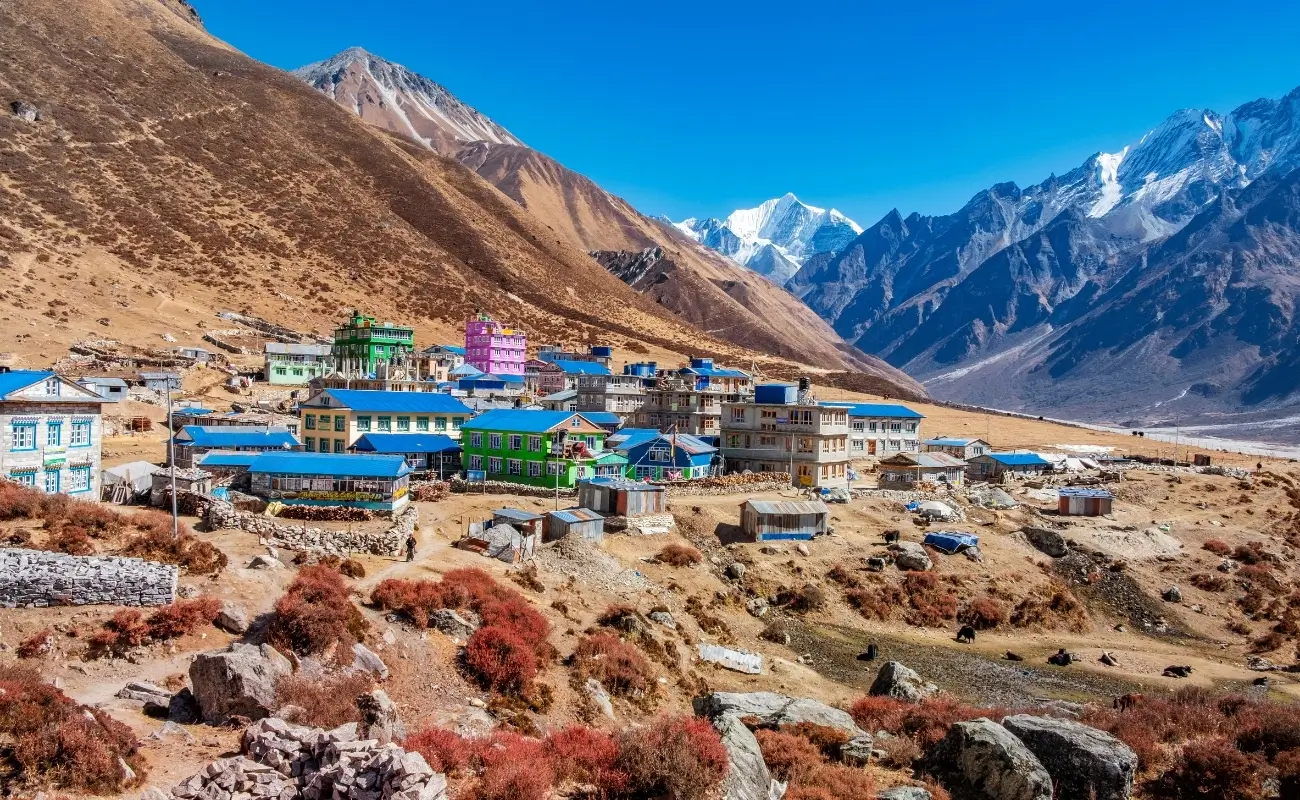
Langtang Trek difficulty depends less on technical ability than on how well a trekker manages altitude, consecutive trekking days, steep ascents and descents, trail conditions, and seasonal weather. The route is accessible to prepared beginners, but the rapid rise from 1,470 meters at Syabrubesi to 3,870 meters at Kyanjin Gompa makes acclimatization, pacing, hydration, and physical endurance essential. Spring and autumn generally provide more favorable trekking conditions, while monsoon rain and winter snow can make the trail substantially more demanding. Understanding these factors helps trekkers choose an appropriate itinerary, prepare their fitness and gear, and decide whether the standard route or a slower schedule with additional acclimatization is the better fit.
What Makes the Langtang Trek Difficult?
Four factors drive Langtang Trek difficulty: altitude gain above 3,000 meters, long daily walking hours, uneven high-mountain trail surfaces, and unpredictable mountain weather. None of these factors requires technical climbing skill or rope work. The trek stays on marked trails the entire way, which keeps it accessible to trekkers with solid general fitness and no prior Himalayan experience.
What separates Langtang from an easy hill walk is cumulative altitude exposure. Trekkers gain roughly 2,400 meters between Syabrubesi, the roadhead at 1,470 meters, and Kyanjin Gompa at 3,870 meters, over just four trekking days. That rate of ascent sits close to the safe acclimatization limit recommended by wilderness medicine guidelines, which is why pacing and hydration matter more on this route than raw leg strength.
A second, less-discussed factor is trail exposure to landslide-prone sections near the Langtang River gorge. Guides route around unstable ground after heavy rain, and this local knowledge measurably reduces risk that a solo trekker following a GPS track would not detect.
How Long and Challenging Is the Langtang Trek?
Most itineraries run 7 to 10 days round trip from Kathmandu, including 5 to 6 walking days, one acclimatization day, and 2 travel days by road. Daily walking time ranges from 4 hours on shorter stages to 7 hours on the Syabrubesi-to-Lama Hotel and Lama Hotel-to-Langtang Village stages, the two most demanding days on the standard route.
The following table compares Langtang against Nepal's two other classic teahouse treks, since trekking agencies field this comparison question constantly.
|
Trek |
Max Altitude |
Distance |
Typical Duration |
Difficulty |
|
Langtang Valley Trek |
5,033 m (Tserko Ri) |
65–80 km |
7–10 days |
Moderate |
|
Annapurna Base Camp |
4,130 m |
60–115 km |
7–12 days |
Moderate |
|
Everest Base Camp |
5,364 m (5,545 m at Kalapatthar) |
130 km |
12–14 days |
Moderate to Strenuous |
Langtang matches Annapurna Base Camp in physical demand but requires less total trekking time than Everest Base Camp, and it avoids the flight-dependent Lukla approach that adds logistical risk to the Everest route.
What Is the Maximum Altitude on the Langtang Trek?
The standard Langtang Trek reaches 3,870 meters at Kyanjin Gompa, while the optional Tserko Ri side hike pushes the maximum altitude to 5,033 meters. Kyanjin Ri, a shorter alternative viewpoint above Kyanjin Gompa, tops out at 4,773 meters. Trekkers who skip both side hikes and turn around at Kyanjin Gompa complete the entire trip below 4,000 meters, which meaningfully lowers altitude-related risk.
This flexibility is unusual among major Nepal treks. Everest Base Camp forces every trekker above 5,000 meters; Langtang lets trekking agencies scale the altitude challenge to the client's acclimatization profile.
How Does Altitude Affect Langtang Trek Difficulty?
Altitude above 3,000 meters reduces available oxygen by roughly 30%, which slows pace, increases breathing rate, and raises the risk of Acute Mountain Sickness (AMS) regardless of a trekker's fitness level. AMS is the body's response to rapid ascent into low-oxygen environments, marked by headache, nausea, fatigue, and disrupted sleep. It is diagnosed using the Lake Louise Score, the standard clinical scoring tool used across Himalayan trekking regions.
Fitness does not prevent AMS. Marathon runners and first-time trekkers face comparable AMS risk at the same ascent rate, because the condition stems from acclimatization speed rather than cardiovascular capacity. The Langtang route's built-in rest day at Kyanjin Gompa gives the body time to produce additional red blood cells and adjust breathing patterns before any further ascent, the single most effective non-pharmaceutical AMS prevention strategy available.
How Difficult Are the Trails on the Langtang Trek?
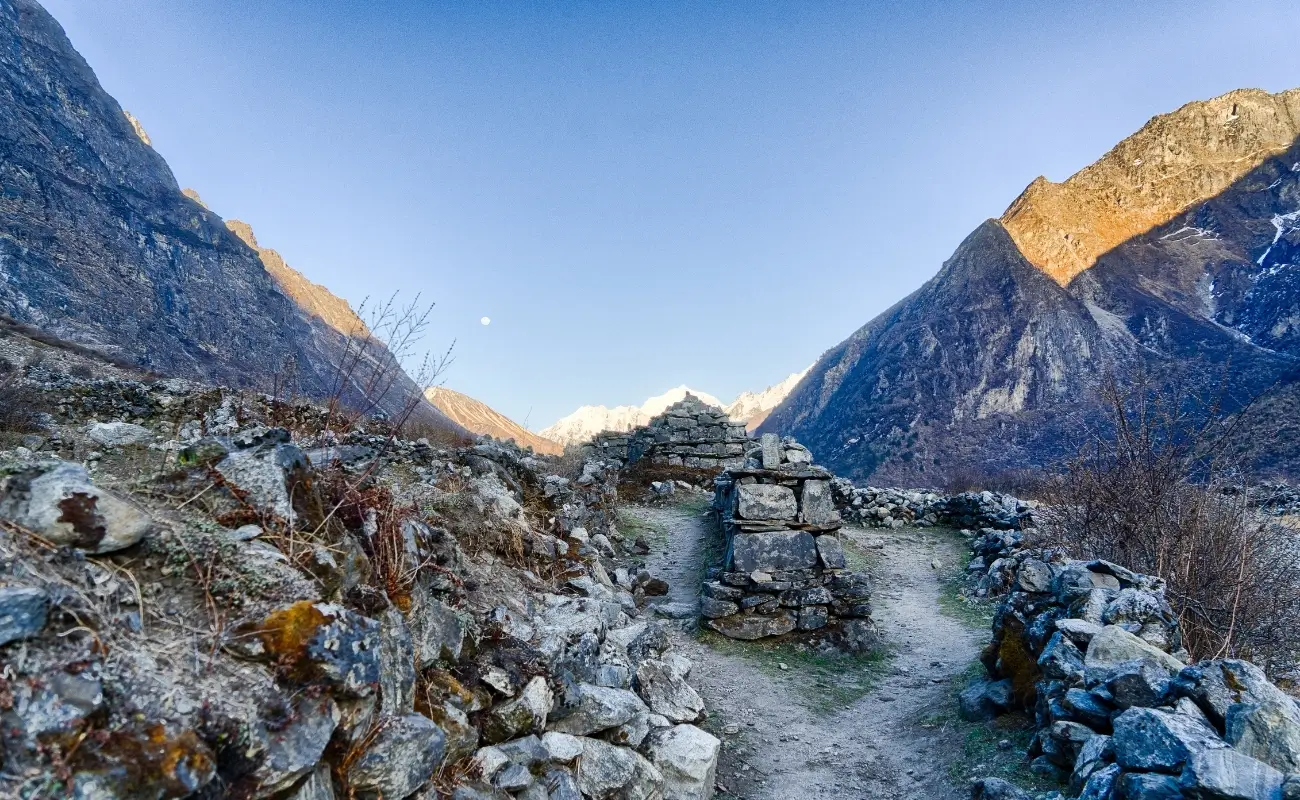
Langtang trails alternate between forested river paths, stone-stepped village routes, and rocky glacial moraine, with no technical climbing or exposed scrambling required. Trail difficulty concentrates in three zones: the Syabrubesi–Lama Hotel forest ascent, the Langtang Village–Kyanjin Gompa moraine crossing near the 2015 landslide zone, and the optional Tserko Ri summit push.
What Kind of Terrain Can You Expect on the Langtang Trek?
Lower sections pass through subtropical and temperate forest dense with rhododendron, oak, and bamboo, home to red panda and Himalayan tahr habitat inside Langtang National Park. Above Lama Hotel, the forest thins into pine and juniper before opening onto the glacial valley floor near Langtang Village. From Kyanjin Gompa upward, terrain shifts to open alpine grassland, loose scree, and moraine deposited by the Langtang Lirung glacier system.
Trail surfaces include packed dirt, stone staircases built into village hillsides, suspension bridges over the Langtang Khola, and, above 4,000 meters, loose rock that demands careful foot placement. None of this terrain requires crampons or ropes outside of winter snow conditions.
How Steep Are the Ascents and Descents of Langtang Trek?
The steepest single-day ascent gains approximately 900 to 1,100 meters over 10 to 11 kilometers, on the Lama Hotel-to-Langtang Village stage. This gradient, roughly 8 to 10 degrees average, with short sections closer to 20 degrees, puts sustained load on the quadriceps and calves for 5 to 7 hours. Descents follow the same grade in reverse on the return leg, which shifts strain to the knees rather than the lungs.
Trekking poles reduce knee-joint impact by an estimated 20% on steep descents, according to biomechanics research on trekking pole use, making them a near-essential piece of equipment for this route rather than an optional accessory.
How Difficult Is the Kyanjin Gompa Day Hike?
The Kyanjin Ri day hike from Kyanjin Gompa gains 900 meters over roughly 4 kilometers one way, taking 3 to 4 hours up and 2 hours down, a hard half-day effort rather than a rest-day stroll. Trekkers already acclimatizing at 3,870 meters attempt this climb on reduced oxygen, which makes it feel disproportionately harder than the distance suggests.
The Tserko Ri alternative extends the same hike to 5 to 6 hours ascending and 3 to 4 hours descending, reaching 5,033 meters. Wind speed on both summits increases sharply after mid-morning, so guides schedule departure before 6 a.m. to summit and descend before afternoon cloud buildup reduces visibility. Trekkers who treat this as a scenic wander rather than a genuine climb consistently underestimate turnaround time and end up descending in fading light.
How Fit Do You Need to Be for the Langtang Trek?
Langtang requires the fitness to walk 5 to 7 hours daily on hilly terrain for six consecutive days while carrying a 5- to 8-kilogram daypack. This is a cardiovascular and muscular endurance demand, not a strength or technical skill demand. Trekkers who can comfortably hike 15 kilometers with 800 meters of elevation gain in training meet the baseline requirement for Langtang.
Can Beginners Complete the Langtang Trek?
Yes, Langtang is one of the three most beginner-accessible teahouse treks in Nepal, alongside Poon Hill and Ghorepani. Beginners succeed on this route more often than on Everest Base Camp or the Annapurna Circuit because the daily distances are shorter, teahouses appear more frequently, and the option to skip Tserko Ri caps altitude exposure below 4,000 meters.
The most common mistake first-time trekkers make is confusing "beginner-friendly" with "easy." Beginners without hiking experience benefit from starting a structured walking routine at least eight weeks before departure rather than relying on general daily activity levels.
How Much Training Is Recommended Before Langtang Trek?
Six to eight weeks of progressive cardiovascular training, including three to four sessions per week combining hill walking, stair climbing, and load-bearing hikes, prepares most trekkers for Langtang's demands. A practical training block looks like this:
-
Weeks 1–2: Build a base with 30- to 45-minute brisk walks or jogs, four times weekly
-
Weeks 3–4: Add weighted hikes of 8 to 10 kilometers with a 5-kilogram pack on hilly terrain
-
Weeks 5–6: Increase to 12- to 15-kilometer hikes with 800 to 1,000 meters of elevation gain
-
Weeks 7–8: Taper volume while maintaining intensity, adding two rest days before departure
Squats, lunges, and step-ups strengthen the quadriceps and glutes that absorb descent impact, while core work improves stability on uneven moraine sections. Trekkers arriving without any preparation still complete the trek in most cases, but they experience more muscle soreness and slower recovery between trekking days.
Can Children or Older Trekkers Complete Langtang Trek?
Children as young as 10 and adults into their 70s complete the Langtang Trek regularly, provided both groups build in extra acclimatization time and shorter daily distances. Age itself does not predict altitude tolerance, individual physiology, hydration, and ascent rate matter far more than the number on a birth certificate.
For children, the primary limiting factor is sustained walking endurance rather than altitude risk, since most pediatric trekkers handle moderate altitude well when ascent is gradual. For older trekkers, cardiovascular health screening before departure and a slower daily pace reduce risk more effectively than fitness level alone. Both groups benefit from adding one extra night at Langtang Village before continuing to Kyanjin Gompa, converting the standard 7-day itinerary into a gentler 9-day version.
How Does Weather Affect Langtang Trek Difficulty?
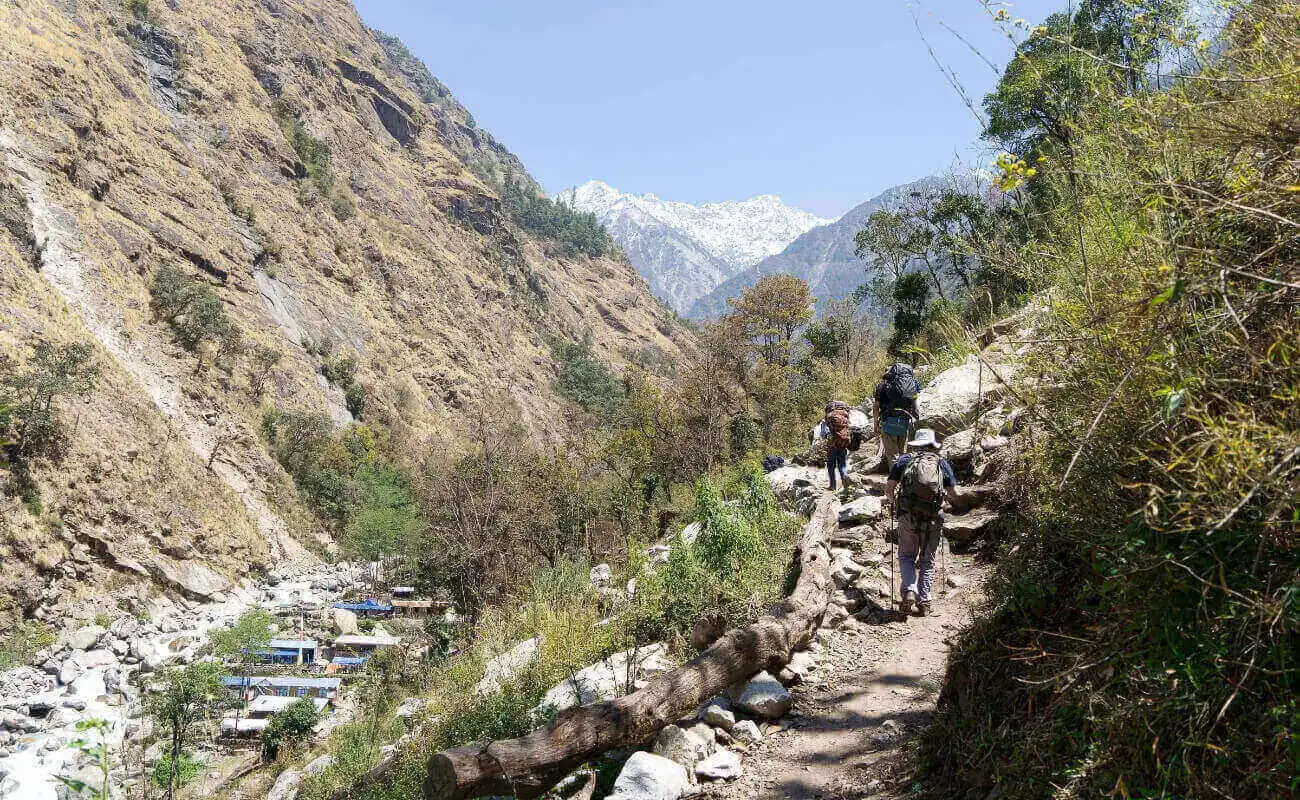
Weather shifts Langtang Trek difficulty more than any other single variable, with autumn offering the easiest conditions and monsoon the hardest. Temperature swings of 20°C between midday sun and pre-dawn cold at Kyanjin Gompa are normal, and trail conditions change from dry and dusty to muddy and landslide-prone across the four trekking seasons. Trekkers weighing exact departure dates can review a month-by-month guide to the best time to trek Langtang.
How Difficult Is Langtang Trek in Spring?
Spring (March to May) delivers moderate difficulty with warming temperatures, blooming rhododendron forests, and increasing afternoon haze that can obscure mountain views by late morning. Trail conditions stay firm and dry through most of the season. Late May brings the first pre-monsoon showers, which soften trail surfaces on the lower forest sections without yet triggering landslide risk.
How Difficult Is Langtang Trek During Monsoon?
Monsoon season (June to August) raises Langtang Trek difficulty substantially through slippery trails, leech-infested lower forests, obscured mountain views, and active landslide risk along the Langtang River gorge. Most trekking agencies actively discourage monsoon departures for this reason rather than simply noting reduced visibility.
Rainfall averages exceed 300 millimeters monthly in the lower valley during peak monsoon weeks, turning packed-dirt trail sections into mud and increasing the chance of trail closures after heavy storms. Trekkers who proceed anyway need gaiters, leech socks, and a flexible itinerary that allows for weather-driven delays.
How Difficult Is Langtang Trek in Autumn?
Autumn (September to November) offers the lowest overall difficulty, with stable high-pressure weather systems, clear mountain visibility, dry trails, and comfortable daytime trekking temperatures between 10°C and 20°C. This is peak season for a reason grounded in measurable conditions, not just tradition, visibility on Tserko Ri and Kyanjin Ri regularly exceeds 50 kilometers on clear autumn mornings.
The trade-off is teahouse capacity. Popular lodges in Kyanjin Gompa fill quickly during October and early November, so trekking agencies book accommodation in advance rather than relying on walk-in availability.
How Difficult Is Langtang Trek in Winter?
Winter (December to February) increases difficulty through sub-zero overnight temperatures, occasional snowfall that can close Tserko Ri and Kyanjin Ri, and thinner teahouse services as some lodges close for the season. Daytime temperatures at Kyanjin Gompa often stay near freezing, while overnight lows drop to -10°C or colder.
Winter rewards trekkers with near-empty trails and exceptional mountain clarity, but it demands a four-season sleeping bag rated to at least -15°C, insulated boots, and flexibility to skip high side hikes if fresh snow makes them unsafe without crampons.
What Are the Main Challenges on the Langtang Trek?
The three main challenges on Langtang are altitude-related fatigue, the physical toll of consecutive long trekking days, and limited food and accommodation variety above Langtang Village. None of these challenges is unique to Langtang, but their combination on a relatively short itinerary compresses the adjustment period compared to longer treks like Everest Base Camp.
How Challenging Is Altitude Gain on the Langtang Trek?
Altitude gain challenges trekkers because the route climbs from 1,470 meters to 3,870 meters in four days, faster than the 300-to-500-meter daily sleeping altitude increase wilderness medicine guidelines recommend above 3,000 meters. The single acclimatization day at Kyanjin Gompa partially offsets this pace, but trekkers arriving without prior high-altitude experience still report headaches and reduced appetite in the 3,400-to-3,900-meter range more often than at any other point on the route.
How Can You Manage Long Trekking Days?
Trekkers manage 6- to 7-hour trekking days by starting early, maintaining a slow and steady pace rather than pushing hard, and taking short breaks every 45 to 60 minutes rather than one long midday stop. This pacing strategy, often called "pole-pole" walking by experienced Himalayan guides, conserves energy better than alternating between fast walking and long rest periods.
Hydration matters as much as pace. Trekkers need 3 to 4 liters of water daily above 3,000 meters, since altitude increases fluid loss through faster breathing and drier mountain air.
How Difficult Is Finding Accommodation and Food Along the Langtang Trail?
Accommodation is straightforward through Lama Hotel and Langtang Village, where multiple teahouses compete for business, but options narrow at Kyanjin Gompa, where 10 to 15 lodges serve the entire upper valley during peak season. Menus follow a consistent teahouse format across the route: dal bhat, noodle soups, momos, and basic Western options like pancakes and porridge, with prices rising roughly 20 to 30% per stage as elevation increases and supply routes lengthen. Budgeting for these shifts in advance helps, and a full Langtang trek cost breakdown covers permits, guide fees, and daily trail expenses in detail.
Trekkers rebuilding food expectations from lower-altitude travel sometimes find the limited variety at 3,870 meters a mental adjustment more than a physical one. Pre-booking accommodation during October, November, and the Nepali New Year period in April avoids the scramble for beds that peak-season walk-in trekkers occasionally face.
How Can You Prepare for the Langtang Trek?
Effective Langtang preparation combines six to eight weeks of physical training, altitude-appropriate gear, and a pre-trek understanding of AMS symptoms and response steps. Preparation reduces difficulty more reliably than natural fitness alone, since altitude response depends on physiological adaptation that training cannot fully control.
What Physical Training Helps With Langtang Trek Difficulty?
Cardiovascular endurance training built around hill walking, stair climbing, and stationary bike intervals builds the aerobic base Langtang demands. Strength training targeting the quadriceps, hamstrings, and calves, through squats, step-ups, and calf raises, prepares the legs for sustained descent impact, which causes more muscle soreness than ascent on this route. Balance and stability drills, including single-leg exercises, reduce the risk of ankle rolls on uneven moraine terrain above Kyanjin Gompa.
What Should You Pack for a Comfortable Langtang Trek?
A layering system built around merino wool base layers, an insulated mid-layer, and a waterproof-breathable outer shell handles the 20°C daily temperature swing typical of this route. Core packing categories include:
-
Insulated, waterproof trekking boots broken in before departure
-
A four-season sleeping bag rated to at least -10°C for autumn and spring, -15°C for winter
-
Trekking poles for descent-heavy stages
-
A water purification method, since bottled water becomes expensive and generates plastic waste above Langtang Village
-
A basic first-aid kit including blister care, altitude medication as advised by a physician, and diarrhea treatment
-
Sun protection, including SPF 50 sunscreen and UV-rated sunglasses, since UV exposure increases roughly 10% per 1,000 meters of elevation gain
Packing weight matters as much as packing list completeness. Daypacks exceeding 8 kilograms measurably slow pace on the steeper stages between Lama Hotel and Langtang Village. For a full gear checklist covering every trekking region, see our Nepal trekking packing list guidelines.
How Can You Prepare for High-Altitude Trekking?
High-altitude preparation centers on ascent rate rather than fitness. Spending one or two nights above 2,500 meters before the trek, when travel schedules allow, gives the body a head start on acclimatization. Avoiding alcohol and sleeping medication above 3,000 meters prevents the additional respiratory suppression these substances cause at altitude. Recognizing early AMS symptoms, headache, nausea, disrupted sleep, and reduced appetite, and communicating them to a guide immediately allows for the single most effective intervention: stopping ascent until symptoms resolve, or descending if they worsen. Since a worsening case can mean helicopter evacuation, confirming your travel insurance coverage includes high-altitude rescue before departure removes one major source of trail-day stress.
How Can Himalaya Trekking Nepal Make the Langtang Trek Easier?
Himalaya Trekking Nepal reduces Langtang Trek difficulty through licensed guide support, built-in acclimatization scheduling, real-time trail condition knowledge, and itineraries adjusted to each trekker's fitness and experience level. A guided itinerary converts many of the risk factors covered in this guide, ascent pace, landslide-prone sections, weather-driven schedule changes, from unknowns into managed variables.
Guides carry pulse oximeters to monitor blood oxygen saturation daily, catching early AMS indicators before symptoms become severe. They also hold current knowledge of trail conditions that changes season to season, including which river crossings need rerouting after monsoon damage and which teahouses have current availability during peak weeks.
Can Himalaya Trekking Nepal Help You Manage Langtang Trek Difficulty?
Yes. Trekkers choosing between the standard 7-day itinerary and a gentler 9- or 10-day version with extra acclimatization days benefit from a route consultation before booking, particularly first-time trekkers, older trekkers, and families traveling with children. Since April 2023, Nepal's trekking regulations require a licensed guide for foreign trekkers in most unrestricted regions, including Langtang, which makes this kind of route-planning support a built-in part of any compliant trek rather than an optional upgrade.
Trekkers with specific concerns, prior altitude sickness history, limited trekking experience, or a tight travel schedule, get the most value from discussing itinerary pacing directly with a guide team before departure rather than defaulting to the standard schedule.
What Are the Key Takeaways About Langtang Trek Difficulty?
Langtang Trek difficulty is moderate: manageable for well-prepared beginners, shaped primarily by altitude and season rather than technical skill, and adjustable through itinerary pacing. The maximum standard altitude is 3,870 meters, extending to 5,033 meters with the optional Tserko Ri hike. Trekking days run 5 to 7 hours over 65 to 80 kilometers across 7 to 10 days. Autumn offers the easiest conditions; monsoon the hardest.
Trekkers who train for six to eight weeks, choose autumn or spring departures, pack for a 20°C daily temperature swing, and pace ascent conservatively above 3,000 meters consistently report Langtang as challenging but achievable rather than difficult. Talk to a Himalaya Trekking Nepal guide before booking, or browse the full Langtang Valley Trek itinerary to match your itinerary length, season, and pace to your experience level, a short conversation that resolves most of the difficulty questions this guide has covered.
More About Author

Khilak Budhathoki
Travel Director
Khilak Budhathoki is the co-founder and lead trekking guide at Himalaya Trekking Nepal, a locally owned and operated adventure company based in Kathmandu. Born and raised in the foothills of Nepal, Khilak developed a deep love for the mountains from an early age. With over a deca...

USD$850 pp
Our Recommendation

USD$200 pp
Our Recommendation
USD$1500 pp
Our Recommendation

USD$700 pp
Our Recommendation
Related Blogs

Jul 28, 2026
How Long Is the Everest Base Camp Trek? 12–14 Days
