- 21, Jul 2026 | Khilak Budhathoki
The Manaslu Circuit Trek is one of Nepal's most rewarding restricted-area trekking adventures, circling Mount Manaslu (8,163 m) through remote Himalayan villages, the Manaslu Conservation Area, and the high-altitude Larkya La Pass (5,160 m). For Indian travelers, the trek is more affordable than many other Himalayan expeditions because Nepal offers several financial advantages, including visa-free entry, SAARC-discounted conservation permits, and convenient transactions in Indian Rupees. However, the total Manaslu Trek cost depends on multiple factors, including the trekking season, itinerary, group size, transportation, accommodation, and the mandatory requirement to hire a licensed guide for restricted-area access.
 Planning a realistic budget requires understanding far more than the package price. Expenses such as the Restricted Area Permit (RAP), MCAP and ACAP permits, transportation from Kathmandu, teahouse accommodation, meals, guide and porter fees, travel insurance, equipment rental, tipping, and personal expenses all contribute to the final trekking cost. This guide provides a complete breakdown of every expense Indian trekkers should expect, explains how seasons and route variations affect pricing, compares different budget levels, and shares practical ways to reduce costs without compromising safety or the overall trekking experience, helping you plan the Manaslu Circuit Trek with confidence.
How Much Does the Manaslu Circuit Trek Cost for Indian Travelers?
The Manaslu Trek costs Indian travelers between (approximately ₹96,500 to ₹2,41,200) for a standard 14-day circuit, covering permits, guide, porter, teahouse accommodation, and meals. Budget travelers completing a group-join package spend USD 800–1,100 (₹77,200–₹1,06,100).
Indian nationals enter Nepal without a visa, saving USD 30–125 compared to travelers from other countries, as confirmed on the Nepal Tourism Board's official visa information page. The Nepal government's SAARC pricing applies to conservation area permits, reducing MCAP and ACAP fees from NPR 3,000 to NPR 1,000 per permit for Indian trekkers, per the official NTNC conservation-area e-permit portal. These 2 advantages lower the total permit bill by approximately USD 45 for Indian trekkers.
The Manaslu Circuit Trek is classified as a restricted area trek, meaning a licensed guide is legally required. This guide cost forms the single largest mandatory line item in the budget.
What Is the Average Cost of the Manaslu Circuit Trek?
The average total Manaslu Trek cost for Indians is USD 1,400–1,700 (₹1,35,100–₹1,64,000) on a privately arranged 14-day trip. Group packages start from USD 850 (₹82,000). Luxury teahouse options push the budget past USD 2,200 (₹2,12,300).
The table below presents 3 budget tiers for a 14-day Manaslu Circuit Trek in the high season (September–November) for 1 Indian traveler:
|
Expense Category |
Budget (USD) |
Mid-Range (USD) |
Comfortable (USD) |
|
Permits (RAP + MCAP + ACAP) |
205–210 |
205–210 |
205–210 |
|
Transportation (round trip) |
30–50 |
80–150 |
200–350 |
|
Accommodation (14 nights) |
70–120 |
140–280 |
280–560 |
|
Food (14 days × 3 meals) |
200–280 |
280–380 |
380–500 |
|
Licensed Guide (14 days) |
350–420 |
420–490 |
490–560 |
|
Porter (14 days) |
210–280 |
280–350 |
350–420 |
|
Travel Insurance |
80–100 |
100–130 |
130–180 |
|
Equipment Rental |
30–60 |
60–90 |
90–150 |
|
Tips + Personal Expenses |
80–120 |
120–180 |
180–280 |
|
Total Estimated Cost |
₹1,20,100–₹1,58,200 |
₹1,62,600–₹2,18,000 |
₹2,22,400–₹3,09,700 |
Which Expenses Are Included in the Total Cost?
A standard organized Manaslu Trek package for Indians typically includes 6 expense categories: all required permits, round-trip transportation from Kathmandu, teahouse accommodation, all meals on the trail, a licensed guide, and a porter shared between 2 trekkers.
Our trekking agency and most established operators include these 6 components in the quoted package price. What varies between operators is the accommodation standard, the guide-to-trekker ratio, and whether transportation is by shared vehicle or private jeep.
Inclusions that distinguish premium packages from standard ones:
-
Private jeep (not shared) from Kathmandu to Soti Khola
-
Single-occupancy teahouse rooms (versus shared twin)
-
Emergency evacuation coordination (not insurance itself)
-
Daily walking briefings and altitude safety monitoring
Which Expenses Are Usually Excluded?
4 expense categories are consistently excluded from standard Manaslu Trek packages: international airfare to Kathmandu, personal travel insurance, alcoholic beverages and soft drinks, and staff tips.
Personal travel insurance is the most critical exclusion to budget for. Helicopter rescue from altitude on the Manaslu Circuit costs USD 3,000–8,000 or more in worst-case scenarios, per current 2026 rescue-cost data; insurance covering helicopter rescue and emergency medical evacuation is non-negotiable for trekking above 5,000m. Insurance covering helicopter rescue and emergency medical evacuation is non-negotiable for trekking above 5,000m.
Other common exclusions:
-
Hot showers and battery charging at teahouses (NPR 100–300 per use)
-
WiFi at teahouses (NPR 100–500 per session)
-
Snacks, energy bars, and protein supplements
-
Bottled mineral water (versus boiled/filtered water)
-
Extra nights for acclimatization or weather delay
What Factors Affect the Manaslu Circuit Trek Cost for Indians?
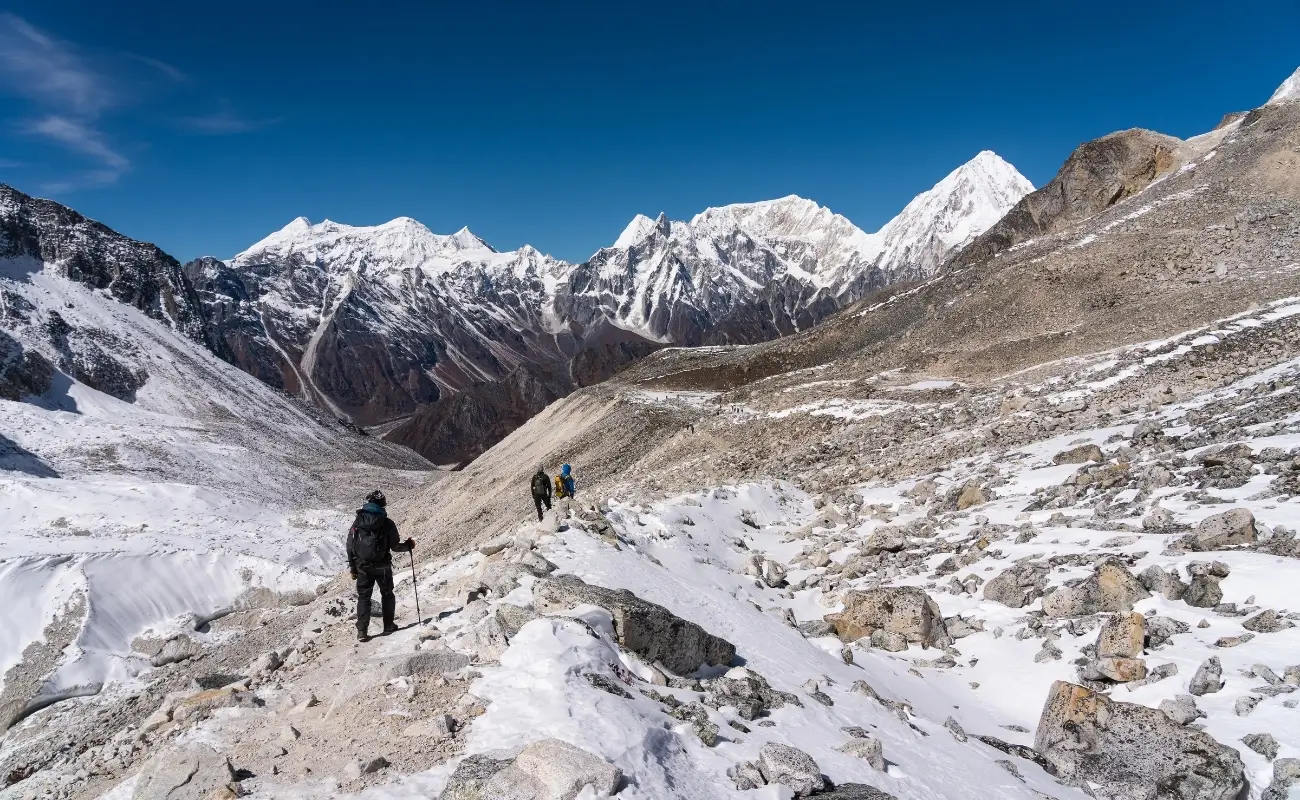 4 primary variables determine the final Manaslu Trek cost for Indian travelers: trek duration, group size, trekking season, and route itinerary. Each variable independently changes the per-person expense by 15–40%.
Understanding these 4 levers lets Indian trekkers optimize their budget before booking.
Does Trek Duration Change the Overall Cost?
Trek duration directly controls both permit costs and guide/porter daily rates. A 14-day Manaslu Circuit costs USD 1,200–1,800 per Indian trekker, while an 18-day version with the Tsum Valley extension adds USD 350–500 to the total bill.
The Manaslu Restricted Area Permit (RAP) charges a flat fee for the first 7 days, then a daily rate for each additional day. In high season (September–November), the per-day rate is USD 15 after day 7. Adding 4 extra days for the Tsum Valley extension adds USD 60 to permit costs alone, plus 4 additional days of guide, porter, food, and accommodation.
The 3 standard Manaslu Trek itinerary options and their duration-driven cost ranges:
-
14-day Manaslu Circuit: USD 1,000–1,800 (₹96,500–₹1,73,700)
-
17-day Manaslu Circuit with Tsum Valley: USD 1,350–2,200 (₹1,30,200–₹2,12,300)
-
20-day Extended Manaslu Circuit: USD 1,700–2,600 (₹1,64,000–₹2,50,800)
How Does Group Size Influence the Price?
Group size is the single most powerful cost lever for Indian trekkers. A solo trekker pays 100% of the guide fee alone. 2 trekkers split the porter cost, reducing per-person expenses by 18–22%. Groups of 4–6 trekkers cut per-person costs by 30–40%.
Most Nepal trekking operators price packages on a per-person basis but offer group discounts starting at 4 trekkers. A group of 4 Indian trekkers booking a 14-day Manaslu Circuit package with our trekking agency typically pays USD 950–1,100 (₹91,700–₹1,06,100) per person versus USD 1,400–1,700 for solo booking.
The guide fee is the most group-size-sensitive cost. A single licensed guide leads up to 10 trekkers at the same daily rate of USD 25–35. Spreading that USD 350–490 total over 4 people instead of 1 saves USD 262–368 per person on that line item alone.
Does the Season Affect Trekking Costs?
Season changes the Manaslu RAP permit fee by USD 25–30 and influences teahouse accommodation prices by 15–25%. Trekking between September and November (high season) costs more than the same route completed in March–May (shoulder season).
The 4 trekking seasons and their cost profiles:
-
September–November (Autumn/High Season): Highest demand, peak teahouse prices. RAP costs USD 100 for first 7 days plus USD 15/day thereafter. Guide daily rates peak at USD 30–35.
-
March–May (Spring/Shoulder Season): Moderate prices. RAP costs USD 75 for first 7 days plus USD 10/day thereafter. Some teahouses offer off-peak discounts of 10–20%.
-
December–February (Winter): Larkya La Pass (5,160m) closes from late December to February due to snow. RAP at winter rates (USD 75 base). Risk of incomplete trek if weather deteriorates.
-
June–August (Monsoon): Larkya La Pass re-opens in June. Lowest teahouse prices. High landslide risk on the Dharapani–Besisahar stretch. Most operators do not operate group departures in this window.
The autumn season (October) delivers the clearest mountain views and most reliable trail conditions, justifying the 15–20% cost premium for most Indian trekkers. Trekkers weighing views against budget can compare all four seasons in our guide to the best time for Manaslu Circuit Trek.
How Does the Route Itinerary Impact the Budget?
Route choice affects total cost by 20–35%. The standard Manaslu Circuit (Soti Khola to Besisahar via Larkya La Pass) at 177km over 14 days costs the least. Adding the Tsum Valley extension (60km, 3–4 days) requires a separate Tsum Valley Restricted Area Permit at USD 30–40 per person, increasing total permit costs by 20–30%.
The Tsum Valley is a sacred Buddhist valley north of Tsum. Its separate restricted area permit costs USD 30 per person for the first 7 days in low season (December–August) and USD 40 per person in high season (September–November). Indian trekkers who choose the combined Manaslu–Tsum Valley route pay an additional USD 40–70 in permits plus 3–4 extra days of guide, porter, and accommodation costs.
The route that terminates at Besisahar (standard circuit) allows a direct local bus return to Kathmandu for USD 7–10, versus a private jeep return if time is limited.
How Much Do Manaslu Circuit Trek Permits Cost for Indian Citizens?
Indian citizens require 4 mandatory permits and local fees for the Manaslu Circuit Trek: the Manaslu Restricted Area Permit (RAP), the Manaslu Conservation Area Project (MCAP) permit, the Annapurna Conservation Area Project (ACAP) permit, and the Chumnubri Rural Municipality fee. Total permit and fee cost in high season is approximately USD 228 per person.
Which Permits Are Required?
The 4 mandatory permits and fees are the Manaslu Restricted Area Permit (RAP), MCAP Permit, ACAP Permit, and the Chumnubri Rural Municipality Fee (collected in cash at Jagat). No TIMS Card is required for Indian nationals on the Manaslu Circuit, saving NPR 2,000 (₹1,250) compared to trekkers from third countries.
Here is a description of each permit:
-
Manaslu Restricted Area Permit (RAP): Issued by the Department of Immigration, Kathmandu. Grants entry into the restricted Manaslu zone. Applies from the Jagat checkpoint onward.
-
Manaslu Conservation Area Project (MCAP) Permit: Entry permit for the Manaslu Conservation Area, managed by Nepal's Department of National Parks and Wildlife Conservation.
-
Annapurna Conservation Area Project (ACAP) Permit: Required for the Besisahar–Dharapani section at the southern end of the circuit, which falls within the Annapurna Conservation Area boundary.
How Are Permit Fees Calculated?
Permit fees are calculated per person, per trip, not per day for the base fee. The RAP base fee covers the first 7 days; each additional day beyond 7 incurs a per-day charge. Conservation area permits (MCAP and ACAP) are flat-fee per person with SAARC national discounts for Indian citizens.
The permit fee structure for Indian (SAARC) trekkers:
|
Permit |
High Season (Sep–Nov) |
Low Season (Dec–Aug) |
SAARC Discount Applied |
|
RAP (first 7 days) |
USD 100 |
USD 75 |
No SAARC discount |
|
RAP (each extra day) |
USD 15/day |
USD 10/day |
No SAARC discount |
|
MCAP |
NPR 1,000 (~USD 7.50) |
NPR 200 (~USD 1.50) |
Yes (NPR 3,000 for others) |
|
ACAP |
NPR 1,000 (~USD 7.50) |
NPR 200 (~USD 1.50) |
Yes (NPR 3,000 for others) |
|
Local Municipality Fee |
NPR 1,000 (~USD 7.50 / $8) |
NPR 1,000 (~USD 7.50 / $8) |
No |
A 14-day trek in high season:
-
RAP: USD 100 (first 7 days) + USD 105 (7 additional days × USD 15) = USD 205, a fee structure confirmed by Nepal's Department of Immigration fee schedule
-
MCAP: NPR 1,000 ≈ USD 7.50
-
ACAP: NPR 1,000 ≈ USD 7.50
-
Total permits: ~USD 208 (~₹20,070)
Are There Any Seasonal Permit Differences?
Yes. The RAP fee drops by USD 25 per person in low season (December–August). This saves USD 95–105 over a 14-day trek compared to autumn pricing. Conservation area permits carry no seasonal variation.
Indian trekkers planning a March–May trek save on the RAP while enjoying blooming rhododendron forests and stable trails below Larkya La Pass. The spring season does carry a 10–15% higher teahouse occupancy rate than winter months. For the full fee table across all four permits, see our detailed Manaslu trek permit cost breakdown.
How Much Does Transportation Cost During the Manaslu Circuit Trek?
Transportation from Kathmandu to the Manaslu Circuit trailhead at Soti Khola costs USD 10–15 per person by shared jeep (8–10 hours) or USD 250–400 total for a private jeep. Return transportation from Besisahar to Kathmandu costs USD 7–12 per person by public bus.
What Are the Transportation Options From Kathmandu?
Indian trekkers travel from Kathmandu to Soti Khola (the standard circuit start) via 3 transport modes: shared local jeep, private jeep, or a combination of public bus to Arughat Bazaar followed by local transport.
The 3 options, with costs and tradeoffs:
-
Shared Jeep (Kathmandu to Soti Khola): Costs USD 12–18 per person. Journey takes 8–10 hours on rough mountain roads. Departures from Machha Pokhari Bus Park in Kathmandu at 6:00–7:00 AM. Recommended for budget trekkers.
-
Private Jeep (Kathmandu to Soti Khola): Costs USD 250–400 for the vehicle (seats 4–6). Journey takes 7–8 hours with fewer stops. Recommended for groups of 4+ or trekkers with heavy luggage.
-
Flight Kathmandu to Pokhara + Jeep to Besisahar: Costs USD 80–110 per person by flight + USD 15–25 by jeep. Used by trekkers doing a reverse circuit (Besisahar to Soti Khola).
Indian trekkers arriving in Kathmandu by air land at Tribhuvan International Airport, 8km from the city center. Airport taxi to Thamel (the main trekking hub) costs NPR 700–1,000 (~₹440–625).
How Much Should You Budget for Local Transfers?
Budget USD 30–60 (₹2,894–₹5,789) total for all local transfers during the Manaslu Trek, including the Kathmandu–Soti Khola jeep, Besisahar–Kathmandu bus return, and Kathmandu city transfers.
Teahouse-to-teahouse trekking on the Manaslu Circuit involves no additional transport costs during the trek itself. The trail is walked entirely on foot. Budget for:
-
Kathmandu–Soti Khola one-way: USD 12–18 (shared) or USD 60–80 per person (private jeep shared among 4)
-
Besisahar–Kathmandu return: USD 7–12 by public bus
-
Kathmandu city taxis for pre-trek permit collection: NPR 500–1,500 (~₹310–940)
How Much Does Accommodation Cost on the Manaslu Trek?
Teahouse accommodation on the Manaslu Circuit costs NPR 400–1,500 (₹250–940) per person per night. The average nightly rate across all 14 stages is NPR 700–800 (₹440–500). Total accommodation cost for a 14-night trek: USD 65–150 (₹6,271–₹14,472).
What Types of Teahouses Are Available?
The Manaslu Circuit has 3 categories of teahouses: basic wooden lodges (NPR 400–600/night), standard stone-built teahouses (NPR 700–1,000/night), and improved facilities at major stops like Samagaun and Samdo (NPR 1,000–1,500/night).
Samagaun village, the main acclimatization stop at 3,530m, has the widest selection of teahouses on the route. Several lodges here offer attached bathrooms, solar-heated hot water, and charging facilities. Above Samdo (3,865m) and at Dharamsala (4,460m), accommodation becomes more basic, shared dormitory-style rooms with thin mattresses are common.
A detail most trekkers overlook: teahouses on the Manaslu Circuit frequently operate a room-food linked pricing model. Staying at a teahouse is sometimes free or subsidized if you eat all meals there. Choosing to cook your own food or eat at a different lodge triggers room charges of NPR 300–500 extra per night.
What Can You Expect to Pay Per Night?
The per-night accommodation cost rises with altitude. Teahouses below 3,000m charge NPR 400–700/night. Between 3,000m and 4,000m, rates climb to NPR 700–1,200/night. High-altitude stops above 4,000m (Dharamsala, High Camp) charge NPR 500–800/night with fewer facilities.
Stage-by-stage accommodation cost reference for the 14-day circuit:
|
Stage |
Altitude |
Avg. Nightly Rate (NPR) |
Avg. Rate (₹) |
|
Soti Khola |
700m |
400–500 |
250–313 |
|
Jagat |
1,410m |
500–700 |
313–438 |
|
Deng / Ghap |
1,860m |
500–700 |
313–438 |
|
Namrung |
2,630m |
600–800 |
375–500 |
|
Lho |
3,180m |
700–1,000 |
438–625 |
|
Samagaun |
3,530m |
900–1,500 |
563–938 |
|
Samdo |
3,865m |
700–1,200 |
438–750 |
|
Dharamsala / Larkya Phedi |
4,460m |
500–900 |
313–563 |
|
Bimthang |
3,590m |
700–1,000 |
438–625 |
|
Gho / Tilje |
2,400m |
500–700 |
313–438 |
|
Dharapani / Besisahar |
1,860m |
600–900 |
375–563 |
How Much Does Food and Drinking Water Cost?
Food on the Manaslu Trek costs USD 20–35 per day (₹1,930–₹3,377) covering 3 meals. Total food expenditure for a 14-day trek: USD 280–490 (₹27,014–₹47,275). Drinking water costs NPR 50–200 per liter from teahouses; using a Sawyer or LifeStraw filter reduces this to near zero.
What Are Typical Meal Prices?
Teahouse meals on the Manaslu Circuit are priced between NPR 350–700 (₹220–438) per dish. Dal bhat, the standard Nepali trekker's meal, costs NPR 500–750 (₹313–469) and includes unlimited refills of rice, lentil soup, vegetables, and pickle.
The unlimited refill policy on dal bhat is unique: trekkers who order dal bhat receive free second and third servings of all components without extra charge. This makes dal bhat the highest-calorie-to-cost meal on the circuit.
Typical menu prices at mid-altitude teahouses (3,000–4,000m):
-
Breakfast: Porridge (NPR 300–400), Tibetan bread with eggs (NPR 350–500), Muesli with milk (NPR 350–450)
-
Lunch: Dal bhat (NPR 550–750), pasta (NPR 400–600), fried rice (NPR 400–600), thukpa noodle soup (NPR 350–500)
-
Dinner: Dal bhat (NPR 600–800), pizza (NPR 500–700), momos (NPR 350–550), soup + bread (NPR 300–500)
Prices increase by 15–25% above 4,000m and at Dharamsala camp due to the porter carry cost for supplies.
How Much Should You Budget for Drinking Water and Snacks?
Budget NPR 100–300 per day for safe drinking water and NPR 200–400 per day for trail snacks, totaling NPR 4,200–9,800 (₹2,625–₹6,125) over 14 days. Indian trekkers carrying a water purification tablet kit or filter reduce daily water costs to NPR 20–50.
Water purification options on the Manaslu Circuit:
-
Bottled mineral water: NPR 100–200/liter (expensive and environmentally harmful)
-
Boiled water from teahouses: NPR 50–100/liter (safe and affordable)
-
Filtered water with Sawyer filter: NPR 0 (carry once, use throughout the trek)
-
Iodine/chlorine tablets: NPR 0 per use after initial purchase of ~₹150 in India
Energy bars, Snickers, and Indian namkeen snacks are available at teahouses on the lower sections of the circuit (below Samagaun). Above Samagaun, snack selection decreases and prices rise by 30–50%. Carrying 3–4 days of reserve snacks from Kathmandu reduces reliance on trail supply.
Should You Hire a Guide and Porter for the Manaslu Trek?
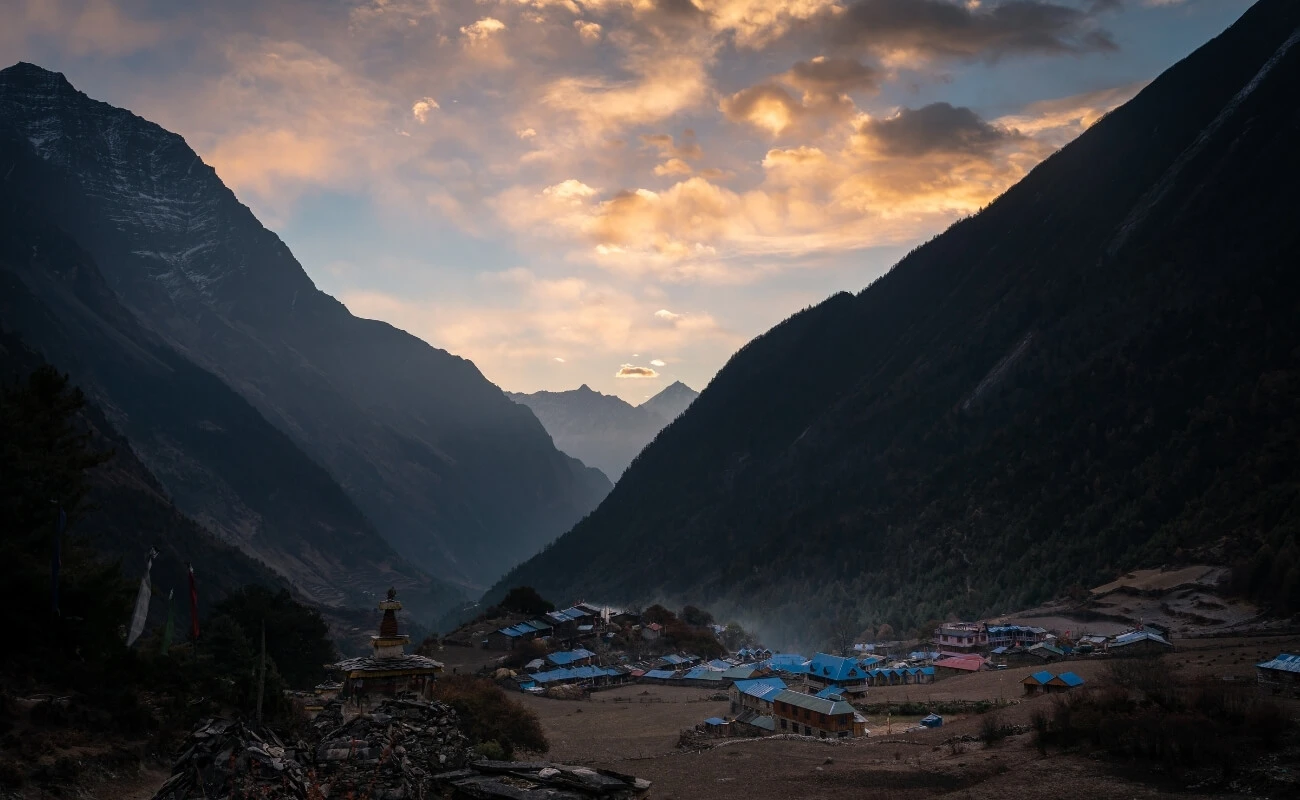 A licensed guide is legally mandatory on the Manaslu Circuit, not optional. The Nepal government enforces this rule at the Jagat checkpoint (the first restricted area entry point). Trekkers without a licensed guide face permit rejection and return from the checkpoint.
Is Hiring a Licensed Guide Mandatory?
Yes. The Manaslu Restricted Area Permit (RAP) requires that every trekking group is accompanied by a licensed guide, as set out in the Nepal Tourism Board's official trekking permit guidance. Solo entry without a guide is not permitted regardless of experience level.
This rule applies equally to Indian nationals. The enforcement checkpoint at Jagat verifies both the RAP and the guide's Nepal Tourism Board (NTB) license card. Indian trekkers who arrive at Jagat without a guide are turned back to Kathmandu, losing all non-refundable permit fees.
How Much Does a Guide Cost?
A licensed Manaslu trek guide charges USD 25–35 per day (₹2,412–₹3,377). For a 14-day trek, total guide cost is USD 350–490 (₹33,768–₹47,275). Experienced high-altitude guides with Manaslu-specific knowledge command USD 35–45 per day.
Guide daily rates include the guide's accommodation, food, and insurance, costs covered by the trekking operator, not separately billed to the trekker. What the trekker pays is the daily rate only.
What distinguishes a high-quality Manaslu guide from an average one:
-
Certified by Nepal Mountaineering Association (NMA) or Nepal Trekking Agencies Association (NTAA)
-
First aid and Wilderness Medicine training certification
-
Minimum 3 previous Manaslu Circuit completions
-
Fluent Hindi communication (highly valued by Indian trekkers)
How Much Does a Porter Cost?
A Manaslu Circuit porter charges USD 15–20 per day (₹1,447–₹1,930) and carries up to 25 kilograms. For a 14-day trek, total porter cost is USD 210–280 (₹20,261–₹27,014). 2 trekkers sharing 1 porter reduces the per-person cost to USD 105–140 (₹10,130–₹13,507).
The standard porter-to-trekker ratio on Manaslu is 1 porter per 2 trekkers. Porters carry all gear except the trekker's daypack. Indian trekkers carrying gear above 10kg are advised to hire a porter from Soti Khola for all 14 stages to prevent knee and back strain at altitude.
Porter wages include: accommodation (at their own teahouse), food, and insurance provided by the operator. Tips are expected separately (see Tips section below).
What Additional Costs Should Indian Trekkers Expect?
Indian trekkers face 3 commonly underestimated expense categories: travel insurance (non-negotiable at USD 80–180), equipment rental (USD 40–120 total), and guide/porter tips (USD 80–200 for a 14-day trek).
How Much Should You Budget for Travel Insurance?
Travel insurance for the Manaslu Trek costs USD 80–180 (₹7,718–₹17,366) for a policy covering emergency helicopter evacuation, high-altitude rescue above 5,000m, and medical hospitalization in Nepal.
Standard travel insurance from Indian insurers does not cover helicopter evacuation above 4,000m or high-altitude rescue operations. Indian trekkers require a policy specifically labeled for "adventure trekking above 5,000m" or "high-altitude mountaineering." World Nomads, Tata AIG Global Protector, and HDFC ERGO travel plans with adventure sports riders cover this requirement.
Helicopter rescue from Manaslu's high camps costs USD 2,500–4,500 per flight. A USD 100 insurance policy eliminating this risk is the highest-ROI expense in the entire Manaslu Trek budget. Read more on why helicopter rescue insurance is considered non-negotiable for any Nepal trek above 3,000m.
What Are the Costs for Equipment Rental?
Equipment rental in Kathmandu's Thamel district costs USD 3–8 per item per day. A standard 14-day equipment rental package (sleeping bag, trekking poles, down jacket, crampons) totals USD 80–150 (₹7,718–₹14,472) for the full trek.
Indian trekkers who already own trekking boots, thermal base layers, and a 3-season sleeping bag reduce rental costs to USD 30–60 (₹2,894–₹5,789) for just supplemental items like crampons and a heavier down sleeping bag.
5 most rented items in Kathmandu for the Manaslu Trek:
-
-15°C sleeping bag: USD 1.50–2.50/day (essential above 4,000m)
-
Trekking poles: USD 1–1.50/day (recommended for Larkya La descent)
-
Down jacket (-10°C rated): USD 2–3/day
-
Crampons / microspikes: USD 1–2/day (for Larkya La Pass in early season)
-
Gaiters: USD 0.50–1/day
Should You Budget for Tips and Personal Expenses?
Yes. Tipping is a standard practice on Nepal treks and forms a significant part of guide and porter income. Budget USD 70–120 (₹6,754–₹11,578) in guide tips and USD 50–80 (₹4,824–₹7,718) in porter tips for a 14-day trek.
Recommended tip amounts for a 14-day Manaslu Trek:
-
Guide: USD 5–8 per trekker per day (USD 70–112 total per trekker)
-
Porter: USD 3–5 per trekker per day (USD 42–70 total per trekker)
-
Teahouse staff tip: NPR 50–200 per night (optional but appreciated)
Personal expenses include medicine (altitude sickness pills, blister treatment, rehydration salts), laundry at teahouses (NPR 100–300 per session), SIM card top-ups for the NTC/Ncell network, and souvenir purchases in Samagaun village. Budget NPR 3,000–6,000 (₹1,875–₹3,750) for miscellaneous personal costs.
How Can Indian Travelers Reduce the Cost of the Manaslu Trek?
Indian trekkers reduce Manaslu Trek costs by 25–40% through 3 primary strategies: joining a group departure package, trekking in shoulder season (March–May), and carrying gear from India rather than renting in Kathmandu.
Is Joining a Group Trek More Affordable?
Yes. Joining a group departure package with 6–10 participants reduces per-person costs by 30–40% versus a private arrangement. Group packages for the Manaslu Circuit start from USD 850 (₹82,000) per Indian trekker on an all-inclusive 14-day basis.
Group packages distribute guide fees (the largest single cost) across all participants. In a group of 8 trekkers, each person's share of the guide cost drops from USD 350–490 (solo) to USD 43–61. This single change saves USD 300–430 per Indian trekker.
Our trekking agency runs fixed-date group departures for the Manaslu Circuit in October, November, April, and May, the 4 highest-demand months. Indian travelers joining these departures benefit from pre-arranged permits (submitted weeks in advance), shared private jeep from Kathmandu, and established teahouse relationships that secure accommodation during peak season.
When Is the Best Time to Find Better Prices?
March and early April (spring shoulder season) deliver the best combination of lower permit costs (USD 75 vs USD 100 for RAP base fee), reduced teahouse rates (10–20% below autumn prices), and stable trekking conditions through Larkya La Pass.
Autumn (October–November) produces the clearest mountain views and is peak demand season, commanding 15–25% higher accommodation and package prices. Trekkers prioritizing cost savings over peak-season mountain clarity gain USD 150–300 in savings by trekking in March–April.
December–February offers the lowest accommodation prices on the lower circuit sections but carries the risk of Larkya La Pass closure due to snowfall above 5,000m. A forced return from Samdo wastes all permit and transportation costs.
Which Budgeting Tips Help Save Money Without Sacrificing Safety?
5 practical strategies lower the Manaslu Trek cost for Indian trekkers without compromising safety or experience quality:
-
Carry gear from India: A sleeping bag, trekking boots, and thermal layers purchased in India cost 40–60% less than renting daily in Kathmandu over 14 days.
-
Solo trekking is now permitted: a solo trekker can be issued a RAP, per the Department of Immigration's 2026 restricted-area notice, provided they book through a registered agency and hire a licensed guide. Operators handle permit submission efficiently and avoid processing errors that cause costly delays.
-
Use water purification instead of buying bottles: A LifeStraw filter (₹800 in India) replaces NPR 1,400–2,800 in bottled water over 14 days.
-
Eat dal bhat daily: Dal bhat's unlimited refill policy delivers more calories per rupee than any other teahouse meal. Switching from pasta and pizza to dal bhat twice daily saves USD 5–8 per day.
-
Share a porter with another trekker: 1 porter between 2 trekkers costs USD 7.50–10 per person per day versus USD 15–20 solo. Coordinate with a group departure partner if trekking independently.
How Should You Book the Manaslu Trek With Our trekking agency?
Book the Manaslu Trek with our trekking agency by contacting the team at least 45–60 days before your intended departure date. Permit applications for restricted area treks require a minimum of 3–4 weeks processing time, and high-season group departures fill 6–8 weeks in advance.
Our trekking agency specializes in organizing Manaslu Circuit treks for South Asian clients, including Indian nationals. The team handles all 3 permit types (RAP, MCAP, ACAP), arranges licensed NTB-registered guides fluent in Hindi, and coordinates Kathmandu pickup for groups arriving from major Indian cities via Kathmandu airport.
The booking process involves 4 steps:
-
Share preferred trek dates, group size, and budget range
-
Receive a customized itinerary and cost breakdown within 48 hours
-
Confirm booking with 30% deposit (balance due on arrival in Kathmandu)
-
Submit passport/voter ID copies for permit processing (minimum 21 days before trek start)
Indian nationals use their Indian passport or voter ID card to enter Nepal, no separate Nepal visa application is required.
Can Our trekking agency Customize a Cost-Effective Manaslu Trek for Indians?
Yes. our trekking agency designs customized Manaslu Trek packages for Indian travelers across 3 budget categories: budget group (USD 850–1,100), standard private (USD 1,200–1,600), and premium private (USD 1,800–2,500). Each package adjusts accommodation standard, transportation mode, and itinerary length.
Customization options that directly affect cost:
-
Trek duration (14, 17, or 20 days)
-
Adding or removing the Tsum Valley extension
-
Private versus shared jeep from Kathmandu
-
Single-occupancy versus twin-sharing teahouse rooms
-
Experienced senior guide versus standard licensed guide
Indian group trekkers from Delhi, Mumbai, Bengaluru, and Kolkata regularly join our trekking agency's fixed-departure Manaslu packages without individual customization, benefiting from the lowest group pricing available. Browse our full range of Manaslu region trekking packages to compare durations, routes, and add-on options.
What Are the Key Takeaways About the Manaslu Trek Cost for Indians?
The Manaslu Trek costs Indian travelers USD 850–2,500 (₹82,000–₹2,41,200) depending on 4 variables: group size, trek duration, season, and accommodation standard. Indian nationals save USD 45–140 versus other nationalities through 3 financial advantages: no visa fee, SAARC-discounted conservation permits, and direct INR acceptance in Nepal.
The 6 essential financial facts every Indian trekker knows before booking:
-
Total permits cost approximately USD 228 in high season (USD 205 RAP + USD 15 for MCAP and ACAP at SAARC rates + USD 8 for the local municipality fee).
-
A licensed guide is legally mandatory: this is not an optional upgrade
-
Travel insurance covering helicopter evacuation above 5,000m is non-negotiable: standard Indian travel policies do not cover this
-
Group departures (6–10 people) reduce per-person cost by 30–40% versus private bookings
-
Spring (March–May) delivers 15–20% lower costs than the popular autumn season
-
Dal bhat with unlimited refills is the highest-calorie-per-rupee meal on the entire circuit: eating it daily reduces food costs by USD 5–8/day
The Manaslu Circuit Trek remains one of Nepal's most rewarding restricted-area expeditions. For Indian trekkers, the combination of currency parity, zero visa costs, and SAARC permit discounts makes this trek more financially accessible than comparable remote circuits in the Annapurna or Everest regions.
Planning a Manaslu Trek from India? Explore the full 14-day Manaslu Circuit Trek package itinerary and pricing, or contact our trekking agency for a customized cost breakdown matched to your group size, preferred season, and budget range.
More About Author

Khilak Budhathoki
Travel Director
Khilak Budhathoki is the co-founder and lead trekking guide at Himalaya Trekking Nepal, a locally owned and operated adventure company based in Kathmandu. Born and raised in the foothills of Nepal, Khilak developed a deep love for the mountains from an early age. With over a deca...

USD$1290 pp
Our Recommendation