- 06, Jul 2026 | Khilak Budhathoki
Training for the Everest Base Camp (EBC) Trek requires far more than general fitness because the journey combines prolonged hiking, steep elevation changes, high-altitude exposure, and consecutive days of physical exertion in the Himalayas of Nepal. Reaching Everest Base Camp at 5,364 meters (17,598 feet) challenges the cardiovascular, respiratory, muscular, and skeletal systems while reduced oxygen availability increases fatigue and the risk of altitude-related illness. Successful trekkers prepare for these demands through progressive endurance training, lower-body and core strength development, backpack conditioning, mobility work, and structured recovery rather than relying solely on occasional hiking or gym workouts.
 A well-designed Everest Base Camp training program develops the physical capacity and resilience needed to complete the trek safely and comfortably. Building aerobic endurance, increasing VO₂ max, improving hiking efficiency, strengthening muscles for steep ascents and descents, practicing acclimatization strategies, refining nutrition and hydration habits, and testing trekking equipment all contribute to better performance on the trail. This guide explains every stage of EBC preparation, from assessing your current fitness level and following an effective 8- to 12-week training plan to preparing for high altitude, preventing injuries, and arriving in Nepal ready for the physical demands of one of the world's most iconic trekking adventures.
Why Is Training Important for the Everest Base Camp Trek?
Physical training for the EBC trek determines success rate, injury frequency, and altitude sickness severity. Trekkers who arrive with a structured 8 to 12 week training base complete the route at dramatically higher rates than those who rely on general fitness or casual preparation.
The Everest Base Camp trek covers approximately 130 kilometers round-trip, climbs to 5,364 meters (17,598 feet) above sea level, and spans 12 to 14 consecutive hiking days. At that altitude, available oxygen drops to roughly 50% of sea-level partial pressure. The cardiovascular system, muscular endurance, and respiratory efficiency face simultaneous, sustained stress across every single day on trail.
Physical preparation does two things no amount of mental toughness replaces. First, it raises your aerobic ceiling, the maximum rate at which your body processes oxygen, which directly determines how your body responds to altitude-induced hypoxia. Second, it conditions the connective tissues (tendons, ligaments, cartilage) that absorb 12 to 14 days of cumulative mechanical load on steep, uneven terrain.
What most trekkers overlook: connective tissue adapts 3 times slower than muscle tissue. A trekker who starts running 6 weeks before departure builds cardiovascular fitness but arrives with under-prepared knees, ankles, and Achilles tendons, the exact injury sites that end EBC attempts prematurely.
Structured training also builds self-knowledge. Trekkers who have completed 8 to 12 weeks of preparation know their recovery rate, recognize their fatigue signals, and understand their hydration patterns. That self-awareness prevents the single most dangerous decision on the trail: pushing through early acute mountain sickness (AMS) symptoms because you don't trust your body's signals.
What Physical Challenges Should You Expect on the EBC Trek?
The EBC trek presents 5 primary physical challenges: sustained cardiovascular output at high altitude, repetitive steep ascent and descent cycles, cumulative muscular fatigue across 12 to 14 consecutive days, reduced oxygen availability above 3,500 meters, and cold temperatures ranging from -15°C to +10°C at higher elevations.
The trail from Lukla (2,860 meters) to Base Camp involves daily elevation gains of 400 to 700 meters on the most demanding sections. The route does not ascend linearly. The trail from Namche Bazaar to Tengboche, for example, drops 200 meters before climbing 600 meters, a sequence that taxes the quadriceps through both eccentric (braking) and concentric (pushing) loading within a single morning.
The trail surface changes constantly. Rocky moraine fields, stone-paved mule paths, narrow glacial ridgelines, and loose scree slopes all appear within the same trekking day. Each surface type demands different neuromuscular responses from the foot, ankle, and lower leg. Road running does not train these responses. Trail hiking and stair work do.
The cumulative nature of the challenge separates EBC from a weekend peak ascent. On day 10 of the trek, every stride carries the accumulated fatigue of the previous 9 days. Training programs that only build single-session fitness, without consecutive-day hiking practice, produce trekkers who feel strong on day 1 and depleted by day 7.
How Fit Do You Need to Be Before Starting Everest Base Camp Trek?
You require a baseline fitness level equivalent to hiking continuously for 5 to 6 hours with a 7 to 10 kg backpack on terrain with at least 500 meters of cumulative elevation gain, without significant distress or recovery deficits the following day.
4 practical fitness benchmarks to assess readiness before departure:
-
Complete a 3-hour uphill hike with no more than 5 minutes of cumulative rest stops
-
Sustain a conversational pace for 60 continuous minutes of moderate-intensity cardio (Zone 2)
-
Descend a sustained slope for 2 hours without knee pain or significant quadriceps burning
-
Carry 8 kg comfortably for 4 hours on mixed terrain without shoulder, neck, or lower back strain
These benchmarks do not require elite athletic ability. Most adults aged 20 to 65 who commit to 8 to 12 weeks of targeted preparation achieve these standards. For a full breakdown of the required fitness level by age and experience, review the complete readiness benchmarks. Trekkers whose VO₂max sits well above the AMS-susceptible range experience measurably milder symptoms: a 2023 high-altitude study found that trekkers who developed AMS at 3,900 m had significantly lower VO₂max (27.80 vs. 32.00 mL/kg/min) than those who stayed symptom-free (JMIR mHealth and uHealth, 2023). The EBC trek is not reserved for mountaineers or ultra-endurance athletes, it is a sustained aerobic challenge that responds directly to progressive, consistent training.
Trekkers with pre-existing cardiovascular conditions, hypertension, or chronic respiratory conditions require physician clearance before beginning altitude-specific training. Altitude amplifies all three conditions unpredictably, and medical consultation before a 5,364-meter trek is a clinical standard, not optional.
When Should You Start Training for the EBC Trek?
Start training a minimum of 8 weeks before departure. The optimal preparation window is 12 weeks. Beginners with a sedentary or low-activity baseline benefit most from 16 to 20 weeks of structured preparation.
The following table outlines recommended training start times by current fitness level. Reference your weekly activity hours, not your perception of general health, when determining your category.
|
Fitness Category |
Current Weekly Activity |
Recommended Training Start |
|
Active Hiker |
5+ hours/week on trails |
8 weeks before departure |
|
Moderately Active |
3–4 hours/week (gym or walks) |
12 weeks before departure |
|
Lightly Active |
1–2 hours/week |
16 weeks before departure |
|
Sedentary |
Under 1 hour/week |
20 weeks before departure |
The final 2 weeks before departure are recovery weeks, not training weeks. Reduce training volume by 40% in week 11 and by 60% in week 12. The body consolidates fitness gains during recovery phases, not during exertion. Trekkers who train hard the week before departure arrive in Kathmandu fatigued rather than primed.
What Does an 8–12 Week Everest Base Camp Trek Training Plan Look Like?
An 8 to 12 week EBC training plan divides into 3 sequential phases: base building (weeks 1–4), endurance extension (weeks 5–8), and trek simulation with progressive taper (weeks 9–12). Each phase builds on the previous with increasing specificity to EBC trail conditions.
Phase 1: Base Building (Weeks 1–4)
-
4 cardio sessions per week, 30 to 45 minutes each
-
2 strength sessions per week (lower body and core emphasis)
-
1 long hike per week, 2 to 3 hours, moderate terrain
-
Total weekly training volume: 6 to 8 hours
Phase 2: Endurance Extension (Weeks 5–8)
-
4 to 5 cardio sessions per week, 45 to 60 minutes each
-
2 strength sessions per week (introduce loaded backpack in session 2)
-
1 long hike per week, 4 to 5 hours, terrain with elevation gain
-
Total weekly training volume: 8 to 10 hours
Phase 3: Trek Simulation and Taper (Weeks 9–12)
-
3 to 4 cardio sessions per week (maintain intensity, reduce duration)
-
1 to 2 strength sessions per week
-
Back-to-back weekend hikes: Saturday 5 to 6 hours, Sunday 4 to 5 hours
-
Week 11: Reduce total volume by 40%
-
Week 12: Reduce total volume by 60%
-
Total weekly training volume: 7 to 9 hours (weeks 9–10), 4 to 5 hours (weeks 11–12)
Every session opens with 10 minutes of dynamic warm-up and closes with 10 minutes of targeted static stretching. Skipping these bookends accelerates the onset of cumulative training injuries in the later phases.
How Can Beginners Prepare for the Everest Base Camp Trek?
Beginners prepare for the EBC trek by building a consistent low-impact aerobic base in weeks 1 to 4 before introducing elevation, load, or intensity, this sequence prevents the overuse injuries that end EBC training plans prematurely.
-
Week 1 to 2: 30-minute brisk walks 5 days per week on flat terrain. The goal is consistency and habit formation, not cardiorespiratory stress.
-
Week 3 to 4: Introduce one uphill session per week (inclined treadmill at 8 to 10% gradient or a local hill). Add one 90-minute weekend hike on natural terrain.
-
Week 5 onward: Follow the standard endurance extension phase, now entering from an established base rather than from zero.
Beginners make 1 critical training error with high frequency: they jump to 4 to 5 hour hikes in week 2 because motivation is high. This overloads the plantar fascia, Achilles tendon, and knee cartilage before these tissues have adapted, producing injuries that interrupt the training cycle entirely and leave less preparation time than a conservative start would have.
Body weight lower-body exercises, squats, lunges, and step-ups, build foundational leg strength without requiring equipment or gym access. 3 sets of 15 repetitions, 3 times per week, produces measurable strength gains within 4 weeks on this movement baseline.
Which Cardio Exercises Best Prepare You for the EBC Trek?
The 4 cardio exercises that best prepare trekkers for the EBC route are stair climbing, inclined treadmill walking, stationary cycling with resistance, and swimming. Each exercise targets a different component of trekking-specific cardiorespiratory fitness.
-
Stair climbing produces the closest biomechanical match to uphill EBC trekking. 45 minutes on a commercial stairmill machine at moderate resistance generates cardiovascular demand equivalent to 90 to 120 minutes of flat walking. It trains the gluteus maximus, quadriceps, and calf complex in the same firing sequence as mountain ascent.
-
Inclined treadmill walking at 8 to 12% gradient replicates the sustained uphill effort of sections between Namche Bazaar and Tengboche or between Dingboche and Lobuche. This exercise is more joint-friendly than trail running and more specific to EBC demands than flat running.
-
Stationary cycling at Zone 2 intensity (60 to 70% of maximum heart rate) builds mitochondrial density and aerobic base with minimal joint impact. It functions best as an active recovery day tool and as a primary cardio option for trekkers managing existing knee or hip issues.
-
Swimming develops lung capacity, diaphragmatic strength, and cardiovascular efficiency simultaneously. Trekkers who include 2 swimming sessions per week report notably better breath control at altitude, the rhythmic, controlled ventilation pattern trained in water translates directly to respiratory pacing during sustained uphill effort at 4,000 to 5,000 meters.
How Often Should You Do Cardio Training for Everest Base Camp Trek Preparation?
Complete 4 to 5 cardio sessions per week during the main training block (weeks 1–10), with the long hike counted as one of those sessions. This frequency builds aerobic base without accumulating the fatigue load that impairs training quality and recovery.
Session distribution across the week:
-
2 to 3 moderate cardio sessions (45–60 min, Zone 2 intensity)
-
1 high-intensity interval session (HIIT, 30–40 min)
-
1 long hike (4–6 hours, including elevation)
-
2 complete rest days
Maintaining 2 complete rest days per week is non-negotiable. Aerobic adaptation, including mitochondrial biogenesis, cardiac stroke volume improvement, and capillary density increase, occurs during recovery, not during exertion. 7-day training weeks produce diminishing cardiovascular returns after week 6 and measurably elevated injury rates.
Heart rate monitoring transforms cardio training from guesswork into precision. Zone 2 sessions (60 to 70% of max heart rate) build the aerobic base that sustains 6 to 8 hour trekking days. Zone 4 intervals (80 to 90% of max heart rate) improve VO2 max, which directly reduces AMS severity at altitude.
Which Activities Best Mimic Trekking Conditions of Everest Base Camp Trek?
The 3 activities that most accurately replicate EBC trekking conditions are loaded stair hiking, back-to-back multi-day trail hiking, and technical trail running on rocky terrain. Each replicates specific physiological or neuromuscular demands that gym-based training cannot fully reproduce.
-
Loaded stair hiking (climbing stairs with a 6 to 10 kg backpack) replicates the quadriceps-dominant loading pattern of ascending at altitude while training the stabilizer muscles under spinal load. Office building stairwells, stadium stairs, and multi-story car park ramps provide sufficient vertical gain in urban environments.
-
Back-to-back multi-day hiking (2 to 3 consecutive 6 to 8 hour hiking days) replicates the accumulated fatigue pattern of the EBC itinerary. After day 2 of consecutive high-output hiking, the body experiences compound muscular fatigue equivalent to day 7 to 9 on the actual trek. This is the most important simulation workout in the entire training program, and the one most trekkers skip.
-
Technical trail running on rocky or root-covered paths trains ankle stabilizers, proprioceptive reaction time on unpredictable surfaces, and eccentric quadriceps control during downhill descents. These three neuromuscular capacities are underdeveloped by road running but essential on the EBC trail's moraine and glacier sections.
How Can You Build Strength for Steep Climbs and Descents of Everest Base Camp Trek?
 Strength training for EBC targets 3 primary muscle systems: the quadriceps and knee extensors (for uphill propulsion and downhill deceleration), the gluteal complex (for hip drive and pelvic stability on uneven terrain), and the posterior chain including hamstrings and spinal erectors (for sustained posture under backpack load).
The descent from high camps generates more acute muscle damage than the ascent. Eccentric quadriceps loading, where the muscle lengthens while contracting to absorb bodyweight impact on downhill steps, is the primary mechanism of post-trek soreness and in-trek knee pain. Concentric-dominant exercises like standard barbell squats build pushing strength but leave braking capacity underdeveloped.
2 strength sessions per week throughout the full 12-week program produce the functional strength required for the EBC route. These sessions do not require a gym. A loaded backpack, a sturdy step or bench, and resistance bands provide sufficient resistance for all foundational exercises.
Which Leg Exercises Improve Trekking Endurance for Everest Base Camp Trek?
The 6 leg exercises with the highest transfer to EBC trekking performance are Bulgarian split squats, loaded step-ups, single-leg Romanian deadlifts, lateral lunges, eccentric step-downs, and incline calf raises. Execute each exercise with controlled tempo (3 seconds down, 1 second pause, 2 seconds up) to maximize both strength and eccentric braking development.
-
Bulgarian split squats: 3 sets × 10 to 12 reps per leg. Builds unilateral quadriceps and gluteal strength that directly transfers to single-leg uphill propulsion on step-heavy EBC terrain.
-
Loaded step-ups: 3 sets × 12 reps per leg. Replicates the exact movement of stepping onto a boulder or high trail step. Use a box height of 40 to 50 cm.
-
Single-leg Romanian deadlifts: 3 sets × 10 reps per leg. Develops hamstring strength and single-leg balance simultaneously, two capacities that deteriorate fastest under multi-day fatigue.
-
Lateral lunges: 3 sets × 12 reps per side. Trains the hip abductors and adductors required for traversing across side-sloped terrain, which appears throughout the upper EBC sections.
-
Eccentric step-downs: 3 sets × 10 reps per leg, lowering over 4 to 5 seconds. Builds the braking quadriceps strength that determines knee comfort during sustained descents.
-
Incline calf raises: 4 sets × 15 to 20 reps. Strengthens the Achilles tendon and gastrocnemius-soleus complex, the most commonly injured lower leg structure on EBC descents.
Why Should You Strengthen Your Core and Upper Body for Everest Base Camp Trek?
Core and upper body strength prevent postural collapse under backpack load, reduce chronic lower back pain accumulation across multi-day hiking, and maximize trekking pole efficiency on steep climbs and descents.
The core, comprising the transverse abdominis, internal and external obliques, multifidus, and diaphragm, stabilizes the lumbar spine under the compressive load of a daypack. A weak core transfers that load directly to the L4-L5 and L5-S1 vertebral discs, producing the lower back pain that trekkers commonly describe starting on day 4 to 5.
Trekking poles reduce compressive force on the knees during descents, the UIAA Medical Commission cites biomechanical testing showing 12 to 25% reductions in tibiofemoral compressive and shear force when poles are used on steep downhill sections (UIAA Medical Commission, 2020). Active pole use requires the triceps, latissimus dorsi, and shoulder stabilizers to drive the pole into the ground and push off through it. Trekkers with weak upper bodies lean on their poles rather than driving through them, eliminating most of the joint protection benefit.
Core exercises prioritized for EBC preparation: dead bugs (anti-extension), bird dogs (anti-rotation), front and side plank progressions, pallof press, and suitcase carries. These movements build the anti-rotation and anti-flexion strength demanded by uneven trail surfaces, not the spinal flexion strength trained by crunches.
How Can You Improve Hiking Endurance Before the Everest Base Camp Trek?
Hiking endurance improves through progressive overload applied to weekly hiking volume: increase total weekly hiking duration by 10 to 15% and add at least 100 meters of additional elevation gain to the long session each week. This rate of progression builds aerobic capacity and connective tissue resilience simultaneously without triggering the overuse injuries associated with rapid training escalation.
The most efficient endurance-building method in a non-mountainous area combines distance with elevation simulation. Hike with a loaded pack on the steepest available terrain, or use a stairmill at increasing resistance to replicate altitude-equivalent cardiovascular demand.
Weekend back-to-back hikes, 5 to 6 hours on Saturday followed by 4 to 5 hours on Sunday, are the single most important endurance block in the training program. This protocol trains the body to output sustained aerobic effort on day 2 of back-to-back exertion, which directly replicates the EBC itinerary's demand from day 6 onward.
Track vertical meters gained per session, not just distance covered. Trekkers who accumulate 500 to 800 meters of vertical gain per long session across the 8 to 12 week program arrive at the EBC trail with a measurably higher lactate threshold for uphill effort than those who track only distance walked.
How Should You Increase Distance and Elevation Gradually for Everest Base Camp Trek?
Apply the 10% rule: increase total weekly hiking distance or cumulative elevation gain by no more than 10% per week. This rate of progression matches the adaptation capacity of tendons and ligaments, preventing the overuse injuries that halt training programs between weeks 4 and 7.
The table below outlines a sample 12-week elevation progression for the long weekly hike. Adapt duration and elevation to available local terrain, maintaining the progressive structure.
|
Week |
Long Hike Duration |
Approximate Elevation Gain |
|
1–2 |
2 hours |
200–300 m |
|
3–4 |
3 hours |
400–500 m |
|
5–6 |
4 hours |
600–700 m |
|
7–8 |
5–6 hours |
800–1,000 m |
|
9–10 |
6–7 hours |
1,000–1,200 m |
|
11 |
5 hours |
700 m (taper week) |
|
12 |
3–4 hours |
400 m (final prep week) |
Reducing volume in weeks 11 and 12 is as critical to EBC performance as the build phase. Fitness consolidates during recovery. Trekkers who maintain full training volume until the week of departure arrive in Nepal with accumulated fatigue rather than peak readiness.
Should You Train with a Loaded Backpack for Everest Base Camp Trek?
Yes, begin backpack load training in week 4, starting at 4 to 5 kg and progressing to 8 to 10 kg by week 8. Training without a backpack leaves the spinal stabilizers, hip flexors, and shoulder girdle unprepared for the mechanical demands of the EBC daypack.
On the EBC trail, the typical trekker carries a daypack of 6 to 10 kg while porters manage heavier bags. That daypack still represents sustained spinal compression across 6 to 8 hours of daily movement, a load pattern that creates distinct muscular demand compared to unloaded hiking.
Distribute pack weight correctly during training sessions: 70% of load positioned high and close to the spine (heavy items near the back panel), 30% lower in the pack. This distribution minimizes forward trunk lean and reduces lumbar extension stress during sustained uphills.
Add 1 kg per week from week 4 onward until you complete a 5-hour hike with 8 to 10 kg without shoulder, neck, or lower back strain. This weekly progression conditions the trapezius, rhomboids, and spinal erectors that stabilize the pack through full-day trail hours.
How Can You Prepare for High Altitude of Everest Base Camp Trek?
Altitude preparation for EBC uses 3 evidence-based strategies: aerobic base development (which raises VO2 max and reduces AMS risk), deliberate elevation exposure during training hikes, and compliance with the standard EBC acclimatization itinerary during the trek itself.
Trekkers with a VO2 max above 45 mL/kg/min experience measurably milder AMS symptoms than those with a VO2 max below 35. This relationship exists because higher VO2 max reflects more efficient oxygen extraction at any partial pressure, including the reduced partial pressure at 5,000+ meters. 12 weeks of combined Zone 2 cardio and HIIT training raises VO2 max by 8 to 15% in previously untrained adults.
Altitude tents, hypoxic sleeping tents that simulate elevations of 2,500 to 4,500 meters, are the most effective sea-level altitude preparation tool available. According to research from the Institute for Altitude Medicine, 3 to 4 weeks of hypoxic sleeping produces measurable increases in red blood cell mass, serum erythropoietin (EPO) levels, and arterial oxygen saturation at altitude. Altitude tents can help, but the evidence is more conditional than often claimed: a peer-reviewed review of hypoxic training methods found that meaningful red blood cell adaptations typically require at least 12 hours of daily exposure, and some 3–4 week protocols at lower simulated altitudes show no measurable change in hemoglobin mass at all (Sinex & Chapman, Journal of Sport and Health Science, 2015).
The 2 weeks before departure: eliminate alcohol entirely, maintain 8 hours of sleep nightly, and eliminate extreme training stress. Both fatigue and dehydration at trek start are direct AMS risk amplifiers independent of fitness level. Some trekkers also discuss preventive Diamox for altitude sickness with a physician as an additional safeguard alongside fitness preparation.
What Training Helps You Adapt to Lower Oxygen Levels of Everest Base Camp?
High-intensity interval training (HIIT) at 90 to 95% maximum heart rate, performed twice weekly, trains the cardiovascular system to extract oxygen from blood more efficiently, raising VO2 max by 8 to 15% across a 10 to 12 week program and directly improving hypoxic performance at altitude.
Each HIIT session includes 8 to 10 intervals of 30 to 60 seconds at 90 to 95% max heart rate, with 90-second active recovery between intervals. Total session duration: 30 to 40 minutes including warm-up and cool-down.
Diaphragmatic breathing practice (10 minutes daily) strengthens the intercostal muscles and diaphragm, the primary respiratory muscles sustaining ventilation during high-altitude exertion. At 5,000 meters, the diaphragm and intercostals work approximately 40% harder per breath than at sea level due to reduced air density. Training these muscles before departure reduces respiratory fatigue on the upper sections of the EBC route.
Respiratory muscle training devices (inspiratory training tools, not altitude simulation masks) strengthen the inspiratory muscles through increased breathing resistance. 15 minutes of daily inspiratory muscle training produces measurable reductions in perceived exertion during sustained aerobic effort within 4 to 6 weeks.
What Role Does Acclimatization Play During the Everest Base Camp Trek?
Acclimatization, the physiological process by which the body increases red blood cell production, adjusts ventilation rate, and redistributes blood flow in response to reduced oxygen partial pressure, occurs during the trek itself and cannot be completed before departure. The standard 12 to 14 day EBC itinerary includes 2 dedicated acclimatization days at Namche Bazaar (3,440 m) and Dingboche (4,410 m).
The "climb high, sleep low" principle governs EBC itinerary design. On acclimatization days, trekkers ascend 300 to 500 meters above their sleeping elevation, then descend to sleep at the lower camp. This controlled hypoxic exposure triggers erythropoietin (EPO) release, stimulating red blood cell production without crossing the threshold that triggers AMS.
Trekkers who rush the EBC itinerary, compressing it to 8 to 10 days, experience AMS at a rate 4 times higher than those who follow the standard 12 to 14 day schedule. Pre-trek fitness accelerates initial physiological adaptation on the trail, making the body's response to acclimatization days faster and more complete.
High Altitude Cerebral Edema (HACE) and High Altitude Pulmonary Edema (HAPE) are the two life-threatening altitude illnesses on the EBC route. Both require immediate descent as the primary treatment. No level of pre-trek fitness eliminates the risk of HACE or HAPE entirely, strict acclimatization schedule compliance is the primary protective factor, not conditioning. Learn to recognize altitude sickness symptoms early, since prevention and prompt response matter more than fitness once AMS begins.
How Can Flexibility and Mobility Reduce Injury Risk?
Flexibility and mobility training reduce the 3 most common EBC trek injuries, knee tendinopathy, IT band syndrome, and ankle sprains, by correcting movement restrictions that concentrate mechanical stress on vulnerable tissue during sustained downhill effort.
Hip flexor restriction, extremely common in trekkers with desk-based work patterns, forces the lumbar spine into extension during uphill steps, loading the facet joints and producing progressive lower back pain starting on day 4 to 5. Daily hip flexor stretching (couch stretch, lunge with reach) corrects this pattern within 3 to 4 weeks of consistent practice.
Restricted ankle dorsiflexion, the forward movement of the shin over the foot during weight-bearing, reduces uphill propulsion efficiency and increases knee valgus stress on descents. Wall ankle stretches and banded ankle mobilization performed for 5 minutes daily restore adequate dorsiflexion range within 3 to 4 weeks.
Thoracic spine stiffness, accumulated from prolonged desk sitting, prevents the natural counter-rotation between upper and lower body during gait. On a 6 to 8 hour hiking day, this restriction transfers rotational force to the lumbar spine and hips, accelerating fatigue and producing pain in structures not designed to absorb rotational load.
Which Stretching Exercises Benefit Trekkers Most?
The 6 stretching exercises with the highest return for EBC trekkers are the couch stretch (hip flexors), pigeon pose (glutes), standing incline calf stretch, IT band foam roll combined with cross-body stretch, doorway hamstring stretch, and thoracic rotation (thread the needle). Hold each position for 60 to 90 seconds per side, performed daily after training sessions and on rest days.
-
Couch stretch: 90 seconds per side. Targets the iliopsoas and rectus femoris. Performed with back knee on floor and front foot forward, rear shin resting against a wall.
-
Pigeon pose: 90 seconds per side. Releases the piriformis and gluteus medius. These muscles tighten progressively over multi-day hiking and produce hip and sacroiliac joint pain by day 6 to 8.
-
Standing incline calf stretch: 60 seconds per side. Performed with forefoot elevated on a step or ramp edge. Stretches the gastrocnemius and soleus under trail-specific loading angles.
-
IT band foam roll + lateral stretch: 60 seconds per side. Addresses the iliotibial band tightening that produces lateral knee compression during extended downhill walking.
-
Doorway hamstring stretch: 90 seconds per side. Prevents the posterior chain shortening that causes step-length reduction and lumbar rounding under fatigue on days 8 to 10.
-
Thread the needle (thoracic rotation): 60 seconds per side. Performed in a quadruped position, rotating the upper arm under the body. Restores upper back mobility compressed by sustained backpack wearing.
How Can Balance Training Improve Stability on Uneven Trails of Everest Base Camp Trek?
Balance training reduces ankle sprain risk on the EBC trail by strengthening the neuromuscular control system that stabilizes the ankle joint in response to unexpected surface changes, the primary mechanism of ankle injury on moraine and scree sections.
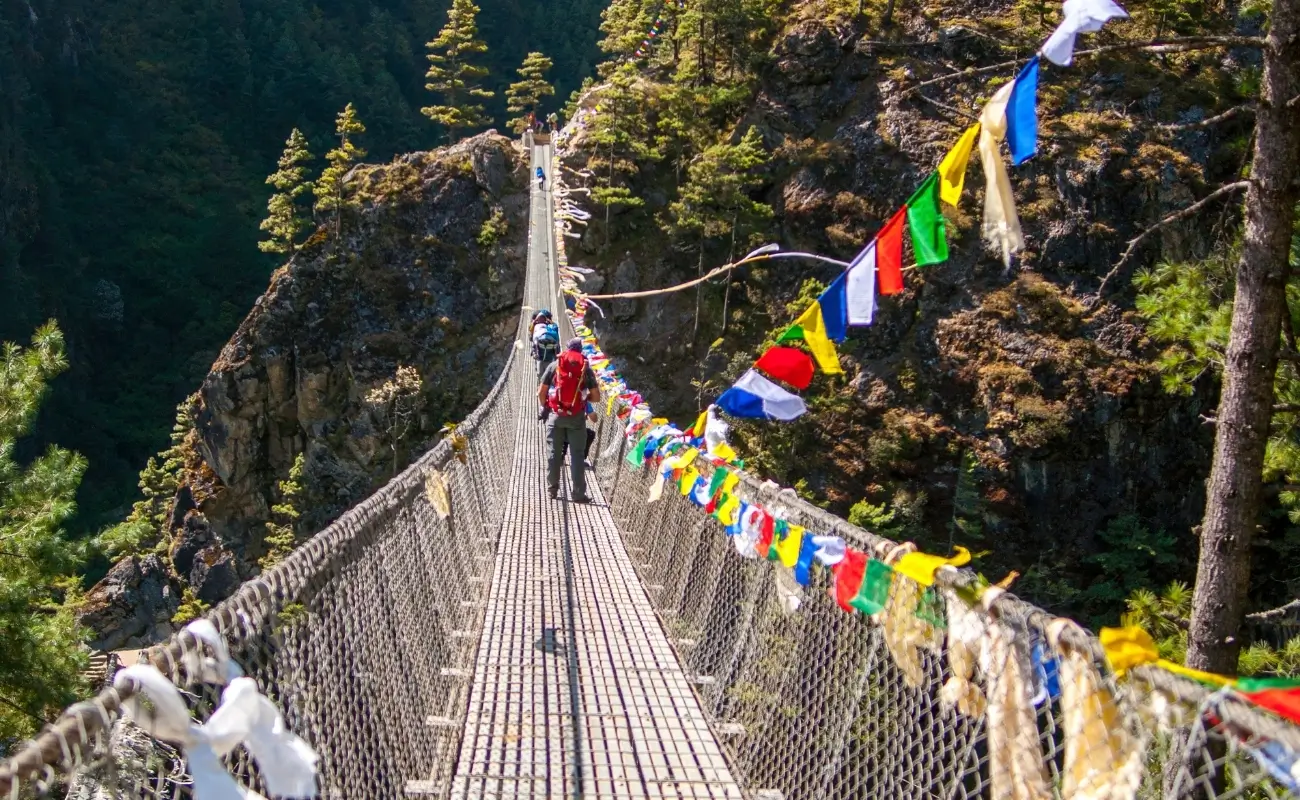
The EBC trail crosses scree fields, glacier moraine, loose boulder fields, and suspended wooden bridges where the foot lands on surfaces that shift, tilt, or compress unpredictably. The body's proprioceptive response time, the interval between sensing instability and firing stabilizing muscles, determines whether a stumble produces a sprain or a recovery step.
Single-leg balance progression across the 12-week program:
-
Weeks 1–2: Single-leg stand on flat surface, eyes open, 45 seconds per leg
-
Weeks 3–4: Single-leg stand on flat surface, eyes closed, 30 seconds per leg
-
Weeks 5–6: Single-leg stand on foam pad, eyes open, 45 seconds per leg
-
Weeks 7–8: Single-leg stand on foam pad, eyes closed, 30 seconds per leg
-
Weeks 9–12: Single-leg deadlifts and eccentric step-downs on foam pad, with trekking poles
Integrate trekking poles into balance drills from week 6 onward. This replicates the 4-point contact pattern used on technical EBC trail sections, training the coordination between upper and lower body movement.
What Nutrition and Hydration Strategies Support Everest Base Camp Trek Training?
EBC training phase nutrition requires sufficient caloric intake to match training load (an additional 300 to 600 calories per active training day), daily protein intake of 1.6 to 2.0 g per kg body weight for muscle repair, and strategic carbohydrate timing around long sessions to maintain training quality across the full 12-week program.
Carbohydrates function as the primary fuel source for sustained aerobic exercise at the intensities required for EBC training. Trekkers who restrict carbohydrates while training at moderate to high intensity consistently report earlier fatigue onset, degraded training quality in the second half of long sessions, and higher rates of tendon and joint injury, all consequences of glycogen depletion.
The macronutrient distribution supporting the EBC training load across all 3 phases:
-
Carbohydrates: 50 to 55% of total daily calories
-
Protein: 25 to 30% of total daily calories
-
Fats: 20 to 25% of total daily calories
Iron intake warrants specific attention for altitude preparation. Iron is the mineral component of hemoglobin and myoglobin, the proteins that carry and store oxygen in blood and muscle tissue respectively. Depleted iron stores limit red blood cell production during the acclimatization process on the trail. Regular consumption of lean red meat, legumes, dark leafy greens, and iron-fortified foods maintains iron stores throughout training. Pair iron-rich foods with vitamin C sources to increase absorption by up to 300%.
What Should You Eat Before and After Training Sessions?
Consume a carbohydrate-dominant meal 2 to 3 hours before long training sessions and a protein-carbohydrate combination within 30 to 45 minutes after session completion. This timing protocol optimizes glycogen availability before exertion and activates muscle protein synthesis during the recovery window.
Pre-training meal (2–3 hours before):
-
300 to 500 grams of rice, oats, or sweet potato with a moderate protein source (2 eggs, 150 g Greek yogurt)
-
Target: 400 to 600 total calories
-
Avoid high-fat meals or high-fiber vegetables that slow gastric emptying and cause gastrointestinal discomfort during training
Post-training recovery meal (within 30–45 minutes):
-
Protein: 20 to 30 g (whey protein shake, 200 g Greek yogurt, 3 eggs, or 150 g cooked chicken)
-
Carbohydrates: 0.8 to 1.0 g per kilogram of body weight (rice, banana, sweet potato, or oats)
-
Example for a 70 kg trekker: 250 g Greek yogurt + 1 large banana + 40 g granola
During training sessions exceeding 90 minutes, consume 30 to 60 g of carbohydrates per hour to maintain blood glucose and delay central and peripheral fatigue. Suitable field options: energy gels, 2 to 3 Medjool dates, a banana, or rice cakes with jam.
How Can Proper Hydration Improve Everest Base Camp Trek Performance?
Proper hydration maintains blood plasma volume, supports oxygen delivery to working muscles, and reduces the physiological amplification of AMS at altitude. Dehydration exceeding 2% of body weight measurably impairs endurance performance, blinded feeding-tube studies confirm the effect in the heat, though newer research shows the size of the drop depends heavily on testing method (Gatorade Sports Science Institute, Sports Science Exchange #214, 2021).
Daily hydration targets during the training period:
-
Baseline daily intake: 2.5 to 3.5 liters (adjust upward for high sweat rate or hot training conditions)
-
During training sessions: 500 to 750 mL per hour of sustained aerobic effort
-
Post-session rehydration: replace 150% of fluid lost during the session (weigh before and after)
Electrolyte replacement is essential during sessions exceeding 90 minutes. Sweat contains 700 to 1,000 mg of sodium per liter along with potassium, magnesium, and chloride. Consuming plain water without electrolyte replacement during multi-hour sessions dilutes blood sodium concentration, producing hyponatremia, a condition that mimics early AMS and impairs cognitive function.
On the EBC trail, trekkers maintain 3 to 4 liters of daily water intake. Training the hydration discipline at home, drinking consistently throughout the day rather than reactively when thirsty, establishes the fluid management patterns that carry directly to trail performance.
What Common Everest Base Camp Trek Training Mistakes Should You Avoid?
The 5 most damaging EBC training mistakes are starting under 6 weeks before departure, skipping rest days, neglecting eccentric downhill training, training exclusively on flat terrain, and failing to test gear before departure. Each error produces a predictable, documented negative outcome on the trail.
1. Starting under 6 weeks before departure: Connective tissues require 8 to 12 weeks to adapt. Muscular cardiovascular fitness builds in 4 to 6 weeks; tendon and ligament resilience require 8 to 12 weeks. Late starters develop aerobic capacity but arrive with vulnerable knee cartilage and Achilles tendons.
2. Skipping rest days: Overtraining syndrome, marked by elevated resting heart rate, persistent fatigue, and performance plateaus, develops when trekkers train 7 consecutive days. 2 rest days per week are physiologically required, not optional.
3. Neglecting downhill training: Descending from Kala Patthar (5,545 m) to Gorak Shep produces severe quadriceps damage in trekkers who trained only for uphills. Eccentric quadriceps loading during descents causes the single most incapacitating muscular soreness pattern of the entire EBC route.
4. Training exclusively on flat terrain: Road running and flat cycling build cardiorespiratory fitness but do not develop the ankle stabilizers, proprioceptive reflexes, and uphill hip mechanics required on the EBC trail. Minimum 1 trail session per week on elevation terrain from week 2 onward.
5. Not testing gear before departure: Blisters from unstested boots and shoulder pain from poorly fitted packs are the 2 most common causes of slowed trekking pace and early turnaround decisions. Every item worn on the EBC trail requires minimum 5 full training sessions of real-conditions use.
How Can You Prevent Overtraining and Injuries?
Overtraining prevention requires daily monitoring of 4 biomarkers: resting heart rate elevated more than 5 bpm above personal baseline, disrupted or unrestful sleep, persistent low motivation or mood, and systemic fatigue not resolved by 8 hours of sleep. The presence of 2 or more of these markers on the same day signals the need for a rest day or reduced-intensity active recovery session.
The 4 most common overuse injuries arising from EBC preparation training:
-
IT band syndrome: Lateral knee pain on descents, caused by insufficient hip abductor strength and excessive weekly mileage increases. Address with hip strengthening, foam rolling, and a 2-week volume reduction.
-
Plantar fasciitis: Heel and arch pain, caused by rapid training volume increases without adequate footwear arch support. Address with calf stretching, foot rolling, and supportive insoles.
-
Patellar tendinopathy: Anterior knee pain below the kneecap, caused by excessive downhill training volume before eccentric quadriceps strength is established. Address with eccentric step-downs and a 10-day volume reduction.
-
Achilles tendinopathy: Posterior heel pain, caused by rapid calf training escalation or consistent training in minimalist footwear without heel support. Address with isometric and eccentric heel drops and footwear assessment.
Address all tendinopathy symptoms within 48 hours of onset. Continuing to train through tendon pain converts a 3 to 5 day manageable setback into a 3 to 6 week interruption and reduces available preparation time significantly.
Which Gear Should You Test During Everest Base Camp Trek Training?
Test 6 gear categories during the training program: trekking boots (minimum 10 sessions), trekking poles (minimum 5 sessions), daypack loaded to 8 to 10 kg, moisture-wicking base layers, insulating mid-layer, and gaiters on dusty or loose terrain.
-
Trekking boots require the most lead time. Break them in across a minimum of 10 progressive-length hikes. A boot that fits correctly at 30 minutes often creates pressure points at hour 3 as foot volume increases with sustained heat and impact. Boots that cause hotspots during 2 to 3 hour training hikes produce blisters by day 3 on the actual trail.
-
Trekking poles require active pole-use technique practice. Correct height (elbow at 90 degrees on flat terrain) and contralateral planting rhythm (right pole with left foot) reduce wrist and shoulder cumulative stress over 6 to 8 hour days. Passive pole use, leaning weight onto the grips rather than driving through them, eliminates the 20 to 25% knee-load reduction that poles provide.
-
Moisture-wicking base layers prevent chafing on multi-hour sessions. Cotton base layers retain sweat against the skin and produce friction blisters on the inner thighs and underarms within 4 hours of sustained uphill effort, the exact body areas where the EBC climb generates the most movement and heat.
-
Gaiters keep dust, pebbles, and snow out of boots on the trail's loose and snowy sections above Lobuche. Test them on loose-surface training routes to confirm that the closure system functions reliably under sustained movement. For the full clothing, footwear, and equipment breakdown, see our Everest Base Camp packing list.
How Should You Choose the Right Everest Base Camp Trek Operator?
Select an EBC trek operator by verifying 5 criteria: Nepal Tourism Board government registration, a guide-to-trekker ratio of maximum 1:4, a full 12 to 14 day itinerary with 2 dedicated acclimatization days, transparent porter welfare standards, and documented AMS emergency response protocols. Compromising on operator quality at extreme altitude carries a disproportionate risk compared to any other trek planning decision.
Nepal Tourism Board-registered operators carry mandatory search and rescue insurance and secure your Khumbu Pasang Lhamu Rural Municipality Entry Permit and Sagarmatha National Park permits. Unregistered operators cannot assist with permit complications, medical evacuations, or legal protection in the event of accidents.
Guide expertise directly determines AMS recognition and decision-making quality on the trail. An experienced, certified guide identifies early AMS symptoms, headache severity, gastrointestinal symptoms, fatigue, and dizziness, using the updated Lake Louise AMS Score (a standardized 12-point assessment tool) before symptoms progress to HACE or HAPE. An experienced guide identifies early AMS symptoms using the 2018 Lake Louise AMS Score, a four-category 0-to-12 scale that replaced the older five-symptom version by dropping 'disturbed sleep' as a diagnostic criterion (High Altitude Medicine & Biology, 2018).
Itinerary duration is a non-negotiable selection criterion. Any operator offering an EBC completion in 8 to 10 days from Lukla does not include the 2 acclimatization days required by the standard medical itinerary. These compressed itineraries carry statistically higher AMS rates than properly structured 12 to 14 day schedules.
Can Our Trekking Agency Help You Prepare for the Everest Base Camp Trek?
Planning your EBC trek with an experienced, Nepal Tourism Board-registered operator removes uncertainty from every stage of the journey, from your training preparation framework to in-field permit management, accommodation coordination, and medical emergency protocols on the trail.
A quality trekking agency provides more than logistics. Experienced operators share destination-specific training guidance calibrated to your departure season and current trail conditions, connect you with altitude physiology resources, and provide detailed gear checklists reflecting real conditions at 5,000+ meters.
Reach out to discuss your current fitness baseline, planned departure date, and trekking objectives. A structured pre-booking consultation determines whether your training timeline aligns with your chosen itinerary, and identifies the specific adjustments that deliver the highest success probability before you step off the plane in Kathmandu.
What Are the Key Takeaways for Training Successfully for the Everest Base Camp Trek?
Successful EBC training rests on 7 foundational principles: start 8 to 12 weeks before departure, follow a 3-phase progressive plan, train on elevation terrain weekly, include loaded backpack sessions from week 4, build eccentric quadriceps strength for descents, practice nutrition and hydration protocols consistently, and test all gear during training. Applying these principles systematically converts the EBC trek from an aspirational goal into a completed achievement.
Summary of the 7 critical training commitments:
-
Start early: 8 weeks minimum, 12 weeks optimal, 16 to 20 weeks for beginners
-
Train on elevation: At least 1 uphill session per week from week 2 onward
-
Build eccentric descent strength: Eccentric step-downs and Bulgarian split squats from week 3 onward
-
Load the backpack: Start at 4 kg (week 4), progress to 8 to 10 kg by week 8
-
Prioritize recovery: 2 rest days per week throughout; reduce volume 40 to 60% in the final 2 weeks
-
Fuel and hydrate strategically: 1.6 to 2.0 g protein per kg body weight daily; 2.5 to 3.5 liters of water daily
-
Test all gear: Minimum 10 sessions in trekking boots; minimum 5 sessions with poles and loaded pack
The EBC route presents fixed conditions: 5,364 meters of altitude, 130 kilometers of trail, 12 to 14 days of sustained effort. The mountain does not adjust its demands to your fitness level. Your training is the single variable you control completely. Invest in it with consistency across 8 to 12 weeks, and once you're ready, a guided Everest Base Camp trek with built-in acclimatization days turns that training into a completed achievement.
More About Author

Khilak Budhathoki
Travel Director
Khilak Budhathoki is the co-founder and lead trekking guide at Himalaya Trekking Nepal, a locally owned and operated adventure company based in Kathmandu. Born and raised in the foothills of Nepal, Khilak developed a deep love for the mountains from an early age. With over a deca...

USD$1,600 pp
Our Recommendation
Related Blogs