- 20, Apr 2026 | Khilak Budhathoki
Diamox (acetazolamide) is the standard medication for preventing and treating acute mountain sickness (AMS) on the Everest Base Camp trek. The standard preventive dose is 125 mg twice daily, started 24 to 48 hours before ascending above 2,500 m.
At altitude, oxygen drops to 50% of sea level volume at Everest Base Camp (5,364 m) and 49% at Kala Patthar (5,545 m). Diamox inhibits carbonic anhydrase, increases blood acidity, stimulates faster breathing, and raises oxygen intake. It is not compulsory and does not replace acclimatization.
Combined with a structured 14-day itinerary, 2 acclimatization days at Namche Bazaar (3,440 m) and Dingboche (4,410 m), and active hydration, Diamox reduces AMS risk from 30% to under 8% in guide-led groups on the Khumbu Valley route. This page covers Diamox mechanism, dosage, timing, side effects, safety, contraindications, alternatives, and the full decision framework for beginner and experienced EBC trekkers.
What Is Diamox and Why Is It Used for the Everest Base Camp Trek?
Diamox (acetazolamide) is a carbonic anhydrase inhibitor used to prevent and treat acute mountain sickness (AMS) at high altitude. Trekkers use it on the Everest Base Camp route because altitude above 3,000 m reduces oxygen availability, triggering hypoxia. Diamox stimulates breathing, increases oxygen intake, and accelerates acclimatization.
Diamox is not a cure for altitude sickness. It supports the body's natural acclimatization process. Trekkers use it in 2 ways: as prevention before ascent begins, and as treatment after mild AMS symptoms appear.
Acetazolamide was first approved for altitude sickness prevention in 1972. According to the Wilderness Medical Society, acetazolamide remains the most clinically supported pharmacological option for AMS prevention in high-altitude trekking environments.
Diamox does not replace acclimatization days. It reduces the time the body takes to adapt to reduced oxygen levels at altitudes between 2,800 m and 5,545 m on the Kala Patthar summit.
How Does Diamox Help with Acute Mountain Sickness on the Everest Base Camp Trek?
Diamox inhibits carbonic anhydrase, which increases blood acidity, which stimulates faster and deeper breathing, which raises oxygen intake at altitude. This chain reaction reduces the 4 primary AMS symptoms: headache, nausea, dizziness, and fatigue.
The mechanism works in 3 steps:
-
Carbonic anhydrase inhibition raises carbon dioxide and bicarbonate levels in blood
-
Increased blood acidity signals the brain to increase breathing rate
-
Faster breathing raises blood oxygen saturation at altitude
According to the High Altitude Medicine Guide by Dr. Peter Hackett, acetazolamide reduces AMS incidence by 75% in trekkers ascending faster than recommended rates. At Namche Bazaar (3,440 m), oxygen is 67% of sea level volume. At Dingboche (4,410 m), it drops to 60%. Diamox keeps breathing rate elevated enough to compensate.
Diamox does not eliminate the need for acclimatization. Trekkers who use Diamox and skip rest days at Namche Bazaar and Dingboche still face AMS risk above 4,500 m.
Should You Take Diamox for the Everest Base Camp Trek?
Diamox is not compulsory for the Everest Base Camp trek, but it is recommended for 3 specific trekker profiles: beginners, rapid ascent trekkers, and those with prior altitude sickness history.
The decision depends on 4 variables: trekking pace, altitude gain rate, prior altitude experience, and individual physiology.
Trekkers who benefit from Diamox:
-
Beginners with no altitude experience above 3,000 m
-
Trekkers on 12-day or shorter itineraries with compressed acclimatization
-
Trekkers with prior AMS episodes at altitudes above 3,500 m
-
Trekkers ascending more than 500 m per day above 3,000 m
Trekkers who may not require Diamox:
-
Experienced trekkers with documented tolerance above 4,500 m
-
Trekkers on 14-day guided EBC itineraries with 2 full acclimatization days at Namche Bazaar (3,440 m) and Dingboche (4,410 m)
-
Trekkers who have completed prior treks above 4,000 m without AMS
Diamox is not compulsory. No permit or regulation requires its use. The choice is medical, not procedural.
When Should You Start Taking Diamox for the Everest Base Camp Trek?
Start Diamox 24 to 48 hours before ascending above 2,500 m. For the EBC route, this means beginning at Kathmandu (1,400 m), 1 to 2 days before the Lukla flight.
Preventive vs reactive timing:
-
Preventive use: Start 24 to 48 hours before ascent. Blood levels stabilize within 4 to 6 hours of first dose. Full effect is active by the time you reach Lukla (2,860 m).
-
Reactive use: Start at first AMS symptom appearance. Effective for mild AMS, but less effective than preventive protocol.
Timing by itinerary type:
-
14-day itinerary: Start Diamox in Kathmandu, 1 day before the Lukla flight
-
12-day itinerary: Start Diamox in Kathmandu, 2 days before the Lukla flight
-
Fast ascent (under 12 days): Start Diamox 48 hours before Lukla departure
Starting Diamox at Lukla rather than Kathmandu reduces blood level stability by 12 to 24 hours. This leaves the body unprotected during the first altitude exposure at Namche Bazaar (3,440 m), which is the steepest single ascent on the route at 830 m gain over 12 km.
What Is the Diamox Dosage for the Everest Base Camp Trek?
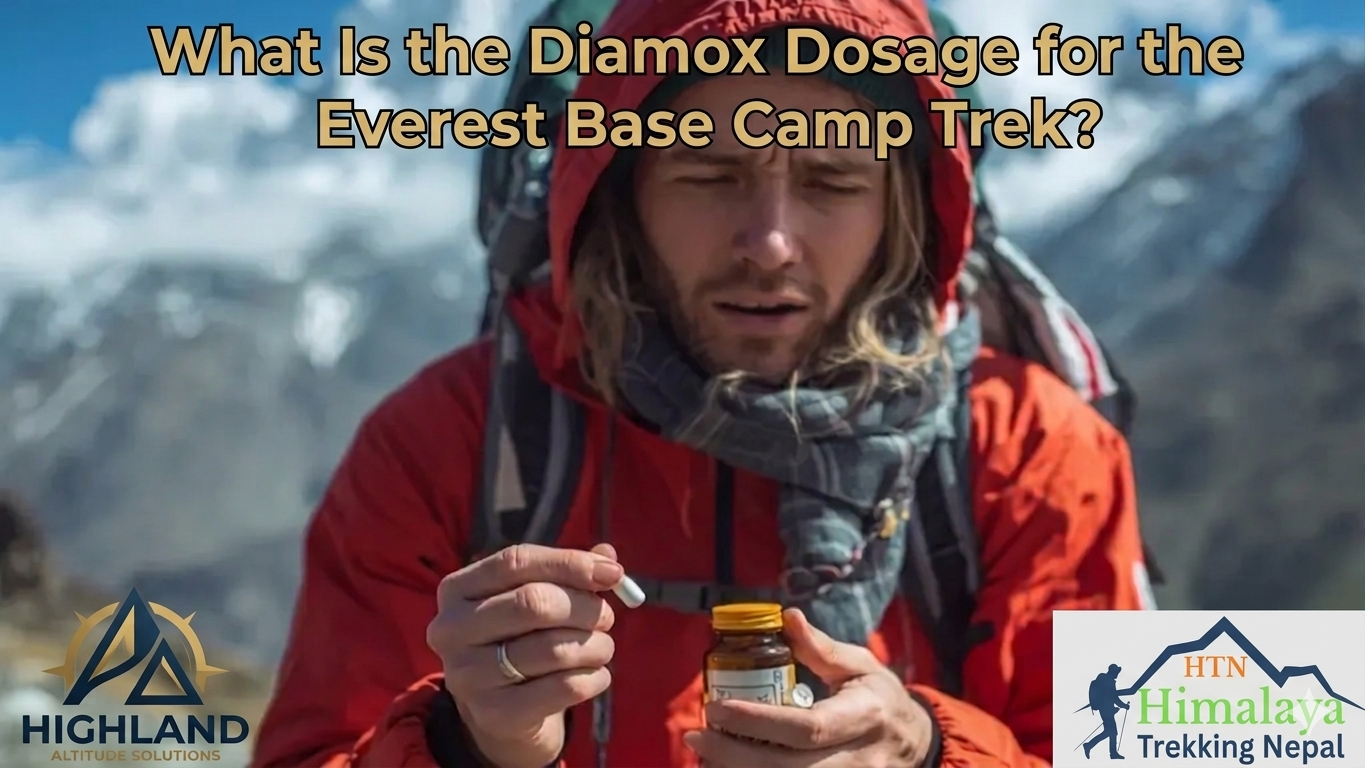
The standard preventive Diamox dosage is 125 mg twice daily, taken every 12 hours. The high-altitude treatment dosage is 250 mg twice daily.
The 3 dosage levels used on EBC treks are:
-
62.5 mg twice daily: Low-sensitivity approach for trekkers prone to side effects
-
125 mg twice daily: Standard preventive dose. Recommended by the Wilderness Medical Society for most trekkers
-
250 mg twice daily: Traditional dose, still used in treatment of active AMS symptoms
According to research from the High Altitude Medicine and Physiology journal, 125 mg twice daily produces equivalent AMS prevention to 250 mg twice daily with 40% fewer side effects.
Dose timing: 8 AM and 8 PM. This 12-hour interval maintains consistent blood acetazolamide levels across the full 24-hour period.
Medical consultation before dosage selection is required. Trekkers with kidney conditions, liver conditions, or sulfa drug allergies require physician clearance before any dosage level.
When and How Do You Take Diamox Each Day During the Trek?
Take Diamox at 8 AM and 8 PM every day, with food, alongside 3 to 4 liters of water per day. Consistent timing maintains stable blood levels. Skipping doses reduces effectiveness within 12 hours.
Daily protocol:
-
Morning dose: 8 AM, with breakfast
-
Evening dose: 8 PM, with dinner
-
Water intake: 3 to 4 liters daily throughout the trek
-
Alcohol: Zero. Alcohol accelerates dehydration and worsens altitude adaptation
Taking Diamox without food increases nausea risk by 30% in trekkers above 3,500 m. Food slows absorption and reduces stomach upset.
Diamox is a diuretic. It increases urination frequency by 30 to 50% above baseline. Dehydration risk increases directly. Trekkers on Diamox require active hydration tracking throughout each trekking day.
How Long Should You Take Diamox During the Everest Base Camp Trek?
Take Diamox from 24 to 48 hours before ascent through 48 hours after reaching peak altitude. For the standard EBC itinerary, this covers approximately 10 to 12 active days of use.
Duration by trek phase:
-
Pre-ascent phase: Start 24 to 48 hours before Lukla
-
Ascent phase: Continue daily through Namche Bazaar, Dingboche, Lobuche, and Gorak Shep
-
Peak altitude phase: Continue through Everest Base Camp (5,364 m) and Kala Patthar (5,545 m)
-
Post-descent phase: Continue 48 hours after descending below 3,500 m
Stopping Diamox before descent is complete raises re-ascent AMS risk. The body has not fully stabilized oxygen processing without pharmaceutical support during descent from 5,000 m to 3,500 m.
Short-term use is the standard protocol. Diamox is not designed for continuous long-term use beyond the trekking window.
What Are the Side Effects of Diamox During the Everest Base Camp Trek?
Diamox causes 4 common side effects: tingling in fingers and toes (paresthesia), increased urination, taste alteration in carbonated drinks, and mild nausea. These occur in 50 to 70% of trekkers at the 125 mg dose.
Side effects by type and frequency:
|
Side Effect |
Medical Term |
Frequency at 125 mg |
|
Tingling in fingers and toes |
Paresthesia |
60 to 70% |
|
Increased urination |
Diuresis |
50 to 60% |
|
Flat taste in carbonated drinks |
Taste alteration |
40 to 50% |
|
Mild nausea |
Gastrointestinal upset |
20 to 30% |
|
Dizziness |
Mild vertigo |
10 to 15% |
|
Electrolyte imbalance |
Hypokalemia |
Less than 10% |
These side effects occur because carbonic anhydrase inhibition affects multiple body systems simultaneously, not only the respiratory system.
Paresthesia is the most common side effect. It appears in hands and feet within 2 to 4 hours of the first dose. It is not harmful. It does not indicate a severe reaction.
Side effects become concerning under 3 conditions: severe rash across the skin, difficulty breathing unrelated to altitude, or swelling of the face and throat. These indicate a sulfa drug allergic reaction and require immediate medical attention.
How Do You Reduce Diamox Side Effects at High Altitude?
4 strategies reduce Diamox side effects without reducing its effectiveness: proper hydration, starting at 62.5 mg before moving to 125 mg, avoiding alcohol, and taking doses with food.
Hydration is the highest-priority strategy. Diamox increases urination by 30 to 50%. Each liter lost without replacement accelerates fatigue, headache, and electrolyte imbalance. Drink 3 to 4 liters of water daily, separate from tea or coffee intake.
Gradual dose approach: Start at 62.5 mg twice daily for the first 2 days. Move to 125 mg twice daily from Day 3. This reduces paresthesia intensity in trekkers sensitive to acetazolamide.
Electrolyte management: Diamox depletes potassium. Eating potassium-rich foods at teahouse meals reduces electrolyte imbalance. Dal bhat, spinach, and bananas available at Namche Bazaar and Dingboche teahouses provide adequate potassium support.
Alcohol worsens every side effect. Dehydration from alcohol combined with Diamox diuretic effect doubles fatigue and headache risk above 3,500 m.
Who Should Avoid Taking Diamox for the Everest Base Camp Trek?
4 groups require physician clearance or must avoid Diamox entirely: trekkers with sulfa drug allergies, kidney or liver conditions, pregnant individuals, and those on specific interacting medications.
Sulfa drug allergy is the primary contraindication. Diamox (acetazolamide) belongs to the sulfonamide drug class. An allergic reaction to any sulfa antibiotic indicates high cross-reactivity risk with Diamox. Symptoms of allergic reaction include skin rash, shortness of breath, and facial swelling.
Medical contraindications:
-
Sulfa drug allergy: Do not take Diamox
-
Kidney disease (chronic): Diamox worsens kidney filtration impairment
-
Liver disease: Acetazolamide metabolism is impaired without normal liver function
-
Pregnancy: Diamox carries Category C risk. Physician clearance required
-
Breastfeeding: Acetazolamide passes into breast milk
Drug interactions requiring physician review:
-
Lithium: Diamox reduces lithium excretion
-
Aspirin (high dose): Combined with Diamox, raises toxicity risk
-
Anticoagulants: Diamox alters drug metabolism rates
-
Metformin: Combined diuretic effect increases lactic acidosis risk
Medical clearance is required before use, not optional, for any trekker in the above groups.
Can Diamox Be Used to Treat Altitude Sickness During the Trek?
Yes. Diamox treats mild to moderate AMS when symptoms appear at altitude. At 250 mg twice daily, it reduces mild AMS symptoms within 12 to 24 hours in 70% of cases.
Treatment protocol after symptoms appear:
-
Stop ascent immediately
-
Begin 250 mg Diamox twice daily
-
Rest at current altitude for 24 hours
-
Reassess oxygen saturation with pulse oximeter
-
Descend if symptoms worsen within 6 hours
Diamox is effective for mild AMS: headache, nausea, fatigue, and dizziness. It is not effective for severe AMS, HACE (High Altitude Cerebral Edema), or HAPE (High Altitude Pulmonary Edema).
HACE and HAPE require immediate descent. No medication replaces descent for severe altitude sickness. Diamox is a support tool, not an evacuation substitute.
What Are the Symptoms of Altitude Sickness on the Everest Base Camp Trek?
Altitude sickness symptoms on the EBC trek present across 3 severity levels: mild AMS, moderate AMS, and life-threatening conditions including HACE and HAPE.
Mild AMS symptoms (appear within 6 to 12 hours of altitude gain):
-
Headache (primary diagnostic symptom)
-
Nausea and reduced appetite
-
Fatigue disproportionate to exertion
-
Dizziness and difficulty sleeping
Moderate AMS symptoms (appear 12 to 24 hours without treatment):
-
Persistent severe headache unresponsive to ibuprofen
-
Vomiting
-
Significant shortness of breath at rest
-
Coordination difficulty
Severe conditions requiring emergency descent:
-
HACE (High Altitude Cerebral Edema): Brain swelling. Symptoms include confusion, loss of coordination, and altered mental state. Fatal without descent.
-
HAPE (High Altitude Pulmonary Edema): Fluid in lungs. Symptoms include severe breathlessness at rest, pink or white frothy cough, and blue-tinged lips. Fatal without descent.
AMS onset risk increases above 3,000 m. The highest-risk elevation zones on the EBC route are Dingboche (4,410 m), Lobuche (4,940 m), and Gorak Shep (5,164 m).
Why Do Trekkers Get Altitude Sickness on the Everest Base Camp Trek?
Altitude sickness occurs because reduced air pressure above 3,000 m decreases oxygen molecule density per breath, triggering hypoxia at high altitude in unprepared bodies.
The physiology operates in a direct chain:
Higher altitude reduces air pressure. Lower air pressure reduces oxygen availability per breath. Reduced oxygen triggers hypoxia. Hypoxia causes headache, nausea, and fatigue (AMS). Severe hypoxia causes HACE and HAPE.
At sea level, each breath delivers 209 ml of oxygen per liter of air. At Namche Bazaar (3,440 m), it delivers 140 ml per liter. At Everest Base Camp (5,364 m), it delivers 104 ml per liter. At Kala Patthar (5,545 m), it delivers 102 ml per liter.
3 factors determine individual AMS risk:
-
Ascent rate: Gaining more than 500 m per day above 3,000 m raises risk sharply
-
Individual physiology: Fitness level does not predict AMS tolerance. Elite athletes develop AMS at the same rate as beginners above 4,000 m
-
Prior altitude history: A previous AMS episode increases recurrence probability by 40 to 60%
Rapid ascent is the primary cause of AMS on EBC treks. The 12 km, 830 m climb from Phakding (2,610 m) to Namche Bazaar (3,440 m) on Day 2 is where most first AMS symptoms appear.
Diamox vs Natural Acclimatization: Which Is Better for the EBC Trek?
Natural acclimatization with structured rest days is more effective than Diamox alone. Combining both reduces AMS risk to under 8% in guide-led groups on 14-day itineraries.
Natural acclimatization works by exposing the body to altitude long enough to trigger red blood cell production, increase oxygen saturation, and adapt cardiovascular output. This takes 2 to 3 days per major altitude gain.
The EBC itinerary includes 2 built-in acclimatization days:
-
Day 3 at Namche Bazaar (3,440 m): Body adapts to 67% oxygen before pushing higher
-
Day 6 at Dingboche (4,410 m): Body adapts to 60% oxygen before the 4,940 m Lobuche push
Diamox accelerates this adaptation by 30 to 40%. It does not replace it.
Trekkers who rely on Diamox and compress the itinerary below 12 days face AMS risk of 25 to 35% above 4,500 m, even with medication.
The combined approach (proper itinerary plus Diamox at preventive dose) reduces AMS incidence to under 8% according to guide-led expedition data from Sagarmatha National Park operators.
What Are the Alternatives to Diamox for the Everest Base Camp Trek?
3 alternatives reduce AMS risk without Diamox: gradual ascent protocol, active hydration strategy, and acclimatization hike exposure on rest days.
Gradual ascent: Ascend no more than 300 to 500 m per day above 3,000 m. The standard 14-day Khumbu Valley trek itinerary respects this rate on most days.
Hydration: Drink 3 to 4 liters of water daily. Dehydration at altitude increases AMS severity. Water does not prevent AMS but reduces symptom intensity.
Acclimatization hike strategy: On rest days at Namche Bazaar and Dingboche, hike to higher altitude during the day and sleep at lower altitude at night. This "climb high, sleep low" method exposes the body to altitude stress without overnight risk.
Ibuprofen: According to research published in the Annals of Emergency Medicine, ibuprofen 600 mg three times daily reduces AMS headache incidence by 26% compared to placebo. It is not as effective as Diamox but is an option for trekkers who cannot take acetazolamide.
Dexamethasone is used only for emergency treatment of HACE and HAPE. It is not a Diamox alternative for standard AMS prevention.
Is Diamox Safe for the Everest Base Camp Trek?
Diamox is safe for medically cleared trekkers at 125 mg twice daily. Serious adverse events occur in less than 1% of users without contraindications.
According to the Wilderness Medical Society guidelines on high-altitude travel, acetazolamide is the first-line pharmacological agent for AMS prevention. It has a 50-year safety record in high-altitude medical use.
Safety by user profile:
-
Healthy adult with no sulfa allergy: Safe at 125 mg twice daily
-
Trekker with prior AMS: Safe and recommended at 125 mg twice daily
-
Trekker with sulfa allergy: Contraindicated
-
Pregnant trekker: Requires physician evaluation
Safe usage guidelines:
-
Always consult a physician before the trek
-
Begin at 62.5 mg to test tolerance if first-time use
-
Do not combine with alcohol
-
Maintain 3 to 4 liters daily water intake
-
Stop and descend on any sign of severe allergic reaction
Tips for Using Diamox Safely During the Everest Base Camp Trek
6 practices ensure safe and effective Diamox use across the full EBC route.
Start early: Begin 24 to 48 hours before Lukla departure, not at Lukla.
Follow the 12-hour dosing interval: 8 AM and 8 PM, every day without gaps.
Hydrate actively: Diamox increases urination. Replace every liter lost. Carry an electrolyte supplement from Kathmandu.
Monitor daily oxygen saturation: A pulse oximeter tracks blood oxygen levels at each camp. Normal saturation above 3,500 m is 85 to 92%. Below 80% at rest is a descend signal.
Do not rely on Diamox alone: Use the full acclimatization protocol. Rest days at Namche Bazaar (3,440 m) and Dingboche (4,410 m) are non-negotiable on a 14-day itinerary.
Carry a backup evacuation plan: Diamox reduces AMS risk. It does not eliminate it. Guide-led groups carry emergency evacuation protocols and maintain direct contact with helicopter rescue services operating from Kathmandu.
FAQs: Diamox for Everest Base Camp Trek
At What Altitude Should You Take Diamox?
Start Diamox before ascending above 2,500 m. Begin in Kathmandu (1,400 m), 24 to 48 hours before the Lukla flight. This stabilizes blood acetazolamide levels before reaching the first risk altitude at Namche Bazaar (3,440 m).
Can You Take Diamox Only After Symptoms Appear?
Yes, but preventive use is more effective. Reactive Diamox at 250 mg twice daily reduces mild AMS symptoms in 70% of cases within 24 hours. Preventive use at 125 mg twice daily reduces AMS onset by 75% before symptoms develop.
Is Diamox Necessary for All Everest Base Camp Trekkers?
No. Diamox is recommended, not required. Trekkers on 14-day itineraries with full acclimatization days at Namche Bazaar and Dingboche, and with prior altitude experience above 4,000 m, complete the trek without Diamox. Beginners and fast-ascent trekkers benefit most.
Can Beginners Rely on Diamox for Altitude Safety?
No. Diamox reduces AMS risk but does not eliminate it. Beginners require a 14-day structured itinerary, 2 acclimatization days, active hydration, pulse oximeter monitoring, and guide supervision. Diamox is 1 layer of a 5-layer safety system, not a standalone solution.
When Should You Stop Taking Diamox During the Trek?
Stop Diamox 48 hours after descending below 3,500 m. On the EBC return route, this corresponds to Namche Bazaar on the descent. Stopping earlier risks rebound altitude adaptation loss if re-ascent is needed.
Can Diamox Prevent Severe Altitude Sickness Completely?
No. Diamox prevents and reduces mild to moderate AMS. HACE and HAPE require immediate descent regardless of Diamox use. No medication substitutes for descent in severe altitude sickness. Trekkers above 5,000 m with severe symptoms descend to below 4,000 m as the primary intervention.
Does Diamox Affect Trekking Performance?
Diamox does not reduce trekking performance at 125 mg twice daily. According to Dr. Peter Hackett's high-altitude medicine research, acetazolamide is not a performance-enhancing drug. It equalizes performance by reducing the physiological suppression caused by hypoxia. Increased urination is the only performance-adjacent effect and is managed by hydration.
Where Do You Get Diamox Before the Everest Base Camp Trek?
Diamox (acetazolamide) is available by prescription in the US, UK, and Australia. In Nepal, it is available over the counter at pharmacies in Kathmandu's Thamel district. Cost in Kathmandu ranges from USD 3 to USD 8 for a 14-day supply at 125 mg twice daily. Obtain a physician prescription before departure. Carry a 20% surplus above calculated dose in case of delays.
More About Author

Khilak Budhathoki
Travel Director
Khilak Budhathoki is the co-founder and lead trekking guide at Himalaya Trekking Nepal, a locally owned and operated adventure company based in Kathmandu. Born and raised in the foothills of Nepal, Khilak developed a deep love for the mountains from an early age. With over a deca...

USD$1,600 pp
Our Recommendation