- 13, Jul 2026 | Khilak Budhathoki
Nepal is widely regarded as one of the safest adventure travel destinations in South Asia for female travellers, welcoming thousands of women every year who visit independently, join guided treks, volunteer, or explore the country's cultural and spiritual landmarks. From the bustling streets of Kathmandu and the lakeside atmosphere of Pokhara to Himalayan trekking routes such as Everest Base Camp and the Annapurna Circuit, Nepal offers a well-established tourism infrastructure, experienced local guides, dedicated Tourist Police, and a culture of hospitality that supports safe and rewarding travel for women. While petty theft, transportation challenges, tourist scams, and altitude-related health risks require sensible preparation, violent crime against foreign female visitors remains uncommon.
 This comprehensive guide explains everything female travellers need to know before visiting Nepal, including personal safety, solo travel, trekking security, the safest destinations, common scams, cultural customs, appropriate clothing, transportation, accommodation, health precautions, altitude sickness, emergency contacts, packing essentials, and the benefits of travelling with licensed trekking agencies. Whether you are planning your first solo trip, a Himalayan trekking adventure, a spiritual retreat, or a guided holiday, this guide provides practical safety advice, local insights, and expert recommendations to help you travel confidently, minimise risks, and enjoy an authentic experience throughout Nepal.
Why Is Nepal Considered Safe for Female Travellers?
Nepal's low violent crime rate, deep-rooted hospitality culture, and 60-year-old tourism infrastructure make it one of Asia's more welcoming destinations for women. The Nepal Tourism Board (NTB) actively regulates trekking agencies, trains licensed guides, and operates tourist support offices across the country's most-visited regions.
Nepal has hosted international travellers since the 1960s. Communities along classic trekking routes, the Annapurna Circuit, Everest Base Camp trail, and Langtang Valley, have spent generations interacting respectfully with foreign visitors. This long history produces communities that understand tourist norms and boundaries better than many regional counterparts.
The cultural foundation matters enormously. In Nepali Hindu and Buddhist tradition, guests hold sacred status, expressed through the Sanskrit principle Atithi Devo Bhava, meaning "The guest is God." This belief translates into genuine hospitality that female travellers consistently describe as one of Nepal's defining characteristics.
Teahouse owners along trekking routes, many of whom are women, create an informal safety network. Shopkeepers, guesthouse staff, and fellow travellers form a broader community of mutual care that solo female travellers benefit from throughout their journey.
How Safe Is Nepal Compared With Other Popular Travel Destinations?
Nepal outperforms regional neighbours including India and Bangladesh on female traveller safety metrics. According to the Global Peace Index 2026, Nepal ranks 111th globally out of 163 nations; while it sits behind regional peers like Sri Lanka (67th), it remains ahead of India (127th) and its long-established tourism infrastructure continues to support safe organized travel.
The table below compares female traveller safety across popular Asian destinations, using 2026 GPI rankings, petty crime exposure, and solo female travel experience as indicators:
|
Destination |
GPI 2026 Rank |
Petty Crime Risk |
Solo Female Travel Experience |
|
Vietnam |
41* |
Low–Moderate |
Very Positive |
|
Sri Lanka |
67 |
Low–Moderate |
Positive |
|
Thailand |
101* |
Moderate |
Positive |
|
Nepal |
111 |
Moderate |
Positive |
|
India |
127 |
High |
Challenging |
Nepal's safety profile most closely mirrors Thailand and Sri Lanka. Female travellers consistently report feeling respected in Nepal's rural and trekking regions, where communities have long experience with international visitors of all genders and backgrounds.
What Types of Female Travellers Visit Nepal?
Nepal attracts 5 distinct types of female travellers: solo adventurers, dedicated trekkers, spiritual seekers, international volunteers, and group tour participants. Each group experiences Nepal differently, and understanding which profile aligns with your journey helps calibrate the appropriate safety strategy.
-
Solo adventurers explore Kathmandu, Pokhara, and Chitwan independently, combining cultural immersion with short hikes and city exploration.
-
Trekkers and hikers target established routes including Everest Base Camp, the Annapurna Circuit, and Poon Hill, frequently joining registered guided group treks.
-
Spiritual seekers visit yoga retreats, meditation centres, and Hindu or Buddhist pilgrimage sites, Pashupatinath Temple, Boudhanath Stupa, and Lumbini (the birthplace of Buddha).
-
Volunteers work with Kathmandu-based NGOs and rural community programmes, typically committing 2 to 12 weeks within a structured placement.
-
Group tourists join organised cultural, wildlife, and adventure packages covering destinations from Chitwan National Park to Upper Mustang.
An unguided trekker attempting to bypass checkpoints faces severe safety vulnerabilities compared to a volunteer based in a structured Kathmandu family home. Matching your safety preparation to your specific travel style is the most effective risk-reduction strategy available.
What Safety Concerns Should Female Travellers Know About in Nepal?
The 4 primary safety concerns for female travellers in Nepal are petty theft, verbal harassment, transportation risks, and high-altitude health hazards. Physical violence targeting foreign women is rare, and these 4 areas account for the large majority of incidents reported to Kathmandu's Tourist Police.
Nepal's tourist zones attract opportunistic crime proportional to the volume of international visitors carrying cameras, electronics, and cash. Thamel in Kathmandu and Lakeside in Pokhara see the highest concentration of petty theft and tourist scams. Remote trekking regions are statistically safer for personal security but introduce altitude sickness as a genuine health threat above 3,500 metres.
The most common complaint among female visitors to Nepal is persistent attention from touts and vendors in tourist zones. This is frequent but not physically threatening in the overwhelming majority of situations. A confident, direct response combined with a change of direction resolves most incidents immediately.
Are Petty Theft and Scams Common?
Petty theft and tourist scams occur in Nepal's main visitor zones, particularly Kathmandu's Thamel district and Pokhara's Lakeside area. Pickpocketing in crowded markets and bus stations is the most frequently reported category of petty crime against tourists.
The 5 most common scams targeting female tourists in Nepal are:
-
Fake trekking agencies that collect advance deposits then disappear or provide dangerously substandard services and equipment.
-
Overpriced taxi fares from unlicensed drivers operating near Tribhuvan International Airport's arrivals hall.
-
Gem investment scams where friendly locals invite tourists to "help" export tax-free gemstones in exchange for a commission that never materialises.
-
Fake monk charity requests where individuals wearing Buddhist robes solicit donations for non-existent monasteries or orphanages.
-
Restaurant menu price switching, where menu prices change between ordering and billing, a practice most common in Thamel's less-established eateries.
Knowledge of these 5 patterns eliminates the vast majority of scam risk. Book all trekking services through agencies verified by the Trekking Agencies' Association of Nepal (TAAN) and confirm taxi fares before entering any vehicle.
Which Situations Require Extra Caution?
4 specific situations require heightened caution for female travellers in Nepal: walking alone after dark in unfamiliar areas, solo trekking in remote regions, accepting drinks from strangers, and using unlicensed transport vehicles.
Travelling alone after 10 PM in Kathmandu's residential neighbourhoods, areas outside Thamel's lit tourist core, carries elevated harassment and disorientation risk. Night buses on the Kathmandu–Pokhara mountain highway carry higher accident rates due to road conditions and driver fatigue. Daytime travel by public bus or domestic flight eliminates this risk.
Attempting to circumvent the guide mandate in remote conservation areas exposes travellers to legal fines at park checkpoints and leaves them isolated without rapid rescue support. The Annapurna Conservation Area Management Project recorded 42 trekking incidents in 2023, with solo trekkers accounting for 29 of those cases.
How Can You Avoid Common Tourist Scams?
Avoiding tourist scams in Nepal requires 3 core practices: booking exclusively through TAAN-registered agencies, using transparent-pricing apps (Pathao or InDrive) for taxis, and cross-referencing any agency against the Nepal Tourism Board's official agency directory (ntb.gov.np) before making any payment eliminates over 90% of agency-related fraud risk.
The NTB directory lists every licensed trekking agency in Nepal. Cross-referencing any agency against this list before making any payment eliminates over 90% of agency-related fraud risk. For accommodation, Booking.com and Hostelworld publish verified guest reviews that independently confirm quality and security standards.
When approached by exceptionally friendly strangers offering free tours, city orientation help, or introductions to "their family's handicraft shop," decline and move in the opposite direction. This specific social pattern serves as the opening of gem scams and overpriced retail encounters in a large proportion of reported cases.
Which Areas of Nepal Are Safest for Female Travellers?
The safest areas for female travellers in Nepal are Pokhara's Lakeside district, Kathmandu's Thamel neighbourhood, and the established teahouse trekking corridors on the Annapurna and Everest Base Camp trails. These areas have the densest concentration of tourist infrastructure, tourist police presence, and English-speaking local guides.
Is Kathmandu Safe for Solo Women?
Kathmandu is safe for solo women during daylight hours. Thamel, the city's primary tourist district, offers the most female-friendly urban environment in Nepal, with international restaurants, licensed hostels, women-focused tour operators, and regular tourist police patrols. The Tourist Police maintain a dedicated Thamel office and respond to tourist incidents within an average of 15 minutes.
The areas requiring most awareness are crowded markets like Asan Bazaar and major bus stations including Ratna Park, where pickpocketing incidents cluster. Swayambhunath (Monkey Temple), Pashupatinath Temple, Boudhanath Stupa, and Patan Durbar Square are safe daytime destinations with consistent tourist foot traffic throughout the day.
Use Pathao or InDrive ride-hailing apps rather than unmarked street taxis, share live location with a trusted contact during evening travel, and return to your accommodation before 10 PM in areas outside Thamel.
Is Pokhara Safe for Female Travellers?
Pokhara earns a consistent rating as the most comfortable city in Nepal for solo female travellers. Lakeside, Pokhara's visitor hub along the eastern shore of Phewa Lake, offers a walkable, low-density layout with abundant verified accommodation, open-air restaurants, and lake-view cafés. Street harassment is noticeably less frequent than in Kathmandu's tourist zones.
Davis Falls, Bat Cave, and the Peace Pagoda (Shanti Stupa) draw steady tourist traffic and are safe during daylight hours. Phewa Lake boating is popular and low-risk. Female travellers regularly make the 3-kilometre walk from Lakeside to Old Pokhara Bazaar independently and without incident.
Pokhara also functions as the primary gateway and acclimatisation base for the Annapurna trekking region, making it the natural starting point for women planning multi-day Himalayan hikes.
Are Rural Villages and Trekking Regions Safe?
Rural Nepali villages and established trekking corridors are among the safest environments for female travellers anywhere in the country. Communities along the Annapurna Circuit, Langtang Valley, and Everest Base Camp trail have hosted international trekkers since the 1960s. Local teahouse owners, many of them women managing family-run businesses, create a naturally supportive environment on the trail.
Crime rates in trekking villages are extremely low. The primary risks in these regions are altitude-related illness, trail accidents, and sudden weather changes rather than personal security threats. Villages including Namche Bazaar (3,440m), Manang (3,519m), and Ghorepani (2,860m) are well-equipped with accommodation, Himalayan Rescue Association-affiliated health posts, and functioning communication infrastructure.
Is Solo Female Travel in Nepal Safe?
Solo female travel in Nepal is safe with proper preparation, situational awareness, and respect for local customs. Thousands of women travel independently across Nepal each year without serious incident. The country's established tourism infrastructure, English-speaking locals in major hubs, and community-oriented culture actively support female independence on the road.
What Challenges Might Solo Female Travellers Face?
Solo female travellers in Nepal encounter 4 common challenges: persistent vendor attention in tourist zones, limited female-only accommodation outside Kathmandu, occasional language barriers in remote villages, and cultural misreadings around solo female independence.
Touts in Thamel and Lakeside approach solo women with high frequency, offering tours, rickshaw rides, restaurant menus, and shop invitations. A firm, confident "No, thank you" while maintaining forward movement is the most effective response. Sustained eye contact and extended conversation signals availability for further engagement in local cultural context.
Some remote trekking villages offer only family-run guesthouses with shared facilities and limited internal door security. Requesting a room lock inspection upon arrival and travelling with a door-stop alarm addresses this gap directly.
What Are the Benefits of Travelling Solo in Nepal?
Solo female travel in Nepal delivers 3 primary benefits: deeper cultural connections with local communities, complete itinerary flexibility, and accelerated personal confidence. Women travelling alone report more frequent invitations into local homes for tea, more candid conversations with Nepali women about daily life, and greater freedom to adjust daily plans in response to weather, energy, or spontaneous opportunity.
Solo travellers integrate naturally into the social ecosystems at trekking teahouses, forming walking partnerships with other independent travellers. Many lasting friendships formed on Nepal's trails begin between solo visitors who meet at a rest stop and decide to continue the day together.
Is Trekking in Nepal Safe for Women?
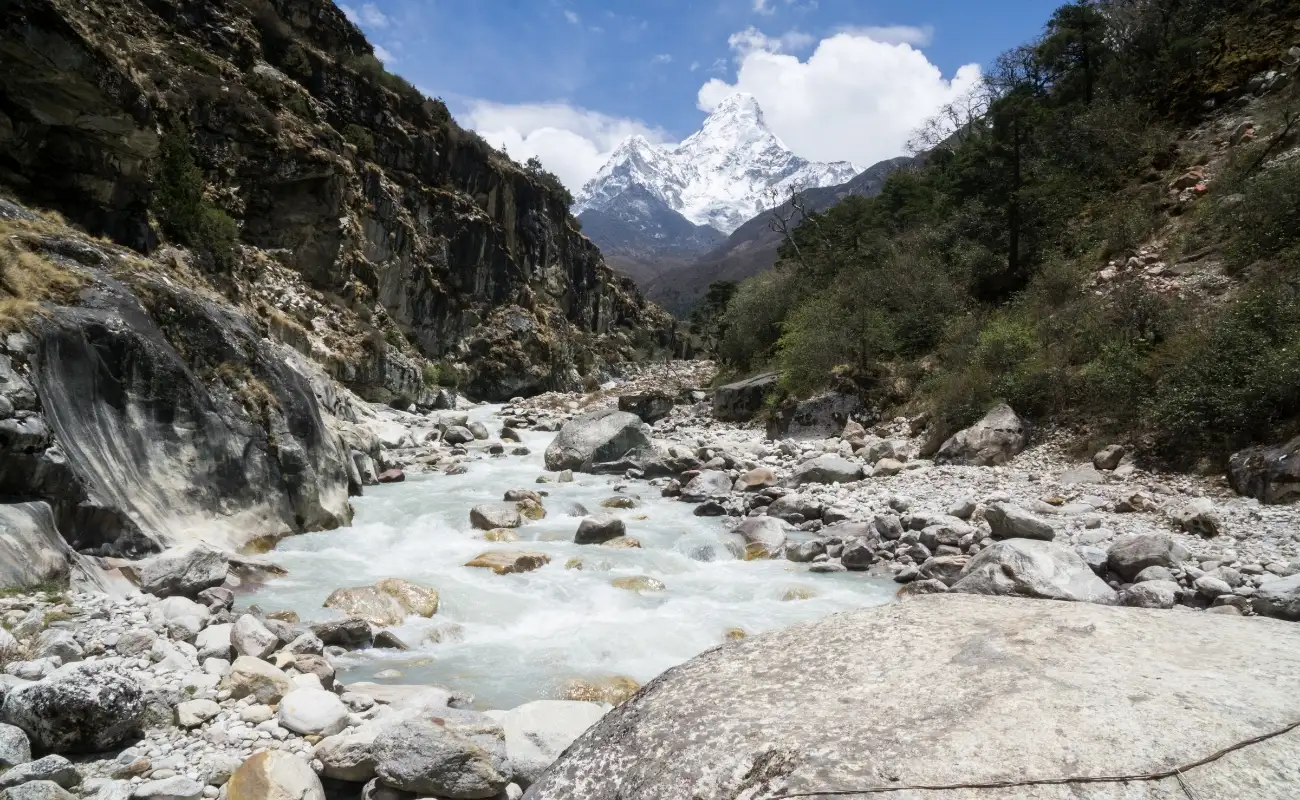 Trekking in Nepal is safe for women on established, permit-required routes with appropriate gear, either a registered guide or a thoroughly mapped self-guided itinerary, and a functional TIMS (Trekking Information Management System) card. The Government of Nepal's permit requirements create a registration system that enables faster search-and-rescue response when needed.
Should You Trek Alone or With a Guide?
Trekking with a registered guide significantly reduces incident risk compared to unguided solo trekking, according to data from the Himalayan Rescue Association (HRA). A licensed guide provides route navigation expertise, real-time altitude health monitoring, emergency communication with rescue services, and cultural liaison with teahouse communities.
Unguided solo trekking is banned for foreign nationals in all of Nepal's national parks and conservation areas, including the Annapurna Circuit, Poon Hill, and Everest Base Camp trails; all trekkers must hire a licensed guide through a registered agency. Women considering an Annapurna Base Camp solo trek can still travel independently in spirit while meeting this guide requirement through a registered agency. Since unguided trekking is no longer permitted, female travellers achieve stronger safety outcomes by ensuring their registered guide logs their full itinerary through the official agency portal and by carrying a personal satellite communicator such as the Garmin inReach Mini.
Three Sisters Adventure Trekking, established in 1994 and recognised as the world's first all-female trekking company in Nepal, provides female guides across all major routes, offering both safety expertise and cultural mentorship for women who prefer a female-led trekking environment.
Which Trekking Routes Are Best for Female Travellers?
The 5 trekking routes most suitable for female travellers in Nepal, ranked from lowest to highest difficulty, are Poon Hill (3 to 4 days), Annapurna Base Camp (7 to 9 days), Langtang Valley (7 to 8 days), Annapurna Circuit (15 to 20 days), and Everest Base Camp (12 to 14 days).
The following table summarises key safety characteristics of each route:
|
Route |
Duration |
Maximum Altitude |
Teahouse Density |
Guide Recommendation |
|
Poon Hill |
3–4 days |
3,210m |
High |
Mandatory |
|
Annapurna Base Camp |
7–9 days |
4,130m |
High |
Mandatory |
|
Langtang Valley |
7–8 days |
3,870m |
Moderate |
Mandatory |
|
Annapurna Circuit |
15–20 days |
5,416m |
High |
Mandatory |
|
Everest Base Camp |
12–14 days |
5,364m |
High |
Strongly Recommended |
The Ghorepani Poon Hill trek is the ideal first Nepal trek for women new to high-altitude hiking. The trail is well-marked, heavily trafficked, and peaks at only 3,210 metres, well below the altitude threshold where acclimatisation risks become significant. The Ghorepani-Poon Hill circuit departs from Nayapul and passes through rhododendron forests, traditional Gurung villages, and delivers one of the most celebrated Himalayan sunrise panoramas accessible without technical mountaineering skill.
What Safety Tips Should You Follow During a Trek?
5 non-negotiable safety practices for female trekkers in Nepal are: registering a TIMS card before departure, sharing daily route plans with your teahouse host each morning, trekking exclusively during daylight hours, following the 300-to-500-metre daily ascent limit above 3,000 metres, and carrying a personal locator beacon on routes above 4,500 metres.
Your registered trekking agency must secure your Blue TIMS card on your behalf, as independent trekking permits are no longer issued. Note that the Everest region no longer uses the TIMS system, requiring the Khumbu Pasang Lhamu Rural Municipality permit instead. Female trekkers heading to Khumbu should review the full Everest Base Camp trek permit process before departure to avoid checkpoint delays. The TIMS system gives rescue teams a verified record of your planned route and expected daily locations.
Begin each trekking day before 7 AM. Reaching your planned teahouse before 3 PM, when afternoon clouds, rain, and temperature drops accelerate in Nepal's mountain environments, ensures safe arrival and time for acclimatisation rest before dinner.
How Can Female Travellers Respect Local Culture?
Female travellers respect Nepali culture by dressing modestly in non-tourist contexts, observing Hindu and Buddhist temple customs, and engaging local communities through genuine curiosity rather than transactional assumptions. Cultural respect produces a direct safety dividend, communities that feel genuinely respected respond with greater care and support toward visitors.
What Should Women Wear in Nepal?
Women in Nepal dress to cover shoulders and knees in all public contexts outside established tourist zones. Clothing that exposes the midriff, chest, or upper thighs is considered culturally inappropriate in rural areas and religious settings, and draws unwanted attention in urban environments.
The appropriate dress code across Nepal's 3 primary contexts is:
-
Kathmandu and Pokhara tourist zones: Modest, comfortable clothing, full-length trousers or maxi skirts, t-shirts or tops that cover the shoulders. Western dress is commonplace and accepted in Thamel and Lakeside.
-
Temples, stupas, and religious sites: Full leg coverage, covered shoulders, and in some Hindu temples, a head covering. Remove shoes before entering all temples and Buddhist gompas.
-
Rural villages and trekking trails: Full-length trekking trousers, moisture-wicking long-sleeve base layers, and a fleece mid-layer for evenings. Short shorts and exposed midriffs are inappropriate in village settings regardless of temperature.
Pashmina scarves, widely available throughout Kathmandu for NPR 200 to 800, function as versatile coverings for temple visits, cool mountain evenings, and village interactions.
Which Cultural Customs Should Visitors Follow?
The 6 cultural customs that female visitors observe in Nepal are: greeting with Namaste (palms pressed together at chest height), removing shoes at all temple and residential home entrances, using the right hand for giving and receiving, refraining from touching anyone's head, avoiding public displays of physical affection, and circumambulating stupas and mani walls in a clockwise direction.
Touching a Nepali person's head, including a child's, constitutes a serious sign of disrespect in both Hindu and Buddhist tradition, where the head holds spiritual significance. Stepping over food, religious offerings placed on the ground, or sacred objects also causes genuine offence and is entirely avoidable with awareness.
During major festivals including Dashain (October), Tihar (October–November), and Holi (March), dress conservatively and request permission before photographing any religious ceremonies or participants.
How Should You Interact With Local Communities?
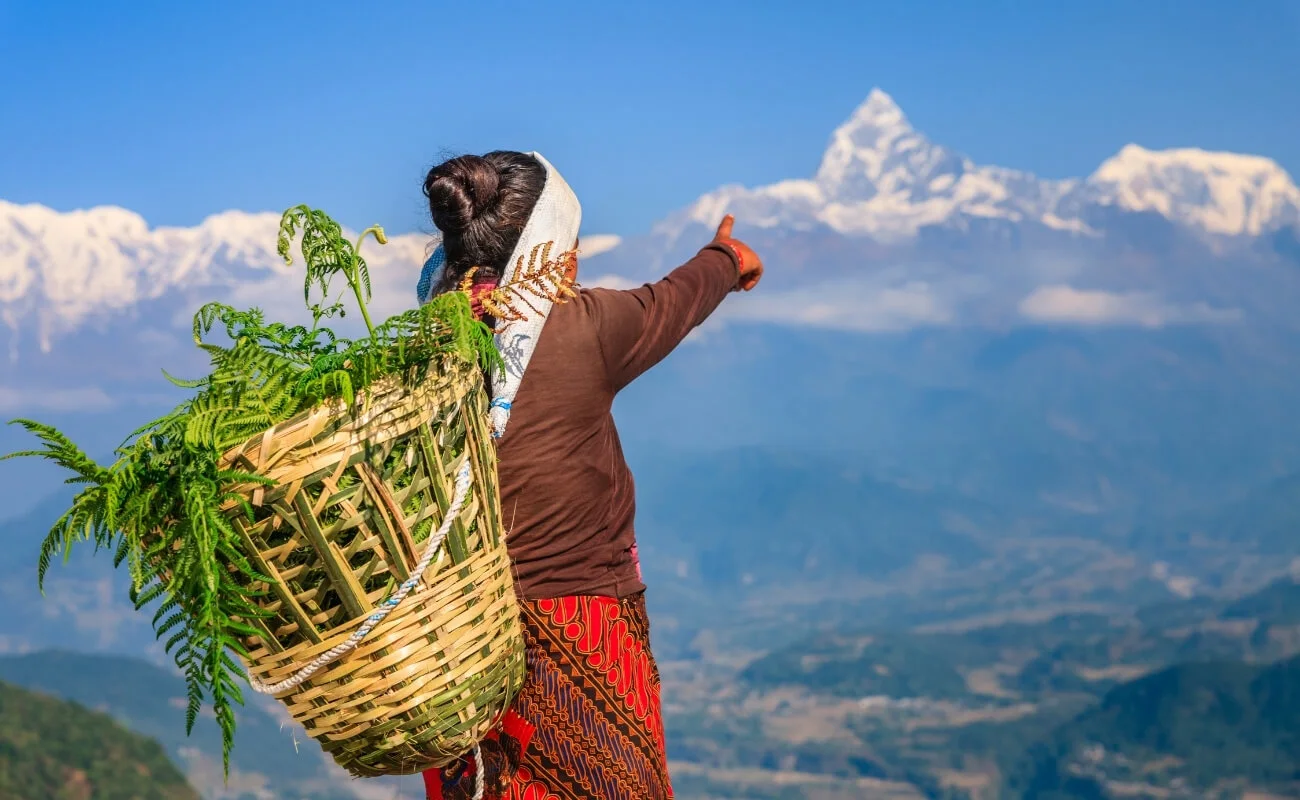 Respectful interaction with Nepali communities operates on 3 principles: obtaining verbal permission before photographing individuals, learning 5 to 10 functional Nepali phrases, and directing purchases toward local artisans and family-run teahouses rather than large commercial operators.
The Nepali phrases generating the most genuine goodwill from local communities include: Namaste (hello/respect), Dhanyabad (thank you), Kati ho? (how much?), Ramro chha (it is nice/good), and Ma bujdina (I do not understand). Making a genuine effort with local language, even imperfectly, communicates respect that crosses all cultural barriers effectively.
Photography of women and children in rural Nepal requires explicit verbal consent. Many women, particularly in Hindu communities, decline to be photographed for religious reasons. Accept refusals without persistence and without visible disappointment.
What Health and Emergency Precautions Should You Take?
Female travellers in Nepal prepare across 3 primary health categories: pre-departure vaccinations and prescriptions, altitude sickness prevention protocols for trekkers above 2,500 metres, and emergency contact knowledge for medical and personal safety situations.
What Medical Preparations Are Recommended?
The recommended medical preparations for Nepal include 6 vaccinations, comprehensive travel insurance with medical evacuation coverage, a 12-item basic first aid kit, and a Diamox (Acetazolamide) prescription for trekkers planning routes above 3,500 metres.
The CDC Yellow Book 2026 Nepal chapter recommends that travellers be up to date on Hepatitis A, Hepatitis B, Typhoid, Tetanus-Diphtheria, Japanese Encephalitis (for rural travel between May and October), and Rabies (for extended stays and trekkers in remote areas). Influenza vaccination is also recommended, with the CDC citing elevated risk at high-elevation teahouses where trekkers gather in close quarters. Malaria prophylaxis is recommended for travel to Nepal's Terai lowland zone below 1,200 metres during the monsoon season (May to October).
Our full guide to travel insurance and vaccinations explains why helicopter evacuation coverage is a non-negotiable requirement for Nepal, particularly for any trekking itinerary. Helicopter evacuation from Everest Base Camp to Kathmandu costs between USD 3,000 and USD 8,000. World Nomads and ISOS (International SOS) are the 2 providers most widely accepted by Kathmandu hospitals and Himalayan rescue services.
How Can You Stay Safe at High Altitudes?
According to a prospective epidemiological study of Nepalese pilgrims published via the NIH/PMC (PMC3794000), AMS affects approximately 34% of individuals ascending to 4,380m too rapidly, and women face a 57% higher incidence than men at equivalent altitudes. AMS, HACE, and HAPE represent the 3 altitude illness categories, ranging from manageable discomfort to life-threatening emergencies.
The primary acclimatisation rule is: ascend no more than 300 to 500 metres per day above 3,000 metres and include a full rest day every 3 days of ascent. Standard Everest Base Camp itineraries include mandatory acclimatisation stops at Namche Bazaar (3,440m) and Dingboche (4,410m) for this reason.
AMS symptoms include persistent headache, nausea, fatigue, dizziness, and disrupted sleep. Descend immediately by 300 to 600 vertical metres at the first sign of worsening symptoms. HACE and HAPE require emergency descent and immediate medical treatment, ascending with either condition is life-threatening.
A network meta-analysis published in PubMed confirms that acetazolamide at 125mg taken twice daily significantly reduces AMS incidence, with randomised controlled trials showing reductions of 47–69% compared to placebo, depending on ascent rate and altitude. Obtain a prescription from a travel medicine physician at least 4 weeks before departure.
What Emergency Contacts Should You Know?
Female travellers in Nepal store 6 emergency contacts before departure: Nepal Police (100), Tourist Police (1144), Ambulance (102), the Himalayan Rescue Association (+977-1-4440292), the Nepal Tourism Board Helpline (+977-1-4256909), and their home country's embassy in Kathmandu.
The Tourist Police service operates in Kathmandu, Pokhara, Chitwan, Lumbini, and Mustang and specifically handles tourist-related incidents including theft, harassment, scams, and missing persons. Average response times in these areas range from 15 to 30 minutes. In remote trekking areas above mobile network range, teahouse radio communication and satellite devices serve as the primary emergency tools.
The table below lists essential emergency contacts for Nepal:
|
Service |
Contact Number |
|
Nepal Police |
100 |
|
Tourist Police |
1144 |
|
Ambulance |
102 |
|
Fire Service |
101 |
|
Nepal Tourism Board Helpline |
+977-1-4256909 |
|
Himalayan Rescue Association (HRA) |
+977-1-4440292 |
|
CIWEC Travel Medicine Center, Kathmandu |
+977-1-4424111 |
Register travel details with your home country's embassy in Kathmandu before beginning any trek. Most embassies provide free traveller registration through online portals, this enables faster diplomatic assistance in medical or security emergencies.
What Practical Safety Tips Can Improve Your Trip?
7 practical habits that consistently improve female travel experiences in Nepal are: using registered transport, booking verified accommodation, distributing cash across multiple locations, maintaining phone charge daily, dressing context-appropriately, informing your accommodation host of your daily plan each morning, and keeping photocopies of key documents both physically and in cloud storage.
How Should You Use Transportation Safely?
The 3 safest transportation modes for female travellers in Nepal are licensed metered taxis, ride-hailing apps (Pathao and InDrive), and domestic flights operated by Buddha Air, Yeti Airlines, or Shree Airlines.
Pathao, Nepal's equivalent of Uber, operates across Kathmandu and Pokhara and displays driver ratings, vehicle registration numbers, and fare estimates before booking confirmation. This transparency eliminates fare disputes and provides a verifiable digital record of every journey. InDrive allows upfront fare negotiation and operates on a similar safety model.
Night buses between Kathmandu and Pokhara, Chitwan, or Lumbini carry elevated accident risk due to mountain road conditions and driver fatigue. Daytime travel on these routes substantially reduces that risk. Domestic flights to Pokhara (25 minutes, approximately NPR 6,000 to 10,000) and Chitwan (30 minutes) eliminate mountain road exposure entirely.
Which Accommodation Options Are Most Secure?
The most secure accommodation types for solo female travellers in Nepal are 3-star-and-above hotels with 24-hour front desk service, female-only dormitories in licensed hostels, and teahouses on established trekking routes with resident owner families.
In Kathmandu, hostels including Alobar1000 in Thamel provide female-only dormitory rooms with individual luggage lockers and secure common areas. Pokhara's Lakeside district concentrates a high density of verified guesthouses with consistent 4-star and above ratings for security and cleanliness on Booking.com.
Check 3 specific features upon arrival at any accommodation: a functioning internal door lock, working window latches, and a well-lit corridor between the room and the shared bathroom. A portable door alarm, available online for under USD 10 and weighing under 50 grams, provides an effective additional security layer in any room type.
How Can You Stay Connected and Protect Your Belongings?
Staying connected in Nepal requires a Ncell or Nepal Telecom SIM card, available at Tribhuvan International Airport arrivals for NPR 100 to 500, and a power bank of at least 20,000mAh capacity for trekking routes where charging facilities are limited or carry a fee of NPR 100 to 200 per device.
Store digital copies of your passport, Nepal visa, travel insurance policy, and TIMS card in a cloud storage application accessible from any internet connection. Carry printed photocopies in a separate bag from your original documents.
Anti-theft day packs with cut-resistant straps and hidden zippers are widely available in Kathmandu's Thamel district for USD 20 to 60. Distributing cash across 3 separate locations, your day bag, a money belt worn under clothing, and your accommodation's room safe, reduces the impact of any single theft event to a fraction of your total travel funds.
What Should Female Travellers Pack for a Safe Trip to Nepal?
 A complete Nepal packing list for female travellers covers 3 categories: personal safety devices, health and emergency supplies, and context-appropriate clothing and trekking equipment. For a full checklist by season and route, see our Nepal packing list guidelines.
Which Essential Safety Items Should You Bring?
The 7 essential safety items for female travellers in Nepal are a personal safety alarm, portable door alarm, whistle, money belt, anti-theft day pack, cloud-stored passport copies, and a satellite communicator for any route above 4,000 metres.
A personal alarm emitting 120 to 130 decibels deters harassment and attracts immediate attention in crowded environments. These devices are available online for USD 8 to 20 and add under 60 grams to pack weight. A door alarm, magnetic or wedge-style, costs under USD 10 and secures any accommodation door that lacks a functioning internal lock.
The satellite communicator represents the most commonly overlooked item among first-time Nepal trekkers. A Garmin inReach Mini enables two-way satellite text messaging from any location in Nepal, including areas above 4,500 metres with zero mobile network coverage. Monthly subscriptions begin at USD 15. Rescue coordination from remote trekking areas without satellite communication can delay response by 12 to 48 hours.
What Trekking Gear Is Recommended for Women?
The trekking gear kit recommended for women in Nepal includes 8 essential items: waterproof trekking boots, a 3-layer clothing system, a rain jacket, a down jacket, a sleeping bag rated to -10°C, a headlamp with spare batteries, water purification tablets or a SteriPen UV purifier, and trekking poles.
Women-specific trekking boots from Salomon, Merrell, or La Sportiva feature narrower heel construction and higher instep volume that significantly reduce blister and ankle instability risk compared to unisex sizing. Break boots in for a minimum of 3 weeks before departure across mixed terrain. Blisters and ankle sprains are Nepal's most common trekking injuries, both are almost entirely preventable with proper footwear selection and preparation.
The 3-layer clothing system manages temperatures that swing from 25°C at valley floors to -15°C at high camps and summit approach zones. The moisture-wicking base layer manages perspiration, the insulating mid-layer (fleece or down) retains heat at rest, and the waterproof outer shell blocks wind and precipitation. Pack light but complete, every layer serves a specific function on Nepal's high-altitude trails.
How Can a Local Trekking Agency Help Female Travellers Stay Safe?
A TAAN-registered Nepali trekking agency provides 5 distinct safety advantages for female travellers: certified route expertise, real-time altitude health monitoring, established emergency evacuation protocols, permit and TIMS management, and access to female-certified guides.
Why Choose an Experienced Trekking Agency in Nepal?
Experienced trekking agencies registered with both TAAN (Trekking Agencies' Association of Nepal) and the NMA (Nepal Mountaineering Association) maintain verified emergency protocols, trained and certified guide staff, and direct relationships with helicopter evacuation services that independent trekkers cannot access.
When evaluating agencies, look for 3 verification signals: active TAAN membership displayed on the agency's website, a physical office location in Kathmandu or Pokhara rather than a digital-only presence, and a verifiable portfolio of client reviews on TripAdvisor or Google spanning at least 3 consecutive years.
3 Sisters Adventure Trekking, founded in Pokhara in 1994 by Lucky, Dicky, and Nicky Chhetri, pioneer female trekking guides in Nepal, operates as the country's first all-female-led trekking company. Their companion NGO, Empowering Women of Nepal, has trained nearly 2,000 women from across Nepal to become certified trekking guides. This agency provides both professional safety expertise and meaningful cultural mentorship for women seeking a female-led mountain experience.
What Safety Support Can Guided Treks Provide?
Guided treks in Nepal deliver 4 core safety functions: daily altitude health assessments by Wilderness First Responder-certified guides, real-time itinerary adjustment based on participant health and weather conditions, direct radio and satellite communication with rescue coordination centres, and cultural mediation with teahouse owners and local communities.
Licensed guides employed by TAAN-registered agencies complete a minimum 45-day formal guide training programme that covers wilderness first aid, altitude illness recognition and management, mountain weather forecasting, and emergency rescue coordination with the Himalayan Rescue Association. Guides operating on Everest Base Camp and above receive additional high-altitude certification through the NMA's guide licensing programme.
Reputable guided trek operations maintain a maximum guide-to-client ratio of 1:8, ensuring each trekker receives adequate individual attention and health monitoring. Nepal's porter regulations specify a maximum load of 25 kilograms per porter, compliance with this standard is a reliable indicator of a professionally operated agency.
What Are the Key Takeaways About Female Travel Safety in Nepal?
Nepal is a safe, deeply welcoming, and genuinely rewarding destination for female travellers of all experience levels. The country's combination of low violent crime rates, a hospitality culture rooted in centuries of Buddhist and Hindu tradition, established trekking infrastructure across 7 major routes, and dedicated tourist support services creates an environment where women travel with real confidence.
The 7 core principles that underpin safe, fulfilling female travel in Nepal are:
-
Register all trekking intentions through the TIMS card system (except everest base camp trek) before beginning any route.
-
Book exclusively through TAAN-registered agencies and verified accommodation platforms with documented reviews.
-
Dress appropriately across all 3 contexts, tourist zones, rural villages, and religious sites each require a different standard.
-
Acclimatise strictly above 3,000 metres, following the 300-to-500-metre daily ascent limit and descending immediately at any worsening altitude sickness symptoms.
-
Connect with established female guide agencies such as Three Sisters Adventure Trekking for culturally immersive and safety-conscious trekking experiences.
-
Carry the 7 essential safety items: personal alarm, door alarm, whistle, money belt, anti-theft pack, document copies, and satellite communicator.
-
Prepare medically with the 6 recommended vaccinations, comprehensive evacuation insurance, and a Diamox prescription for high-altitude routes.
Nepal rewards prepared, culturally respectful female travellers with experiences that few destinations on earth replicate, the silence of a Himalayan sunrise above 5,000 metres, the warmth of a teahouse owner's welcome after a 20-kilometre trail day, the earned satisfaction of completing a world-class Everest Base Camp trek. The safety record speaks clearly: Nepal has hosted millions of female travellers across more than six decades, and the great majority return with nothing but admiration for the mountains and the people who live among them.
More About Author

Khilak Budhathoki
Travel Director
Khilak Budhathoki is the co-founder and lead trekking guide at Himalaya Trekking Nepal, a locally owned and operated adventure company based in Kathmandu. Born and raised in the foothills of Nepal, Khilak developed a deep love for the mountains from an early age. With over a deca...
USD$620 pp
Our Recommendation
Related Blogs