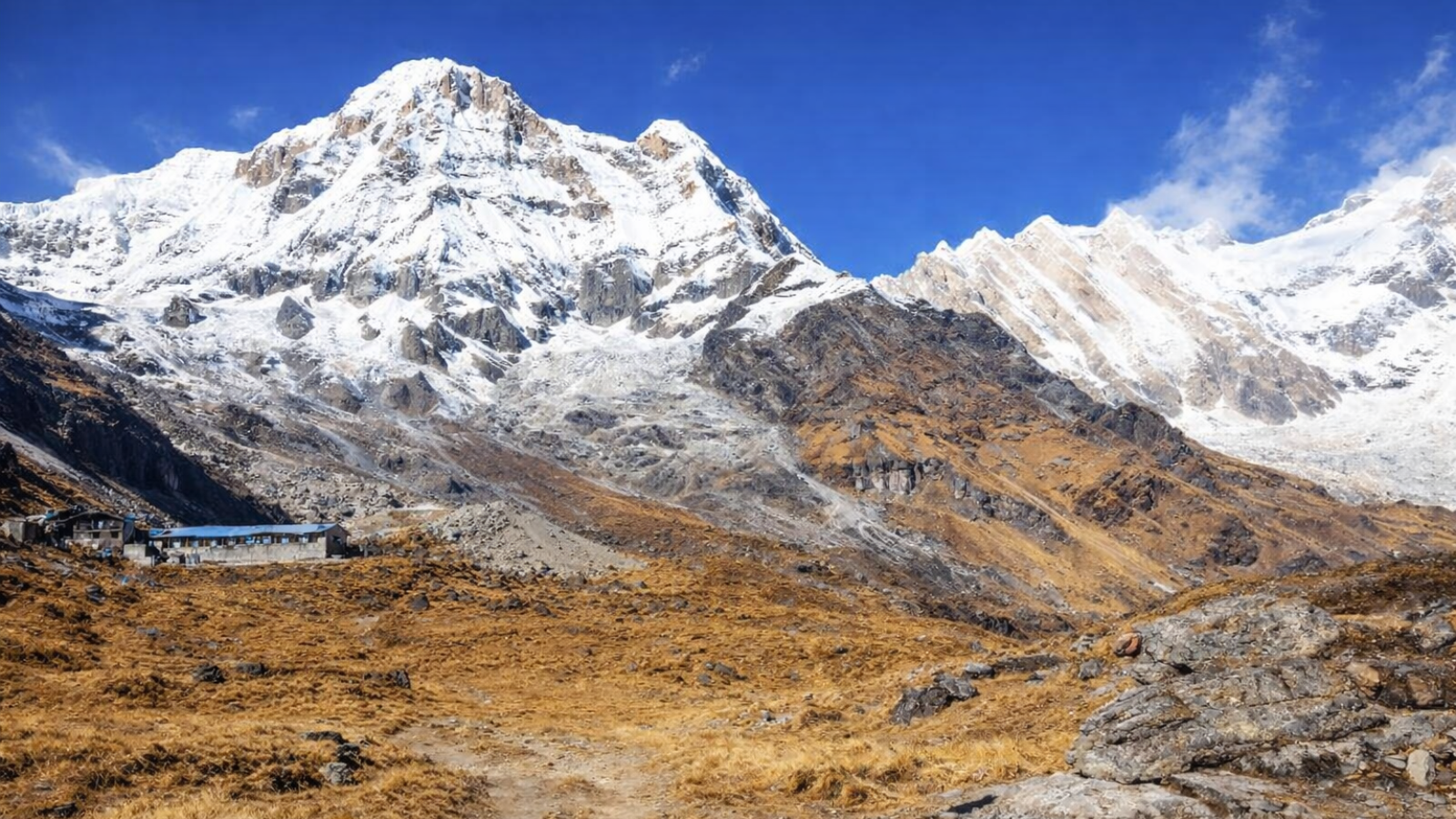
- 28, Jan 2026 | Khilak Budhathoki
Machapuchare is one of the most beautiful mountains you can see in Nepal. In Nepali, “Machha” means fish and “Puchhare” means tail. From the right angle, the peak splits into two, looking like a fish tail rising into the sky.
As a guide at Himalaya Trekking Nepal, we always tell people that Machapuchare is the real king of the Pokhara skyline. Unlike Everest, which people climb to conquer, Machapuchare is a mountain people visit to admire and respect. It has a calm, spiritual feel that stays with you even after you return home.
In this blog, we’ll discuss Machapuchare’s meaning, location, unique features, best viewpoints, and why it is sacred and unclimbed.
Machapuchare Quick Facts (Fishtail Mountain)
|
Fact |
Details |
|
Height |
6,993 m (22,943 ft) |
|
Location |
Annapurna Himalayas, north of Pokhara |
|
First Ascent |
Never climbed (religious restriction) |
|
Nepali Name |
मच्छपुछ्रे (Machhapuchhre) |
|
Rank in Nepal |
32nd highest peak |
|
Best Viewpoint |
Pokhara, Phewa Lake, ABC trek routes |
Even though Machapuchare is only the 32nd-highest peak in Nepal, it looks much taller because it rises sharply above Pokhara. It is also one of Nepal’s most sacred and untouched mountains.
Machapuchare Meaning, Location, and Sacred Importance
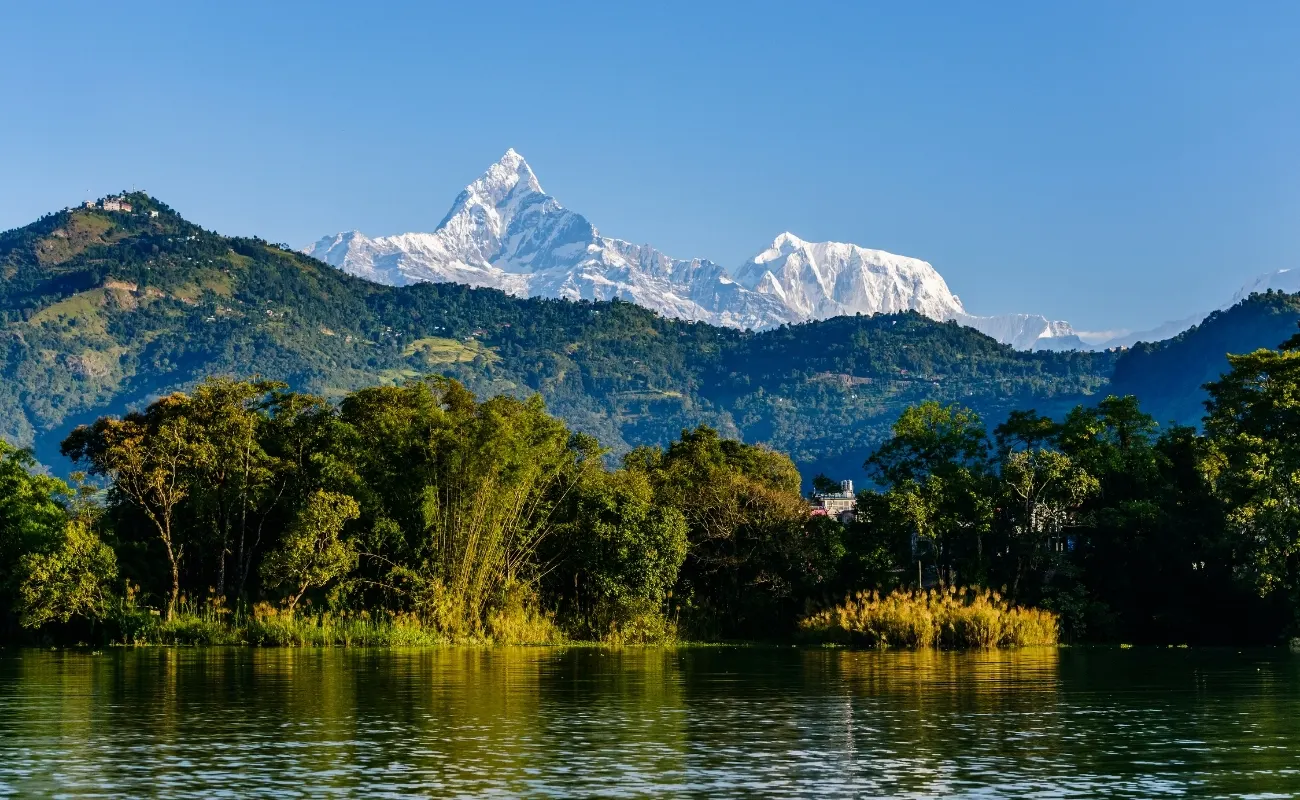
Machapuchare, also called Machhapuchhre or Fishtail Mountain, is a famous peak in the Annapurna region. It belongs to the Annapurna Himalayas and stands just north of Pokhara. Its twin summit makes it instantly recognizable from far away.
This mountain is not only famous for its shape but also because it is sacred, protected, and unclimbed.
Meaning of Machapuchare
The name comes from “machha” (fish) and “puchhre” (tail). From some angles, it really looks like a fishtail. The local Gurung and Magar communities call it Katasun-Kli, meaning “snowy fish mouth.”
Because the mountain is sacred, locals believe it should never be climbed. For us Nepali guides, Machapuchare is not just a mountain: it is a spiritual symbol.
Where Is Machapuchare Located?
Machapuchare is in north-central Nepal, inside the Annapurna Conservation Area.
-
Province: Gandaki Province
-
District: Kaski
-
Distance from Pokhara: about 25 km north
-
Location: It sits at the edge of the Annapurna Sanctuary, surrounded by Annapurna I, Annapurna South, and Hiunchuli.
That’s why you can see Machapuchare on famous treks like the ABC Trek, Mardi Himal Trek, and Poon Hill Trek.
Planning a trek and want the best mountain views? Check out our blog on the best viewpoints of the Annapurna Range.
Why Machapuchare Mountain Is Unique?
-
It has never been climbed.
-
It has deep religious value.
-
It stays protected and untouched.
If you ever see Machapuchare at sunrise, you will understand why it is so special.
Special Features of Machapuchare Mountain
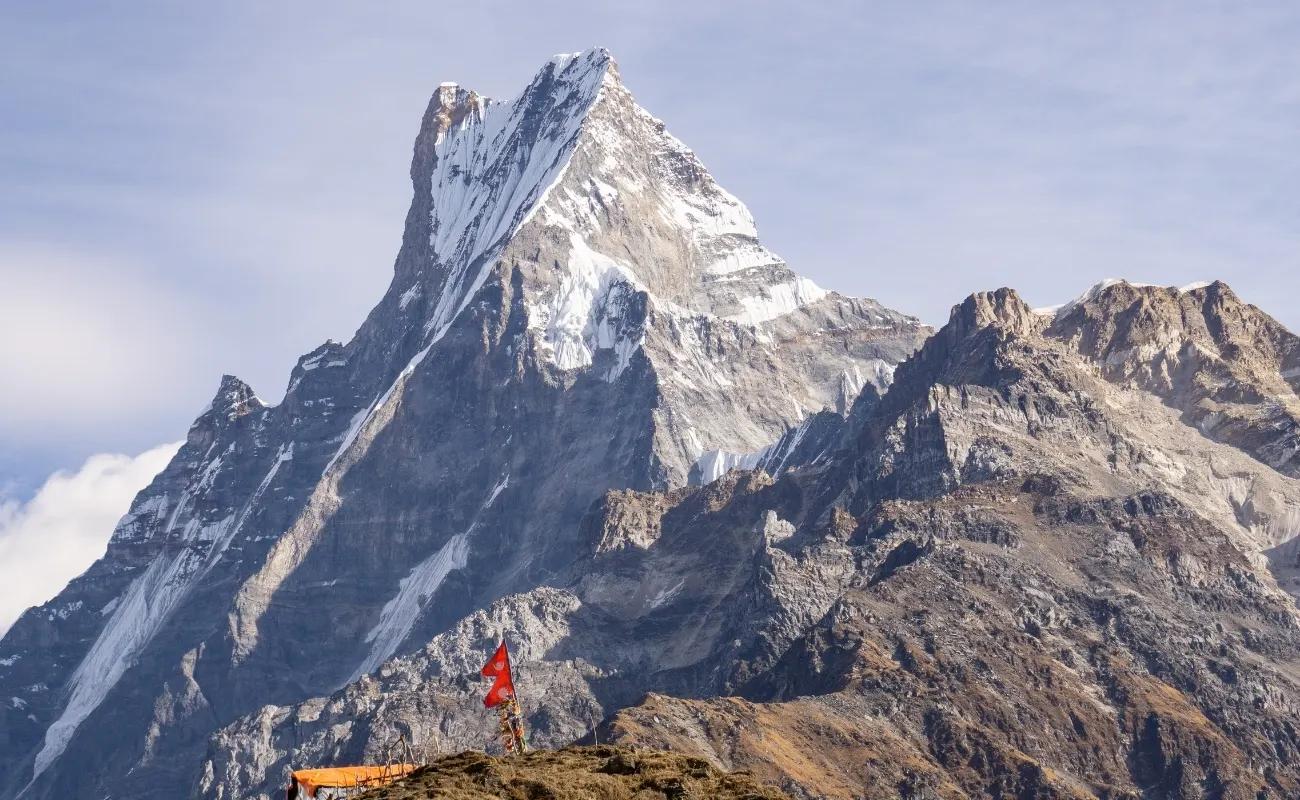
If you ask us, Machapuchare is not just a mountain: it’s a symbol of Nepal’s natural beauty and culture. This peak is famous for its fishtail-shaped summit, steep vertical rise, sacred status, and the strict climbing ban. It’s one of the most untouched peaks in the Himalayas, and that makes it even more special.
- Double-Summit Profile: The twin summit connected by a sharp ridge creates the iconic fish-tail shape. When you see it from Pokhara or the Annapurna trekking routes, you instantly recognize Machapuchare.
- Extreme Vertical Relief: From the lower valleys near Pokhara to ABC, Machapuchare rises almost straight up. That is why it looks more dramatic than many higher peaks in Nepal.
- The “Matterhorn of Nepal”: Many trekkers call Machapuchare the Matterhorn of Nepal because of its sharp, pyramidal shape and steep ridges. If you are a photographer, this mountain is a dream.
- Steep South Face: The south face is very steep and remains off-limits to climbers. This helps preserve the mountain’s sacred beauty and protects its natural environment.
- The “Virgin Peak”: Machapuchare is officially unclimbed that's why it's called the virgin peak. It is one of the few mountains where no human has reached the summit, making it a true symbol of purity and respect in Nepal.
Not every trail shows Machapuchare perfectly. Contact us: we’ll guide you to the best viewing spots.
Why Machapuchare Is Sacred and Unclimbed?
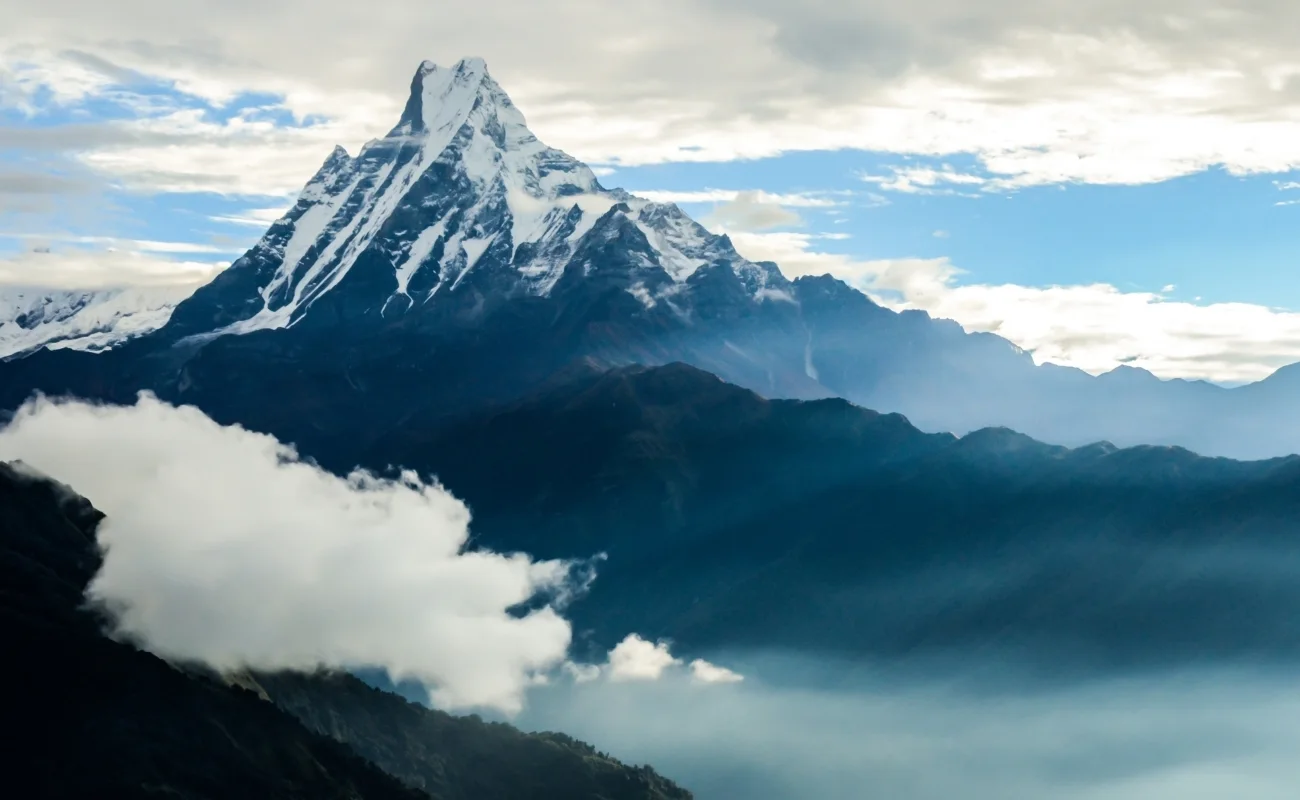
Machapuchare is not just a mountain for us: it is a sacred guardian. When we see it, we feel a deep respect, like we are standing near something holy. Most locals believe Lord Shiva lives on the summit, so climbing Machapuchare is seen as disrespectful. That’s why this peak remains unclimbed and protected.
-
Home of Shiva: People believe the Hindu god Shiva lives at the top, so touching the summit is not allowed.
-
Symbol of Purity: Machapuchare remains a virgin peak, untouched by climbers, and that purity is very important to us.
-
Local Legend: Some Gurung and Magar people say the twin peaks represent Nara and Narayana, the divine brothers from Hindu mythology.
-
Official Ban: In 1957, a British expedition stopped just 50 meters from the top out of respect. After that, Nepal officially banned climbing Machapuchare, and the rule still stands today.
-
Mountain Worship: For us, respect and tradition matter more than fame or world records. That’s why Machapuchare is still protected and sacred.
So, when you trek near Machapuchare, you’re not just seeing a mountain: you’re experiencing a sacred place in Nepal.
The 1957 Expedition, Sacred Beliefs, and Nepal’s Permanent Climbing Ban of Machapuchare Mountain
The only confirmed attempt to climb Machapuchare took place in 1957, led by British mountaineer Lieutenant Colonel Jimmy Roberts. During this expedition, climbers Wilfrid Noyce and A. D. M. Cox ascended the north ridge and reached an altitude of approximately 6,947 metres, stopping just 150 metres below the summit. They voluntarily turned back to honour a promise made to King Mahendra of Nepal, agreeing not to set foot on the sacred peak.
The expedition faced challenges beyond altitude. Team member Roger Chorley was forced to withdraw after contracting polio, highlighting the risks of Himalayan exploration at the time. After returning, Jimmy Roberts formally requested that Nepalese authorities ban all future climbing expeditions on Machapuchare to protect its spiritual significance. His request was accepted, resulting in a permanent prohibition that remains in force today.
Among local ethnic groups such as the Gurungs, Machapuchare is deeply revered. Many believe that disturbing the summit could invite natural disasters, reinforcing the cultural importance of leaving the mountain untouched. Although there are unverified rumours of an illegal ascent by a New Zealand climber named Bill Denz in the early 1980s who reportedly died in an avalanche there is no credible evidence to confirm a successful summit.
While the main twin summits remain strictly off-limits, climbers may sometimes receive permission to attempt the Machapuchare West Peak (6,841 metres). These ascents are highly technical and require professional guides, special permits, and advanced mountaineering equipment, including ice axes, crampons, and fixed ropes. For most visitors, however, Machapuchare remains a virgin peak, admired from afar along trekking routes such as Annapurna Base Camp, Mardi Himal, Poon Hill, and Pokhara viewpoints.
Curious about the people guiding your journey? Know more about Himalaya Trekking Nepal and our experienced team.
Machapuchare Height and Elevation in Nepal
If you’ve sat by Phewa Lake in Pokhara at sunrise, you know what I mean: Machapuchare steals the show. It may not be the tallest peak in the Annapurna range, but its sharp fishtail shape makes it feel like the king of the sky.
Machapuchare Elevation Facts
-
Height: 6,993 m (22,943 ft)
-
Prominence: 1,233 m (that’s why it looks so massive from the valley)
-
Location: Annapurna Himal, north of Pokhara
Even though it is just 7 meters short of 7,000, the way it rises straight from the valley makes it feel much taller.
How to Reach Machapuchare Himal?
If you want to see Machapuchare (Fishtail Mountain) up close, the journey is actually pretty simple. Think of it as two steps: Kathmandu to Pokhara, then Pokhara to the trailhead.
Here’s the easiest way to reach the Machapuchare area.
Step 1: Kathmandu to Pokhara (Gateway to Machapuchare)
Pokhara is the starting point for all Machapuchare treks because it sits right at the foot of the Annapurna Himalayas. You have two main options:
Option 1: Flight (Fastest & Most Comfortable)
-
Duration: 25–30 minutes
-
Route: Tribhuvan International Airport (Kathmandu) → Pokhara International Airport
-
Best for: Travelers with limited time or those who want a smooth start
-
Bonus: You often get a breathtaking aerial view of the Himalayas, including Annapurna and Machapuchare.
Option 2: Road (Cheaper & Scenic)
-
Duration: 8–10 hours
-
Route: Prithvi Highway
-
Best for: Budget travelers who want to experience Nepal’s landscapes
-
Tip: Choose a sofa deluxe bus for comfort.
Local guide note: Road construction can cause delays, so if you’re short on time, flying is the safer choice.
Step 2: Pokhara to the Trek Trailhead (Start of Your Machapuchare Trek)
From Pokhara, you drive to the trailhead depending on which trek you choose. Here are the most popular trailheads:
|
Trailhead |
Driving Time |
Best For |
|
Nayapul |
1.5–2 hours |
Annapurna Base Camp Trek & Machapuchare Base Camp |
|
Kande |
~1 hour |
Mardi Himal Trek |
|
Phedi |
~45 minutes |
Dhampus & local village treks |
These routes lead you into the Annapurna Sanctuary, where the views of Machapuchare are unforgettable.
Need a reliable way to reach Pokhara? Himalaya Trekking Nepal offers Kathmandu to Pokhara tour packages; just tell us your dates!
Best Trekking Viewpoints & Places for Machapuchare (Fishtail Mountain)
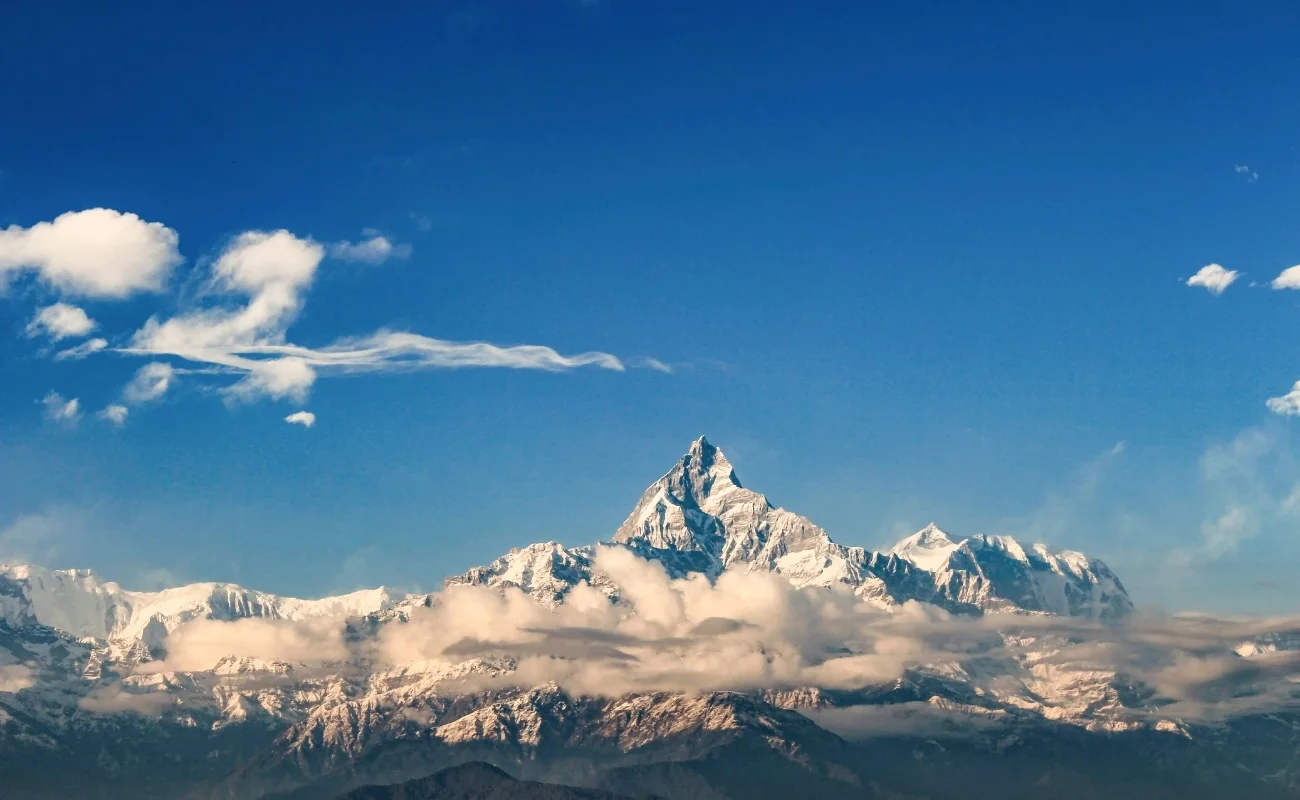
In the Annapurna region, you don’t need to climb Machapuchare to feel its power. The best way to experience this sacred peak is from the trekking trails around it. Here are the top viewpoints where you can see Machapuchare (Fishtail Mountain) up close.
1. Machapuchare Base Camp (MBC): Closest Viewpoint
Altitude: ~3,700 meters
Best for: closest view of Machapuchare
Why it’s special: Machapuchare Base Camp is on the Annapurna Base Camp (ABC) trek route and gives the closest legal viewpoint of Fishtail Mountain. From here, the steep walls of Machapuchare rise sharply above the Annapurna Sanctuary, making the peak feel almost within reach.
2. Annapurna Circuit Trek: Rugged Northern View
Best for: wide Himalayan panorama
The Annapurna Circuit Trek offers a completely different view of Machapuchare from the north. As you walk through Manang Valley toward Thorong La Pass, you’ll see the mountain’s rugged northern face, a perspective many trekkers miss. This view helps you understand how Machapuchare fits into the entire Annapurna massif.
3. Mardi Himal Trek: Best View for Photography
Upper Viewpoint: ~4,200 meters
Best for: photography lovers
The Mardi Himal Trek is one of the best routes to see Machapuchare’s perfect fishtail shape. From the Mardi Himal Upper Viewpoint, you get one of the most symmetrical and clear silhouettes of Machapuchare Mountain. This quieter trail passes through rhododendron forests, alpine ridges, and wildlife: perfect for nature lovers.
4. Ghorepani Poon Hill: Best Sunrise View
Altitude: 3,210 meters
Best for: sunrise view
The Ghorepani Poon Hill Trek is a short and popular trek in the Annapurna region. At sunrise, Machapuchare glows beautifully next to Annapurna South, painted in golden and pink light. If you want a quick trek with a big reward, this is the best place to see the Fishtail Mountain from Pokhara.
Want to know who we are and how we trek in the Himalayas? Learn more about us and visit Himalaya Trekking Nepal for more treks in Nepal.
Best Places to See Machapuchare from Pokhara
If you want to see Machapuchare from Pokhara, here are the best spots:
-
Phewa Lake (best sunrise view)
-
Sarangkot (clear views during autumn)
-
Dhauladhar viewpoint (near Pokhara city)
-
Peace Pagoda (beautiful perspective with lake view)
Weather & Visibility Guide: When Can You Actually See the Fishtail?
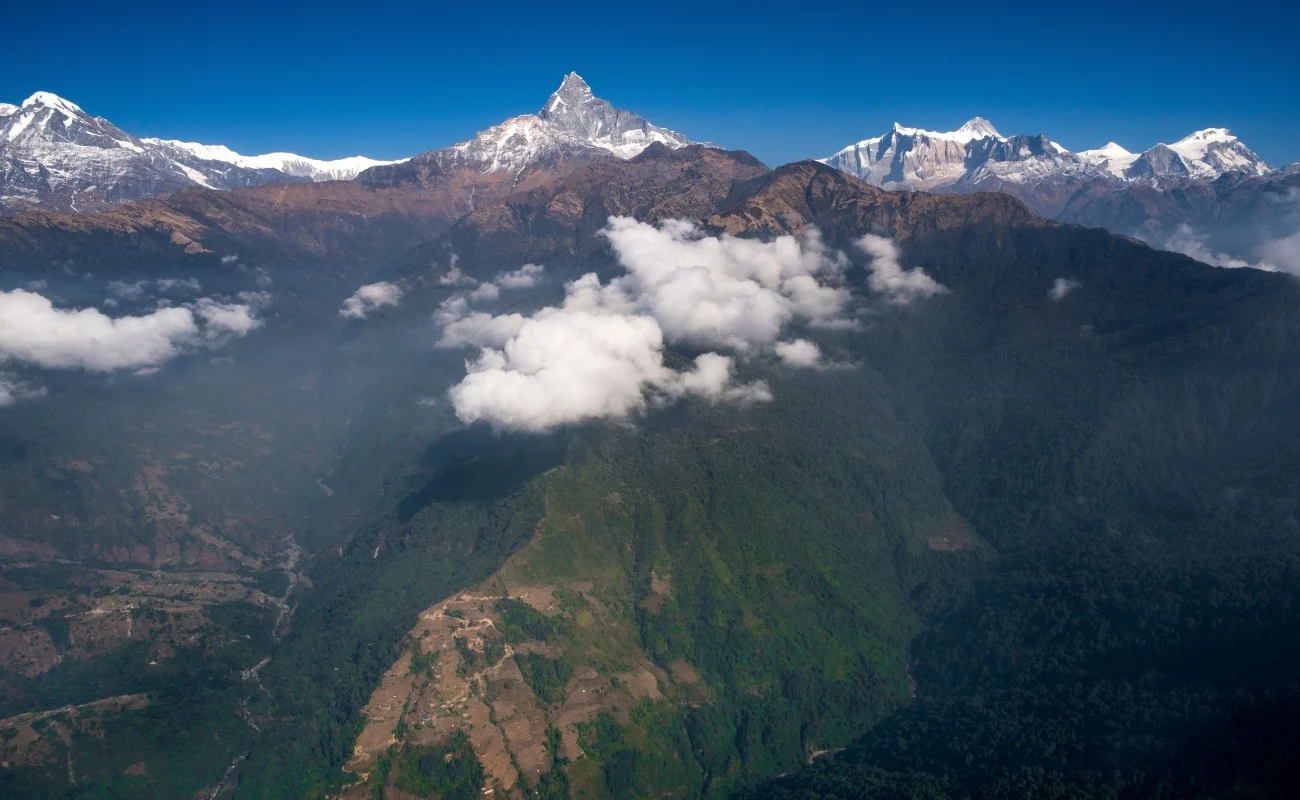
Let’s be honest: Machapuchare is a bit of a shy mountain. You could travel all the way to the Annapurna Conservation Area and still see nothing but a wall of gray if your timing is off.
At Himalaya Trekking Nepal, we always tell our guests that understanding the mountain’s "daily routine" is the secret to getting that perfect shot.
The Best Months for Crystal-Clear Views
If your goal is to see every jagged edge of the machapuchare summit, you have nest seasons:
-
October-November (The Gold Standard): This is the post-monsoon "sweet spot." The rain has washed all the dust out of the air, leaving the sky a deep, vibrant blue. Visibility is at its annual peak, you can often see the peak from 50 km away!
-
March-April (The Color Window): Spring is incredible. While the air might have a bit more haze than in autumn, the rhododendron forests are in full bloom. You get the white snow-capped peaks against a sea of red and pink flowers.
The Seasons of "Hide and Seek"
-
Monsoon (June-August): We usually suggest avoiding these months for views. The peak hides behind thick clouds 90% of the time. Plus, the trails get slippery and the leeches come out to play!
-
Winter (December-February): The air is very dry and clear, but it is "bone-chilling" cold. If you don't mind the freezing nights at Machapuchare Base Camp, you’ll be rewarded with a peaceful trail and sharp, snowy views.
Pro-Tip: The "Golden Hour" Rule- 2PM Rule
In the Himalayas, the mountains follow a daily routine. Mornings start with a clear sky at 6:00 AM. By 11:00 AM, clouds begin to creep up the valleys, and by 2:00 PM, Machapuchare is often tucked under a cozy blanket of clouds.
Our advice: Wake up early. The best views always happen before your second cup of tea!
Temperature Table (Machapuchare Base Camp)
|
Season |
Daytime |
Nighttime |
Notes |
|
Spring |
10–18°C |
0 to -6°C |
Warm days, cold nights |
|
Monsoon |
12–20°C |
4–10°C |
Cloudy, wet trails |
|
Autumn |
8–16°C |
-2 to -8°C |
Best visibility |
|
Winter |
0–8°C |
-10 to -18°C |
Very cold, clear skies |
Every trek has its perfect window. Before choosing your dates, check our blog on the best time for the ABC trek.
Cost and Budget: How Much Money Do You Need?
Planning a trip to see Machapuchare mountain doesn’t have to be stressful. Whether you’re travelling solo, with friends, or with family, there’s always a budget option. At Himalaya Trekking Nepal, we want you to enjoy the trek without worrying about every rupee.
The total cost depends on your trekking style, but for a 7–10 day trip, here’s what you should expect.
A Simple Breakdown of Costs
Here are the main expenses you’ll face during the trek:
|
Item |
Estimated Cost (USD) |
Pro-Tip from Our Guides |
|
Permits (ACAP) |
$25 – $30 |
Keep your permit in a plastic bag to keep it dry. |
|
Food & Drinks |
$25 – $35 per day |
Eat dal bhat: it’s filling, healthy, and comes with free refills. |
|
Tea House Stay |
$5–$15 per night |
Choose lodges that offer dinner and breakfast together. It’s cheaper. |
|
Guide & Porter |
$45 – $60 per day |
This covers their food, salary, and insurance and keeps you safe. |
|
Small Extras |
$2 – $5 each |
Budget for hot showers, Wi-Fi, and charging your phone. |
A smart budget makes your trek stress-free. Check our ABC trek budget guidelines to plan your expenses clearly before you go.
Packing List: What Should You Put in Your Bag?
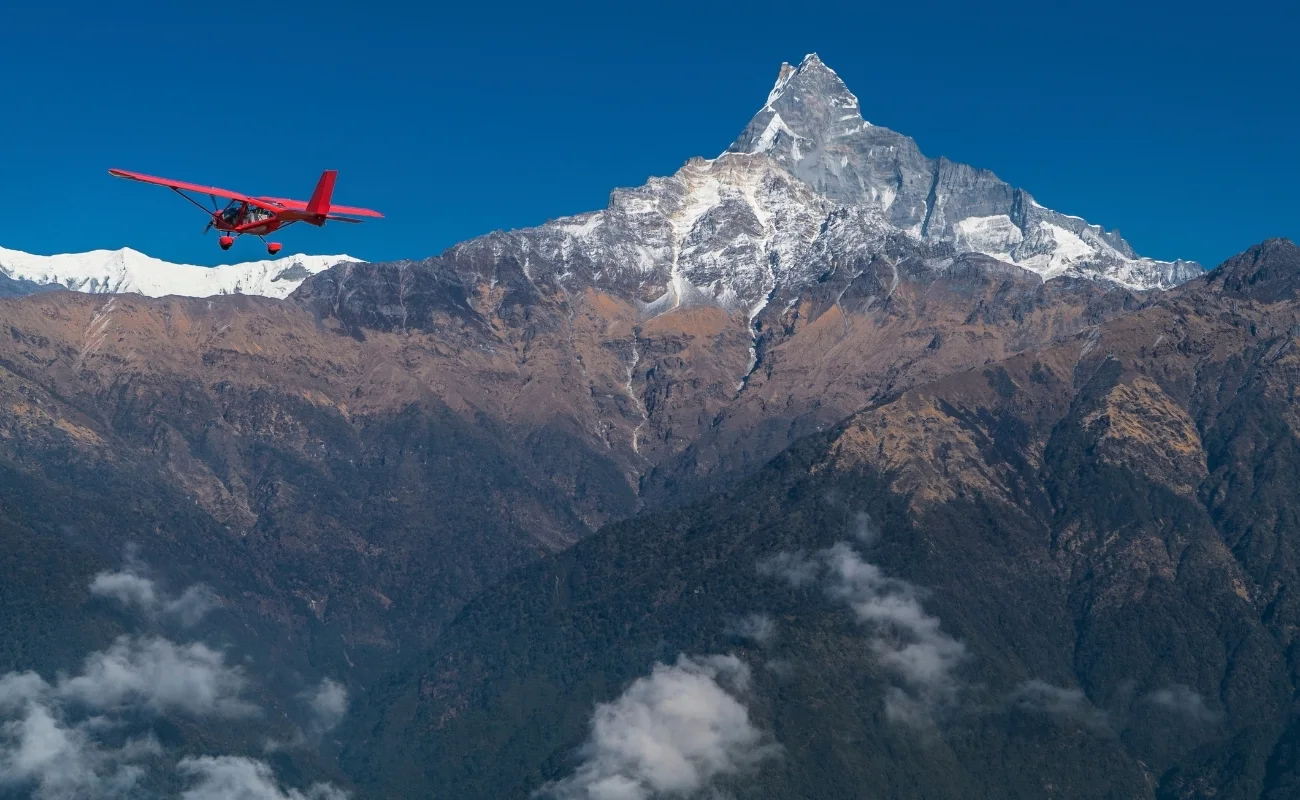
The weather around Machapuchare (Fishtail Mountain) can change quickly. One moment it’s sunny, and the next moment snow can start falling. That’s why we always tell trekkers, “Dress like an onion.” Wear layers so you can add or remove clothing as the weather changes.
Here are some of our packing list guidelines for the trek:
-
Warm Clothes: A good puffy jacket and a fleece sweater are essential, especially for nights near Machapuchare Base Camp.
-
Good trekking Boots: Comfortable trekking boots are a must. Wear them at home before the trek to avoid blisters.
-
Rain Gear: A light rain jacket or poncho is important, especially during monsoon season.
-
Head and Hands Protection: Bring a warm hat and gloves, it gets very cold at higher altitudes.
-
Sun Protection: Sunscreen and sunglasses are necessary because the sun is strong in the Annapurna region.
-
Water Bottle: Carry a refillable bottle. We try to keep the Annapurna Conservation Area clean and plastic-free.
-
Light Source: A headlamp or flashlight is very useful for early morning walks or bathroom trips at night.
-
Power Bank: A power bank helps you keep your phone and camera charged for photos of Machapuchare.
Planning a trek between June and August? Check our monsoon trekking tips to avoid common mistakes.
Safety Tips for Trekking Near Machapuchare (Fishtail Mountain)
Trekking near Machapuchare (Fishtail Mountain) in the Annapurna region is truly amazing, but it also means you’ll be walking in high-altitude terrain. So safety should always come first. Here are the most important tips from a local guide:
-
Watch for altitude sickness: Above 2,500 metres, symptoms like headache, nausea, and dizziness can appear. These are early signs of acute mountain sickness (AMS), and you should never ignore them while trekking in the Annapurna Himalayas.
-
Acclimatize properly: To avoid altitude sickness, walk slowly, keep a steady pace, and include rest days in your itinerary. This is one of the best ways to stay safe on the routes to Machapuchare base camp.
-
Stay hydrated and pack smart: Bring enough water and warm layers. A useful packing list helps prevent dehydration and cold-related illness during high-altitude trekking.
-
Trek with a licensed guide or porter: A local guide knows the trails, weather changes, and altitude risks. Trekking with a guide makes the journey safer and smoother, especially on the Annapurna Base Camp trek.
-
Get trekking insurance: Always travel with trekking insurance that covers high-altitude rescue and medical emergencies, especially for Annapurna region treks.
For official travel updates and trekking guidelines, visit the Nepal Tourism Board for the latest information.
Final Thoughts on Machapuchare (Fishtail Mountain)
Machapuchare is one of Nepal’s most sacred and iconic peaks, and it truly defines the Annapurna skyline. Its fishtail-shaped twin summit and steep rise above Pokhara make it one of the most dramatic mountains in the Himalayas.
This peak is not meant to be climbed, but you can admire it from popular viewpoints such as Phewa Lake, Annapurna Base Camp, Mardi Himal, and the Poon Hill trek.
For trekkers, Machapuchare is a reminder that some mountains are meant to be respected, not conquered. At Himalaya Trekking Nepal, we encourage responsible trekking and respect for local culture so you can experience Machapuchare in its purest form.
At sunrise, Machapuchare shines next to Annapurna South: it’s a short trek, but the memory lasts a lifetime.
Experience the magic of Machapuchare up close.
Plan your Annapurna trek, Annapurna Circuit Trek, Mardi Himal, or Poon Hill trek with Himalaya Trekking Nepal and witness the Fishtail Mountain at its most breathtaking.
FAQ's
Is Machapuchare climbable?
No, Machapuchare is not climbable because it is a sacred peak in the Annapurna massif, and Nepal’s government prohibits any ascent to protect local religious beliefs.
How high is Machapuchare?
Machapuchare height rises to 6,993 meters (22,943 ft), making it one of the most prominent peaks in the Annapurna Himalayas.
Can you see Machapuchare from Pokhara?
Yes, Machapuchare is clearly visible from Pokhara, especially from Phewa Lake and the surrounding viewpoints on clear days.
Which trek includes Machapuchare Base Camp?
The Annapurna Base Camp trek includes Machapuchare Base Camp, and you can also view the peak on the Mardi Himal Trek and Ghorepani Poon Hill Trek.
Why is Machapuchare sacred and unclimbed?
Machapuchare is sacred because local Gurung and Hindu communities believe it is the home of Lord Shiva, so climbing is banned and the peak remains unclimbed.
Has anyone ever climbed Machapuchare?
No, Machapuchare has never been successfully summited, and the mountain remains unclimbed due to religious restrictions and government protection.
Why is it forbidden to climb Machapuchare?
Climbing Machapuchare is forbidden because the mountain is considered holy and protected as a sacred site in Nepal.
Why is Machapuchare sacred?
Machapuchare is sacred because it is believed to be the divine residence of Lord Shiva and is deeply respected by local communities in the Annapurna region.
Where is Machhapuchhre Himal located?
Machhapuchhre Himal is located in Gandaki Province, Kaski District, in the Annapurna Himalayas, about 25 km north of Pokhara.
Can we climb Machhapuchhre?
No, Machhapuchhre (Machapuchare) cannot be climbed because Nepal bans expeditions to preserve its sacred status.
More About Author

Khilak Budhathoki
Travel Director
Khilak Budhathoki is the co-founder and lead trekking guide at Himalaya Trekking Nepal, a locally owned and operated adventure company based in Kathmandu. Born and raised in the foothills of Nepal, Khilak developed a deep love for the mountains from an early age. With over a deca...
USD$1,400 pp
Our Recommendation

USD$600 pp
Our Recommendation
Related Blogs