- 15, Jun 2026 | Khilak Budhathoki
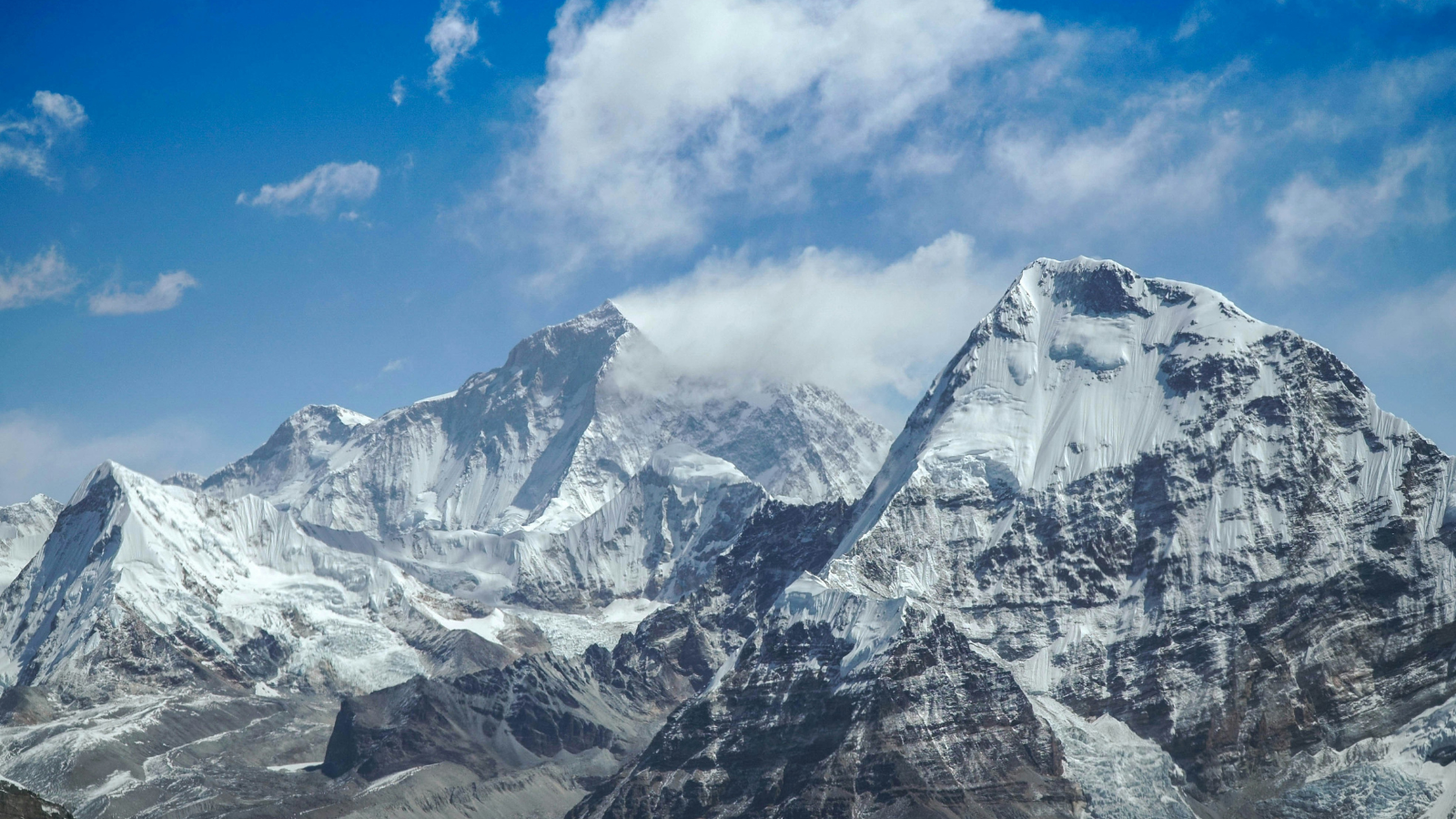
Short Everest Base Camp trek covers EBC (5,364 m / 17,598 ft) and Kala Patthar (5,544 m / 18,192 ft) in 7 to 9 days via a compressed ascent and helicopter return. Helicopter return eliminates the 4-day descent walk, compressing the minimum safe route to 7 days while retaining 2 acclimatization stops.
The 7-day format: Namche, Day 1 combined march and acclimatization; Day 2, Dingboche, Day 3 combined; EBC, Day 5; and helicopter return, Day 6.
The Lukla-to-Namche Day 1 combined march (17 km / 10.6 mi) and the Dingboche-to-EBC 954 m gain on Day 5 are the 2 highest AMS risk points on the itinerary.
Short trek skips the Phakding overnight, Tengboche Monastery stay, and Pheriche stops that standard 14-day trekkers experience. Cost is $1,100 to $1,800 per person; the helicopter tour at $1,200 to $2,500 delivers the same Kala Patthar viewpoint with no ground trekking in 1 aerial day.
Suitable for trekkers with prior altitude above 4,000 m (13,123 ft), elite-fitness athletes, and professionals with a maximum of 8 to 10 Nepal days. First-time high-altitude trekkers are not advised to attempt the 7-day format. Diamox prophylaxis from Day 1 and Garmin InReach and satellite monitoring are both recommended for all participants on the compressed format.
What is a short Everest Base Camp trek?
Short Everest Base Camp trek is any EBC itinerary that reaches EBC and Kala Patthar within 10 days or fewer by combining a compressed ascent with a helicopter return. The ascent route is the same standard Khumbu trail: Lukla, Namche, Dingboche, Lobuche, and Gorak Shep.
Compression comes from combining 2 separate trekking days into 1 on Days 1 and 3.
Short EBC trek is not a beginner format. The Day 1 combined Lukla-to-Namche march (17 km / 10.6 mi, 580 m / 1,903 ft net gain) replaces the standard 2-day approach.
The Day 3 Namche-to-Dingboche combined day (19 km / 11.8 mi, 970 m / 3,182 ft gain) replaces the standard 2-day stage. Both combined days require above-average trekking fitness.
What is the minimum number of days to reach Everest Base Camp safely?
The minimum safe EBC trek duration is 7 days, including 2 flight days (Lukla up and helicopter return) and 2 acclimatization days. Fewer than 7 days requires eliminating both acclimatization stops, which elevates High Altitude Cerebral Edema (HACE) risk significantly above 4,500 m (14,764 ft).
A 5 to 6-day EBC format without acclimatization days is not operated by any responsible licensed agency. The 7-day minimum maintains the 2 critical acclimatization days at Namche (3,440 m / 11,286 ft) and Dingboche (4,410 m / 14,468 ft) while compressing only the combined approach days.
What does a short 7 to 8 day Everest Base Camp trek itinerary look like?
Day 1: Kathmandu to Lukla, Lukla to Namche Bazaar (combined)
Morning flight Kathmandu (1,338 m / 4,390 ft) to Lukla (2,860 m / 9,383 ft). Trek Lukla to Namche Bazaar (3,440 m / 11,286 ft) in one day: 7 to 9 hours, 17 km (10.6 mi), 580 m (1,903 ft) net gain. This combines the standard Day 1 (Lukla to Phakding) and Day 2 (Phakding to Namche) into one march. Only for trekkers with confirmed fitness and no prior AMS history above 3,000 m (9,843 ft).
Day 2: Namche Bazaar Acclimatization
Full acclimatization at Namche (3,440 m / 11,286 ft). Morning hike to Everest View Hotel (3,880 m / 12,729 ft): 2 hours up, 1.5 hours down. SpO2 readings at Namche and the viewpoint. Afternoon rest mandatory. No ascent above 4,000 m (13,123 ft) on Day 2.
Day 3: Namche Bazaar to Dingboche via Tengboche (combined)
Trek Namche (3,440 m / 11,286 ft) to Dingboche (4,410 m / 14,468 ft) in one day: 7 to 9 hours, 19 km (11.8 mi), 970 m (3,182 ft) gain. Pass through Tengboche (3,860 m / 12,664 ft) without overnight. SpO2 monitoring at Tengboche rest stop; trekkers with SpO2 below 90% rest 45 to 60 minutes before continuing.
Day 4: Dingboche Acclimatization
Full acclimatization at Dingboche (4,410 m / 14,468 ft). Morning hike to Nangkartshang viewpoint (5,083 m / 16,676 ft): 3 to 4 hours round trip. SpO2 readings at 5,083 m. Trekkers with SpO2 below 82% at 5,083 m are advised to rest at Dingboche and not proceed to Lobuche.
Day 5: Dingboche to Gorak Shep and Everest Base Camp
Trek Dingboche (4,410 m / 14,468 ft) to Lobuche (4,940 m / 16,207 ft): 3 to 4 hours. Continue to Gorak Shep (5,164 m / 16,942 ft): 1.5 to 2.5 hours. Leave bags at Gorak Shep. Trek to Everest Base Camp (5,364 m / 17,598 ft) and back: 3 to 4 hours. Total Day 5: 9 to 12 hours, the most demanding day of the short format.
Day 6: Kala Patthar sunrise and helicopter return to Kathmandu
Pre-dawn departure from Gorak Shep at 4:00 to 4:30 AM for Kala Patthar (5,544 m / 18,192 ft): 90 to 120 minutes. Sunrise at 5:45 to 6:15 AM. Descend to Gorak Shep: 45 minutes. Helicopter pickup at 8:00 to 10:00 AM. Breakfast stop at Everest View Hotel (3,880 m) during flight. Arrive Kathmandu by noon.
Day 7: Kathmandu buffer and departure
Buffer day covering Gorak Shep helicopter weather delays and tight international flight connections. Day 6 helicopter arrives Kathmandu by 12:00 PM, leaving the afternoon for same-day international departure from 5:00 PM onward.
How does using a helicopter make a short EBC trek possible?
The standard 4-day return walk from Gorak Shep to Lukla is the primary time barrier to completing EBC in under 10 days. Helicopter return from Gorak Shep covers this in 90 minutes, saving exactly 3 to 4 days. Without the helicopter, the minimum safe EBC format extends to 12 days.
Helicopter return cost ($400 to $600 per person) partially replaces the 3 to 4 nights of teahouse accommodation ($120 to $200) and 4 days of guide and porter wages ($280 to $400) that walking back would require. Net additional cost of the helicopter versus walking back: $100 to $200 per person.
What altitude sickness risks are specific to a short Everest Base Camp trek?
The short format maintains 2 acclimatization days. The elevated risk comes from faster early ascent: the Lukla-to-Namche combined Day 1 (arriving at 3,440 m / 11,286 ft after one demanding day without prior altitude exposure) and the Namche-to-Dingboche combined Day 3 (arriving at 4,410 m / 14,468 ft after a 970 m / 3,182 ft gain on the day).
Specific risk points:
-
Day 1 night at 3,440 m: headache and nausea risk elevated for first-altitude-exposure trekkers
-
Day 5 Dingboche-to-EBC: AMS symptoms suppressed by exertion effort become apparent at Gorak Shep rest
-
No buffer day: AMS forcing an extra rest day means the helicopter pickup must be rescheduled.
Diamox protocol for short EBC: 125 to 250 mg twice daily from Day 1, requiring physician consultation and prescription before departure.
What is missed on a short Everest Base Camp trek compared to the full route?
Short format omits 4 elements of the full 14-day experience. First, the Phakding overnight and the first relaxed suspension bridge crossings above the Dudh Koshi River at 2,610 m (8,563 ft). Second: the Tengboche Monastery overnight with the 3:00 PM prayer ceremony and Ama Dablam views at 3,860 m (12,664 ft). Third: the Pheriche HRA medical post interaction at 4,240 m (13,911 ft). Fourth: the 3 to 4-day reflective descent through villages at a slower pace.
Cultural immersion depth is reduced. Standard trek provides 14 mornings in Sherpa villages across 6 unique overnight locations. Short trek provides the EBC and Kala Patthar milestones with significantly less cultural and environmental context.
How does a short EBC trek compare to an EBC helicopter tour?
Cost: Short EBC (7 to 9 days): $1,100 to $1,800. Helicopter tour (1 day): $1,200 to $2,500. Short trek costs $400 to $700 less than the helicopter tour for 7 to 9 days more total Nepal time.
Physical requirement: Helicopter tour requires no trekking fitness. Short EBC requires high fitness and confirmed prior altitude experience. Short trek provides 5 days of ground trekking through Sherpa cultural terrain; helicopter tour provides 20 to 30 minutes at Kala Patthar from either air or a brief landing.
Experience: A Short trek delivers Namche Bazaar, suspension bridges, an SpO₂-monitored progressive ascent, and EBC on foot. Helicopter tour delivers aerial Khumbu views. Both endpoints reach 5,544 m (18,192 ft); short trek achieves this through 5 days of physical effort.
How much does a short Everest Base Camp trek cost?
7-day short EBC package (guide, permits, accommodation, meals, Lukla flight, helicopter return): $1,100 to $1,800 per person.
Cost breakdown:
-
All 2 permits: NPR 6,000 ($45 USD)
-
Certified guide (7 days at NPR 3,000 to 4,000 per day): $186 to $248
-
Porter (7 days at NPR 2,000 to 2,500 per day): $124 to $155
-
Teahouse accommodation (6 nights): NPR 500 to 2,000 per night
-
Helicopter return seat: $400 to $600
-
Lukla round-trip flights: $130 to $185
Who is the short Everest Base Camp trek designed for?
Short EBC suits 4 trekker profiles. First: experienced trekkers with completed prior EBC, Kilimanjaro, Aconcagua lower camps, or Nepal peaks above 4,000 m (13,123 ft). Second: elite-fitness athletes (marathon runners and endurance cyclists) with high cardiovascular adaptability. Third: professionals with a maximum of 8 to 10 days away from work. Fourth: repeat Nepal trekkers on a second EBC trip seeking a time-efficient return to Kala Patthar.
Short EBC is not designed for first-time high-altitude trekkers, anyone without prior altitude exposure above 3,500 m, travelers over 60 without recent high-altitude experience, or anyone who experienced AMS symptoms on previous treks above 3,000 m.
Frequently Asked Questions About the Short EBC Trek
Can a short EBC trek include Kala Patthar?
Yes. Kala Patthar (5,544 m / 18,192 ft) is included in all quality short EBC itineraries. The Day 6 pre-dawn Kala Patthar sunrise happens before the helicopter pickup that same morning. Kala Patthar and helicopter return occur consecutively between 4:00 AM and 10:00 AM on Day 6.
Is a 7-day EBC trek safe for a healthy, fit person?
Yes, under specific conditions: confirmed prior altitude experience above 3,500 m (11,483 ft), no AMS history on previous trips, high cardiovascular fitness confirmed by recent medical assessment, and willingness to take Diamox prophylactically from Day 1. A fit person with zero prior altitude exposure still faces elevated AMS risk on Day 1 arriving at 3,440 m (11,286 ft).
Can the short EBC trek be done without a helicopter?
Yes, but total duration extends to 12 days minimum. Without helicopter return, the standard 4-day descent walk is required, eliminating the time compression that makes 7 to 9 days possible. A 7-day EBC trek without helicopter return cannot safely include both acclimatization days and a full descent to Lukla.
What is the shortest EBC trek offered by agencies?
7 days including 2 flight days (Lukla up, helicopter return) is the shortest responsible EBC format offered by licensed Nepal agencies. Any agency marketing a 5 to 6-day EBC plan should be examined to confirm whether 2 acclimatization days are included. The Himalayan Rescue Association recommends a minimum of 2 acclimatization days on any EBC ascent.
Does the short EBC trek still include all required permits?
Yes. All 2 mandatory permits (Sagarmatha NPR 3,000 and Khumbu municipality NPR 3,000) are required regardless of trek duration. Permit checkpoints at Monjo and Namche verify both for every trekker entering the national park. No permit exemption applies to short-format treks or helicopter-assisted itineraries.
More About Author

Khilak Budhathoki
Travel Director
Khilak Budhathoki is the co-founder and lead trekking guide at Himalaya Trekking Nepal, a locally owned and operated adventure company based in Kathmandu. Born and raised in the foothills of Nepal, Khilak developed a deep love for the mountains from an early age. With over a deca...

USD$1,600 pp
Our Recommendation
Related Blogs