- 12, Apr 2026 | Khilak Budhathoki
The Everest Base Camp trek covers 130 km round trip across 10 overnight stops from Lukla (2,860m) to Gorakshep (5,164m). Accommodation on this route follows a clear pattern: quality decreases as elevation increases, prices increase with altitude despite reduced amenities, and availability tightens at the highest stops during peak seasons.
Teahouses, family-run sleeping inns managed by Sherpa families, form the backbone of EBC lodging. Basic lodges, luxury lodges, and designated camping areas complete the 4 accommodation types available on the Nepal-side route. No trekker accommodation exists at Everest Base Camp itself (5,364m).
This guide covers every overnight stop on the standard EBC route: named hotels at each location, specific room costs in USD and NPR, amenity costs (hot shower, Wi-Fi, device charging), toilet progression by altitude, sleeping bag temperature ratings, solo female trekker safety guidance, seasonal availability, cash and ATM logistics, booking methods, and the HRA medical post at Pheriche. Himalaya Trekking Nepal's guide-founded team, with 15+ years leading Himalayan treks, has walked every stop on this route and documented what each one actually delivers.
What Types of Accommodation Are Available on the Everest Base Camp Trek?
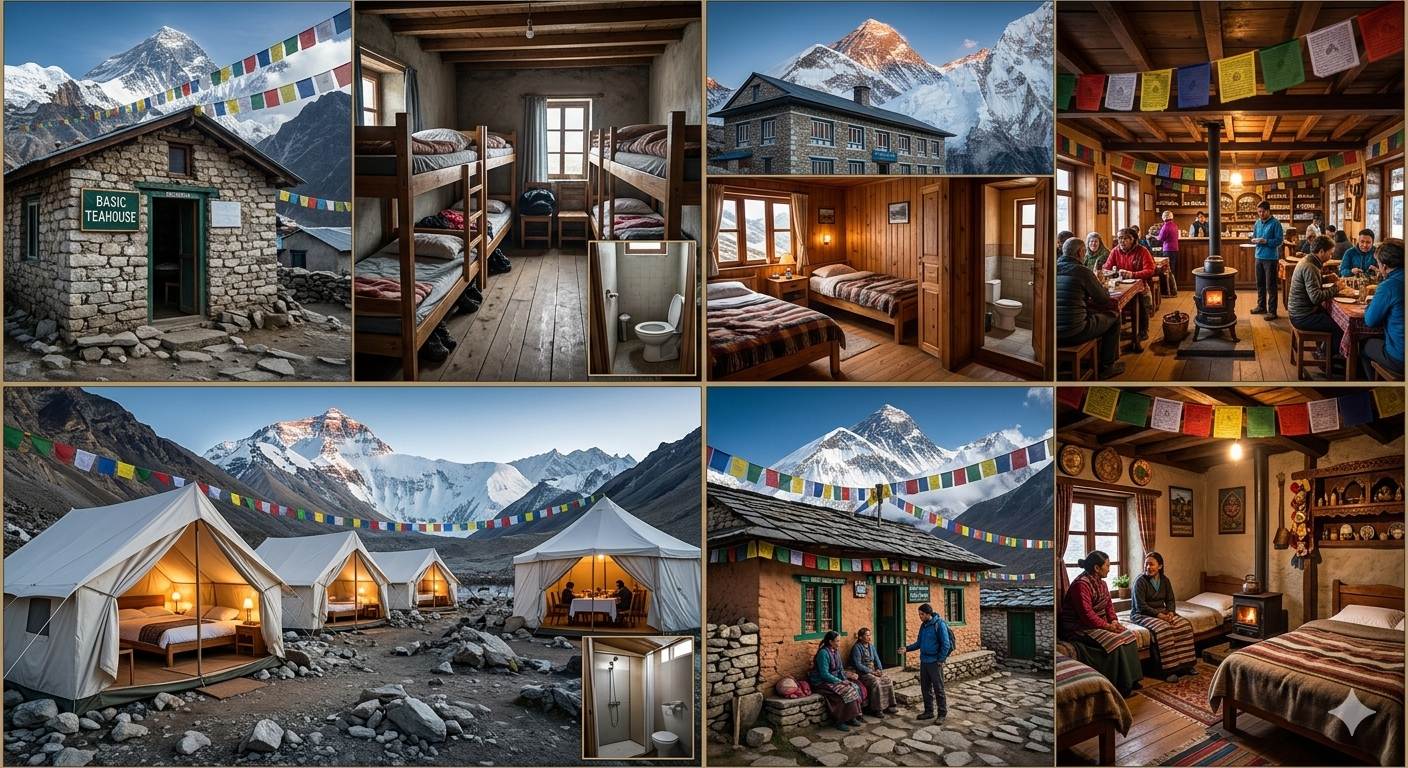
Teahouses are the primary accommodation type on the Everest Base Camp trek. Basic lodges, luxury lodges, and designated camping areas are the 4 available options. Accommodation quality decreases as elevation increases from Lukla (2,860m) to Gorakshep (5,164m).
One distinction foreign trekkers miss: in Nepali, "hotel" means a food-only establishment. "Lodge" or "teahouse" means a sleeping place. A building called "Hotel XYZ" on the trail serves meals, not beds.
Teahouses: The Backbone of EBC Lodging
Teahouses are family-run sleeping inns built and managed by local Sherpa villagers. Each provides twin-sharing rooms, warm blankets, hot meals, and a communal dining room heated in the evenings with a pot-bellied stove. Toilet paper is not provided at any teahouse; carry your own.
Basic Lodges vs. Luxury Lodges: What Is the Real Difference?
Basic lodges cost 750–1,000 NPR (~$5–7) per night and include a normal bed, shared bathroom, and clean blankets. Luxury lodges cost $50–200 per night and include a private attached bathroom, electric heating, and wide rooms with hot water. Luxury lodges operate primarily at lower elevations: Lukla, Phakding, and Namche Bazaar.
Camping on the EBC Trail: When Does It Apply?
Camping is uncommon on the EBC trek for 3 specific reasons: teahouses are more affordable and convenient; camping requires permits and is allowed only at designated sites; and total costs (permits + logistics + gear) exceed teahouse costs. The designated camping area on the Nepal side sits southwest of Lobuche Village, where tent hotels operate during peak seasons. Camping suits expedition teams, not standard trekkers.
How Does Accommodation Change as You Gain Altitude?
Accommodation quality follows a direct degradation pattern linked to elevation. Lukla and Phakding (2,610–2,860 m) offer the most comfortable options: private bathrooms, Western food, and landscaped lodges. Namche Bazaar (3,440m) offers the widest range. From Tengboche (3,860m) upward, attached bathrooms disappear, food choices narrow, Wi-Fi becomes unreliable, and rooms turn significantly colder. Lobuche (4,940 m) lodges are notoriously primitive stone huts with shared bunk dormitories. Gorakshep (5,164m) is the most basic stop on the entire route.
What Accommodation Is Available in Kathmandu Before the EBC Trek?
Kathmandu (1,400m) offers accommodation from budget guesthouses to 5-star hotels. Thamel is the primary trekker neighborhood. Most EBC trekkers spend 1–2 nights in Kathmandu before flying to Lukla, using this time for permit collection, gear checks, and initial acclimatization at 1,400m.
Best Areas to Stay in Kathmandu Before EBC
Thamel provides the highest concentration of trekker-oriented accommodation. Budget options in Thamel range from $15–30/night. Mid-range hotels range from $50 to $100/night. Luxury hotels range from $150 to $400/night. Kathmandu offers a wide variety of cuisines, Western, Nepali, Indian, and Continental, across numerous restaurants, pubs, and cafes. Named trekker-friendly options include Yatri Suites and Spa (mid-range, Thamel) and budget picks along Jyatha Road. Proximity to Thamel matters: Lukla flights depart from Tribhuvan International Airport, 20 minutes from Thamel.
Where Do You Stay in Lukla (2,860m / 9,383ft) on the EBC Trek?
Lukla has 30+ hotels and teahouses across budget and premium tiers. Rooms without a bathroom cost ~$5/night (~750 NPR). Rooms with an attached bathroom cost $20–30/night. Lukla sits at 2,860m (9,383ft) and serves as the gateway to the Khumbu region. It is the first entry point for imported goods and food distributed to all higher stops on the EBC route.
Most trekkers fly into Lukla from Kathmandu in the morning and walk directly to Phakding on ascent, while some choose a helicopter return option after the trek. Lukla accommodation is primarily used on the return trek or when flights are cancelled due to weather. Lukla hotels are generally better quality than lodges at any higher elevation.
What Lodges and Hotels Are Available in Lukla?
Named lodges in Lukla include The Nest Hotel and Lukla Numbur Hotel. These offer the highest standard of accommodation at this stop, with rooms costing $20–30/night with attached bathroom. Advance booking is recommended during peak seasons (March–May, September–November).
Room Types Available
Lukla lodges offer 3 room configurations:
-
Twin-sharing rooms: 2 single beds in one room, shared between 2 trekkers. Standard across all mid-range lodges. Mattress, pillow, and blanket provided.
-
Private rooms: 1 room for a single occupant or couple. Available at premium lodges. Cost is $20–30/night with attached bathroom.
-
Single rooms: 1 bed for solo occupancy. Less common. Book in advance if required. Price is comparable to a private room.
Room Features and Furnishings
Each lodge room includes a mattress, pillow, bed sheet, and warm blanket. Premium lodge rooms add a small table, chair, shelf, and hooks for hanging clothes and gear. Balcony rooms are available at The Nest Hotel and Lukla Numbur Hotel. These face directly toward the high peaks. Landscaped lawns and patio dining areas distinguish Lukla's premium lodges from teahouses at this stop.
Bathroom and Sanitation
Attached private bathrooms are available at lodges for $20–30/night. Shared bathrooms serve basic room guests (~$5/night). Western-style flush toilets are standard at Lukla. This is one of the last stops where flush toilets are consistently available. Hot showers cost $1–3/use and are gas-heated. Toilet paper is not provided. Carry your own.
Cuisine and Food Available at Lukla Lodges
Lukla lodges serve the widest food range of any stop on the EBC route. The menu includes:
-
Dal Bhat: The traditional Nepali staple. Rice (bhat) served with lentil soup (dal), vegetable curry, pickles (achar), and papad. Naturally vegetarian, protein-rich, and available at every meal. Dal Bhat at Lukla costs $4–6 per serving. Most lodges offer unlimited refills of dal and vegetables. The portion fuels a full trekking day.
-
Curry dishes: Chicken curry, vegetable curry, and potato curry are standard on all lodge menus.
-
Pizza: Available at most lodges. Quality is comparable to lower-altitude restaurants.
-
Noodle dishes: Thukpa (Tibetan noodle soup), fried noodles, and noodle stir-fry.
-
Breakfast items: Eggs (boiled, fried, scrambled), porridge, Tibetan bread, pancakes, and toast with jam.
-
Beverages: Milk tea, black tea, lemon tea, hot chocolate, coffee, and hot water. Fresh juice is available at some lodges.
-
Western dishes: Pasta, sandwiches, spring rolls, and fried rice.
Food is fresh, reasonably priced, and of good quality at Lukla. This is the last stop where imported ingredients are easily available.
Wi-Fi, Charging, and Connectivity
Wi-Fi costs $3–5/hour or is included in premium room rates. Device charging costs $2–3/hour at shared points. Rooms with a wall socket provide free charging. A Ncell prepaid SIM card with 3G mobile data works at Lukla and throughout the Khumbu region.
What Teahouses Are Available in Lukla?
Named teahouses include Himalayan Lodge, Buddha Lodge, Everest Inn, and Kongde Peak Guest House. Basic rooms cost ~$5/night (~750 NPR) with twin beds and a shared bathroom. These are family-run sleeping inns managed by local Sherpa villagers.
Room Types at Lukla Teahouses
Teahouse rooms are twin-sharing as standard. 2 single beds with mattress, pillow, and blanket. Shared bathrooms serve all rooms. Private rooms are not common at basic teahouses. The $5/night rate covers a shared twin room.
Room Features and Furnishings
Each room includes a mattress, pillow, and warm blanket. A small table or chair is present in most rooms. Some rooms have a shelf and hooks for hanging clothes. Walls are thin. Earplugs are recommended for light sleepers when groups are present.
Bathroom and Sanitation
Shared bathrooms with Western-style flush toilets are standard at Lukla teahouses. Hot showers cost $1–3/use and are gas-heated. Toilet paper is not provided. Carry your own. Hand sanitizer is recommended.
Cuisine and Food at Lukla Teahouses
Teahouse menus include Dal Bhat, noodle soups, curry dishes, fried rice, eggs, and tea. The communal dining room is the social center. Trekkers gather here for meals and conversation. The dining room is heated in the evenings with a pot-bellied stove. Sleeping rooms are not heated. Dal Bhat costs $3–5 per serving with generous portions. Basic teahouses at Lukla do not serve pizza or complex Western dishes. The menu is simpler than at lodges.
Where Do You Stay in Phakding (2,610m / 8,563ft) on the EBC Trek?
Phakding has 25 hotels and teahouses. Rooms without a bathroom cost ~$5/night (~750 NPR). Rooms with an attached bathroom cost $20–30/night. Phakding sits a 3–4 hour walk from Lukla and serves as the first overnight stop for most trekkers. Hotels operate on both sides of the Dudh Kosi River.
What Lodges and Hotels Are Available in Phakding?
Named lodges include Hotel Gurkhas Inn and Yeti Mountain Home. Yeti Mountain Home is the premium option at Phakding and suits higher-budget trekkers. Rooms cost $20–30/night with attached bathroom. Advance booking is not required at Phakding except during peak season.
Room Types Available
Phakding lodges offer 3 room configurations:
-
Twin-sharing rooms: 2 single beds, standard across all lodges. Mattress, pillow, and blanket provided.
-
Private rooms: 1 room for a solo occupant or couple with a bathroom. Available at Yeti Mountain Home and Hotel Gurkhas Inn.
-
Single rooms: Available on request at most lodges. The price is comparable to a private room.
Room Features and Furnishings
Lodge rooms include a mattress, pillow, bed sheet, and warm blanket. Premium rooms at Yeti Mountain Home add a small table, chair, shelf, and hooks for gear. Some rooms offer river-facing views across the Dudh Koshi. Phakding lodges are cleaner and more spacious than lodges at higher elevations.
Bathroom and Sanitation
Attached private bathrooms with Western-style flush toilets are available at lodges for $20–30/night. Hot showers cost $1–3/use and are gas-heated. Shared bathrooms serve basic room guests. Toilet paper is not provided at any lodge or teahouse. Carry your own.
Cuisine and Food at Phakding Lodges
Phakding lodge menus are comparable in range to Lukla:
-
Dal Bhat: Rice, lentil soup, vegetable curry, pickle, and papad. $4–6 per serving with unlimited dal and vegetable refills. The standard fuel meal for trekkers at this elevation.
-
Curry dishes: Chicken curry, vegetable curry, potato curry.
-
Noodle dishes: Thukpa (Tibetan noodle soup), fried noodles.
-
Breakfast items: Eggs (boiled, fried, scrambled), porridge, Tibetan bread, pancakes, toast.
-
Beverages: Milk tea, black tea, lemon tea, coffee, hot chocolate, hot water.
-
Western dishes: pasta, fried rice, and sandwiches.
Food quality at Phakding is good and freshly prepared. Imported ingredients are still available here as Phakding sits close to Lukla's supply chain entry point.
Wi-Fi, Charging, and Connectivity
Wi-Fi is available at $3–5/hour. Device charging costs $2–3/hour at shared points. Ncell 3G mobile data works reliably at Phakding.
What Teahouses Are Available in Phakding?
Named teahouses include Pine Forest Lodge, Sherpa Guide Lodge, Panorama Lodge, Shangri-La Lodge, Buddha Lodge, and Hotel Sherpa. Basic rooms cost ~$5/night with twin beds and a shared bathroom. Family-run by local Sherpa villagers.
Room Types at Phakding Teahouses
Twin-sharing rooms are standard. 2 single beds with mattress, pillow, and blanket. Shared bathrooms serve all rooms per floor. Private rooms are uncommon at basic teahouses.
Room Features and Furnishings
Each room includes a mattress, pillow, and warm blanket. A small table or chair is present in most rooms. A shelf and hooks are available in some rooms. Walls are thin in construction. Earplugs are recommended.
Bathroom and Sanitation
Shared bathrooms with Western-style flush toilets and squat toilets are both present at Phakding teahouses. Hot showers cost $1–3/use. Toilet paper is not provided.
Cuisine and Food at Phakding Teahouses
Teahouse menus include Dal Bhat ($3–5/serving), noodle soups, curry dishes, fried rice, eggs, and hot tea. The communal dining room heats with a pot-bellied stove in the evenings. Sleeping rooms are not heated. Basic teahouses at Phakding do not serve pizza or complex Western dishes.
Where Do You Stay in Namche Bazaar (3,440 m / 11,286 ft) on the EBC Trek?
Namche Bazaar has 50–60+ hotels and teahouses across all price tiers and connects to alternative routes like the Gokyo Lake trek extension. Basic rooms cost up to $10/night. Mid-range lodges cost $15–30/night. Luxury lodges cost $50–100/night. Hotel Everest View costs $250–500/night. 90% of trekkers spend a minimum of 2 nights on ascent and 1 night on return for mandatory acclimatization. Namche Bazaar is the largest commercial town in the Everest region and the last ATM point on the route, and also acts as the hub of the Everest trekking region. Withdraw sufficient NPR before leaving.
Amenity costs at Namche: hot shower $1–3/use; device charging $2–3/hour; Wi-Fi $3–5/hour.
What Luxury Hotels Are Available in Namche Bazaar?
Named luxury options include Yeti Mountain Home and Hotel Everest View. Yeti Mountain Home costs $50–100/night. Hotel Everest View costs $250–500/night and holds the Guinness World Record as the highest-altitude hotel in the world at 3,880m (12,730ft).
Room Types at Namche Luxury Hotels
-
Twin-sharing rooms: 2 beds with electric blankets, heating, and attached bathroom.
-
Private rooms: Full en-suite with hot water, sitting area, and balcony. Standard at Yeti Mountain Home.
-
Deluxe rooms: Panoramic Everest views, balcony seating, electric heating. Available at Hotel Everest View.
Room Features and Furnishings
Luxury rooms at Namche include a wide bed, electric blanket, room heater, sitting area, balcony, and attached bathroom with hot water. Hotel Everest View rooms face directly toward Mount Everest and neighboring peaks. Warm blankets are provided in addition to electric heating.
Bathroom and Sanitation
Full attached private bathrooms with Western-style flush toilets and hot water are standard at Namche luxury lodges. Hot showers are included in the room rate at Yeti Mountain Home. Toilet paper is not universally provided. Carry your own.
Cuisine and Food at Namche Luxury Hotels
Namche Bazaar is the last stop with genuine international food variety. Luxury hotels serve:
-
Dal Bhat: $5–8/serving at luxury lodges. Full platter with rice, lentil soup, vegetable curry, pickle, papad, and unlimited refills of dal and vegetables.
-
Continental cuisine: Pasta, pizza, salads, soups.
-
Korean cuisine: Ramyeon, bibimbap, kimchi soup. Available at dedicated Namche restaurants.
-
Chinese cuisine: Fried rice, dumplings, noodle dishes.
-
Italian cuisine: Pizza and pasta prepared with imported ingredients.
-
Breakfast: Eggs, porridge, Tibetan bread, pancakes, toast, freshly brewed coffee, and pastries from Namche bakeries.
-
Beverages: Espresso, cappuccino, hot chocolate, juices, milk tea, and butter tea.
Namche bakeries serve freshly brewed coffee and pastries. This is the last stop where bakery food is available. International cuisine disappears from Tengboche upward.
Wi-Fi, Charging, and Connectivity
Free Wi-Fi is included at premium Namche lodges. Shared Wi-Fi costs $3–5/hour at standard options. Device charging costs $2–3/hour. Ncell 3G and NTC mobile data both work reliably at Namche. This is the last stop with consistent, fast connectivity.
What Mid-Range Lodges Are Available in Namche Bazaar?
Named mid-range lodges include Hotel Khangri and Mountain Lodges of Nepal. Rooms cost $15–30/night with attached bathrooms, balconies, electric blankets, and room heaters.
Room Types at Namche Mid-Range Lodges
-
Twin-sharing rooms: 2 beds, electric blanket, shared or attached bathroom depending on rate.
-
Private rooms: Attached bathroom, balcony, and room heater at $20–30/night.
Room Features and Furnishings
Rooms include a bed, electric blanket, room heater, table, chair, and shelf. Some rooms at Mountain Lodges of Nepal include a sitting area and balcony with mountain views. Hooks for gear and clothes are present in all rooms.
Bathroom and Sanitation
Attached bathrooms with Western-style flush toilets are standard. Hot showers cost $1–3/use. Toilet paper is not universally provided.
Cuisine and Food at Namche Mid-Range Lodges
Mid-range lodges serve Dal Bhat ($4–6/serving), curry dishes, pasta, fried rice, noodle soups, eggs, and tea. Pizza is available at most. Breakfast includes eggs, porridge, bread, and coffee. Food quality is good, as imported ingredients are still reachable at Namche's elevation.
What Teahouses Are Available in Namche Bazaar?
Named teahouses include Hotel Namche, Sona Lodge, and Hotel Tibet. Basic rooms cost up to $10/night with comfortable beds and Wi-Fi spots.
Room Types at Namche Teahouses
Twin-sharing rooms are standard at $5–10/night. Some teahouses offer private rooms at $15–20/night. Shared bathrooms are the norm at the $10 rate.
Room Features and Furnishings
Rooms include a mattress, pillow, blanket, and a small table. Some rooms have a shelf and hooks. Walls are thin. Earplugs are recommended. Namche teahouses are warmer than those at higher elevations due to lower altitude and better building insulation.
Bathroom and Sanitation
Shared bathrooms with Western-style flush toilets. Hot showers cost $1–3/use. Toilet paper is not provided.
Cuisine and Food at Namche Teahouses
Dal Bhat ($3–5/serving), curry dishes, fried rice, noodle soups, eggs, and hot tea. The communal dining room functions as a social hub. Trekkers exchange route information and trail conditions here. A pot-bellied stove heats the dining area in the evenings. Sleeping rooms are not heated at basic teahouses.
Where Do You Stay in Tengboche (3,860 m / 12,664 ft) and Deboche on the EBC Trek?
Tengboche has approximately 2 hotels and 5 teahouses. Deboche has approximately 10 hotels. Both stops charge ~$7/night. Accommodation quality drops noticeably from Namche at this point. Attached bathrooms and Western food variety are no longer standard. Tengboche Monastery (3,867m) is the largest monastery in the Everest region. Trekkers staying overnight attend morning prayers, a significant cultural experience available only to those who sleep here.
Advance booking is critical at both stops in spring and autumn. Total combined capacity is very limited.
What Lodges Are Available in Tengboche?
Named lodges include Hotel Himalaya, Tashi Delek Lodge, and Tengboche Guesthouse. Rooms cost ~$7/night. Hot showers cost an extra $1–3/use. Device charging carries an additional fee.
Room Types Available
-
Twin-sharing rooms: 2 single beds, standard. Mattress, pillow, and blanket provided.
-
Private rooms: Available at Hotel Himalaya at a slight premium above the $7 base rate.
-
Single rooms: Rarely available. Book through agency in advance.
Room Features and Furnishings
Rooms include a mattress, pillow, and warm blanket. A small table or chair is present. No room heating. The dining room provides the only warmth via a pot-bellied stove in the evenings. Hooks for clothes and gear are available. Balcony or view rooms are not available at this elevation.
Bathroom and Sanitation
Shared bathrooms are standard. No attached private bathrooms at this price point. Squat toilets begin appearing at Tengboche alongside flush options. Hot showers cost $1–3/use. Toilet paper is not provided. Pipes can freeze at night. Hand sanitizer and a small disinfectant spray are recommended from this stop upward.
Cuisine and Food at Tengboche Lodges
-
Dal Bhat: $5–7/serving. Rice, lentil soup, vegetable curry, and pickle. Available at every meal. The menu begins simplifying from Tengboche upward.
-
Pizza: Some lodges serve pizza at slightly higher prices. This is one of the last stops where it appears reliably.
-
Noodle dishes: Thukpa, fried noodles, noodle soup.
-
Curry dishes: Vegetable and potato curry. Chicken curry is less common than at lower stops.
-
Breakfast items: eggs, porridge, Tibetan bread, and toast.
-
Beverages: Milk tea, black tea, hot chocolate, coffee, hot water.
Food choices decrease noticeably from Tengboche. Western dish variety narrows. Pasta and pizza disappear by Dingboche at most teahouses.
Wi-Fi, Charging, and Connectivity
Wi-Fi is available at extra cost ($3–5/hour), but speed decreases at this elevation. Device charging costs $2–3/hour. Ncell 3G provides some mobile data, but reliability drops. Power bank use becomes important from Tengboche onward.
What Teahouses Are Available in Tengboche?
Named teahouses include Tengboche Guesthouse and Tashi Delek Lodge. Rooms cost ~$7/night with a shared bathroom. Family-run by local Sherpa community members.
Room Types at Tengboche Teahouses
Twin-sharing rooms are the only standard option. 2 single beds with mattress, pillow, and blanket. No private rooms at $7/night. Private options require advance agency arrangement.
Room Features and Furnishings
Each room includes a mattress, pillow, and warm blanket. A small table or chair is present. No room heating. Walls are thin and uninsulated. Temperatures drop significantly at night at 3,860m. Sleeping bag use is recommended from this stop.
Bathroom and Sanitation
Shared bathrooms with squat and flush toilet options. Hot showers cost $1–3/use. Toilet paper not provided. Pipes may freeze overnight. Prepare accordingly.
Cuisine and Food at Tengboche Teahouses
Dal Bhat ($4–6/serving), noodle soups, potato curry, eggs, and hot tea. The communal dining room is heated with a pot-bellied stove. Sleeping rooms are not heated. Butter tea becomes a common beverage from Tengboche upward. Butter tea is a Tibetan drink made from tea, yak butter, and salt, providing warmth and calories at altitude.
What Accommodation Is Available in Deboche When Tengboche Is Full?
Named lodges in Deboche include Deboche Lodge and Rivendell Lodge. Rooms cost ~$7/night, the same price as Tengboche at the same elevation. Deboche sits just past Tengboche and serves as the primary overflow stop when Tengboche reaches capacity.
Room Types at Deboche Lodges
Twin-sharing rooms as standard. Private rooms are available on request at Rivendell Lodge. Deboche has approximately 10 lodges and more total capacity than Tengboche, making it a more reliable walk-in option in peak season.
Room Features and Furnishings
Rooms include a mattress, pillow, and warm blanket. Small table and chair present. No room heating. Hooks for gear available. Deboche Lodge construction is slightly newer than Tengboche's in some properties.
Bathroom and Sanitation
Shared bathrooms with squat toilets. Hot showers cost $1–3/use. Toilet paper not provided.
Cuisine and Food at Deboche Lodges
Dal Bhat, potato curry, noodle soups, eggs, and hot tea. The menu is similar to Tengboche's. Simple and carbohydrate-focused to support trekking energy needs at altitude. Beverages include milk tea, black tea, butter tea, and hot water.
Where Do You Stay in Dingboche (4,410m / 14,469ft) on the EBC Trek?
Dingboche has approximately 30 hotels and teahouses with rooms ranging from $5–30/night. A minimum of 1 acclimatization day is required here. Dingboche is the divergence point for Ama Dablam Base Camp and Island Peak Expedition routes. Mountain views include Ama Dablam, Lhotse, and Makalu. The village population is approximately 200 people. Vegetation disappears at this elevation. Only small tundra grasses remain.
Peak season reality: teahouses are packed to full capacity. Trekkers have shared beds or slept on dining tables at busy lodges during high season. Book in advance.
What Lodges With Private Bathrooms Are Available in Dingboche?
Named lodges include Hotel Goodluck, Hotel Tashi Delek, and Good Day Lodge. Newer lodges here offer private bathrooms for up to $30/night. A warm room at Dingboche directly reduces AMS (acute mountain sickness) risk. Cold rooms disrupt sleep at 4,410 m, and poor sleep at altitude increases AMS vulnerability.
Room Types Available
-
Twin-sharing rooms with private bathroom: 2 beds, attached bathroom, $20–30/night at newer lodges.
-
Private rooms: Single occupancy with attached bathroom. Available at Hotel Goodluck and Hotel Tashi Delek.
-
Twin-sharing rooms with shared bathroom: Standard option at $5–15/night.
Room Features and Furnishings
Lodge rooms include a mattress, pillow, bed sheet, and warm blanket. A small table and chair are present. Hooks for clothes and gear available. No room heating. A sleeping bag is recommended from this stop. Lodges at Dingboche are often extensions of family homes. Trekkers may interact directly with the host family.
Bathroom and Sanitation
Attached bathrooms with flush or squat toilets available at newer lodges ($20–30/night). Shared squat toilets with manual pour flush are basic options. Hot showers cost $1–3/use. Toilet paper not provided. Carry your own. Hand sanitizer and small disinfectant spray are recommended from this stop upward.
Cuisine and Food at Dingboche Lodges
-
Dal Bhat: $5–7/serving. The dominant meal from this altitude upward. Rice, lentil soup, vegetable curry, and pickle. Unlimited dal and vegetable refills are standard at most lodges.
-
Potato dishes: Potato soup, boiled potatoes, potato curry. High-calorie and altitude-appropriate.
-
Noodle dishes: Thukpa, fried noodles, noodle soup.
-
Eggs: Boiled, fried, and scrambled. A reliable protein source.
-
Breakfast items: Porridge, Tibetan bread, toast, and eggs.
-
Beverages: Milk tea, black tea, butter tea, hot chocolate, hot water. Coffee available at some lodges.
Western dish variety is minimal at Dingboche. Pizza is not reliably available. The menu is carbohydrate-focused to support trekking energy at 4,410m.
Wi-Fi, Charging, and Connectivity
Wi-Fi costs $3–5/hour and is available at most lodges but with reduced reliability. Device charging costs $2–3/hour. Ncell 3G provides intermittent mobile data. A power bank is recommended from Dingboche onward.
What Teahouses Are Available in Dingboche?
Named teahouses include Friendship Lodge, Dingboche Guest House, Snow Lion, and Hotel Country Side. Basic rooms cost $5–15/night with a shared bathroom. Peak season crowding at these options is significant. Shared beds and dining table sleeping are documented realities.
Room Types at Dingboche Teahouses
Twin-sharing rooms are standard at $5–15/night. Shared bathrooms serve all rooms. Some newer teahouses offer private bathrooms at premium rates.
Room Features and Furnishings
Rooms include a mattress, pillow, and warm blanket. A small table or chair is present. Walls are thin and cold at 4,410m. Sleeping bag use is strongly recommended. Hooks for clothes available.
Bathroom and Sanitation
Shared bathrooms with squat toilets (flushable or manual pour). Hot showers cost $1–3/use. Toilet paper not provided. Pipes may freeze at night at this elevation.
Cuisine and Food at Dingboche Teahouses
Dal Bhat ($4–6/serving), potato curry, noodle soups, eggs, and hot tea. The communal dining room heats with a pot-bellied stove in the evenings. This is the primary warmth source. Butter tea is widely available. Sleeping rooms are not heated.
Where Do You Stay in Pheriche (4,371m) on the EBC Trek?
Pheriche has 5 named teahouses and lodges ranging from budget shared-facility options to mid-range lodges with private bathrooms. Acclimatization is the primary function of this stop. Advance booking is recommended in peak seasons.
The Himalayan Rescue Association (HRA) operates a health post and rudimentary hospital at Pheriche. The HRA clinic assesses trekkers for AMS, HACE (High Altitude Cerebral Edema), and HAPE (High Altitude Pulmonary Edema) symptoms, assists with descend decisions, and provides altitude medicine guidance. Walk-in assessments are available. Trekkers feeling unwell at Pheriche stop at the HRA post before continuing. Many trekkers add an extra night at Pheriche on the return specifically for an HRA assessment before descending to Namche.
What Lodges Are Available in Pheriche?
Named mid-range lodges include the Edelweiss and Himalayan hotels. These offer private bathroom options at rates above the basic $5–15/night range.
Room Types Available
-
Twin-sharing rooms with shared bathrooms: Standard at budget teahouses, $5–15/night.
-
Private rooms with attached bathrooms: Available at The Edelweiss and Himalayan Hotel at premium rates.
Room Features and Furnishings
Rooms include a mattress, pillow, and warm blanket. A small table is present. No room heating at any option. A sleeping bag is essential from Pheriche onward. Hooks for gear available.
Bathroom and Sanitation
Shared squat toilets with manual pour flush at budget options. Attached bathrooms at mid-range lodges. Hot showers cost $1–3/use. Toilet paper not provided. Hand sanitizer and disinfectant spray are essential at this elevation.
Cuisine and Food at Pheriche Lodges
-
Dal Bhat: $5–7/serving. The primary meal at this altitude. Rice, lentil soup, vegetable curry, and pickle with unlimited dal refills.
-
Potato dishes: Boiled potatoes, potato soup, potato curry. The most altitude-appropriate high-calorie food at Pheriche.
-
Noodle dishes: Thukpa and noodle soup.
-
Eggs: Boiled and fried.
-
Beverages: Milk tea, black tea, butter tea, and hot water. Butter tea is the recommended beverage at this altitude for warmth and calorie content.
Wi-Fi, Charging, and Connectivity
Wi-Fi is available at $3–5/hour at most lodges but with reduced reliability. Device charging costs $2–3/hour. Mobile data is intermittent. Power bank use is essential from this stop.
What Teahouses Are Available in Pheriche?
Named teahouses include Everest Trekkers Lodge, Panorama Lodge, and Snow Land Lodge. Basic shared facilities at ~$5–15/night.
Room Types at Pheriche Teahouses
Twin-sharing rooms with shared bathrooms at $5–15/night. Sleeping bags are essential. Rooms are cold and unheated.
Room Features and Furnishings
Rooms include a mattress, pillow, and warm blanket. Small table and chair. Walls are thin and cold at 4,371m. Earplugs recommended.
Bathroom and Sanitation
Shared squat toilets. Hot showers cost $1–3/use. Toilet paper not provided.
Cuisine and Food at Pheriche Teahouses
Dal Bhat ($4–6/serving), potato soup, noodle dishes, eggs, and butter tea. Communal dining room with pot-bellied stove. Sleeping rooms unheated.
Where Do You Stay in Dughla / Thukla (4,620m) on the EBC Trek?
Dughla (also called Thukla) has approximately 12 lodges. All are basic and family-run. The families that operate these teahouses live inside them. This stop sits between Dingboche and Lobuche. Estimated room cost is ~$10–15/night. Dughla is quieter than Dingboche and Lobuche, an advantage during peak season.
What Teahouses and Basic Lodges Are Available in Dughla?
Dughla has approximately 12 basic family-run lodges. Named hotels at Dughla represent a complete entity gap across published competitor content. Specific named lodges are best confirmed through a licensed trekking agency with ground-level guide networks.
Room Types Available
-
Twin-sharing rooms: 2 beds with mattresses, pillows, and blankets. Standard and only option at most Dughla lodges.
-
Shared rooms: In peak season, some lodges place additional beds in rooms. Confirm occupancy at booking.
Room Features and Furnishings
Rooms include a mattress, pillow, and warm blanket. Minimal furniture. A small table or chair only. No heating in rooms. Hooks may not be present. Hang gear on the bed frame. A sleeping bag is essential from Dughla.
Bathroom and Sanitation
Shared squat toilets with manual pour flush or pit latrines at this elevation. Hot showers are limited. A bucket of hot water is the typical bathing option. Toilet paper not provided. Hand sanitizer and disinfectant spray are essential.
Cuisine and Food at Dughla Lodges
-
Dal Bhat: The dominant meal. $5–7/serving. Rice, lentil soup, vegetable curry, and pickle.
-
Potato dishes: Boiled potatoes and potato soup. The highest-calorie option at this elevation.
-
Noodle dishes: Thukpa and noodle soup.
-
Beverages: Butter tea, milk tea, black tea, and hot water.
Western food is largely unavailable at Dughla. The menu is simple. All food is carried or grown locally at this elevation.
Wi-Fi, Charging, and Connectivity
Wi-Fi is intermittent and may not be available at all lodges. Device charging costs $2–3/hour when available. A power bank is essential from Dughla.
Where Do You Stay in Lobuche (4,940m / 16,207ft) on the EBC Trek?
Lobuche has approximately 6 hotels. The low count is a direct result of Sagarmatha National Park construction restrictions. Rooms start at $10+/night. The camping area sits southwest of Lobuche village. Tent hotels operate here during peak seasons.
Sleeping bags rated -10°C minimum are essential from Lobuche. Winter trekkers require -15°C. Blankets are provided but insufficient at 4,940m. Peak season rooms fill completely. Trekkers without reservations sleep in the dining area. Book Lobuche in advance.
What High-End Lodges Are Available in Lobuche?
Named high-end lodges include Oxygen Altitude Home, New EBC Guest House, and Himalayan Eco Resort. These are the only Nepal-side teahouses that offer supplemental oxygen service and internet, a unique amenity at this elevation.
Room Types Available
-
Twin-sharing rooms with private bathrooms: Available at Oxygen Altitude Home and Himalayan Eco Resort at premium rates.
-
Private rooms: Single occupancy with attached bathroom at high-end lodges.
-
Twin-sharing rooms with shared bathrooms: Standard at $10–15/night at mid-range options.
Room Features and Furnishings
High-end lodge rooms include a mattress, pillow, bed sheet, warm blanket, and small table. Some rooms at Oxygen Altitude Home include supplemental oxygen access points. This is the only Nepal-side accommodation where supplemental oxygen is available. Hooks for clothes and gear present. No room heating in standard rooms. A sleeping bag is non-negotiable.
Bathroom and Sanitation
Attached bathrooms available at high-end lodges. Squat toilets with manual pour-flush are basic options. Bucket showers are often the only bathing option at Lobuche. Toilet paper not provided. Hand sanitizer and disinfectant spray are essential. Pipes freeze regularly at night. Pit latrines may replace flush options.
Cuisine and Food at Lobuche High-End Lodges
-
Dal Bhat: $6–8/serving. The dominant meal. Rice, lentil soup, vegetable curry, and pickle with unlimited dal refills.
-
Potato dishes: Boiled potatoes and potato soup. High-calorie and altitude-essential.
-
Noodle dishes: Thukpa and noodle soup.
-
Eggs: Boiled and fried. A reliable protein source.
-
Beverages: Butter tea, milk tea, black tea, and hot water. Butter tea is the primary warming beverage at this altitude.
Food quality at Lobuche is improving with the increase in trekker numbers. Menus are basic. No pizza, pasta, or complex Western dishes are available.
Wi-Fi, Charging, and Connectivity
Internet is available at high-end lodges (Oxygen Altitude Home) at $3–5/hour. Device charging costs $2–3/hour. A power bank is essential. Charging is not available in rooms with basic options.
What Basic Teahouses Are Available in Lobuche?
Named basic options include Eco Lodge, National Park Hotel, and Mother Earth House. Rooms cost $10+/night in stone huts with shared bunk dormitories. These are described as notoriously primitive by experienced trekkers. National park restrictions limit new construction, so these basic lodges see high demand in peak season.
Room Types at Lobuche Basic Teahouses
-
Shared bunk dormitories: Multiple bunk beds in a single stone room. Standard at the most basic Lobuche options. Sleeping bag essential. Rooms are extremely cold.
-
Twin-sharing rooms: 2 beds per room are available at some options. Shared bathroom.
Room Features and Furnishings
Stone hut construction with minimal insulation. A mattress and warm blanket are provided but are insufficient without a sleeping bag at 4,940m. No table or chair in many rooms. No hooks in some rooms. Hang gear on the bed frame or pack.
Bathroom and Sanitation
Shared squat toilets with manual pour flush or pit latrine. Bucket of hot water for bathing. Toilet paper not provided. Pipes freeze regularly.
Cuisine and Food at Lobuche Basic Teahouses
Dal Bhat ($5–7/serving), potato soup, noodle dishes, eggs, and butter tea. Communal dining room with pot-bellied stove. No Western dishes. Sleeping rooms are unheated and colder than the dining area.
Where Do You Stay in Gorakshep (5,164 m / 16,942 ft)—The Last Stop Before EBC?
Gorakshep has 5–6 teahouses and guesthouses. Rooms cost $10–30/night. Gorakshep is the last human settlement on the EBC trek, sitting just below the Khumbu Icefall. It was the original Everest Base Camp until the 1950s, when the glacier shifted. Gorakshep serves as the overnight base for both the EBC push and Kala Patthar (5,644m) climb.
Gorakshep sells out first in peak season. It has the fewest beds on the entire route combined with the highest demand. Every EBC trekker and every Kala Patthar climber overnights here. Book Gorakshep before any other stop on the route.
Rooms are extremely cold. A sleeping bag rated -10°C minimum is essential. -15°C is recommended for winter trekkers. Device charging operates in dining halls only, not in rooms. Gorakshep has no natural water source. Bottled water is the only option. Plan cash for high food and water costs.
What Teahouses Are Available in Gorakshep?
Named options include Snow Land Highest, Himalayan Lodge, Yeti Lodge, Buddha Lodge, and New EBC Guest House.
Room Types Available
-
Twin-sharing rooms: 2 single beds with mattresses, pillows, blankets, and woolen bedsheets. Standard at all 5 guesthouses. Sleeping bag essential. Provided blankets are insufficient at 5,164m.
-
Shared dormitory rooms: Some guesthouses convert dining areas to sleeping spaces in peak season. Trekkers without reservations sleep in these.
-
Private rooms: Very limited. Book through an agency well in advance if required.
Room Features and Furnishings
Rooms include a mattress, pillow, warm blanket, and woolen bedsheet. No heating in rooms. A small table may be present. Walls are thin and cold. Temperature in sleeping rooms drops significantly below the dining room temperature. Device charging is available in dining halls only at a relatively high cost.
Bathroom and Sanitation
Shared squat toilets with manual pour flush or pit latrine. Flush is unreliable at 5,164m. Pipes freeze regularly. Bucket water for bathing only. Hot showers are not available or severely limited. Toilet paper not provided. Hand sanitizer and disinfectant spray are essential. Used toilet paper goes in the bucket. Waste is burned.
Cuisine and Food at Gorakshep Teahouses
Food quality at Gorakshep is better than expected for its elevation:
-
Dal Bhat: $7–10/serving. The most expensive Dal Bhat on the route. Rice, lentil soup, vegetable curry, and pickle. Unlimited dal refills available.
-
Pizza rolls: Available and frequently ordered. A surprisingly satisfying food at this altitude.
-
Chicken curry: Available at most guesthouses. One of the few reliable non-vegetarian options at the highest stop.
-
Potato dishes: Boiled potatoes and potato soup. The altitude-essential calorie source.
-
Noodle dishes: Thukpa and noodle soup.
-
Beverages: Butter tea, milk tea, black tea, hot water, and hot chocolate. Bottled water is the only drinking water source. Budget accordingly. Water at Gorakshep is the most expensive on the route.
All food at Gorakshep is the most expensive on the entire trail. The dining room is warmer than sleeping rooms. Trekkers gather here in the evenings until the pot-bellied stove fire dies down.
Wi-Fi, Charging, and Connectivity
Wi-Fi is intermittent at best and not reliable at 5,164m. Device charging in dining halls costs $2–3/hour at relatively high rates. No charging is available in rooms. A power bank is non-negotiable at Gorakshep.
What Is Hotel Everest View, and Is It Worth Staying At?
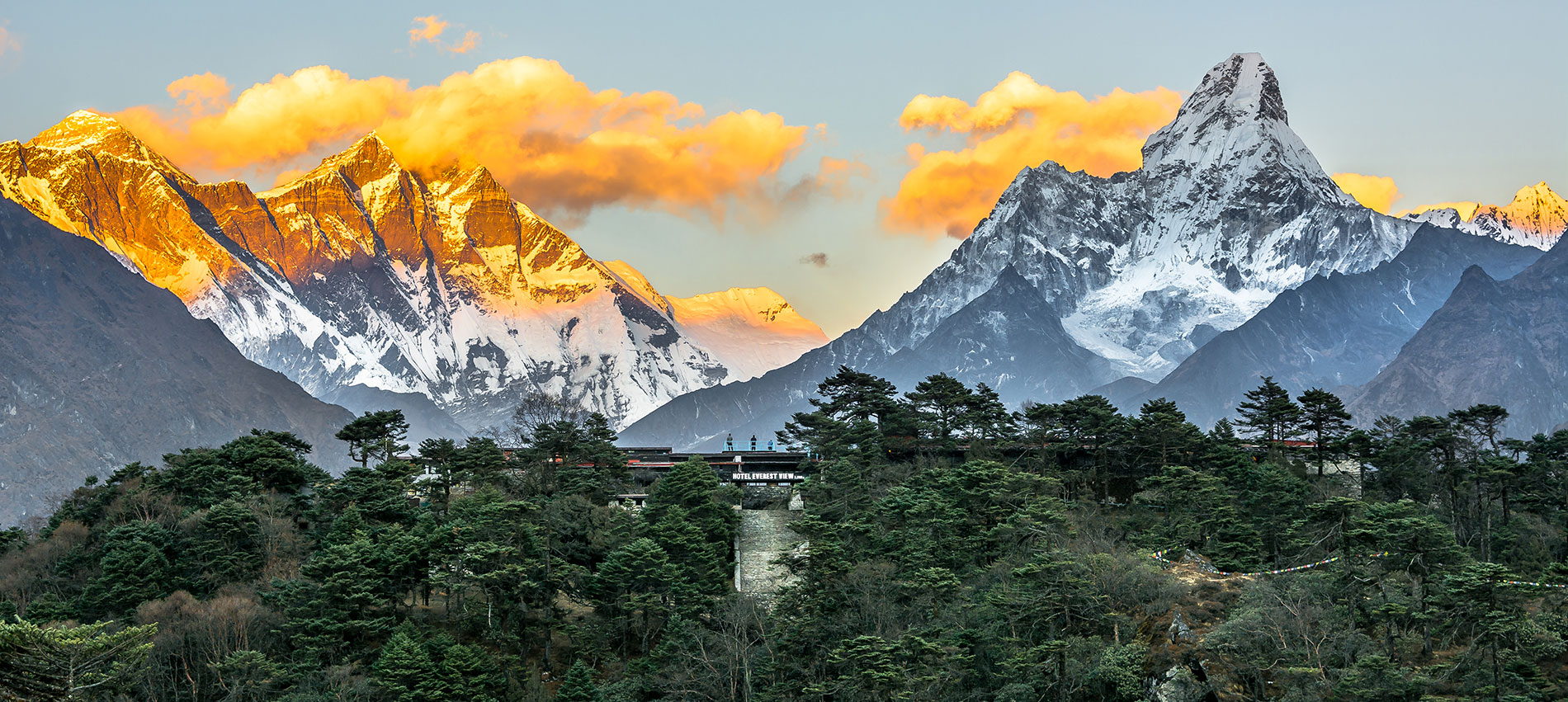
Hotel Everest View sits at 3,880m (12,730ft) and holds the Guinness World Record as the highest-altitude hotel in the world. One night costs $250–500 depending on the room type and season. Peak seasons are spring (March–May) and autumn (September–November).
Rooms include warm blankets and panoramic views of Mount Everest and neighboring peaks. Breakfast features Dal Bhat (traditional Nepali rice and lentils) and Western options. Lunch and dinner include local and international dishes. Advance booking is non-negotiable; the hotel sells out in both peak seasons.
Hotel Everest View suits trekkers who prioritize a landmark stay over budget. For standard trekkers, Namche Bazaar lodges at $20–30/night offer comparable elevation with far lower cost.
Is There Any Accommodation at Everest Base Camp (5,364 m / 17,598 ft)? Itself?
No accommodation exists for trekkers at Everest Base Camp. EBC is occupied temporarily by climbing expeditions and research teams during the spring climbing season (March–May only). Trekkers spend a few hours at EBC, taking photographs and resting briefly, then return to Gorakshep the same day. The nearest overnight lodging is Gorakshep (approximately 2 hours from EBC) or Lobuche.
Camping at EBC is not permitted for trekkers. The site is reserved for climbing expeditions only.
What Facilities and Amenities Can You Expect at EBC Trek Accommodation?
Amenity availability decreases directly with elevation nd is influenced by seasonal weather conditions in the Everest region. The following costs and facilities apply across the standard Nepal-side EBC route.
Hot showers cost $1–3 per use at lower elevations (Lukla to Namche). Gas-heated showers are standard. At higher elevations (Tengboche and above), bucket showers, a bucket of hot water, replace shower heads. At Lobuche and Gorakshep, hot shower options are severely limited or unavailable.
Wi-Fi costs $3–5/hour and is available throughout the Khumbu region at lower stops. Speed and reliability decrease with altitude. Ncell 3G SIM cards provide mobile data as an alternative; Nepal Telecom (NTC) CDMA coverage sometimes outperforms Ncell at the highest elevations. Above Namche, Wi-Fi becomes progressively unreliable.
Device charging costs $2–3/hour and becomes more expensive at altitude. Teahouses with a plug socket in the room provide free charging; this is uncommon above Dingboche. A power bank is strongly recommended for all trekkers.
Toilet progression by altitude:
|
Elevation Zone |
Toilet Type |
|
Lukla to Namche (2,610–3,440m) |
Western-style flush toilets |
|
Tengboche to Dingboche (3,860–4,410m) |
Squat toilets, flushable |
|
Lobuche to Gorakshep (4,940–5,164m) |
Squat toilets, manual pour, and pit latrines when pipes freeze |
Toilet paper is not provided at any stop; carry your own. Bring hand sanitizer and a small bottle of disinfectant spray for higher altitudes. Most indoor toilets provide a bucket for used toilet paper. Waste goes to underground pits, many of which seep into the river system. Placing used paper in the bucket (where it is burnt) is the correct practice on this route.
Sleeping gear: Warm blankets are provided at every stop. A personal sleeping bag is essential from Lobuche (4,940m) upward and strongly recommended from Dingboche (4,410m).
How Much Does Accommodation Cost on the Everest Base Camp Trek?
The following table shows per-night accommodation costs at each stop on the standard EBC route. Prices are shown in USD and NPR.
The table below covers the full stop-by-stop price range, bathroom availability, and named example lodges across the EBC route.
|
Stop |
Elevation |
Price (No Bath) |
Price (With Bath) |
Named Example |
|
Kathmandu |
1,400m |
$15–30 |
$50–400 |
Yatri Suites (mid-range) |
|
Lukla |
2,860m |
~$5 / 750 NPR |
$20–30 |
Lukla Numbur Hotel |
|
Phakding |
2,610m |
~$5 / 750 NPR |
$20–30 |
Hotel Gurkhas Inn |
|
Namche Bazaar |
3,440m |
up to $10 |
$20–100 |
Hotel Khangri / Yeti Mountain Home |
|
Hotel Everest View |
3,880m |
— |
$250–500 |
Hotel Everest View |
|
Tengboche |
3,860m |
$7 |
— |
Tengboche Guesthouse |
|
Deboche |
3,860m |
$7 |
— |
Rivendell Lodge |
|
Dingboche |
4,410m |
$5–15 |
up to $30 |
Hotel Goodluck |
|
Pheriche |
4,371m |
$5–15 |
available |
Panorama Lodge |
|
Dughla / Thukla |
4,620m |
~$10–15 |
— |
Basic family lodges |
|
Lobuche |
4,940m |
$10+ |
high-end available |
Himalayan Eco Resort |
|
Gorakshep |
5,164 m |
$10–30 |
— |
Snow Land Highest |
Budget trekker total (accommodation only, both directions): approximately $150–250. Mid-range trekker: $300–500. Luxury trekker: $1,000+. International flights and Kathmandu to Lukla airfare are excluded from these estimates. Total EBC trek cost, including all expenses, ranges from $1,000 to $3,000.
Plan the Everest Base Camp trek with structured routes, verified accommodation planning, acclimatization stops, and full logistical support across the complete journey from Lukla to Gorakshep. View the complete Everest Base Camp trekking package details and route breakdown.
When Is the Best Season to Book EBC Trek Accommodation?
Spring (March–May) and autumn (September–November) are the 2 peak trekking seasons. Accommodation demand rises sharply in both periods. Book Gorakshep first, then Lobuche, then Hotel Everest View; these 3 stops sell out earliest.
Off-season (December–February, June–August): Walk-in accommodation is available at most stops below Namche without advance booking. Above Namche, reduced capacity means advance booking remains advisable.
Monsoon (June–August): Teahouses remain open, but trail conditions are wet, and leeches are active on lower sections. Accommodation is available throughout.
Winter (December–February): Some teahouses at Gorakshep and Lobuche reduce to minimal operation. A small number close entirely. Teahouses at Tengboche have reduced seasonal capacity. Confirm operational status with your trekking agency before departure. Winter hotel rates are lower; quality accommodation at discounted prices is available at all lower stops.
What Are the Best Tips for Choosing Hotels During the Everest Base Camp Trek?
7 specific tips guide the best accommodation choices on the EBC route, from booking timing to altitude-based room selection.
1. Book Gorakshep, Lobuche, and Hotel Everest View First
These 3 stops sell out earliest in peak season (March–May and September–November). Gorakshep has the fewest beds on the entire route and the highest demand. Book these 3 before any other stop.
2. Match Sleeping Bag Temperature Rating to Your Highest Stop
Blankets are provided at every teahouse but are insufficient above Lobuche (4,940m). Pack a sleeping bag rated at 10°C minimum for Lobuche and Gorakshep. Winter trekkers require 15°C. Cold rooms increase AMS risk by disrupting sleep quality.
3. Choose Private Bathrooms at Dingboche if Budget Allows
Dingboche (4,410m) is the last stop where newer lodges offer private attached bathrooms at a reasonable premium (up to $30/night). Above Dingboche, shared bathrooms are the only option.
4. Prioritise Warm Rooms Over Price at Lobuche and Gorakshep
Basic stone hut dormitories at Lobuche are notoriously primitive. High-end options like Oxygen Altitude Home and Himalayan Eco Resort cost more but offer significantly better sleeping conditions. At Gorakshep, $10 and $30 rooms differ substantially in cold exposure.
5. Carry Sufficient NPR Cash From Namche Bazaar
Namche Bazaar has the last ATMs on the route. Above Namche, teahouses accept cash only. Estimate $30–65 per day above Namche for accommodation, food, and amenities combined.
6. Book Through a Licensed Trekking Agency Above Namche
EBC teahouses are not listed on Booking.com or Airbnb. A licensed agency manages accommodation through the guide-to-porter system. Solo independent trekkers face the genuine risk of no available room at Lobuche and Gorakshep during peak season.
7. Use the Acclimatization Stops to Assess Room Quality Before Committing
At Namche (2 nights minimum) and Dingboche (1 acclimatization day minimum), trekkers have time to inspect room warmth and bathroom access. Above Tengboche, options narrow significantly, and flexibility disappears.
How Do You Book Accommodation on the Everest Base Camp Trek?
Booking through a licensed trekking agency is the most reliable method. EBC teahouses are not listed on Booking.com or Airbnb. Direct WhatsApp contact with lodges is possible at lower stops (Namche has phone connectivity). Above Namche, lodge bookings are managed through guide-to-porter communication on the trail.
The guide-to-porter booking system works as follows: the trekking guide arranges the next stop's accommodation on the morning of each walking day. The guide sends a porter ahead to confirm or change the booking before the group arrives. This system manages last-minute changes due to weather or pace variations.
Walk-in availability by altitude zone:
-
Below Namche (Lukla, Phakding): Walk-in acceptable in off-season; advance booking recommended in peak season.
-
Namche to Dingboche: Walk-in possible in off-season; risky in peak season.
-
Lobuche and Gorakshep: Walk-in is not reliable in peak season. These stops require confirmed advance booking.
Payment method: Teahouses above Namche accept cash only. NPR (Nepali Rupees) is the standard. USD is sometimes accepted at lower stops but not above Namche. Namche Bazaar ATMs are the last cash withdrawal point on the route; carry sufficient NPR from Namche onward.
Do You Need a Sleeping Bag for EBC Trek Accommodation?
A personal sleeping bag is essential from Lobuche (4,940m) upward and strongly recommended from Dingboche (4,410m). Blankets are provided at every teahouse but are insufficient at extreme-altitude temperatures.
Temperature rating guide by altitude stop:
-
Namche Bazaar (3,440m): 0°C comfort rating is sufficient.
-
Dingboche (4,410m): -5°C comfort rating is recommended.
-
Lobuche (4,940m): -10°C comfort rating is the minimum.
-
Gorakshep (5,164m): -10°C minimum; -15°C recommended for winter trekkers.
A cold room at high altitude directly disrupts sleep quality and is linked with altitude effects during the Everest Base Camp trek. Poor sleep at altitude increases AMS (Acute Mountain Sickness) risk. A sleeping bag rated for the relevant temperature zone is a medical consideration, not a comfort preference, from Lobuche upward.
Can You Camp Instead of Staying in Teahouses on the EBC Trek?
Camping is technically permitted but uncommon for standard EBC trekkers. 3 specific reasons explain why most trekkers avoid it: teahouses are more convenient and affordable; camping requires government permits and is allowed only at designated sites; and total camping costs (permits + logistics + additional gear) typically exceed teahouse costs.
The designated camping area on the Nepal side sits southwest of Lobuche village. Tent hotels operate in this area during peak seasons. The Sagarmatha National Park camping permit is required for all camping on the EBC route. Permit cost is approximately $30 USD per person. Camping is not permitted at Everest Base Camp itself; the site is reserved for climbing expeditions.
What Should You Pack for Sleeping in EBC Teahouses?
The 7 essential items to pack for EBC teahouse accommodation:
-
Sleeping bag: -10°C minimum comfort rating for Lobuche and Gorakshep
-
Power bank: Device charging is $2–3/hour and unavailable in rooms at highest stops
-
Toilet paper: Not provided at any stop on the route
-
Hand sanitizer: Not always provided, especially at altitude
-
Disinfectant spray: Small bottle; carry from Dingboche upward
-
Padlock: Teahouse door latches are basic; a small padlock secures room privacy
-
Earplugs: Teahouse walls are thin; communal sleeping creates noise, especially in shared dormitories
Is It Safe for Solo Female Trekkers to Stay in the EBC Teahouse? Accommodation?
EBC teahouses are considered safe for solo female trekkers. Teahouses are family-run operations with a consistent community atmosphere. Practical steps reduce any risk:
Book private rooms in advance at Lobuche and Gorakshep; shared dormitories at these stops involve mixed-gender sleeping when teahouses are at capacity. Namche Bazaar and Dingboche offer the widest range of private room options and are the easiest stops to pre-book single occupancy. A small padlock provides additional room security at any stop. A licensed trekking agency provides guide accompaniment; this is the strongest safety layer available to solo trekkers on the route.
What Food Is Available at EBC Trek Accommodation Stops?
Dal Bhat (rice and lentils, the traditional Nepali staple dish) is available at every stop from Lukla to Gorakshep. It is naturally vegetarian. Food variety decreases directly with altitude.
-
Kathmandu: International variety, Western, Nepali, Indian, Chinese cuisines; restaurants, pubs, cafes.
-
Lukla / Phakding: Curry, pizza, local dishes; good quality and reasonable price.
-
Namche Bazaar: Continental, Korean, Chinese, Italian; bakeries with freshly brewed coffee and pastries. Last stop for genuine international food variety.
-
Tengboche: Pizza available at slightly higher prices. Food choices begin decreasing from here.
-
Dingboche / Pheriche: Basic local menu; Dal Bhat is dominant.
-
Dughla: Basic food; mostly Dal Bhat with few Western options.
-
Lobuche: Basic local food; quality is improving with increased trekker numbers.
-
Gorakshep: Pizza rolls and chicken curry are available; food quality is better than expected. Most expensive food on the entire trail.
Water: Gorakshep has no natural water source. Bottled water is the only option at the final stop. Water purification tablets reduce reliance on single-use plastic bottles at lower stops; carry them from Lukla onward.
FAQ, Everest Base Camp Trek Accommodation
Is There Accommodation at Everest Base Camp Itself?
No. Everest Base Camp (5,364m / 17,598ft) has no trekker accommodation. Climbing expeditions and research teams occupy it temporarily in spring (March–May). Trekkers spend a few hours at EBC, then return to Gorakshep, the nearest overnight stop (~2 hours away).
Where Do You Sleep on the Everest Base Camp Trek?
Trekkers sleep in teahouses and lodges at each stop from Lukla (2,860m) to Gorakshep (5,164m). The 10 main overnight stops are Lukla, Phakding, Namche Bazaar, Tengboche or Deboche, Dingboche, Pheriche, Dughla, Lobuche, and Gorakshep.
What Is the Highest Hotel on the EBC Trek Route?
Hotel Everest View at 3,880m (12,730ft) holds the Guinness World Record for the highest-altitude hotel in the world. It sits above Namche Bazaar and costs $250–500/night.
Do EBC Teahouses Have Attached Bathrooms?
Attached bathrooms are available at lower elevations (Lukla, Phakding, Namche) for $20–30/night. Above Tengboche (3,860m), shared bathrooms are the standard. Private bathrooms at Dingboche are available at newer lodges for up to $30/night.
Are There Hot Showers on the EBC Trek?
Hot showers cost $1–3 per use and are available at most stops up to Dingboche. Gas-heated showers operate at lower stops. Bucket showers replace them at higher elevations. At Lobuche and Gorakshep, hot shower options are severely limited.
Do Teahouses on the EBC Trek Require Cash Payment?
Above Namche Bazaar, teahouses accept cash only. NPR (Nepali Rupees) is standard. USD is sometimes accepted at lower stops. Namche is the last ATM point, withdraw sufficient NPR before leaving Namche.
What Is the Cheapest Way to Stay on the EBC Trek?
Basic teahouses charge ~$5/night (~750–1,000 NPR) at lower elevations. Budget trekkers spend approximately $150–250 total on accommodation for the full return route. Dal Bhat meals at basic teahouses cost $3–5 each and are the most cost-effective food option throughout.
Can Solo Female Trekkers Stay Safely in EBC Teahouses?
Yes. EBC teahouses are safe for solo female trekkers. Pre-booking private rooms at Lobuche and Gorakshep, carrying a padlock, and trekking with a licensed agency are the 3 practical steps that ensure safe accommodation throughout the route.
More About Author

Khilak Budhathoki
Travel Director
Khilak Budhathoki is the co-founder and lead trekking guide at Himalaya Trekking Nepal, a locally owned and operated adventure company based in Kathmandu. Born and raised in the foothills of Nepal, Khilak developed a deep love for the mountains from an early age. With over a deca...

USD$1,600 pp
Our Recommendation
Related Blogs