- 29, Jul 2026 | Khilak Budhathoki
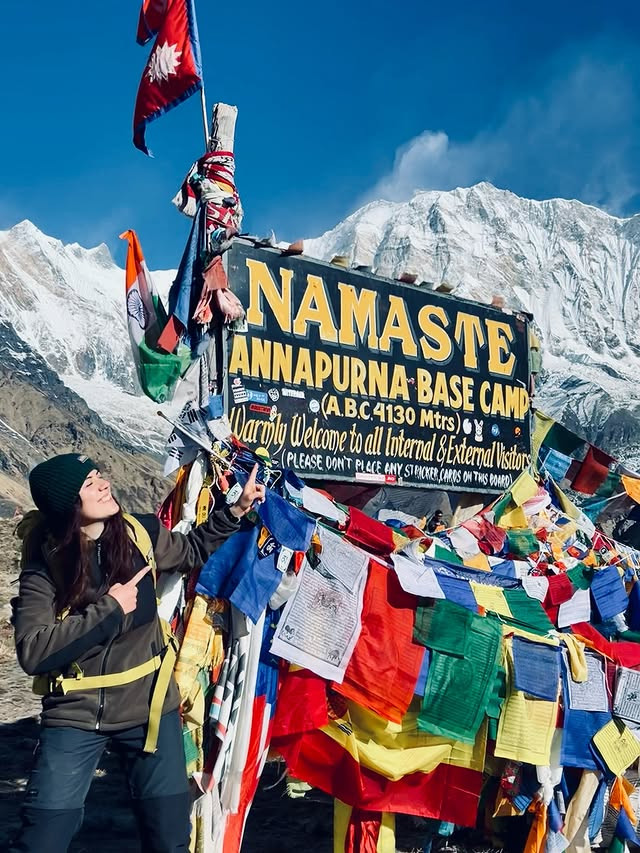
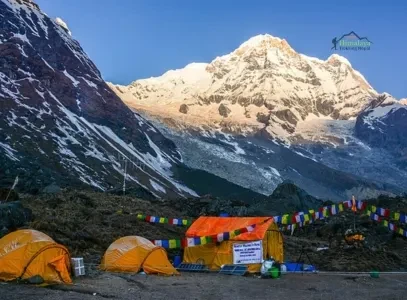
The Annapurna Base Camp (ABC) Trek is one of Nepal's most iconic Himalayan trekking experiences, leading through the Annapurna Conservation Area to Annapurna Base Camp at 4,130 meters (13,550 feet). Most trekkers complete the journey in 7 to 12 days, with the 10-day itinerary providing the best balance between safe altitude acclimatization, manageable daily walking distances, and time to experience highlights such as Ghorepani, Poon Hill, Chhomrong, and Machhapuchhre Base Camp. The total route covers approximately 110–115 kilometers (68–71 miles) round trip from Nayapul, making it one of Nepal's most accessible high-altitude treks for both first-time and experienced Himalayan trekkers.
 Choosing the right Annapurna Base Camp trek duration depends on more than the total distance. Your itinerary is influenced by factors such as fitness level, daily walking pace, starting point, elevation gain, seasonal weather, trail conditions, and acclimatization requirements to reduce the risk of Acute Mountain Sickness (AMS). This guide explains how long the trek typically takes, compares 7-, 10-, 12-, and 14-day itineraries, outlines daily walking hours and the most demanding trail sections, examines seasonal impacts and alternative routes, and provides practical planning advice to help you select the safest and most rewarding Annapurna Base Camp trekking itinerary for your experience, schedule, and travel goals.
How Many Days Does the Annapurna Base Camp Trek Usually Take?
The Annapurna Base Camp trek takes 7 to 12 days for the majority of trekkers. The 10-day itinerary is the most commonly booked duration, offering enough time to enjoy Poon Hill sunrise, acclimatize properly, and reach ABC (4,130m) without rushing. First-time high-altitude trekkers benefit most from 10–12 days.
Three distinct duration tiers exist for this trek:
-
7-day trek: A fast-paced route for experienced trekkers with prior high-altitude exposure, covering 15–18 km per day
-
10-day trek: The standard option, covering 10–13 km per day with built-in rest and acclimatization stops
-
12-day trek: The extended version for first-timers, leisure trekkers, and those combining the route with Poon Hill and Jhinu hot springs
Most trekking agencies in Pokhara recommend the 10-day format as the safest baseline for trekkers with moderate fitness and no prior Himalayan experience.
How Long Is the Standard Annapurna Base Camp Trek Itinerary?
The standard Annapurna Base Camp trek itinerary spans 10 days, starting with a 1.5-hour drive from Pokhara to Nayapul (1,070m) and ending with a descent to Jhinu Danda before returning to Pokhara. The route passes through 12 major villages and gains 3,060 meters of elevation across the full ascent.
The standard 10-day route follows this structure:
-
Days 1–2: Nayapul → Tikhedhunga → Ghorepani (2,860m)
-
Day 3: Ghorepani → Poon Hill sunrise (3,210m) → Tadapani (2,630m)
-
Day 4: Tadapani → Chhomrong (2,170m)
-
Days 5–6: Chhomrong → Sinuwa → Dovan → Himalaya (2,900m)
-
Day 7: Himalaya → Deurali (3,230m) → Machhapuchhre Base Camp (3,700m) → ABC (4,130m)
-
Days 8–9: ABC → descent via Bamboo → Jhinu Danda (1,760m)
-
Day 10: Jhinu Danda → Nayapul → drive to Pokhara
What most guides skip: Day 7 is the longest and most physically demanding single day on the entire trek. Trekkers gain 1,230 meters of elevation and cross two sub-camps before reaching ABC. Starting before 6:00 AM on this day is the standard practice among experienced guides.
Can You Complete the Annapurna Base Camp Trek in Fewer Days?
Yes, physically fit trekkers with prior high-altitude experience complete the Annapurna Base Camp trek in 5–7 days. The absolute minimum is 5 days for highly experienced trekkers using a jeep from Pokhara to Matkyu (near Jhinu Danda, bypassing the first 2 trail days), then pushing hard to reach ABC by Day 4 and returning by Day 5.
A 7-day trek is realistic for trekkers who meet all 3 of these criteria:
-
Prior altitude experience above 3,500 meters without symptoms of AMS (Acute Mountain Sickness)
-
Daily trekking fitness, walking 6–7 hours with 900m+ elevation gain without distress
-
Strong cardiovascular baseline, comparable to running 5 km under 30 minutes at sea level
Completing the trek in under 7 days significantly increases AMS risk. The elevation gain from Pokhara (827m) to ABC (4,130m) spans 3,303 meters. The human body acclimates at a safe rate of 300–500 meters of net elevation gain per day above 3,000m. Compressing this timeline removes built-in acclimatization time built into longer itineraries.
What Is the Longest Recommended Annapurna Base Camp Trek Duration?
 The longest recommended Annapurna Base Camp trek duration is 14 days, incorporating the Poon Hill side trek, a rest day at Chhomrong, the Jhinu hot spring stop, and a full acclimatization day at Machhapuchhre Base Camp (3,700m) before the final push to ABC.
A 14-day trek suits 3 specific trekker profiles:
-
Older trekkers (60+) who benefit from an additional acclimatization day at 3,000–3,500m
-
Trekkers recovering from illness who require slower elevation gain and more rest periods
-
Photography or cultural immersion trekkers who spend extended time at Ghorepani, Chhomrong, and ABC for sunrise light and rhododendron forest exploration
Beyond 14 days, the trek duration loses practical value. Tea house availability across the ABC corridor remains consistent, and extending beyond 14 days means repeating the same trail sections rather than adding new terrain.
What Factors Affect the Length of the Annapurna Base Camp Trek?
6 primary factors determine your actual Annapurna Base Camp trek duration: starting point, walking pace, fitness level, weather conditions, trail congestion during peak seasons, and individual acclimatization response. No two trekkers experience identical durations, even on the same itinerary.
How Does Your Starting Point Change the Trek Duration?
Your starting point adds or removes up to 2 full days from the standard Annapurna Base Camp trek duration. Nayapul is the most common trailhead, reached by a 1.5-hour drive from Pokhara. Starting from Phedi adds 2 hours. Starting directly from Pokhara on foot adds 1 full day.
4 common starting points and their time impacts:
|
Starting Point |
Elevation |
Extra Days vs. Nayapul |
Best For |
|
Matkyu/Samrung (Jeep drop-off) |
1,500m |
−2 days |
Experienced, time-limited trekkers |
|
Nayapul |
1,070m |
Baseline |
Most trekkers |
|
Phedi |
1,130m |
+0.5 days |
Budget-conscious (no jeep hire) |
|
Pokhara (on foot) |
827m |
+1 day |
Ultra-endurance trekkers |
Trekkers who take a jeep from Pokhara directly to Chhomrong (2,170m) bypass 3 full trail days but skip the Ghorepani–Poon Hill section entirely, one of the route's most photographed highlights.
How Does Your Walking Pace Influence the Trek?
Walking pace directly controls your daily kilometer coverage and determines whether your chosen itinerary remains physically manageable. A trekker maintaining 3.5–4 km/hour on flat trail completes the 10-day itinerary comfortably. A trekker averaging 2–2.5 km/hour on ascent requires 12 days minimum to avoid exhaustion. Pace, elevation gain, and daily exertion all factor into overall Annapurna Base Camp trek difficulty, which directly shapes how many days you should budget.
Pace benchmarks for the ABC trail:
-
Ascent pace (uphill): 2–3 km/hour (standard on stone steps and rocky terrain)
-
Descent pace: 3–4.5 km/hour (varies based on knee strength)
-
Flat trail pace: 4–5 km/hour (rare on this predominantly vertical route)
The Tikhedhunga-to-Ulleri section, 3,100 consecutive stone steps across 3.5 km, is the most pace-breaking stretch on the entire trail. Trekkers who underestimate this section consistently arrive at Ghorepani too exhausted for the next day's hike. Factoring a 30-minute rest break every 2 hours of walking adds an average of 45 minutes to daily completion time.
How Do Weather and Trail Conditions Affect Trekking Time?
Weather and trail conditions add 1–3 additional days to the Annapurna Base Camp trek during monsoon season (June–September) and winter (December–February). Snow above 3,500m slows progress by 40–60% compared to clear autumn trails.
3 weather conditions that directly increase trek duration:
-
Snowfall above Deurali (3,230m): Adds 2–4 hours to the Deurali–MBC–ABC section; crampons become necessary above 3,700m during heavy snowfall
-
Monsoon trail washouts: Rerouting around landslide damage near Bamboo and Dovan adds 1.5–2 hours per incident
-
Dense mountain fog between Tadapani and Chhomrong: Reduces visibility to under 20 meters, requiring trail markings and slower pace on exposed ridgelines
Spring and autumn trails are dry, stable, and fastest. Trekkers completing the route in October and November regularly finish the 10-day itinerary in 9 days due to favorable conditions.
What Is the Typical Day-by-Day Annapurna Base Camp Trek Itinerary?
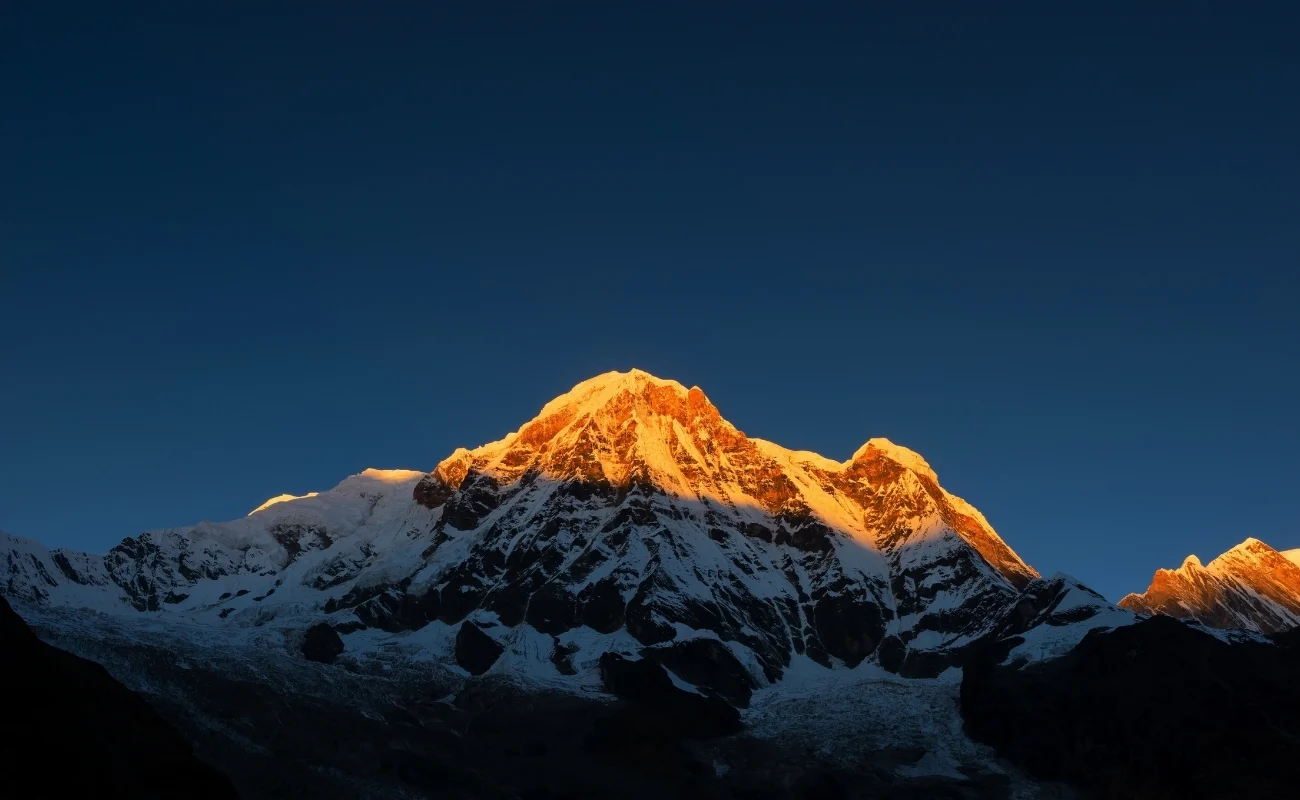 The typical Annapurna Base Camp trek itinerary follows a 10-day structure, ascending via Ghorepani and Tadapani, entering the Modi Khola river valley through Chhomrong, and reaching ABC on Day 7 or 8. The descent uses a faster, more direct route back to Nayapul via Jhinu Danda.
What Does a 7-Day Annapurna Base Camp Trek Look Like?
A 7-day Annapurna Base Camp trek is a fast-paced itinerary that skips Poon Hill and combines several standard stopping points into single longer walking days. Daily walking time averages 7–8 hours. This version suits physically active trekkers who have visited Poon Hill separately or prioritize reaching ABC over scenic stopovers.
The 7-day schedule:
-
Day 1: Drive Pokhara → Nayapul; trek to Tikhedhunga (1,495m), 4 hours walking
-
Day 2: Tikhedhunga → Ghorepani (2,860m), 6 hours; 1,365m elevation gain
-
Day 3: Ghorepani → Chhomrong (2,170m) via Tadapani, 7 hours
-
Day 4: Chhomrong → Himalaya Hotel (2,900m), 6 hours
-
Day 5: Himalaya Hotel → ABC (4,130m) via Deurali, MBC, 7 hours
-
Day 6: ABC → Bamboo (2,310m), 6 hours descent
-
Day 7: Bamboo → Nayapul → drive to Pokhara, 5 hours walking
The 7-day format is not suitable for trekkers with any history of altitude sickness or those climbing above 3,000m for the first time.
What Does a 10-Day Annapurna Base Camp Trek Include?
A 10-day Annapurna Base Camp trek includes the Poon Hill sunrise experience, a dedicated acclimatization stop at Himalaya Hotel, and a rest day at Machhapuchhre Base Camp before ascending to ABC. Daily walking averages 5–6 hours with 600–900m elevation variation.
The 10-day schedule:
-
Day 1: Drive Pokhara → Nayapul; trek to Tikhedhunga (1,495m)
-
Day 2: Tikhedhunga → Ghorepani (2,860m)
-
Day 3: Poon Hill sunrise (3,210m) → Tadapani (2,630m)
-
Day 4: Tadapani → Chhomrong (2,170m)
-
Day 5: Chhomrong → Dovan (2,600m) via Sinuwa
-
Day 6: Dovan → Himalaya Hotel (2,900m)
-
Day 7: Himalaya Hotel → ABC (4,130m) via Deurali (3,230m) and MBC (3,700m)
-
Day 8: Rest/explore at ABC; descend to Bamboo (2,310m)
-
Day 9: Bamboo → Jhinu Danda (1,760m); hot spring soak
-
Day 10: Jhinu Danda → Nayapul → drive to Pokhara
The 10-day format is the most balanced choice for first-time Himalayan trekkers. The built-in rest at ABC on Day 8 allows the body to recover at altitude before the long descent, a detail most shortened itineraries omit.
What Does a 12-Day Annapurna Base Camp Trek Cover?
A 12-day Annapurna Base Camp trek covers all highlights of the 10-day route plus 2 additional rest or exploration days, typically distributed at Ghorepani (extra Poon Hill time or rhododendron forest hiking) and Chhomrong (village exploration, acclimatization walk). Daily walking time drops to 4–5 hours.
The 2 additional days in a 12-day itinerary serve specific purposes:
-
Extra day at Ghorepani: Allows a morning Poon Hill sunrise and an afternoon walk to Deurali viewpoint (2,900m), a ridge panorama that captures Dhaulagiri (8,167m), Annapurna South (7,219m), and Hiunchuli (6,441m) simultaneously
-
Extra day at Chhomrong: Provides a rest day with an optional 2-hour acclimatization walk to Sinuwa (2,360m) and back, stabilizing blood oxygen saturation above 2,000m before entering the high-altitude ABC corridor
The 12-day version delivers the best overall trekking experience for families, photographers, and those making their first Himalayan trek.
How Many Hours Will You Walk Each Day?
Daily walking time on the Annapurna Base Camp trek ranges from 4 to 8 hours, depending on the day's elevation gain, trail condition, and your chosen itinerary. The average across a standard 10-day trek is 5.5 hours of active walking per day.
Which Days Are the Longest on the Trek?
The 3 longest walking days on the Annapurna Base Camp trek are Day 2 (Tikhedhunga to Ghorepani), Day 7 (Himalaya Hotel to ABC), and the initial descent day (ABC to Bamboo). Each of these days demands between 6 to 8 hours of active walking, depending on your pace and trail conditions.
Day-by-day walking hours for the 10-day itinerary:
|
Day |
Route |
Walking Hours |
Elevation Change |
|
1 |
Nayapul → Tikhedhunga |
4 hrs |
+425m |
|
2 |
Tikhedhunga → Ghorepani |
6–7 hrs |
+1,365m |
|
3 |
Poon Hill → Tadapani |
5–6 hrs |
−230m net |
|
4 |
Tadapani → Chhomrong |
5–6 hrs |
−460m net |
|
5 |
Chhomrong → Dovan |
5 hrs |
+430m |
|
6 |
Dovan → Himalaya Hotel |
4 hrs |
+300m |
|
7 |
Himalaya Hotel → ABC |
7–8 hrs |
+1,230m |
|
8 |
ABC → Bamboo |
6–7 hrs |
−1,820m |
|
9 |
Bamboo → Jhinu Danda |
4 hrs |
−550m |
|
10 |
Jhinu Danda → Nayapul |
4 hrs |
−690m |
Which Sections Are the Most Challenging?
The 3 most physically demanding sections of the Annapurna Base Camp trek are the Tikhedhunga-to-Ulleri stone step climb, the Deurali-to-ABC high-altitude push, and the initial steep descent from ABC to Sinuwa.
Each section is challenging for a distinct reason:
-
Tikhedhunga to Ulleri (Day 2): 3,100 stone steps across 3.5 km; gains 600 meters in elevation; most trekkers report this as the most leg-burning section of the entire trek
-
Deurali to ABC (Day 7): Oxygen levels at 4,130m measure approximately 60% of sea-level concentration; every 100m of gain above Deurali requires noticeably more effort despite flat or gradual trail gradient
-
ABC to Sinuwa descent: 1,500+ meters of knee-impacting descent over 14 km; Trekking poles reduce knee joint forces by 12–25% on steep descents like ABC to Sinuwa, according to biomechanical testing published in Medicine & Science in Sports & Exercise.
Does Acclimatization Increase the Trek Duration?
Yes, proper acclimatization adds 1–2 days to the minimum Annapurna Base Camp trek duration. Skipping acclimatization does not save time; trekkers who ascend too fast risk acute mountain sickness (AMS), which forces 1–3 mandatory rest days at lower elevation, adding more time than the acclimatization would have required.
Is Acclimatization Necessary for Annapurna Base Camp?
Acclimatization is necessary for every trekker reaching above 3,000 meters on the Annapurna Base Camp route. ABC sits at 4,130m, where atmospheric pressure is 62% of sea-level pressure and available oxygen per breath drops by 38%. The body requires 24–48 hours to produce additional red blood cells and adjust respiratory patterns at each major elevation band.
The 2 most critical acclimatization points on the ABC route are:
-
Himalaya Hotel (2,900m): A night's sleep here prevents rapid ascent from Chhomrong (2,170m) directly to ABC, a 1,960m gain in a single day, which exceeds safe ascent limits by 4x
-
Machhapuchhre Base Camp (3,700m): Spending even 2 hours here before continuing to ABC (4,130m) reduces AMS incidence among trekkers by allowing the body to stabilize at 430m below the final destination
The ‘climb high, sleep low’ principle, detailed in the Himalayan Rescue Association's official trekker brochure, recommends no more than 300 meters of sleeping-altitude gain per day above 3,000m.
How Can You Stay Safe While Adjusting to the Altitude?
Staying safe during altitude adjustment on the Annapurna Base Camp trek requires following 4 evidence-based protocols: controlling daily elevation gain, maintaining hydration, recognizing AMS symptoms early, and descending immediately at the first signs of severe altitude illness.
Specific safety protocols used by experienced ABC guides:
-
Elevation awareness: Standard alpine rules suggest gaining no more than 500 meters of sleeping altitude per day above 3,000m. However, because of the steep topography in the final ABC corridor, trekkers often must make a 1,230m jump from Himalaya Hotel directly to ABC. Because this violates standard acclimatization profiles, spending 1-2 hours resting at Machhapuchhre Base Camp (3,700m) before the final push to ABC is a mandatory safety buffer.
-
Hydration target: Drink 3–4 liters of water per day; dehydration accelerates AMS onset
-
AMS symptom recognition: Headache, nausea, dizziness, and loss of appetite are Grade 1 AMS signals; confusion, inability to walk straight, or breathlessness at rest indicate Grade 3 AMS requiring immediate descent of 500+ meters
-
Medication: Acetazolamide (Diamox) at 125mg twice daily carries a Grade 1A recommendation, the strongest evidence tier, for AMS prevention, per the Wilderness Medical Society Clinical Practice Guidelines for Acute Altitude Illness; consult a physician before use.
The ACAP (Annapurna Conservation Area Project) checkpoint at Deurali records trekker health data, part of the mandatory Annapurna Base Camp trek permit process every trekker completes in Pokhara before departure. Guides registered with the Nepal Tourism Board are trained to assess AMS using the Lake Louise Scoring System and carry pulse oximeters to measure blood oxygen saturation (SpO2), a reading below 80% at any point on the trail triggers mandatory descent.
When Is the Best Time to Trek to Annapurna Base Camp?
The best time to trek to Annapurna Base Camp is October–November (autumn) and March–May (spring). These 2 seasons deliver stable weather, clear mountain views, and safe trail conditions across 85–90% of trekking days.
Which Seasons Offer the Best Trekking Conditions?
Autumn (October–November) offers the best overall trekking conditions with post-monsoon clarity, dry trails, and stable temperatures ranging from 5°C at night to 18°C during the day at lower elevations. Spring (March–May) delivers rhododendron blooms at Ghorepani and Tadapani, with slightly warmer mornings.
Season-by-season breakdown:
|
Season |
Months |
Trail Condition |
Views |
Crowd Level |
|
Autumn |
Oct–Nov |
Excellent |
Crystal clear |
High |
|
Spring |
Mar–May |
Good |
Good (some haze) |
High |
|
Winter |
Dec–Feb |
Snow above 3,500m |
Excellent on clear days |
Low |
|
Monsoon |
Jun–Sep |
Slippery, landslides |
Obscured |
Very Low |
November is specifically preferred by photographers: post-harvest skies carry minimal atmospheric dust, delivering the sharpest views of Annapurna South (7,219m), Hiunchuli (6,441m), and Machhapuchhre (6,993m) from ABC.
How Does the Season Affect Trek Duration?
Winter and monsoon seasons each add 1–3 days to standard trek duration. Snow above Deurali during December–February requires slower pacing, potential crampon use, and occasional route detours. Monsoon season (June–September) adds time through trail damage, leeches on lower elevations, and daily afternoon rain from 13:00–17:00.
Spring and autumn trekkers complete the 10-day itinerary on schedule 90% of the time. Winter and monsoon trekkers should budget a minimum of 12 days for the same route, with 2 buffer days for weather delays.
How Can You Shorten or Extend the Annapurna Base Camp Trek?
You shorten the Annapurna Base Camp trek by using jeep transport and omitting Poon Hill; you extend it by adding side trips to Khopra Danda, Mardi Himal, or the Annapurna Circuit loop. Both strategies are straightforward and widely used by trekkers in Pokhara.
Which Alternative Routes Save Time?
2 alternative route strategies save 2–3 days on the Annapurna Base Camp trek without sacrificing the core ABC experience:
-
Jeep from Pokhara to Matkyu/Samrung (near Jhinu Danda): Bypasses the Nayapul–Tikhedhunga–Ghorepani–Tadapani section, saving 2 to 3 full trekking days. The road ends here, requiring a 2–3 hour physical hike, including crossing the Modi Khola suspension bridge and a steep stone-step ascent, to reach Chhomrong (2,170m).
Cost: approximately NPR 4,000–6,000 ($30–45 USD) for a shared jeep from Pokhara
-
Direct descent route via Sinuwa: Instead of descending through Bamboo and Jhinu Danda, descend directly from Chhomrong to Jhinu Danda in a single 3-hour push, saving half a day on the return
The Ghorepani-to-Chhomrong bypass sacrifices 2 of the route's most photographed panoramas, Poon Hill at sunrise and the Tadapani ridgeline views. Trekkers who skip this section frequently report missing the Himalayan context that Poon Hill provides before entering the deep Modi Khola gorge.
Which Side Trips Add Extra Days to the Trek?
3 popular side trips each add 1–3 days to the Annapurna Base Camp trek:
-
Poon Hill (3,210m): Already integrated into the 10-day itinerary; adds 1 extra morning if done as a dedicated sunrise excursion from Ghorepani; no extra overnight required
-
It reaches 370m higher than ABC and offers views of the eastern Annapurna massif that ABC itself does not provide. Trekkers with extra days often combine both routes by booking the Mardi Himal trek as a standalone extension. Khopra Danda Ridge (3,660m): A 2-day loop from Ghorepani or Tadapani; traverses a high ridge above the treeline with views of Dhaulagiri and Nilgiri North (7,061m)
How Does the Annapurna Base Camp Trek Compare With Other Popular Treks?
The Annapurna Base Camp trek is shorter than both the Everest Base Camp trek and the Annapurna Circuit, making it the most accessible high-altitude trek in Nepal for trekkers with 7–12 available days. It combines technical altitude with relatively straightforward trail navigation.
Is Annapurna Base Camp Shorter Than the Everest Base Camp Trek?
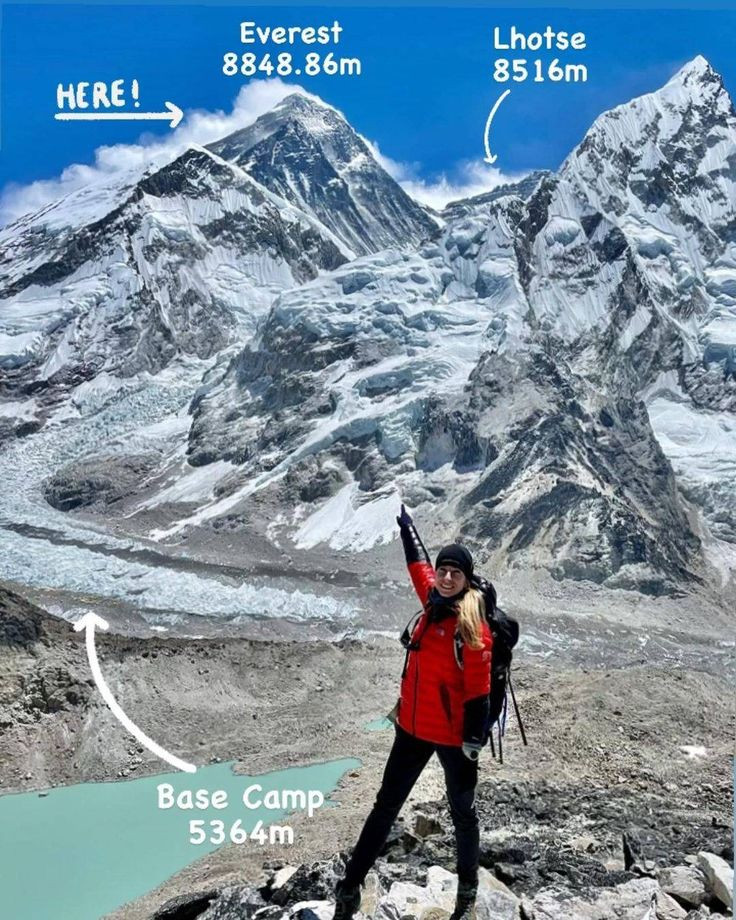
Yes, the Annapurna Base Camp trek is 4–6 days shorter than the Everest Base Camp trek. EBC typically requires 14–18 days, covers 130 km round trip, and reaches a maximum elevation of 5,364 meters, 1,234 meters higher than ABC. For a full side-by-side breakdown of permits, altitude risk, and daily distances, see this detailed EBC vs Annapurna Base Camp trek comparison. The Khumbu trail to EBC also involves more consecutive high-altitude nights above 3,500m.
Key comparison:
|
Feature |
Annapurna Base Camp |
Everest Base Camp |
|
Maximum elevation |
4,130m |
5,364m |
|
Standard duration |
10 days |
14–16 days |
|
Round trip distance |
110–115 km |
130 km |
|
AMS risk level |
Moderate |
High |
|
Permit cost |
NPR 5,000 (~$38 USD) |
NPR 5,000–6,000 (~$38–$45 USD) (combining National Park and local municipality fees) |
|
Best for |
First-time high-altitude trekkers |
Experienced mountain trekkers |
ABC is widely recommended as the ideal "first Himalayan trek" before attempting EBC or peaks above 5,000 meters.
How Does Annapurna Base Camp Compare With the Annapurna Circuit?
The Annapurna Circuit is 7–12 days longer than the Annapurna Base Camp trek, covering 160–230 km and crossing the Thorong La Pass at 5,416m, the world's highest trekking pass. The Circuit circumnavigates the entire Annapurna massif; ABC only penetrates to the base of the south face.
The Annapurna Circuit suits trekkers who want cultural diversity (crossing from Hindu foothills to Tibetan-influenced upper Mustang), multiple ecosystems in one trek, and a higher physical and altitude challenge. ABC suits trekkers who want a focused, high-altitude experience with clear distance and duration boundaries.
What Should You Pack for a Trek of This Length?
Packing for a 7–12 day Annapurna Base Camp trek requires a base kit of 15–18 essential items weighing 8–12 kg total (excluding water). Tea house availability across the ABC corridor means trekkers do not carry tents or cooking equipment, since meals and lodging are covered through established food and accommodation on the ABC trek at every overnight stop.
Which Essentials Are Required for a Week-Long Trek?
15 essential items every Annapurna Base Camp trekker carries:
-
Trekking boots (broken in, waterproof, ankle support)
-
Down jacket (rated to −10°C for overnight at ABC)
-
Moisture-wicking base layers (2 sets)
-
Trekking poles (collapsible, with wrist straps)
-
Sleeping bag liner (tea houses provide blankets; liner adds warmth)
-
Headlamp with spare batteries (power cuts are frequent above Chhomrong)
-
Water purification tablets or UV purifier (prevents gastrointestinal illness from untreated water)
-
Sunscreen SPF 50+ and UV-blocking sunglasses (UV intensity increases 4–5% per 300m of elevation)
-
First aid kit including blister plasters, elastic bandage, and paracetamol
-
TIMS card and ACAP permit (purchased in Pokhara; cost: NPR 5,000 combined)
-
Cash in Nepalese rupees (no ATMs above Pokhara; carry NPR 15,000–20,000 minimum)
-
Daypack (20–25 liters) for summit day items
-
Rain jacket and pack cover (essential even in dry season above 3,000m)
-
Gaiters (optional in dry season; essential in winter above Deurali)
-
Portable phone charger/power bank (10,000 mAh minimum)
What Optional Gear Can Improve Comfort?
5 optional items that measurably improve comfort on the Annapurna Base Camp trek:
-
Lightweight camp shoes: Tea house evenings in wet or muddy trekking boots are uncomfortable; packable crocs or sandals weigh 300g and prevent foot fatigue
-
Pulse oximeter: A finger-clip SpO2 monitor costs NPR 1,500–3,000 ($11–22 USD) in Pokhara and provides real-time blood oxygen readings above 3,000m, the most actionable AMS early-warning tool available on the trail
-
Thermal buff/balaclava: Mornings at Ghorepani and ABC drop to −5°C in autumn; a buff weighs 50g and functions as neck gaiter, hat, and face cover
-
Trekking gaiters: Keeps trail debris and moisture out of boot collars on wet descents, particularly on the muddy Bamboo-to-Sinuwa section during and after rain
-
Electrolyte tablets: Altitude and high daily exertion deplete sodium and potassium; adding electrolyte tablets to water prevents cramps and fatigue during 7+ hour walking days
How Should You Plan Your Annapurna Base Camp Trek With a Local Trekking Agency?
Planning with a local Pokhara-based trekking agency provides 6 concrete advantages: permit acquisition, guide assignment, porter logistics, emergency evacuation coordination, tea house reservation during peak season, and flexible itinerary adjustment based on daily trail conditions.
A licensed trekking guide registered with the Nepal Tourism Board typically costs NPR 3,300–4,600+ ($25–35+ USD) per day. Under strict ethical guidelines, a porter carries a maximum of 20 kg (usually shared between two trekkers) and costs NPR 2,600–3,300 ($20–25 USD) per day. All inclusive 10-day ABC trek packages from established Pokhara agencies range from NPR 50,000–90,000 ($375–675 USD) covering accommodation, meals, permits, guide, and porter.
What planning through a registered agency secures: Since April 1, 2023, confirmed by a U.S. Embassy Nepal travel alert, solo and independent foreign trekkers must be accompanied by a registered guide or porter inside Nepal's national parks and conservation areas, including the Annapurna Conservation Area. Booking through a reputable agency not only ensures legal compliance but guarantees tea house beds at popular stops like Ghorepani and Himalaya Hotel, which fill completely by 15:00 during peak weeks.
Can Our Trekking Agency Help You Choose the Right Annapurna Base Camp Trek Duration?
Our trekking agency specializes in customized ABC itineraries tailored to each trekker's fitness level, available days, altitude experience, and personal trekking goals. Their team of licensed Nepalese guides assess fitness benchmarks, prior altitude history, and seasonal conditions before recommending a 7-day, 10-day, or 12-day itinerary.
Our trekking agency manages all 4 logistical components that determine trek success:
-
TIMS and ACAP permit procurement in Pokhara before departure
-
Experienced NTB-registered guides with first aid and AMS response training
-
Pre-booked tea house accommodation on the entire ABC corridor
-
Flexible day-by-day pace adjustment based on individual health and weather
For trekkers uncertain about which duration fits their fitness level, a 20-minute consultation with the our trekking agency planning team in Pokhara, or via their booking portal before arriving in Nepal, clarifies the correct itinerary, packing list, and acclimatization strategy specific to your travel dates. Browse our full Annapurna Base Camp trek itinerary, inclusions, and departure dates to start planning your journey.
What Are the Key Takeaways About the Annapurna Base Camp Trek Duration?
The Annapurna Base Camp trek takes 7 to 12 days for the vast majority of trekkers. The 10-day itinerary is the most recommended duration, balancing safe acclimatization, complete trail coverage, and a sustainable daily walking pace of 5–6 hours.
6 facts that define your planning decisions:
-
Distance: 110–115 km round trip from Nayapul
-
Maximum elevation: 4,130 meters at ABC; gain from Pokhara totals 3,303 meters
-
Minimum viable duration: 7 days for experienced, fit trekkers with prior altitude exposure above 3,500m
-
Optimal duration: 10 days for most first-time Himalayan trekkers
-
Best trekking months: October, November, March, and April
-
Peak challenge days: Day 2 (Tikhedhunga to Ghorepani) and Day 7 (Himalaya Hotel to ABC)
The Annapurna Base Camp trek is the most accessible high-altitude trek in Nepal, reaching a glacial amphitheater surrounded by 8 peaks above 6,000 meters within 7–12 days from Pokhara. Planning your duration accurately, matched to your fitness, schedule, and altitude experience, transforms the trek from a physical endurance event into one of the most rewarding mountain experiences in the Himalayas.
More About Author

Khilak Budhathoki
Travel Director
Khilak Budhathoki is the co-founder and lead trekking guide at Himalaya Trekking Nepal, a locally owned and operated adventure company based in Kathmandu. Born and raised in the foothills of Nepal, Khilak developed a deep love for the mountains from an early age. With over a deca...
USD$1500 pp
Our Recommendation
USD$1,400 pp
Our Recommendation
Related Blogs