- 19, Jul 2026 | Khilak Budhathoki
The Annapurna Base Camp (ABC) Trek is one of Nepal's most accessible and well-established high-altitude trekking routes, taking hikers through the Annapurna Conservation Area to 4,130 meters (13,550 feet) above sea level. Every year, thousands of trekkers choose the route for its spectacular Himalayan scenery, traditional Gurung villages, and extensive network of tea houses. For solo trekkers, the Annapurna Base Camp Trek is widely considered a safe adventure when approached with proper planning, licensed guide support, altitude awareness, and respect for changing mountain weather. Well-marked trails, frequent settlements, army checkpoints, and established rescue services further contribute to its reputation as one of Nepal's safest major trekking destinations.
.jpg) Trek safety, however, depends on far more than the condition of the trail itself. Altitude sickness, unpredictable weather, seasonal landslides, physical fatigue, navigation, communication, permits, and emergency preparedness all influence the success of a solo trek. Nepal's mandatory licensed guide regulation for the Annapurna region has also changed how independent trekkers must plan their journey. This guide provides a complete overview of solo trekking safety on the Annapurna Base Camp Trek, covering route conditions, altitude risks, accommodation safety, essential gear, acclimatization strategies, rescue services, travel insurance, and practical recommendations to help you complete the trek safely and confidently while making informed decisions at every stage of the journey.
Trek safety, however, depends on far more than the condition of the trail itself. Altitude sickness, unpredictable weather, seasonal landslides, physical fatigue, navigation, communication, permits, and emergency preparedness all influence the success of a solo trek. Nepal's mandatory licensed guide regulation for the Annapurna region has also changed how independent trekkers must plan their journey. This guide provides a complete overview of solo trekking safety on the Annapurna Base Camp Trek, covering route conditions, altitude risks, accommodation safety, essential gear, acclimatization strategies, rescue services, travel insurance, and practical recommendations to help you complete the trek safely and confidently while making informed decisions at every stage of the journey.
Is the Annapurna Base Camp Trek Safe Overall for Solo Trekkers?
The Annapurna Base Camp Trek is safe for solo trekkers who prepare correctly. The trail passes through densely populated villages, hosts multiple tea houses per day of hiking, and receives thousands of trekkers annually. Altitude, weather, and remote terrain remain the 3 primary risk factors to manage.
The Annapurna Conservation Area Project (ACAP) manages the entire trekking corridor under strict guidelines. Registered tea houses, clear trail junctions, and active army checkpoints create a structured environment that differentiates this route from remote Himalayan expeditions. According to the Government of Nepal's official 2023 tourism statistics, 107,880 foreign trekkers entered the Annapurna Conservation Area that year, making it the most trafficked trekking corridor in the country.
That said, solo trekking carries inherent challenges that group trekking naturally distributes. A solo trekker with acute mountain sickness (AMS) must rely entirely on their hired guide to alert tea house staff, as they don't have a wider group of friends to monitor them. A solo trekker who slips on an icy Deurali section at 3,230 meters faces longer response times. These are real, manageable risks, not reasons to avoid the route, but reasons to prepare with greater precision.
What Makes the Annapurna Base Camp Trek Relatively Safe?
4 structural features make the ABC Trek the safest major high-altitude trek in Nepal:
-
Continuous village access: The trail passes through Tikhedhunga, Ghorepani, Chhomrong, Sinuwa, Bamboo, Himalaya Hotel, Deurali, and Machapuchare Base Camp before ABC. Each settlement has functioning tea houses, locals, and basic first-aid supplies.
-
High trekker density: Trail traffic between October and November averages 300–500 daily trekkers, meaning you are rarely isolated for long.
-
Army checkpoints: Multiple checkpoints at locations including Chhomrong and Deurali verify TIMS cards and ACAP permits, creating a live record of your progress.
-
Short daily hiking distances: Daily stages average 5–7 hours of walking, which prevents exhaustion-driven decision errors common on more demanding routes.
What Are the Main Risks Solo Trekkers Should Expect?
The 4 main risks on the ABC Trek are altitude sickness, monsoon-season landslides, trail injuries from uneven terrain, and isolation during medical emergencies.
Altitude sickness presents the highest likelihood of disrupting a trek. Symptoms appear above 3,000 meters with measurable frequency. A 2026 peer-reviewed analysis of Himalayan Rescue Association clinic records at Manang found that 11.6% of the 2,904 trekkers and locals treated between 2018 and 2023 had altitude-related illness, including AMS, HAPE, and HACE cases. Solo trekkers are disproportionately affected because no partner monitors their condition overnight.
Landslides claim sections of trail during the monsoon season (June through September), particularly between Bamboo and Deurali. The 2021 monsoon permanently rerouted 2 trail sections in this zone. Weather windows close without warning at higher elevations, and solo trekkers without guide support make descent decisions alone, which increases exposure time during storms.
What Challenges Do Solo Trekkers Face on the Annapurna Base Camp Trek?
Solo trekkers on the ABC Trek face 3 compounding challenges: altitude-driven health risks, unpredictable mountain weather, and physical trail hazards, all of which require individual management without a support partner or immediate emergency assistance.
Understanding these challenges before departure is what separates trekkers who complete the route safely from those who need helicopter evacuation. For a full walkthrough of costs, seasons, and route planning, see our solo trek guide to Annapurna Base Camp.
How Does High Altitude Affect Solo Trekkers?
Altitude affects every trekker above 2,500 meters by reducing oxygen availability, and solo trekkers face heightened risk because no partner monitors their symptom progression overnight.
The ABC Trek ascends from Nayapul at 1,070 meters to Annapurna Base Camp at 4,130 meters. This 3,060-meter gain in elevation occurs across 5–7 hiking days, which is a rapid ascent profile by Himalayan standards. The human body requires time for red blood cell production to compensate for reduced atmospheric oxygen pressure at elevation.
Altitude-related conditions that affect trekkers on this route fall into 3 clinical categories:
-
Acute Mountain Sickness (AMS): Affects 25–30% of trekkers above 4,000 meters with symptoms including headache, nausea, fatigue, and dizziness.
-
High Altitude Cerebral Edema (HACE): A severe AMS progression causing brain swelling. This is a medical emergency requiring immediate descent and evacuation.
-
High Altitude Pulmonary Edema (HAPE): Fluid accumulation in the lungs at altitude. HAPE is responsible for the majority of altitude-related deaths in Nepal's trekking regions.
Solo trekkers are at greater risk for delayed recognition of HACE and HAPE because neither condition presents itself obviously during sleep. A roommate in a shared tea house room notices abnormal breathing. A solo trekker does not. Registering your room number with tea house staff each night is a practical countermeasure that most solo trekkers overlook.
How Can Weather Conditions Impact Trek Safety?
Weather on the ABC Trek changes within 2–4 hours at elevations above 3,500 meters, and the 4 most dangerous conditions, whiteout snowfall, freezing rain, monsoon downpours, and sudden fog, reduce trail visibility to under 10 meters.
The Annapurna massif generates its own localized weather systems due to its position at the edge of the Himalayan range and direct exposure to southwest monsoon airflow. Temperatures at ABC drop below -10°C (14°F) on clear winter nights and reach -5°C (23°F) during daytime storms even in October.
The Deurali section between 3,200 and 3,700 meters accumulates ice and snow from November onward, making trail conditions treacherous for trekkers without microspikes or crampons. In January and February 2024, the trail above Deurali closed 3 separate times due to avalanche risk.
Monsoon season (June–September) creates an entirely different hazard profile: leeches on every trail surface below 3,000 meters, reduced visibility from cloud cover and rain, and active landslide risk on exposed sections near Bamboo (2,310 meters) and the Himalaya Hotel (2,920 meters) section.
What Trail Hazards Should You Watch Out For?
The ABC trail contains 5 specific hazard zones: river crossings near Jhinu Danda, steep stone steps below Ghorepani, narrow cliff edges above Chhomrong, icy sections above Deurali, and avalanche-risk corridors between MBC and ABC.
River crossings at lower elevations (Jhinu Danda area) become dangerous crossing points during monsoon season when water levels rise 3–4 times their dry-season depth. Suspension bridges in the region are structurally maintained but carry weight limits, typically 5 persons or 1,500 kg maximum, which solo trekkers cross safely.
The 3,500 stone steps climbing out of Ulleri represent the single most physically demanding section of the lower trail. Wet stone surfaces after rainfall reduce traction significantly. The section between Chhomrong and Sinuwa involves a sharp descent of 500 vertical meters followed by an immediate 500-meter climb, a fatigue trap that causes most lower-trail ankle injuries.
How Safe Is the Annapurna Base Camp Trek Route?
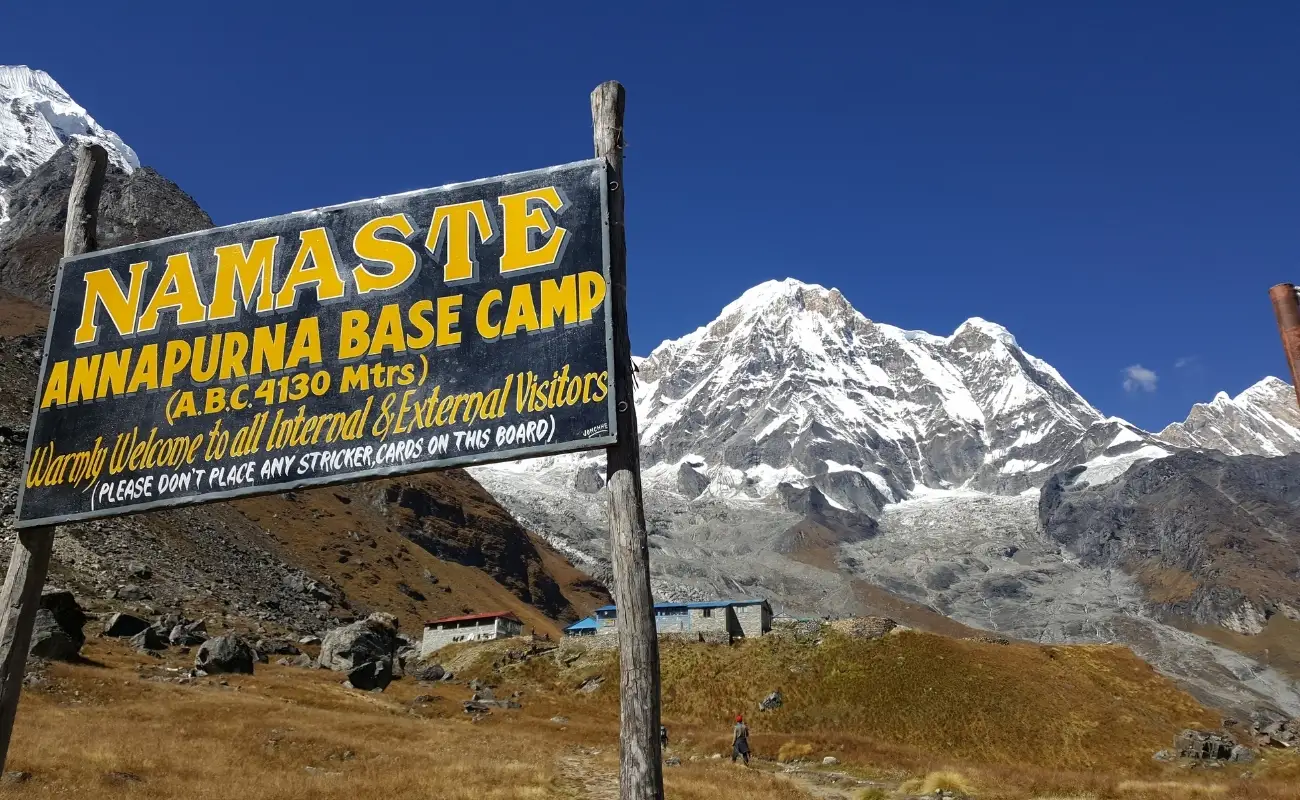 The ABC Trek route ranks among Nepal's safest trekking corridors due to its infrastructure, village density, and year-round maintenance by ACAP teams. Most safety incidents arise not from the route itself but from trekker decisions made on the route.
Which Sections of the Trail Require Extra Caution?
4 sections of the ABC Trek demand heightened caution from solo trekkers: the Chhomrong descent/ascent, the Deurali ice zone, the MBC-to-ABC final push, and any suspension bridge crossing during monsoon season.
The Deurali-to-MBC section at 3,230–3,700 meters produces the highest concentration of altitude-related medical incidents on the entire route. Tea house staff at Deurali report assisting trekkers with AMS symptoms on an almost daily basis during peak season. This section also channels wind through narrow glacial valleys, dropping perceived temperature by an additional 5–8°C below ambient readings.
The final 2-hour push from Machapuchare Base Camp (MBC) at 3,700 meters to ABC at 4,130 meters crosses a moraine field with no natural windbreaks. Morning starts (before 7:00 AM) reduce avalanche risk and ensure clear summit visibility. Afternoon approaches after 2:00 PM expose trekkers to the highest lightning risk window in this section.
How Well Marked Is the Annapurna Base Camp Trek Route?
The main ABC trail is well marked with painted stone cairns, ACAP-installed directional signboards at every major junction, and tea house clusters that confirm you are on the correct route every 1–2 hours of hiking.
The trail uses a color-coded signboard system maintained by the Annapurna Conservation Area Project. Blue boards indicate distances to the next settlement. Yellow boards mark restricted zones or altitude warnings. Solo trekkers using digital trail apps (Maps.me or Gaia GPS, both downloadable for offline use) add a second navigation layer with zero mobile data requirements.
The only genuinely unmarked section appears during whiteout snowfall above Deurali, where cairns disappear under snow. Solo trekkers who reach Deurali in deteriorating visibility face a clear binary choice: wait at the tea house until conditions improve, or turn back. Waiting is the correct decision in 100% of whiteout scenarios.
Are Tea Houses Safe for Solo Trekkers?
Tea houses on the ABC Trek are safe, licensed by ACAP, and provide single-room or dormitory accommodation at every major trail point, with female-only room options available at most establishments.
The ACAP licensing system requires tea houses to meet minimum standards for food safety, waste management, and accommodation. Tea houses along the ABC route are licensed and managed under the Annapurna Conservation Area Project (ACAP), Nepal's largest protected area at 7,629 sq. km, run by the National Trust for Nature Conservation since 1986.
Solo female trekkers represent a significant portion of ABC trekkers, estimates from local guide agencies place this at 35–40% of all solo trekkers on the route. Tea house owners along the trail maintain strong community relationships and routinely check on solo guests after check-in. Locking door hardware at higher-elevation tea houses (above Chhomrong) varies in quality; carrying a small door wedge or travel lock adds personal security.
What Safety Precautions Should Solo Trekkers Take?
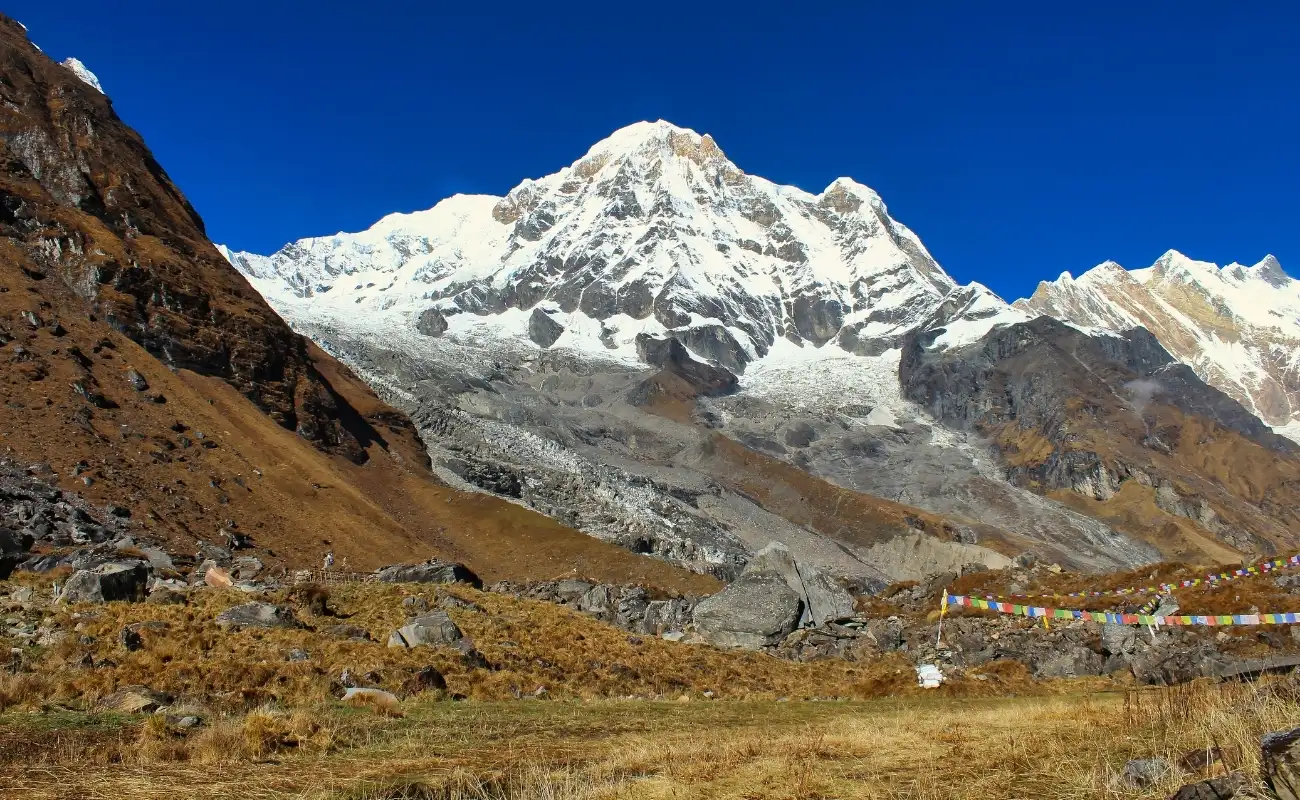 Solo trekkers on the ABC Trek improve safety outcomes by carrying the right gear, completing medical and logistical preparation before Pokhara departure, and establishing communication protocols with at least 1 contact outside Nepal. For a broader look at permits, fitness prep, and emergency protocols, see our ABC trek safety guide.
What Essential Gear Improves Trekking Safety?
The 8 essential safety items every solo ABC trekker carries are: a down sleeping bag rated to -10°C, trekking poles, a headlamp with backup batteries, microspikes (November–March), a pulse oximeter, a personal first-aid kit, a water purification system, and a fully charged battery pack.
A pulse oximeter is the single most underutilized safety tool on high-altitude treks. A blood oxygen saturation (SpO2) reading below 85% at altitude signals significant hypoxia and requires immediate assessment. Normal SpO2 at sea level is 95–100%; readings above 80% at 4,130 meters are typical. Readings below 75% at ABC indicate a descent is necessary.
Trekking poles reduce knee joint loading by 12–25% during downhill walking, according to a controlled biomechanical study from the University of Salzburg's Institute of Sport Sciences, a critical benefit on the long descent from ABC back through the Sanctuary. Microspikes add traction on ice above Deurali without the bulk of full crampons, and they weigh under 500 grams per pair.
Water purification eliminates gastrointestinal risk, which is the leading cause of trip-ending illness on Nepali trekking routes. Chlorine tablets, UV-light purifiers (SteriPen), or a Sawyer Squeeze filter each neutralize Giardia, E. coli, and Cryptosporidium, pathogens present in trail water sources throughout the region. For the complete clothing, gear, and document checklist, see our ABC trek packing list.
How Should You Prepare Before Starting the Trek?
Preparation before the trek starts in Pokhara, where solo trekkers obtain 2 mandatory permits for ABC trek, complete a fitness assessment, and register their itinerary with the Tourism Board office.
The 2 required permits are:
-
ACAP (Annapurna Conservation Area Permit): NPR 3,000 (~$23 USD) per person, available at the ACAP office in Pokhara or Besisahar.
-
TIMS Card (Trekker Information Management System): NPR 2,000 (~$15 USD) per person for foreign nationals. Since the ban on independent trekking, individual TIMS cards are no longer issued; this mandatory permit must be obtained and processed through your registered trekking agency.
As confirmed by an official U.S. Embassy Nepal travel alert, Nepal's Ministry of Culture, Tourism, and Civil Aviation made licensed guides mandatory for all solo and independent foreign trekkers effective April 1, 2023, a rule now strictly enforced at Annapurna region checkpoints. Enforcement is active at army checkpoints. Trekkers discovered without either permits or a licensed guide face fines and mandatory registration delays.
Pre-trek fitness preparation targeting cardiovascular endurance, specifically the ability to hike 6+ hours carrying a 10 kg pack, reduces altitude stress. Training at a gym with stair machines at incline setting for 4–6 weeks before departure produces measurable fitness gains for desk-bound trekkers.
How Can You Stay Connected During the Trek?
Solo trekkers on the ABC route stay connected through Nepal Telecom SIM cards, which provide 3G/4G signal at all major trail points up to and including Chhomrong (2,170 meters), with intermittent signal continuing to Deurali.
Above Deurali, mobile signal becomes unreliable. MBC and ABC have no consistent cell coverage. The 2 communication solutions for this dead zone are:
-
Satellite Messenger (Garmin inReach or SPOT): Provides 2-way messaging and SOS capability from anywhere on Earth. A Garmin inReach Mini 2 weighs 100 grams and sends GPS location to emergency contacts every 10 minutes on active tracking mode.
-
Tea House Landline/Radio: Tea houses above Deurali maintain radio contact with Pokhara-based trekking agencies. Informing your tea house manager that you are a solo trekker creates an informal monitoring network.
Sharing a detailed day-by-day itinerary with a contact in your home country before departure, including expected check-in times at each tea house, provides a precise trigger for initiating search-and-rescue if communication lapses.
How Can Solo Trekkers Prevent Altitude Sickness?
Solo trekkers prevent altitude sickness on the ABC Trek by ascending no faster than 300–500 meters per day above 3,000 meters, scheduling 1 acclimatization rest day at Chhomrong or Deurali, and monitoring blood oxygen saturation with a pulse oximeter at every camp. The ascent from Lukla (2,840 m) to Base Camp (5,364 m) covers 2,524 meters of elevation gain.
Altitude sickness prevention is the highest-return safety investment available to any trekker on the ABC route. Most medical evacuations from the Annapurna Sanctuary are altitude-related and avoidable with schedule adjustment.
What Are the Early Signs of Altitude Sickness?
The 4 early signs of AMS are: persistent headache unrelieved by ibuprofen or paracetamol, nausea with or without vomiting, significant fatigue disproportionate to physical exertion, and dizziness when standing or turning.
The 2018 revised Lake Louise AMS Score, a clinical diagnostic tool used by wilderness medicine physicians, assigns numerical scores to these four symptoms, having officially removed sleep disruption from its diagnostic criteria. A combined score of 3 or above on the Lake Louise scale with headache as a required component confirms AMS diagnosis.
The critical error most solo trekkers make: attributing early AMS symptoms to dehydration or exhaustion and continuing ascent. Headache that begins at Himalaya Hotel (2,920 meters) and worsens at Deurali (3,230 meters) is AMS until proven otherwise. The correct response is rest at current altitude, oral hydration, and 24-hour symptom monitoring. Ascending with worsening AMS converts a manageable condition into a helicopter evacuation scenario.
How Can Proper Acclimatization Reduce Health Risks?
Proper acclimatization reduces AMS risk by 60–70% through two established protocols: the "climb high, sleep low" principle and scheduled rest days at altitude transition points.
The "climb high, sleep low" principle involves ascending 200–300 meters above your intended sleep elevation during the afternoon, then descending to sleep. This stimulates increased red blood cell production without sustained hypoxic stress.
The optimal ABC Trek acclimatization schedule includes 1 rest day at either Chhomrong (2,170 meters) or Himalaya Hotel (2,920 meters), depending on how your body responds to initial altitude gain. Trekkers who include this rest day complete the final Deurali-to-ABC section with significantly better SpO2 readings and lower reported symptom frequency.
Hydration is a concrete acclimatization tool, not simply general health advice. Drinking 3–4 liters of water per day at altitude maintains blood viscosity and supports the cardiovascular system's compensation for reduced oxygen pressure. Alcohol consumption above 3,000 meters dilates blood vessels and accelerates fluid loss, 2 mechanisms that worsen altitude sickness symptoms.
When Should You Descend or Seek Help?
Immediate descent is required when a trekker experiences any of these 3 conditions: confusion or disorientation (a HACE indicator), persistent cough with pink frothy sputum (a HAPE indicator), or inability to walk a straight 10-meter line unassisted (ataxia, indicating severe HACE).
Descending 300–500 meters resolves AMS symptoms in the majority of cases within 12–24 hours. Descent is the fastest, most effective altitude sickness treatment available. No medication substitutes for descent when symptoms indicate HACE or HAPE progression.
Acetazolamide (Diamox) at 125–250 mg twice daily prevents and reduces AMS severity. Many altitude medicine physicians recommend this for solo trekkers precisely because they have no second person to monitor overnight symptoms. Obtain a prescription before travel; Diamox is available in Kathmandu and Pokhara but supply at trail pharmacies is inconsistent.
Is It Better to Trek Alone or Hire a Guide?
Hiring a licensed guide improves safety on the ABC Trek across 4 specific dimensions: altitude decision-making, emergency coordination, trail navigation in bad weather, and direct access to rescue networks. Independent trekking remains viable for experienced trekkers with prior Himalayan experience, strong fitness, and a satellite communicator.
What Are the Benefits of Hiring a Local Guide?
A licensed Nepali trekking guide provides 5 safety functions beyond direction-finding: altitude symptom monitoring, tea house advance booking during peak season, emergency helicopter coordination, language mediation with local medical staff, and terrain assessment in adverse conditions.
Licensed guides carry first-aid certifications from the Nepal Mountain Academy (NMA) and complete courses in wilderness first response and altitude medicine. An NMA-certified guide on the trail between Deurali and ABC has completed training specifically designed for the Annapurna Sanctuary corridor.
Guides maintain direct relationships with Pokhara-based helicopter rescue coordinators. When a guided trekker requires evacuation, the guide initiates contact through radio or mobile within minutes.
When Is Independent Trekking a Good Option?
Independent trekking on the ABC route is appropriate for trekkers with previous experience on routes above 3,500 meters, physical fitness for 7-hour hiking days, a satellite communicator, and familiarity with AMS self-assessment protocols.
Previous high-altitude experience, specifically time spent above 4,000 meters on any route, is the strongest predictor of safe independent completion of the ABC Trek. The body's physiological response to altitude is somewhat predictable once you have experienced it once. First-time high-altitude trekkers carry a significant unknown into solo decision-making.
Nepal's current guide mandate (introduced in April 2023 and strictly enforced as of 2026) makes independent trekking illegal across the entire Annapurna Conservation Area. All foreign trekkers must be accompanied by a licensed guide from the moment they enter the region at the lower trailheads; you cannot independently manage the lower trail sections.
How Does a Porter or Guide Improve Safety?
A porter reduces physical load by carrying 15–20 kg of equipment, directly lowering cardiovascular strain at altitude and reducing the likelihood of fatigue-driven trail accidents. A guide provides decision-making support, emergency coordination, and altitude symptom oversight.
The combination of guide plus porter is standard for most organized ABC Trek groups. For solo trekkers, hiring a guide-porter, a single professional who performs both roles, costs approximately $30–40 USD per day and represents the most cost-efficient safety investment available.
The ergonomic load reduction from using a porter changes the safety calculus above 3,500 meters. Trekkers carrying a 15 kg pack at ABC expend 25–30% more energy than those with a 5 kg summit pack. This energy differential directly affects altitude acclimatization and fatigue, both of which influence the quality of safety decisions.
What Emergency Services Are Available on the Annapurna Base Camp Trek?
Emergency services in the Annapurna region include helicopter rescue (available 24 hours from Pokhara), Himalayan Rescue Association medical posts at select trail points, and army checkpoint first-aid stations at Chhomrong and Deurali.
How Do Rescue Operations Work in the Annapurna Region?
Helicopter rescue from ABC reaches the nearest hospital in Pokhara within 25–35 minutes of liftoff, with evacuation decisions made by HRA-trained medical personnel based on symptom severity and weather window availability.
Fishtail Air, Simrik Air, and Air Dynasty operate helicopter rescue services from Pokhara. Weather conditions at ABC, particularly afternoon cloud buildup, restrict flying windows to mornings between 6:00 AM and 11:00 AM in most seasons. Afternoon evacuations require a medical emergency declaration that overrides standard aviation protocols.
Helicopter rescue without travel insurance costs between $3,000 and $6,000 USD depending on weather, flight time, and required hospital transfer. Insurance companies with active rescue coverage coordinate directly with helicopter operators and settle costs without requiring upfront payment from trekkers.
What Travel Insurance Covers High-Altitude Trekking?
Travel insurance for the ABC Trek requires a specific high-altitude trekking extension covering rescue operations up to 5,000 meters. Standard travel policies exclude activities above 3,000–4,000 meters unless the correct adventure sports rider is purchased.
World Nomads, IMG Global, and Allianz all offer trekking extensions that explicitly cover helicopter rescue, medical evacuation, and emergency repatriation from the Annapurna region up to 6,000 meters. Confirm the following 3 policy terms before purchasing:
-
Maximum altitude covered (minimum 4,500 meters for ABC safety margin)
-
Direct billing with Nepali helicopter operators (avoids upfront payment requirement)
-
Emergency medical coverage for AMS-related hospitalization in Pokhara
Carry physical and digital copies of your insurance policy with the emergency contact number highlighted. Tea house managers need this number to initiate insurance-coordinated rescue.
What Should You Do During an Emergency?
During an emergency on the ABC Trek, alert the nearest tea house manager immediately, provide them your insurance policy emergency number, check your GPS coordinates using an offline maps application, and initiate descent if the emergency involves altitude sickness.
Do not attempt to self-evacuate between MBC and ABC or between Deurali and MBC in deteriorating weather or after dark. Tea house staff and guides respond to medical situations efficiently and know the fastest descent routes.
What Tips Can Make the Annapurna Base Camp Trek Safer for Solo Trekkers?
The 4 tips that produce the highest safety improvement for solo ABC trekkers are: trekking in the correct season, carrying a satellite communicator, scheduling an acclimatization day, and registering daily with tea house managers.
When Is the Safest Season to Trek?
The 2 safest seasons for the ABC Trek are October–November (post-monsoon) and March–May (pre-monsoon). October and November provide the most stable weather windows, clearest mountain views, and lowest avalanche risk of the year.
The table below shows the 4-season risk profile for solo trekkers:
|
Season |
Months |
Trail Conditions |
Risk Level |
|
Spring |
March–May |
Clear skies, possible late snow at ABC |
Low–Moderate |
|
Monsoon |
June–September |
Landslides, leeches, reduced visibility |
High |
|
Autumn |
October–November |
Optimal conditions, crowded trails |
Low |
|
Winter |
December–February |
Ice above 3,000m, restricted snow access |
Moderate–High |
October holds the strongest safety record of any single trekking month. November introduces early snowfall above 3,500 meters but still produces excellent trekking days. March is the second-best option, with rhododendron blooms adding significant visual reward. For a full month-by-month breakdown, see our guide to the best time to trek Annapurna Base Camp.
How Can You Protect Your Valuables While Trekking?
Solo trekkers protect valuables by carrying passports and cash in a waterproof dry bag worn close to the body, leaving non-essential electronics in Pokhara hotel safes, and using a combination lock on backpack zippers at tea houses.
Petty theft on the ABC trail is uncommon, the Himalayan Rescue Association and local police records show fewer than 20 reported theft incidents per year across the entire Annapurna region. The greater risk to valuables is accidental water damage from rain, river crossings, and sweat. AMS is not an inconvenience. Symptoms include persistent headache, nausea, loss of coordination, and reduced cognitive function.
Carry enough cash (Nepali rupees) for the entire trek. ATM access ends in Pokhara. Tea house costs on the ABC trail in 2025 average NPR 600–2,000 for rooms and NPR 600–1,500 for meals. Budget NPR 2,600–4,600 per day for a comfortable experience above Chhomrong.
What Common Mistakes Should Solo Trekkers Avoid?
The 6 most common mistakes solo trekkers make on the ABC Trek are: ascending too fast above 3,000 meters, ignoring early AMS symptoms, trekking without a satellite communicator, skipping rest days to shorten the itinerary, starting afternoon pushes to ABC after 12:00 PM, and entering the trail without a completed medical kit.
Rushing the itinerary to save money on tea house nights is the most expensive safety mistake possible. An extra $30–50 USD in accommodation costs for a rest day at Deurali eliminates the most common trigger for helicopter evacuation, which costs 60–200 times that amount.
Starting the final push to ABC after noon exposes solo trekkers to afternoon thunderstorm risk and reduced visibility at exactly the point where the trail becomes most exposed. Lodges at MBC fill quickly during peak season, arriving before noon ensures accommodation and allows a morning departure the next day.
How Can You Plan a Safe Annapurna Base Camp Trek with Our trekking agency?
Our trekking agency specializes in customized ABC Trek packages designed around each trekker's fitness level, risk tolerance, and available time, with licensed guides who carry altitude rescue training and maintain direct radio contact with Pokhara.
Our trekking agency provides pre-departure safety briefings covering permit requirements, altitude protocols, weather monitoring, and emergency procedures for every solo trekker who books through their platform. Guides assigned to solo clients complete Nepal Mountain Academy certification and hold first-aid qualifications specific to high-altitude environments.
Can Our trekking agency Help Solo Trekkers Stay Safe?
Our trekking agency improves solo trekker safety through 5 concrete service elements: ACAP and TIMS permit management, licensed guide assignment, customized acclimatization scheduling, 24-hour Pokhara contact support, and comprehensive travel insurance guidance.
Solo trekkers who book with Our trekking agency receive a personalized trek profile assessment during the booking process. This assessment identifies fitness gaps, reviews any pre-existing medical conditions relevant to altitude, and adjusts the itinerary to build in appropriate acclimatization time.
Our trekking agency also maintains standing relationships with Fishtail Air and Simrik Air helicopter operators, which reduces rescue coordination time to under 15 minutes from initial contact, faster than any individual trekker can achieve through cold-call rescue coordination.
What Are the Key Takeaways About Solo Trekking Safety on the Annapurna Base Camp Trek?
The Annapurna Base Camp Trek at 4,130 meters is safe for solo trekkers who approach it as the high-altitude undertaking it is, not as an extended village hike.
The 7 non-negotiable safety foundations for solo ABC trekkers:
-
Obtain both required permits (ACAP: NPR 3,000 + TIMS: NPR 2,000) before the trailhead.
-
Hire a licensed guide to comply with Nepal's 2023 solo trekking regulation and gain an altitude-trained safety partner.
-
Carry a pulse oximeter and record SpO2 readings at every overnight stop above 3,000 meters.
-
Schedule at least 1 acclimatization rest day at Chhomrong or Himalaya Hotel.
-
Purchase high-altitude travel insurance with helicopter rescue coverage to 5,000 meters before entering Nepal.
-
Carry a satellite communicator (Garmin inReach or SPOT) for the dead zone above Deurali.
-
Register your itinerary with a contact outside Nepal before you start the trail.
The route itself is not the hazard. The trail infrastructure, village network, army checkpoints, and tea house system create a fundamentally managed trekking environment. Solo trekkers who respect altitude, prepare logistically, and stay informed about weather windows complete the Annapurna Base Camp Trek, and return from it, safely every year.
Planning your ABC Trek with our trekking agency connects you with on-ground expertise that transforms each of these 7 safety foundations from a checklist into a lived, guided experience from your first step out of Pokhara to your final descent back to Nayapul. Browse our guided Annapurna Base Camp trek itinerary to start planning your safe, supported journey.
More About Author

Khilak Budhathoki
Travel Director
Khilak Budhathoki is the co-founder and lead trekking guide at Himalaya Trekking Nepal, a locally owned and operated adventure company based in Kathmandu. Born and raised in the foothills of Nepal, Khilak developed a deep love for the mountains from an early age. With over a deca...
USD$1500 pp
Our Recommendation
Related Blogs


Nov 12, 2025
What Makes Annapurna Base Camp Beautiful?