- 21, Aug 2026 | Khilak Budhathoki
The Annapurna Circuit Trek is a 160–230 km high-altitude trekking route in Nepal that connects subtropical valleys, traditional Hindu and Buddhist settlements, the Manang and Mustang regions, and the 5,416-metre Thorong La Pass. For Indian trekkers, it is one of the most accessible Himalayan trekking routes because Indian nationals do not require a Nepal visa and receive SAARC-rate fees for the Annapurna Conservation Area Permit (ACAP). The typical Annapurna Circuit Trek cost for Indians falls around ₹50,000–₹90,000 per person for a 14–18-day trek, while shorter budget itineraries can start near ₹35,000 and premium trips can reach ₹1,80,000. The final budget depends on trek duration, travel from India to Nepal, permits, accommodation, meals, guide and porter services, transportation, trekking season, and group size.
 A realistic Annapurna Circuit budget must account for more than the advertised trekking package price. Flights to Kathmandu, Kathmandu or Pokhara transfers, teahouse expenses, snacks, drinks, Wi-Fi, trekking gear, travel insurance, tips, and emergency reserves can substantially increase the final amount. Higher elevations also raise food and accommodation costs, while private departures, peak-season travel, Tilicho Lake extensions, and premium services create additional expenses. This 2026 guide breaks down the complete Annapurna Circuit Trek cost for Indian travellers, including permit fees, daily trail expenses, package inclusions, transportation, guide costs, seasonal pricing, cash requirements, emergency costs, and practical ways to reduce the total budget without compromising safety or the trekking experience.
How Much Does the Annapurna Circuit Trek Cost for Indians?
The Annapurna Circuit Trek cost for Indians ranges from ₹35,000 to ₹1,80,000, depending on trek duration, trekking style, season, group size, and the support services you choose. This wide range reflects 3 distinct budget tiers, budget, mid-range, and premium, each offering a fundamentally different experience on Nepal's most iconic high-altitude trail.
Indian trekkers hold one structural cost advantage that no other nationality enjoys: no Nepal visa requirement. You enter Nepal on a valid voter ID card or passport, saving the $50 to $100 visa fee that every other foreign trekker pays before even reaching the trailhead.
The Annapurna Circuit covers approximately 160 to 230 kilometres depending on the route variation, crossing the Thorong La Pass at 5,416 metres, the highest motorable and trekking pass in the world. Most Indian trekkers complete the circuit in 14 to 18 days, spending between ₹50,000 and ₹90,000 in total when combining flights, permits, teahouse stays, daily meals, and guide services.
What Is the Typical Annapurna Circuit Trek Cost Per Person for Indian Trekkers?
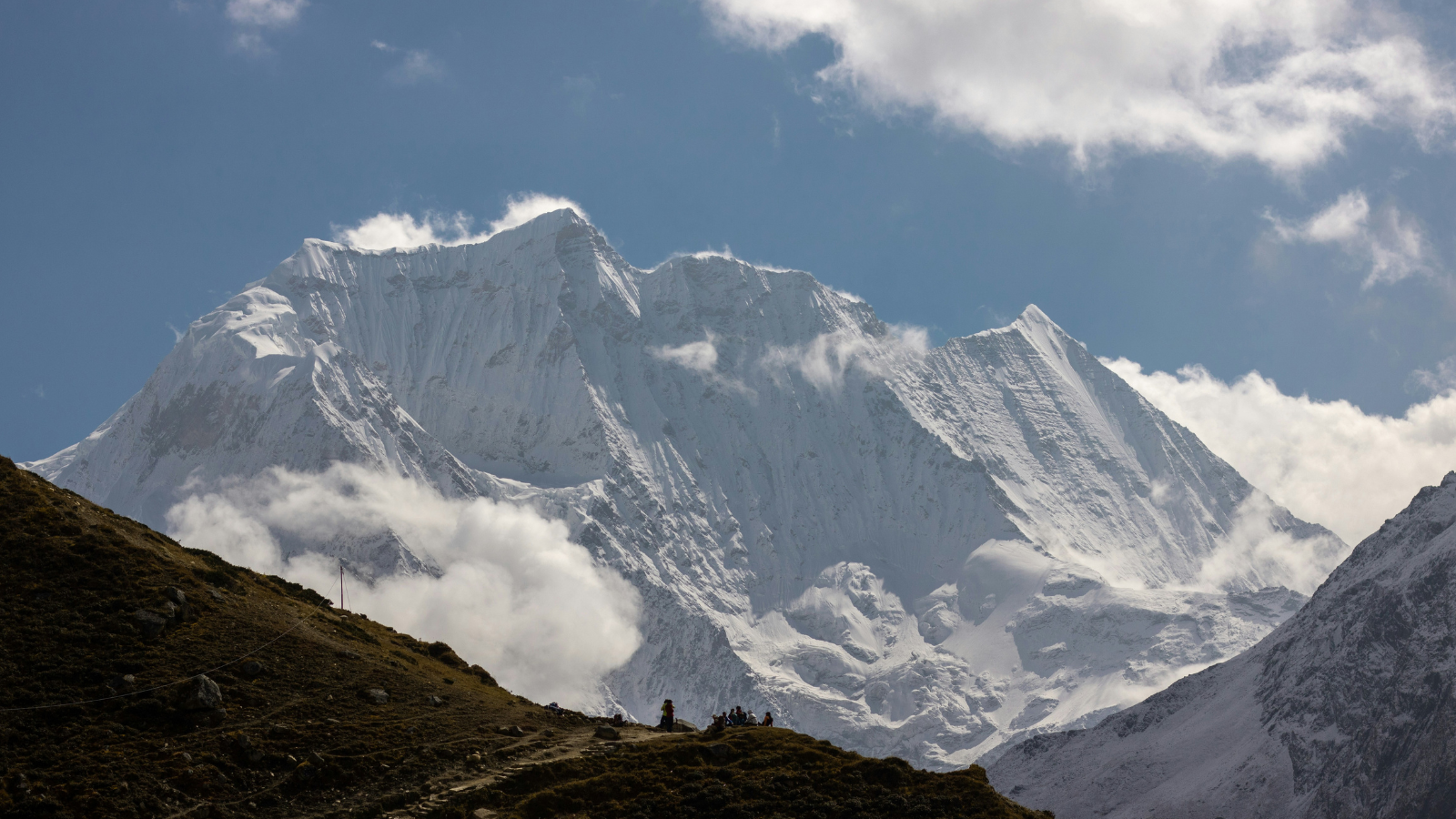
.jpg) The typical Annapurna Circuit trek cost per person for Indian trekkers is ₹50,000 to ₹90,000 for a self-guided or agency-supported 14- to 18-day trek. This figure covers flights from a major Indian city to Kathmandu, trekking permits, teahouse accommodation, daily meals, guide fees, and basic personal expenses.
The typical Annapurna Circuit trek cost per person for Indian trekkers is ₹50,000 to ₹90,000 for a self-guided or agency-supported 14- to 18-day trek. This figure covers flights from a major Indian city to Kathmandu, trekking permits, teahouse accommodation, daily meals, guide fees, and basic personal expenses.
The table below maps the 3 core budget tiers against their primary cost components:
|
Budget Tier |
Total Cost (INR) |
Trek Duration |
Accommodation |
Guide/Porter |
|
Budget |
₹35,000 – ₹55,000 |
9 – 12 days |
Basic teahouses |
None or shared guide |
|
Mid-Range |
₹60,000 – ₹1,00,000 |
14 – 18 days |
Comfortable teahouses |
Licensed guide included |
|
Premium |
₹1,20,000 – ₹1,80,000 |
18+ days with extensions |
Twin-share standard rooms |
Private guide + porter |
What most trekkers underestimate is the difference between on-trail daily expenses at lower elevations versus above 3,500 metres. Dal bhat at Besisahar costs approximately ₹350 to ₹450. The same dal bhat at Manang, sitting at 3,500 metres, costs ₹600 to ₹800. Every 1,000 metres of elevation adds roughly 30 to 40 percent to your daily food and accommodation bill, simply because supply logistics become significantly harder for teahouse operators.
How Does Annapurna Circuit Trek Duration Affect the Total Cost?
Trek duration directly drives total expenditure because every additional day on trail adds accommodation, meal, guide, and porter costs. A 9-day accelerated circuit costs significantly less in day-to-day expenses but creates greater altitude acclimatisation risk, which can paradoxically increase costs if medical evacuation becomes necessary. For a full breakdown of standard itineraries and route variations, see our guide to Annapurna Circuit trek duration.The per-day trail cost structure for Indian trekkers breaks down as follows:
-
Teahouse accommodation: ₹800 – ₹1,500 per night (elevation-dependent)
-
3 daily meals on trail: ₹900 – ₹1,500 per day
-
Guide fee: ₹1,500 – ₹2,500 per day
-
Porter fee: ₹1,200 – ₹1,700 per day
-
Snacks, water, incidentals: ₹300 – ₹600 per day
A 14-day trek at mid-range spending produces a daily on-trail cost of approximately ₹4,500 to ₹6,000 per person including a guide. Multiply that across the full itinerary and factor in flights and permits, and the total lands comfortably in the ₹65,000 to ₹85,000 range for most Indian trekkers.
What Does the Annapurna Circuit Trek Cost Include for Indians?
Most agency packages cover 6 core components: trekking permits, teahouse accommodation, daily meals on trail, licensed guide service, transportation from Kathmandu or Pokhara to the trailhead, and internal ground transfers. What changes between agencies and package tiers is the quality standard within each component, not the components themselves.
Are Permits Included in the Annapurna Circuit Trek Cost?
Yes, reputable trekking agencies include the Annapurna Conservation Area Permit (ACAP) in their standard package price. For Indian trekkers, the ACAP costs NPR 1,000 (approximately ₹625) as a SAARC national, compared to NPR 3,000 charged to other foreign nationals. The Trekkers' Information Management System (TIMS) card, where still applicable, costs NPR 1,000 for group trekkers through a registered agency.
Always confirm in writing that your package includes both documents. Some budget operators quote a lower headline price and add permit costs as a separate line item at checkout.
Are Accommodation and Meals Included in the Annapurna Circuit Trek Package?
Yes, standard packages include teahouse accommodation and 3 daily meals (breakfast, lunch, dinner) throughout the trek. Budget packages specify basic teahouses, shared bathrooms, no attached toilet, limited hot water. Mid-range packages confirm en-suite or attached bathroom rooms with functioning hot showers, which typically cost an additional NPR 200 to 500 per night above the basic teahouse rate.
One practical detail most agencies omit: they include only on-trail meals. Meals in Kathmandu or Pokhara before and after the trek, beverages beyond basic water, snacks between meals, and acclimatisation day costs all fall outside the package scope.
Is Transportation Included in the Annapurna Circuit Trek Package?
Yes, ground transportation from Kathmandu or Pokhara to the trailhead at Besisahar or Chame is included in most packages. The return transfer from Nayapul, Tatopani, or Jomsom back to Pokhara is also included. International flights from India are never included in Nepal-based agency packages.
Some trekkers opt for a Kathmandu–Besisahar bus (approximately NPR 500 to 700, or ₹310 to ₹440), while others prefer private Jeep transfers (approximately NPR 4,000 to 7,000, or ₹2,500 to ₹4,400). The Jeep option saves 3 to 4 hours of travel time and is markedly more comfortable, though many budget-focused Indian trekkers comfortably use local public buses.
Are Guide and Porter Services Included?
Guide service became mandatory for all foreign trekkers in Nepal on April 1, 2023, per the joint directive from the Nepal Tourism Board and the Ministry of Culture, Tourism and Civil Aviation confirmed in the U.S. Embassy in Nepal's trekking-guide advisory, meaning every licensed package now automatically includes a certified guide. Porter services are an optional addition. A guide costs ₹1,500 to ₹2,500 per day, and a porter costs ₹1,200 to ₹1,700 per day. Most Indian trekking groups hire 1 porter for every 2 to 3 trekkers to keep porter costs proportionate.
Hiring a guide independently in Pokhara generally costs 10 to 15 percent less than through a Kathmandu-based agency, though you sacrifice pre-trip logistical support and the guide's language fluency with your agency contact.
What Extra Expenses Should Indians Budget for the Annapurna Circuit Trek?
Beyond the core package, 4 additional expense categories account for 20 to 35 percent of a typical Indian trekker's total spend: flights and travel to Nepal, local transportation, daily consumables, and emergency reserves.
How Much Should You Budget for Flights or Travel to Nepal?
Return flights from major Indian cities to Kathmandu Tribhuvan International Airport cost ₹12,000 to ₹20,000 from Delhi and ₹12,000 to ₹15,000 from Mumbai or Kolkata, depending on booking lead time and airline. Booking 6 to 8 weeks in advance reliably secures prices in the lower third of that range.
Indian citizens travelling overland through the Raxaul–Birgunj, Sunauli–Bhairahawa, or Kakarbhitta–Panitanki border crossings pay only bus fare, approximately ₹1,500 to ₹3,000 for the full journey to Pokhara, making overland travel the lowest-cost entry option. The trade-off is 12 to 18 additional travel hours each way.
How Much Does Local Transportation Cost?
Local transportation within Nepal covers 3 primary segments: airport to hotel in Kathmandu, Kathmandu or Pokhara to the trailhead, and the return transfer to Pokhara at trek's end. Budget ₹1,500 to ₹4,500 in total for local ground transport not included in your package, including taxi fares, local bus tickets, and a Pokhara airport to lakeside taxi on the return.
Trekkers ending the circuit at Jomsom who prefer to fly to Pokhara rather than take the overland Jeep route pay approximately ₹7,000 to ₹10,500 for the Jomsom–Pokhara mountain flight, a dramatic 20-minute flight with Annapurna and Dhaulagiri views on both sides of the aircraft.
How Much Should You Budget for Snacks, Drinks, and Wi-Fi?
Budget ₹300 to ₹700 per day for snacks (energy bars, biscuits, chocolate), hot drinks (tea, coffee, hot lemon), bottled water above safe boiling altitude, and Wi-Fi access. Most teahouses charge NPR 200 to 500 (₹125 to ₹310) per day for Wi-Fi, and connection quality drops significantly above Manang.
A reusable water bottle with a purification tablet system, available at Thamel outdoor gear shops for ₹250 to ₹600, eliminates daily bottled water costs of ₹100 to ₹250 per litre at high altitude and significantly reduces plastic waste on the trail.
How Much Should You Keep for Emergency Expenses?
Maintain an emergency reserve of ₹15,000 to ₹25,000 in cash, separate from your daily spending budget. This reserve covers 4 realistic scenarios: altitude sickness requiring helicopter rescue (which can cost ₹2,00,000 to ₹2,90,000 without insurance), medical consultation at Manang's ACAP Health Post, gear damage or replacement, and unexpected itinerary extension due to weather or trail closure.
Travel insurance covering high-altitude helicopter evacuation up to 6,000 metres is not optional for the Annapurna Circuit, the volunteer doctors at the Himalayan Rescue Association's Manang aid post treat altitude-sickness cases every trekking season and can arrange evacuation, but insurance determines whether that rescue is paid for in the field or billed to you afterward. Annual multi-trip policies from Indian insurers such as ICICI Lombard, Bajaj Allianz, or Tata AIG covering Nepal adventure trekking cost ₹2,500 to ₹5,000 and represent the single most important expenditure in your entire budget.
How Much Do Annapurna Circuit Trek Permits Cost for Indians?
 The Annapurna Circuit requires 1 mandatory conservation permit and, depending on current Nepal Tourism Board policy, potentially 1 trekker registration document. Total permit costs for Indian trekkers amount to NPR 1,000 to NPR 2,000 (approximately ₹625 to ₹1,250), a fraction of the NPR 5,000 to NPR 6,000 that non-SAARC nationals pay.
How Much Does the ACAP Permit Cost for Indian Trekkers?
The Annapurna Conservation Area Permit (ACAP) costs NPR 1,000 for Indian citizens travelling as SAARC nationals. This is one-third the cost of the NPR 3,000 fee charged to European, American, and Australian trekkers. The ACAP is issued by the National Trust for Nature Conservation (NTNC), which reports in its 2024 Annual Report on the Annapurna Conservation Area that permit revenue funds conservation work, trail maintenance, and community development across the 7,629 square kilometre area and its 100,000-plus residents.
Obtain the ACAP at the NTNC offices in Kathmandu's Bhrikutimandap area or at the Pokhara Damside office. Indian citizens present a valid government-issued photo ID, a voter ID card or passport, rather than a Nepal visa, which further simplifies the permit process. Buying the ACAP at trailhead checkpoints costs twice the official rate. Collect it in Kathmandu or Pokhara without exception.
Children under 10 years of age are exempt from the ACAP fee entirely.
Do Indian Trekkers Need a TIMS Card?
The TIMS (Trekkers' Information Management System) card situation has evolved significantly since 2023. The Nepal Tourism Board has periodically revised TIMS requirements, and as of mid-2026, group trekkers travelling with a registered agency are covered under the agency's documentation system, making individual TIMS procurement unnecessary for most organised treks. Independent trekkers confirm current TIMS requirements directly with the Nepal Tourism Board office in Kathmandu before departure.
Where TIMS applies, SAARC nationals including Indians pay NPR 1,000 for the card. The previous NPR 2,000 rate applied only to non-SAARC nationals trekking independently. Always verify the current TIMS status with your registered trekking agency at the time of booking, as this requirement has changed multiple times in a 3-year period.
What Affects the Annapurna Circuit Trek Cost for Indian Travelers?
5 primary variables drive the final cost of the Annapurna Circuit Trek for Indians: trekking season, group size, package quality tier, route extensions, and booking channel (international agency versus local Nepal agency).
How Does Trekking Season Affect the Price?
Peak season, March to May (spring) and September to November (autumn), increases package prices by 15 to 25 percent compared to off-season months. Teahouse accommodation fills faster during peak weeks, and last-minute booking during October (the single most popular trekking month in Nepal) often produces a 10 to 30 percent price premium over identical April departures booked 8 weeks in advance.
Monsoon season (June to August) produces the lowest package prices, sometimes 20 to 30 percent below peak rates, but brings heavy rainfall below 2,500 metres, significant trail damage, and limited mountain visibility. Winter (December to February) offers clear skies and uncrowded trails above 3,000 metres but closes the Thorong La Pass during severe cold spells, carrying a real itinerary disruption risk.
The best cost-to-experience ratio for Indian trekkers sits in early October (post-monsoon clarity, still-moderate prices) or early April (stable weather, full rhododendron bloom, pre-peak pricing). For a month-by-month comparison across all regions, see our guide to the best trekking season in Nepal.
How Does Group Size Change the Cost?
Group size is the most controllable cost lever for Indian trekkers. Agencies offer 4 tiered pricing structures:
-
Solo trekker: ₹85,000 – ₹1,05,000 for a 15-day mid-range package
-
Group of 2: ₹70,000 – ₹85,000 per person
-
Group of 4 to 6: ₹60,000 – ₹75,000 per person
-
Group of 8 to 12: ₹52,000 – ₹65,000 per person
A solo Indian trekker pays 25 to 35 percent more per person than someone travelling in a group of 6. The guide and transportation costs are fixed regardless of group size; distributing them across more people directly reduces the per-person total.
How Does Trek Package Quality Affect the Price?
Package quality determines the specific teahouse tier, guide experience level, and included supplementary services. Budget packages specify the cheapest available teahouse at each stop, which may mean dormitory-style accommodation above Manang where teahouse capacity is limited. Mid-range packages specify minimum room standards, typically twin-share with attached bathroom, and include certified guides with 3 or more years of Annapurna Circuit experience.
Premium packages include satellite phone communication, GPS tracking, daily health monitoring using pulse oximeters, and upgraded teahouses where available. The premium tier makes the most practical sense for first-time Himalayan trekkers, older trekkers, or those with any pre-existing cardiovascular or respiratory conditions.
Does Adding Tilicho Lake Increase the Trek Cost?
Adding the Tilicho Lake side trip increases the base trek cost by ₹8,000 to ₹15,000 and extends the itinerary by 2 to 3 days. Tilicho Lake sits at 4,919 metres, the world's highest lake accessible by foot trail, and the detour from Manang requires an additional night at Tilicho Base Camp (approximately ₹1,000 to ₹1,500 per night) plus a full day of return hiking before rejoining the main circuit.
The additional guide day rate applies for each extra day, and the Tilicho trail requires careful acclimatisation planning. For Indian trekkers already spending 14 to 18 days on the main circuit, adding Tilicho Lake is the highest-value route extension available, combining the lake itself with views of Annapurna III's south face at close range.
How Can Indians Reduce the Annapurna Circuit Trek Cost?
Indian trekkers have 4 specific cost reduction strategies available that meaningfully reduce total expenditure without compromising safety or experience quality.
Is Joining a Group Trek More Affordable?
Joining an existing group departure, where an agency fills remaining spots on a pre-scheduled trek, reduces individual cost by 20 to 35 percent compared to a private departure. Most reputable Nepal-based agencies offer shared group departures in October and November with groups of 4 to 10 trekkers, often mixing Indian trekkers with European or Australian participants.
Indian trekking communities on Facebook and Reddit's r/Nepal regularly organise self-assembled groups where 4 to 8 Indian trekkers book with the same agency simultaneously, creating their own pricing leverage without joining a stranger-led tour.
Can Indians Save Money by Booking Locally in Nepal?
Booking directly with a Kathmandu or Pokhara-based registered trekking agency rather than through an international booking platform saves 20 to 40 percent on identical packages. International platforms charge a platform fee of 15 to 25 percent of the package cost that local Nepal agencies do not apply.
Reputable local agencies are registered with the Trekking Agencies Association of Nepal (TAAN) and Nepal Tourism Board. Verify registration on the TAAN website before transferring any deposit. The local agency booking model works well for Indian trekkers because Nepal is easily accessible, and a 1- to 2-day Kathmandu pre-trek stay allows in-person finalisation of permits and logistics.
How Can You Avoid Unnecessary Trekking Expenses?
5 practical actions eliminate common unnecessary costs on the Annapurna Circuit:
-
Carry a water purification system (Steripen or purification tablets) to eliminate ₹150 to ₹250 per litre bottled water costs at altitude.
-
Buy trekking gear in Thamel, Kathmandu rather than in India or at trail villages, where prices are 30 to 60 percent lower for equivalent equipment.
-
Eat dal bhat at every teahouse, it comes with unlimited refills, costs less than other menu items, and provides superior carbohydrate fuel for altitude trekking.
-
Avoid charging devices in teahouses individually, negotiate a flat daily charging fee (NPR 100 to 200) rather than paying per-device rates.
-
Book return flights 6 to 8 weeks in advance from Kathmandu to your departure city to avoid last-minute price spikes of 40 to 70 percent above base fares.
How Should Indians Plan Their Budget for the Annapurna Circuit Trek?
Budget planning for the Annapurna Circuit requires separating 3 distinct cost zones: pre-trip expenses (flights, gear, insurance), in-Nepal base costs (package, permits, Kathmandu hotels), and on-trail daily expenses. Managing each zone independently produces far more accurate budget control than estimating a single lump sum.
How Much Cash Should Indian Trekkers Carry?
Indian trekkers carry a minimum of NPR 30,000 to NPR 50,000 (approximately ₹18,750 to ₹31,250) in cash for on-trail expenses. ATMs are available in Besisahar, Chame, and Manang, but become entirely unreliable above Manang and cease to exist beyond Muktinath. Card payments are not accepted at teahouses anywhere on the Annapurna Circuit.
Withdraw Nepali Rupees at ATMs in Pokhara or Kathmandu rather than at currency exchange counters, which carry 3 to 5 percent higher spread costs. For Indian trekkers, particularly those with State Bank of India (SBI) accounts, Nepal SBI Bank ATMs in Kathmandu and Pokhara offer the lowest cross-border withdrawal fees. For other banks, Standard Chartered and NIC Asia are reliable backups.
Can Indian Rupees Be Used During the Trek?
Yes, Indian Rupees are widely accepted across the Annapurna Circuit, particularly at teahouses in villages along the lower and mid-elevation trail sections.The informal exchange rate applied by teahouse operators typically runs NPR 1.55 to 1.58 per INR, marginally below the fixed official rate of NPR 1.60 per INR that Nepal Rastra Bank data shows has held without fluctuation through eight rate reviews since the peg was introduced.
Acceptance of Indian currency decreases above Manang and becomes unreliable near Muktinath and Jomsom, where Nepali Rupees are strongly preferred. Carry a mix of both currencies, Indian Rupees for lower sections and ₹15,000 to ₹20,000 equivalent in Nepali Rupees for the upper circuit. Do not carry Indian ₹500 or ₹1,000 notes to Nepal: under RBI regulation FEMA 6/RB-2000, cited in Government of India Customs Circular No. 19/2010, notes above ₹100 cannot legally be carried across the border in either direction, and Nepali authorities can seize higher-denomination notes or fine and prosecute those found holding them.
How Can Himalaya Trekking Nepal Help With the Annapurna Circuit Trek?
Himalaya Trekking Nepal specialises in Annapurna Circuit packages designed specifically for Indian trekkers, combining local Nepal booking advantages with India-facing pre-trip communication and documentation support. As a TAAN-registered Nepal trekking company, the agency manages ACAP permits, certified licensed guides, teahouse bookings, and ground transportation under a single transparent package price.
Can Himalaya Trekking Nepal Arrange an Annapurna Circuit Trek for Indians?
Himalaya Trekking Nepal arranges complete Annapurna Circuit trek packages for Indian nationals, managing the ACAP permit, TIMS documentation where applicable, licensed guide assignment, and full itinerary logistics from Kathmandu or Pokhara arrival. Group departures for Indian trekkers are available throughout the October–November peak season and the March–May spring season, with private departure dates available year-round.
The agency's Indian client service includes Hindi-language pre-trek briefings, pre-departure documentation checklists, and 24-hour WhatsApp support during the trek through the assigned guide. Custom Annapurna Circuit itineraries with Tilicho Lake, Poon Hill extensions, or Muktinath visits are available within the same registration framework.
What Should Indian Trekkers Remember About Annapurna Circuit Trek Costs?
The Annapurna Circuit remains one of the world's most cost-effective high-altitude treks for Indian nationals, and 5 cost realities define what a well-planned budget looks like:
-
Indian trekkers save on 3 major cost categories that other nationalities pay in full: Nepal visa fee (₹4,000 to ₹8,000), ACAP permit premium (NPR 2,000 difference versus non-SAARC nationals), and currency exchange overhead thanks to Indian Rupee acceptance on trail.
-
The total cost is always higher than the package price by 20 to 35 percent once flights, Kathmandu hotel nights, personal gear, tips, and trail consumables are factored in. Build your budget from the total, not the agency package price.
-
Altitude increases your daily spend. Every 1,000-metre elevation gain raises daily meal and accommodation costs by 25 to 40 percent. Plan the budget with altitude-graduated daily cost estimates rather than a flat daily average.
-
Guide cost is non-negotiable and non-optional. Nepal mandates licensed guide accompaniment for all foreign trekkers since April 2023. Budget for guide fees from the outset rather than treating them as optional.
-
Travel insurance covering helicopter rescue is a cost, not a luxury. Medical evacuation from above 4,000 metres on the Annapurna Circuit costs ₹60,000 to ₹1,20,000 without coverage. An annual adventure travel policy from an Indian insurer costs ₹2,500 to ₹5,000, a 95 percent cost reduction against the alternative.
Trekkers weighing alternatives may also want to compare the Manaslu Circuit trek cost, a similarly priced but noticeably less crowded high-altitude option for Indian nationals. The Annapurna Circuit offers Indian trekkers the complete Himalayan experience: cultural diversity from subtropical forests to Trans-Himalayan desert, the Thorong La Pass crossing at 5,416 metres, the sacred Muktinath Temple, and the possibility of Tilicho Lake, all within a total budget that, with smart planning, a group of 4 can complete for ₹60,000 to ₹75,000 per person including flights from Delhi. That cost-to-experience ratio has no rival in Himalayan trekking.
More About Author

Khilak Budhathoki
Travel Director
Khilak Budhathoki is the co-founder and lead trekking guide at Himalaya Trekking Nepal, a locally owned and operated adventure company based in Kathmandu. Born and raised in the foothills of Nepal, Khilak developed a deep love for the mountains from an early age. With over a deca...
USD$1500 pp
Our Recommendation
Related Blogs
Aug 18, 2026
Manaslu Circuit Trek Difficulty: Fitness & Altitude