- 16, Jul 2026 | Khilak Budhathoki
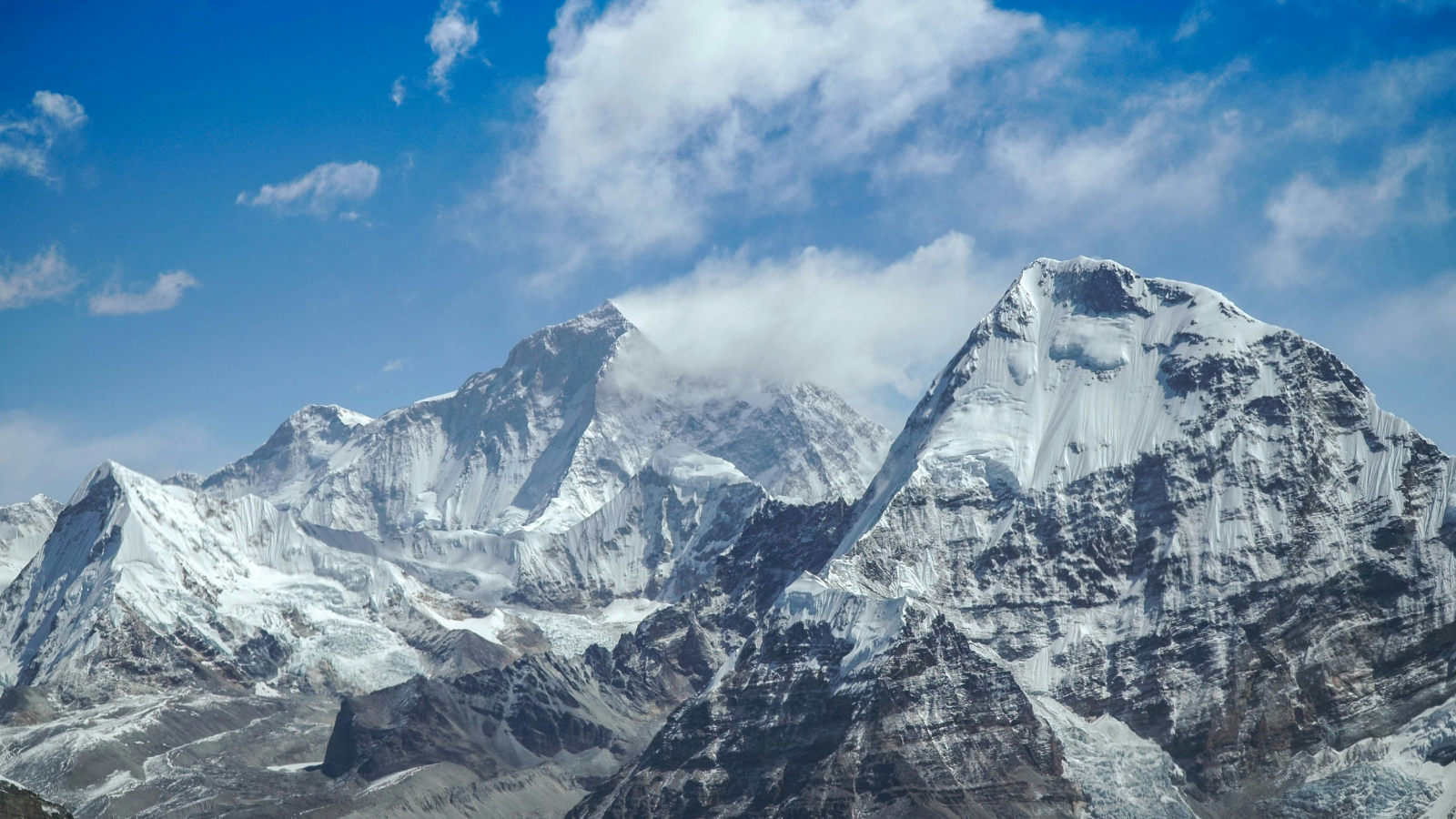
Nepal is one of the few countries where snowfall is shaped almost entirely by elevation rather than latitude. Stretching from the subtropical Terai plains at just 60 meters to the summit of Mount Everest (8,849 meters), the country contains dramatic climate zones that range from warm lowlands to permanently frozen Himalayan peaks. Snow falls seasonally across many trekking regions above 2,500 to 3,000 meters, while glaciers and snowfields remain year-round above 5,000 meters, making Nepal one of the world's premier destinations for mountain landscapes, winter trekking, and high-altitude adventure.
 Whether you're wondering does it snow in Nepal, planning a winter trek to Everest Base Camp, Annapurna, Langtang, or Manaslu, or simply hoping to experience snow near Kathmandu, understanding Nepal's snowfall patterns is essential for choosing the right destination and season. This guide explains where and when snow falls, how snowfall varies by elevation and month, which trekking routes and national parks receive the most snow, what weather conditions influence winter travel, and how to prepare with the right itinerary, gear, safety measures, and budget for a successful snow adventure in Nepal.
Does It Snow Everywhere in Nepal?
No, snow does not fall everywhere in Nepal. Nepal spans 5 altitude zones, from the Terai plains at 60 meters to Mount Everest at 8,849 meters. Nepal spans 5 altitude zones, from the Terai plains at 60 meters to Mount Everest at 8,849 meters. Only areas above 2,000 meters receive meaningful seasonal snowfall, and permanent snow exists only above 5,000 meters, a band that holds, per WEPA's 2024 Nepal Outlook report, roughly 3,252 glaciers and an estimated 481 km³ of ice, even though only about 10% of the country's total precipitation falls as snow.
The Terai plains, Kathmandu Valley, and Pokhara rarely see snow.
Nepal compresses more vertical range into a shorter horizontal distance than almost anywhere on Earth, 8,780 meters of elevation change across roughly 150 kilometers north to south. A traveler in Pokhara at 822 meters wakes up to frost-free winter mornings while trekkers at Thorong La Pass, just 100 kilometers away, navigate waist-deep snow at 5,416 meters.
Which Parts of Nepal Receive Snow?
Nepal receives snow across 3 distinct elevation bands, each with different seasonal patterns:
-
Above 5,000 meters (Himalayan High Zone): Permanent glaciers, snowfields, and year-round snowfall define this zone. Mount Everest (8,849 m), Annapurna I (8,091 m), Kanchenjunga (8,586 m), Dhaulagiri (8,167 m), and Manaslu (8,163 m) carry snow 365 days per year.
-
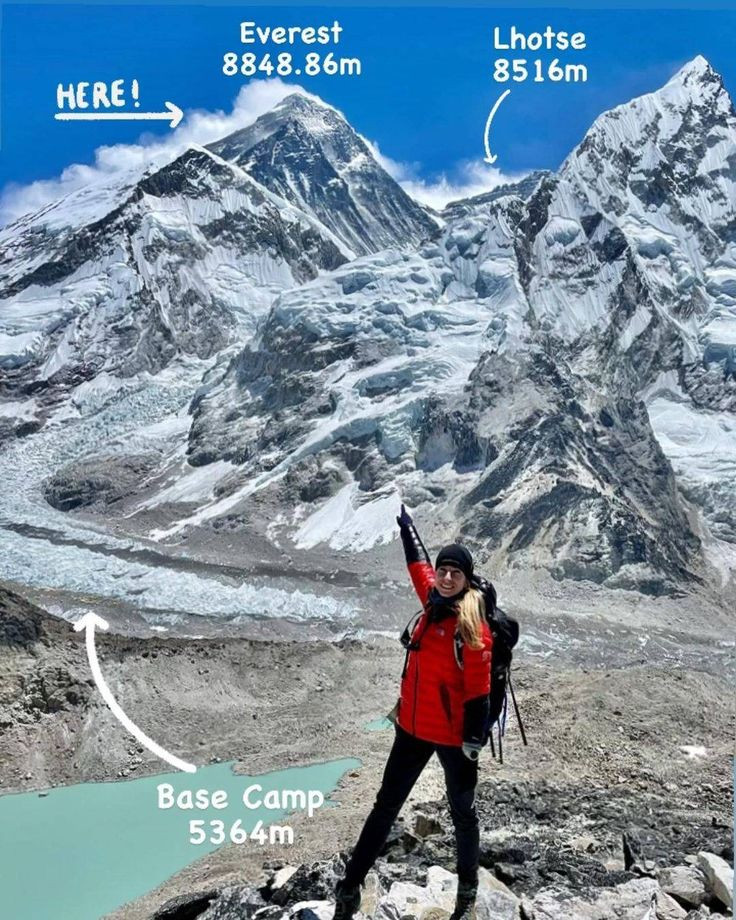
3,500 to 5,000 meters (Sub-Alpine Zone): Seasonal snowfall occurs from November through April with peak accumulation in January and February. Key trekking destinations in this band include Everest Base Camp (5,364 m), Annapurna Base Camp (4,130 m), Thorong La Pass (5,416 m), Gosaikunda Lake (4,380 m), and Mardi Himal High Camp (4,500 m).
-
2,000 to 3,500 meters (Middle Hills): Snowfall is less frequent and lighter. Towns such as Namche Bazaar (3,440 m), Manang (3,500 m), and Ghorepani (2,860 m) receive snowfall 5 to 15 times per winter season. Snow typically melts within 24 to 72 hours at these elevations.
Which Areas Rarely or Never Get Snow?
The Terai plains, Kathmandu Valley at 1,400 meters, and Pokhara at 822 meters rarely receive snowfall. In recorded meteorological history, Kathmandu has experienced light snow flurries fewer than 10 times in the past century. The last confirmed major snowfall on the Kathmandu Valley floor occurred in 2007, with surrounding urban edges and hills seeing snow again in 2019. Pokhara has no confirmed snowfall record.
The following areas do not receive snow under normal winter conditions: Chitwan and Bardia (Terai plains at 100 to 200 m), Pokhara (822 m), Kathmandu (1,400 m), Biratnagar and Birgunj (Terai towns below 100 m), and Janakpur (70 m).
Cold waves can reach the Terai and produce heavy frost, but not snowfall. Travelers expecting snow in Kathmandu will need to travel to elevated viewpoints like Nagarkot (2,195 m) or Chandragiri (2,551 m), where light dustings occur 2 to 4 times per winter.
When Does It Snow in Nepal?
Snowfall in Nepal occurs most reliably between December and February above 3,000 meters. The Himalayan peaks receive snow year-round through precipitation cycles driven by the monsoon and westerly jet streams. Lower trekking regions receive snowfall within a concentrated 4-month window from November to February.
Nepal's snowfall calendar follows two distinct patterns. Above 5,000 meters, snow falls in every month, including June, July, and August during the monsoon. Below 4,000 meters, snowfall concentrates between November and March.
Which Months Have the Highest Chances of Snowfall?
The 4 months with the highest snowfall probability in Nepal's trekking zones are December, January, February, and March:
|
Month |
Elevation 2,500–3,500 m |
Elevation 3,500–5,000 m |
Snow Probability |
|
December |
Occasional |
Frequent |
High |
|
January |
Frequent |
Very Frequent |
Very High |
|
February |
Occasional |
Frequent |
High |
|
March |
Rare |
Occasional |
Moderate |
|
October |
Rare |
Rare |
Low |
|
November |
Rare |
Occasional |
Low to Moderate |
January delivers the highest snowfall accumulation across all elevations. At Everest Base Camp, January night temperatures average around -17°C, and fresh snowfall occurs roughly 8 to 12 days per month, though totals vary sharply year to year: according to DHM's State of the Climate of Nepal 2024, Nepal's winter 2023–24 season delivered only 19.4% of normal precipitation nationwide. At Namche Bazaar (3,440 m), January brings snow 4 to 6 times per month on average.
One thing most trekkers don't factor in: October, Nepal's peak trekking season, can deliver unexpected snowfall above 4,500 meters. The 2014 Annapurna snowstorm struck in mid-October and, according to a peer-reviewed case study in Disaster and Military Medicine, claimed 43 lives and injured 175 people, including trekkers from six different countries caught on the Annapurna Circuit. Post-monsoon snowfall above high passes is real and deserves preparation even when the calendar says "autumn season."
Does It Snow During the Trekking Seasons?
Yes, snow falls during both the spring (March to May) and autumn (October to November) trekking seasons, particularly above 4,000 meters. Peak season does not eliminate snow risk on high-altitude routes.
Spring brings some of Nepal's most visually rewarding conditions. March snowfall coats the upper trails while rhododendrons bloom at lower elevations. The contrast, pink and red flowers against white peaks, makes March one of the most striking months for trekking.
Autumn delivers crisp, clear air and freshly snowfall-dusted peaks after the monsoon rinse. The mountains look sharper than at any other time of year. That clarity comes with a catch: late October and November snowstorms close high passes without warning on the Annapurna Circuit and Three Passes Trek.
Where Can You See Snow in Nepal?
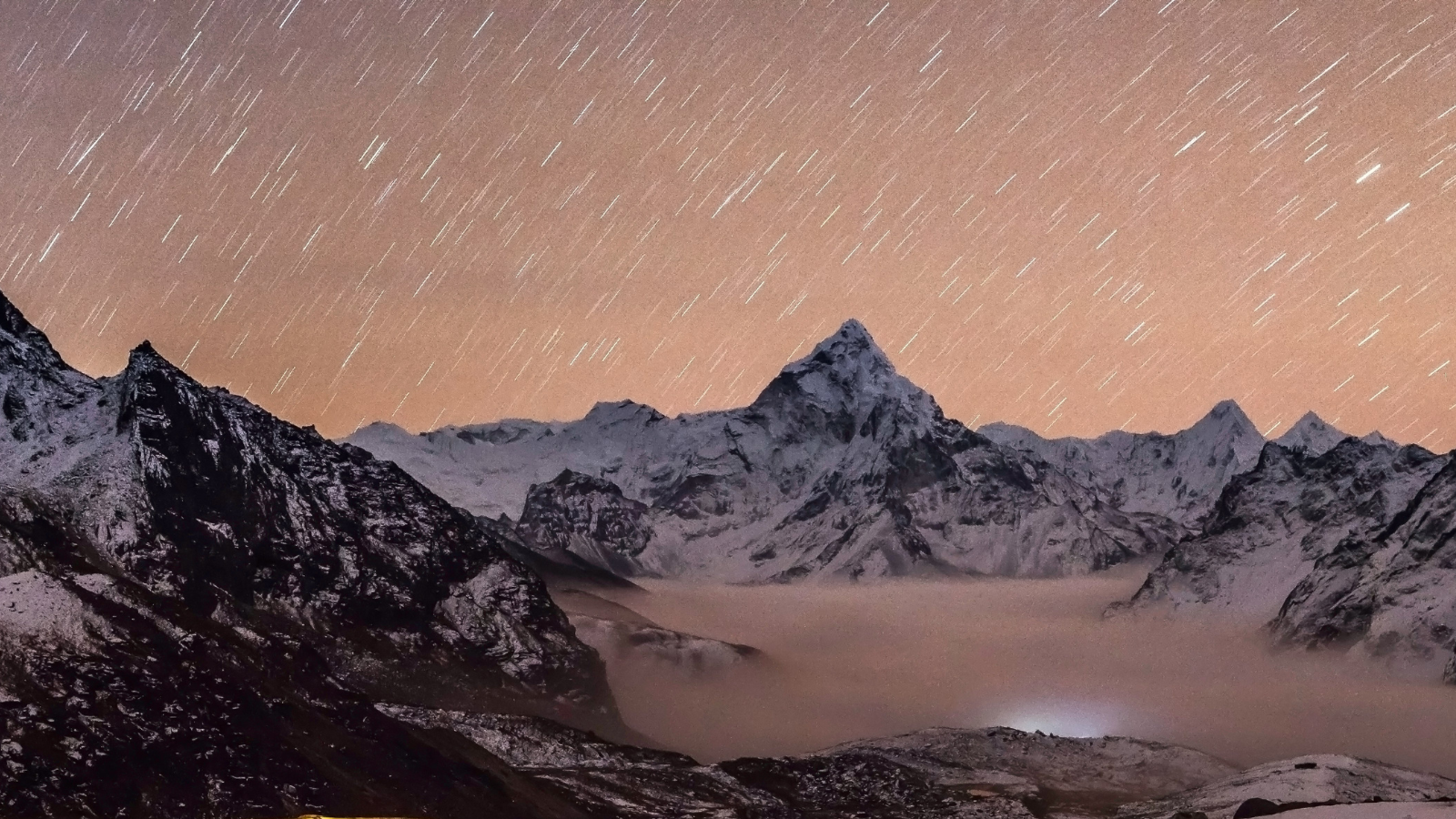 Snow is visible from Kathmandu's streets on a clear day. The Himalayan peaks ringing Nepal's northern border are snow-covered year-round and visible from multiple viewpoints, cities, and trekking trails. For on-ground snow, snow you walk through, you need to reach elevations above 3,000 meters during winter months.
Nepal offers 3 categories of snow experience: distant views of snow-covered peaks, walking through snow on trekking trails, and full immersion in deep winter snowfields above base camps.
Which Popular Trekking Regions Get Snow?
Nepal's 5 major trekking regions each receive snowfall, with significant differences in timing, depth, and duration:
-
Everest Region (Khumbu): Namche Bazaar (3,440 m) gets light snowfall 15 to 25 times per year. Trails toward Lobuche (4,940 m) and Everest Base Camp (5,364 m) stay snow-covered from November through April, and sudden shifts in Everest Base Camp weather can bury trail markers within hours. The Khumbu glacier is visible beneath a white mantle throughout winter.
-
Annapurna Region: Towns in this band, such as Namche Bazaar (3,440 m) and Manang (3,500 m), receive snowfall 5 to 15 times per winter season, while lower stops like Ghorepani (2,860 m) average 8 to 12 snowfalls. The Annapurna Sanctuary bowl at 4,130 m accumulates substantial snow from December to March. Thorong La Pass at 5,416 m is snowbound from December through February and requires careful timing.
-
Langtang Region: Among the snowiest easily accessible trekking regions, Langtang Valley at Langtang Village (3,430 m) sits in a north-facing valley that traps cold air. Snow arrives earlier here, late October, and stays longer, often into mid-April. Kyanjin Gompa (3,870 m) typically carries snow on the ground from November to March.
-
Manaslu Region: The Manaslu Circuit crosses Larkya La Pass at 5,160 meters, which carries deep snow from November through March. The pass is impassable without local guides and proper equipment in full winter conditions.
-
Mustang Region (Upper Mustang): This rain-shadow region sits north of the Annapurna and Dhaulagiri ranges. It receives less precipitation than other regions at comparable elevations. Some years, Upper Mustang's trails remain passable when Annapurna and Khumbu routes are blocked.
Which National Parks and Mountain Areas Experience Snowfall?
Nepal's 20 protected areas span elevations from the Terai to the high Himalayas. Several of them experience significant seasonal snowfall:
-
Sagarmatha National Park (Everest Region): The entire park above 3,500 m stays snow-covered from December to March. It contains at least seven peaks above 7,000 meters and the world's highest glacier system, the Khumbu Glacier.
-
Langtang National Park: Located 50 kilometers north of Kathmandu, this park receives heavy snowfall between November and March. Its high passes, Ganja La (5,160 m) and Tilman Pass (5,320 m), require mountaineering skills in winter.
-
Annapurna Conservation Area: Nepal's largest protected area covers 7,629 square kilometers with elevation ranges from 790 m to 8,091 m. Snowfall varies dramatically by zone within the conservation area: southern slopes receive significantly less than northern valleys.
-
Makalu-Barun National Park: This remote eastern park borders Mount Makalu (8,485 m) and receives heavy snowfall above 4,000 meters from November to April. One of Nepal's least-visited parks and most snow-isolated in winter.
-
Rara National Park: Located in far-western Nepal at 2,990 meters, Rara Lake receives heavy snowfall from December to February and becomes completely inaccessible by road in some winters.
Can You See Snow Near Kathmandu?
Yes. Snow is visible from Kathmandu city on clear days, and nearby viewpoints receive light snowfall 2 to 4 times per winter. The Langtang range, visible along Kathmandu's northern horizon, carries permanent snow year-round. Within a 2-hour drive, you reach elevations where snow falls to the ground.
3 viewpoints near Kathmandu offer snow experiences without multi-day trekking:
-
Nagarkot (2,195 m): Located 30 kilometers east of Kathmandu, Nagarkot receives light snowfall 2 to 3 times per winter. The panoramic view covers 8 Himalayan peaks including Everest, Langtang Lirung, and Manaslu. Drive time from Kathmandu: approximately 1.5 hours.
-
Chandragiri (2,551 m): A cable car from Kathmandu's western edge reaches Chandragiri in 20 minutes. The summit receives light snow 2 to 4 times per winter. Views on clear days span from Dhaulagiri to Ganesh Himal.
-
Shivapuri (2,732 m): The Shivapuri-Nagarjun National Park, bordering Kathmandu's northern edge, receives snowfall 4 to 6 times per winter. The summit area stays snow-covered for days after each event.
How Much Snow Falls in Nepal?
Annual snowfall in Nepal ranges from 0 centimeters at Terai elevations to over 500 centimeters at high-altitude glacier zones. Within primary trekking corridors, snowfall accumulates from 10 centimeters per event at 2,500 meters to 100+ centimeters per event at 5,000 meters.
Snowfall amounts shift significantly year to year based on western disturbance strength and monsoon intensity, and the long-term trend is downward: ICIMOD's 2025 Hindu Kush Himalaya Snow Update found regional snow persistence 23.6% below normal in 2024–25, the lowest level in 23 years of monitoring. The figures below represent averages from Nepal's Department of Hydrology and Meteorology data sets.
How Does Snowfall Vary by Elevation?
Snowfall in Nepal follows a clear elevation gradient. The table below shows average winter snowfall accumulation by altitude:
|
Elevation |
Representative Location |
Avg. Snowfall (Nov–Mar) |
Days with Snow Cover |
|
Below 2,000 m |
Pokhara, Kathmandu |
Negligible |
0–2 |
|
2,000–2,500 m |
Chandragiri (2,551 m) |
15–50 cm |
5–10 |
|
2,500–3,500 m |
Namche Bazaar (3,440 m) |
100–200 cm |
30–60 |
|
3,500–4,500 m |
Dingboche (4,410 m) |
200–350 cm |
60–90 |
|
4,500–5,500 m |
Everest Base Camp (5,364 m) |
350–500+ cm |
90–150 |
|
Above 5,500 m |
High Himalayan Zone |
Year-round accumulation |
365 |
A detail most travel guides miss: snowfall depth varies dramatically within the same altitude band depending on slope aspect, valley shape, and proximity to moisture sources. Langtang Valley at 3,500 meters consistently accumulates more snow than the Khumbu at the same elevation because of its north-facing orientation and direct exposure to winter westerlies.
What Weather Conditions Influence Snowfall?
3 primary weather systems drive snowfall in Nepal: winter westerly disturbances from Central Asia, the retreating Indian monsoon's residual moisture, and localized convective storms.
-
Western Disturbances: These extra-tropical cyclone systems track from the Mediterranean and Central Asia, reaching Nepal's mountains between October and March. They deliver the largest single-event snowfalls, 50 to 150 centimeters within 48 hours above 4,000 meters. The October 2014 snowstorm that struck the Annapurna Circuit deposited nearly 2 meters on Thorong La Pass in a single event.
-
Post-Monsoon Residual Moisture: As the monsoon retreats southward in October, residual atmospheric moisture generates high-altitude snowfall events. This moisture-rich phase produces wet, heavy snow that is denser per volume than dry winter snow.
-
Clear Winter High-Pressure Systems: These produce dry conditions with minimal precipitation but extreme cold. Temperatures at Everest Base Camp drop to -25°C or lower during clear winter high-pressure events. The cold without snowfall creates icy trails from refrozen meltwater, conditions that are sometimes more hazardous than fresh snow.
What Are the Best Treks to Experience Snow in Nepal?
Nepal offers 15+ trekking routes with reliable snow exposure. The best snow treks depend on 3 factors: target elevation, preferred season, and experience level. The routes below are grouped by beginner-friendliness, altitude, and winter demand.
Which Beginner-Friendly Snow Treks Are Worth Considering?
3 treks offer snow access without extreme altitude or technical terrain:
-
Ghorepani–Poon Hill Trek (4 to 5 days): Poon Hill at 3,210 meters receives snowfall several times per winter. The trek stays below 3,500 meters throughout, making the Ghorepani–Poon Hill Trek, Nepal's most popular short route for winter snow views. January and February bring the highest probability of fresh snow at Ghorepani. The sunrise view of Dhaulagiri, Annapurna South, and Machhapuchhre under fresh snow is one of the most photographed images in Nepal.
-
Mardi Himal Trek (5 to 7 days): This route reaches 4,500 meters at Mardi Himal High Camp and delivers close-up views of the Annapurna massif under substantial snowfall from December to March. Less crowded than Poon Hill, the Mardi Himal Trek rewards trekkers with quieter trails and close-up Annapurna views. The rhododendron forests on this trail look extraordinary after fresh snowfall, a detail the route's reputation underplays.
-
Langtang Valley Trek (7 to 10 days): Closer to Kathmandu than any Annapurna or Everest route, no domestic flight required. Kyanjin Gompa at 3,870 meters receives substantial snowfall from November onward. The valley's accessibility makes the Langtang Valley Trek ideal for first-time winter trekkers who want genuine snow immersion without logistical complexity.
Which High-Altitude Treks Offer the Best Snow Views?
4 high-altitude treks deliver Nepal's most dramatic snow landscapes:
-
Everest Base Camp Trek (12 to 14 days): The Khumbu Icefall edge, the lateral moraine of the Khumbu Glacier, and the final approach to base camp at 5,364 meters, all snow-covered in winter. January night temperatures routinely drop below -20°C at camp. The silence where autumn crowds once walked makes the Everest Base Camp Trek a profoundly different winter experience.
-
Annapurna Circuit Trek (12 to 18 days): Crossing Thorong La Pass at 5,416 meters, Nepal's highest trekking pass, is the defining moment. The descent into Muktinath combines deep snow, ancient Buddhist shrines, and unobstructed Dhaulagiri views. No other trek in Nepal replicates that specific combination.
-
Three Passes Trek (18 to 21 days): This Khumbu route crosses Cho La (5,420 m), Renjo La (5,360 m), and Kongma La (5,535 m). Each pass offers a different perspective on snow-covered Himalayan terrain. Previous high-altitude trekking experience is required.
-
Kanchenjunga Base Camp Trek (18 to 24 days): Nepal's most remote major trek reaches the base of the world's third-highest mountain at 5,143 meters. Snow coverage from November to April transforms this route into one of Nepal's most visually powerful winter journeys.
Which Winter Treks Are Most Popular?
The 3 most popular winter treks in Nepal, ranked by visitor numbers:
-
Everest Base Camp Trek: Despite -17°C average temperatures at EBC in January, experienced trekkers value the solitude. Teahouses stay open.
-
Ghorepani–Poon Hill Trek: Lower elevation and shorter duration make this the most accessible winter snow trek. Teahouses at Ghorepani stay warm through winter. January and February are the quietest months on this trail.
-
Langtang Valley Trek: The 4-hour drive from Kathmandu to the trailhead removes the domestic flight variable.
Winter visitor numbers on this route are dramatic: Nepal Tourism Statistics 2023 puts Sagarmatha National Park's January 2023 foreign arrivals at just 1,337, versus 11,479 in November, roughly an 88% drop from peak autumn.
Is It Safe to Trek in Nepal During Snowfall?
.png) Trekking in Nepal during snowfall is safe with proper preparation, certified guide support, and appropriate gear. Nepal's trekking infrastructure stays functional in winter. Major teahouses remain open. The primary risks, trail icing, low visibility, and pass closures, are manageable with local knowledge and flexible itineraries.
Trekking in Nepal during snowfall is safe with proper preparation, certified guide support, and appropriate gear. Nepal's trekking infrastructure stays functional in winter. Major teahouses remain open. The primary risks, trail icing, low visibility, and pass closures, are manageable with local knowledge and flexible itineraries.
Most snowfall-related accidents in Nepal result from 3 avoidable mistakes: attempting high passes without current condition checks, packing inadequate gear, and traveling without a local guide on routes above 4,500 meters.
What Challenges Does Snow Create for Trekkers?
Snow creates 5 specific challenges on Nepal's trekking routes:
-
Trail Icing: Snowmelt during the day refreezes overnight, creating ice sheets on steep sections. Ice is more dangerous than fresh snow because it is unpredictable underfoot. Microspikes or crampons are essential above 3,500 meters from December to March.
-
Route Navigation: Fresh snowfall buries trail markers and stone cairns. Above the treeline in white-out conditions, trails become difficult to distinguish from surrounding terrain. A local guide's route knowledge becomes the primary navigation tool.
-
Altitude and Cold Combined: Cold temperatures intensify altitude effects. The body burns more energy regulating temperature at altitude, accelerating exhaustion. Trekkers need to increase water intake and daily calorie consumption.
-
Pass Closures: Nepal's high passes close after heavy snowfall. Thorong La Pass closes 5 to 15 days per winter season. Cho La and Renjo La in the Khumbu close less frequently but are still subject to seasonal blockages.
-
Reduced Daylight Hours: Winter days in Nepal's mountains last 10 to 11 hours, with darkness by 5:30 PM. Starting high-altitude sections by 6 to 7 AM is essential to reach destinations before afternoon weather shifts.
What Safety Precautions Should You Take?
7 essential safety precautions for snow trekking in Nepal:
-
Check pass conditions daily with teahouse owners and your local guide, condition changes happen within hours.
-
Hire a certified guide from a registered trekking agency for any route crossing passes above 4,500 meters.
-
Purchase travel insurance that explicitly covers helicopter evacuation from high-altitude zones, and confirm your policy meets Nepal's helicopter rescue insurance requirements before departure.
-
Register with TIMS and obtain required trekking permits, this enables rescue teams to locate you.
-
Carry a satellite communication device (Garmin inReach or equivalent) on remote routes like Manaslu or Kanchenjunga.
-
Build 2 to 3 buffer days into any itinerary that crosses a high pass.
-
Prepare an emergency supply kit with 2,000 extra calories of food and enough cash to extend your teahouse stay by 3 days.
What Gear Is Essential for Snow Trekking?
The 10 essential gear items for snow trekking in Nepal:
-
Down jacket rated to -20°C (not a lightweight travel layer)
-
Waterproof outer shell (Gore-Tex or equivalent, critical above the treeline)
-
Microspikes or crampons (attachable to regular trekking boots)
-
Double-layer waterproof gloves (inner liner plus outer shell)
-
Balaclava and insulated hat (ears freeze within minutes at high altitude in wind)
-
Waterproof trekking boots (ankle-height minimum; mountaineering boots for routes above 5,000 m)
-
Trekking poles with snow baskets (standard rubber tips sink in deep snow)
-
Thermal base layers (merino wool or synthetic, never cotton)
-
High-SPF sunscreen and glacier glasses (UV reflection from snow intensifies at altitude)
-
Sleeping bag rated to -15°C (teahouse blankets are insufficient on winter nights above 4,000 m)
A common mistake is treating Nepal's winter trekking like a cold-weather city trip. At -20°C with wind at 5,000 meters, you are in a genuinely extreme environment. Gear shortcuts at this elevation create emergencies.
How Does Snow Affect Trekking Conditions in Nepal?
Snow transforms Nepal's trekking landscape across 4 dimensions: trail surface, teahouse availability, transportation access, and mountain visibility. Understanding each dimension helps you plan realistic itineraries and avoid surprises.
Which Trails May Close Due to Snow?
6 trekking routes and passes face regular closures or access restrictions due to heavy snowfall:
-
Thorong La Pass (5,416 m): Closes 3 to 5 times per winter after heavy snowfall, resulting in 5 to 15 total days of closure per season. Closures typically last 24 to 72 hours.
-
Cho La Pass (5,420 m): Closes intermittently from December to February. Requires crampons even when technically open.
-
Ganja La Pass (5,160 m): Completely impassable from December to March without mountaineering equipment.
-
Kanchenjunga Upper Route: The final approach above 4,500 m becomes technical in winter.
-
Tsum Valley High Sections: Northern Tsum Valley routes entering from the Manaslu area close after December snowfall.
-
Dolpo Upper Circuit: Above Shey Phoksundo, trails above 5,000 m are impassable for unguided trekkers in winter.
How Does Snow Impact Transportation and Flights?
Snow affects Nepal's mountain airports and mountain roads in 3 specific ways:
-
Flight Cancellations at Mountain Airports: Lukla Airport (Everest region gateway) and Jomsom Airport (Annapurna area) face weather-based cancellations year-round. Winter snowfall increases cancellation frequency. Lukla averages 20 to 30 weather-related cancellation days per year; winter contributes 8 to 12 of those. Building 2 extra days before a Lukla departure is not optional in winter, it is necessary.
-
Mountain Road Conditions: The road from Besisahar to Chame on the Annapurna Circuit and the road to Dhunche (Langtang gateway) become impassable after heavy snowfall. This occasionally forces trekkers to walk sections they planned to cover by jeep.
-
Helicopter Operations: Helicopters are the primary evacuation and emergency transport in Nepal's mountains. Heavy snowfall and low cloud ceilings ground helicopters for days at a time. Trekkers in remote high-altitude positions can face extended waits during major winter storm events.
How Should You Prepare for Changing Mountain Weather?
Mountain weather in Nepal changes within 2 to 4 hours. A clear morning sky gives way to heavy snowfall by early afternoon with regularity. This daily pattern requires schedule adaptation, not weather prediction.
3 practical preparation strategies that work consistently:
-
Start trekking early. Begin each day's high-altitude section by 6 to 7 AM. Exposed ridges and passes above 4,500 m are safest in morning hours when winds are calmer and visibility is better.
-
Build buffer days into the plan. Schedule 2 extra days per week on any high-altitude winter route. This absorbs pass closures, weather delays, and acclimatization adjustments without forcing unsafe decisions.
-
Carry emergency supplies. An extra 2,000 calories of food, an emergency bivouac bag, and enough cash to extend a teahouse stay by 3 days removes the pressure that leads to bad weather decisions.
Can Beginners Enjoy Snow in Nepal?
Yes, beginners can safely enjoy snow in Nepal. Multiple snow experiences in Nepal require no technical skill or extreme physical fitness. The key is matching your experience level to the appropriate route and elevation.
Which Easy Destinations Offer Snow Experiences?
4 beginner-appropriate destinations deliver genuine snow experiences:
-
Nagarkot (2,195 m): No multi-day trekking required. Drive or take a day hike from Kathmandu. Between December and February, Nagarkot receives light snowfall 2 to 3 times, and the panoramic Himalayan view consistently shows snow-covered peaks. Accommodation ranges from basic guesthouses to boutique hotels.
-
Ghorepani–Poon Hill: This 4-day trek stays below 3,210 meters. The terrain is steep in sections but requires no technical skills. Most first-time trekkers complete it without difficulty. January visits regularly coincide with fresh snow on the rhododendron forests.
-
Chandragiri Hills (2,551 m): A 20-minute cable car from Kathmandu's western edge requires zero physical exertion. Light snow falls at the summit 2 to 4 times per winter. The Himalayan view spans from Dhaulagiri to Ganesh Himal on clear days. Nepal's most accessible snow viewpoint.
-
Kakani (2,073 m): Located 29 kilometers northwest of Kathmandu, Kakani is a quiet hill station with occasional winter snowfall and views of Ganesh Himal. Drive time: approximately 1 hour from the city.
Can Families Travel to Snowy Areas in Nepal?
Yes, families with children can access Nepal's snowy areas with appropriate route selection. Day trips to Nagarkot or the Chandragiri cable car are suitable for all ages. For multi-day trekking with snow, Ghorepani–Poon Hill suits children aged 10 and above in good physical condition.
Key considerations for family snow trips in Nepal:
-
Children below 12: Limit elevation to 3,000 meters maximum. Cold and altitude combined create additional risk for younger children. Nagarkot, Chandragiri, and day hikes in the Shivapuri area are appropriate.
-
Children 12 and above: Ghorepani–Poon Hill, the lower Langtang Valley, and the Annapurna foothills are suitable with proper acclimatization awareness.
-
All family sizes: The Chandragiri cable car or a drive to Nagarkot deliver Himalayan snow views without any trekking demand.
How Can You Plan a Snow Trip to Nepal?
Planning a snow trip to Nepal requires decisions across 4 dimensions: timing, duration, budget, and route selection. Each dimension interacts with the others, a tight budget with unlimited time opens different options than a generous budget with only 10 days.
What Is the Best Time to Visit for Snow?
The best time to visit Nepal for snow depends on your objective. Trekkers who want guaranteed snow on the trail visit between December and February. Trekkers who want snow views with comfortable daytime temperatures visit in March or October and November.
3 optimal snow windows in Nepal:
-
December and January (Peak Snow Season): Maximum snowfall probability above 3,000 meters. Temperatures are coldest, teahouses are quietest, and trails carry the most snow. This window suits experienced cold-weather trekkers with complete gear.
-
February and March (Snow with Warming Trend): February maintains significant snowfall while March brings warmer daytime temperatures that make high-altitude trekking more comfortable. Rhododendron bloom begins in March at lower elevations, creating snow-and-flowers combinations unique to this month.
-
October and November (Post-Monsoon Snow on Peaks): Fresh snowfall on the mountains after the monsoon makes these months Nepal's most photographically spectacular. Trails below 4,000 meters are generally snow-free, but mountain views show winter-level snow coverage.
How Long Should You Stay for a Snow Trek?
The minimum recommended duration for a meaningful snow trekking experience is 10 days. This covers arrival, acclimatization, 1 to 2 weather buffer days, and actual trekking time.
Recommended total trip durations by destination:
-
Nagarkot or Chandragiri snow viewpoint: 2 to 3 days
-
Ghorepani–Poon Hill: 7 to 8 days including Kathmandu arrival and departure
-
Langtang Valley: 10 to 12 days total
-
Everest Base Camp: 16 to 18 days total
-
Annapurna Circuit with Thorong La: 18 to 22 days total
Add 2 days to any high-altitude winter itinerary. Weather delays are not exceptions in winter Nepal, they are part of the plan.
What Budget Should You Expect?
Nepal snow trekking budgets range from USD $800 to $5,000 per person, depending on route, duration, season, and comfort level.
Budget Snow Trek (Ghorepani–Poon Hill, 8 days total):
-
Permits and TIMS: $30 to $40
-
Guide fee: $25 to $35 per day × 5 days = $125 to $175
-
Teahouse accommodation and meals: $20 to $35 per day
-
Flights and Kathmandu hotel: $200 to $400
-
Total: approximately $700 to $1,000
Mid-Range Snow Trek (Langtang, 12 days):
-
Permits: $40
-
Guide and porter: $60 to $90 per day
-
Accommodation and meals: $30 to $50 per day
-
Total: approximately $1,200 to $1,800
High-Altitude Snow Trek (Everest Base Camp, 18 days):
-
Permits: $60 to $100
-
Guide and porter: $60 to $90 per day
-
Flights to Lukla: $200 to $220 each way
-
Accommodation and meals: $35 to $60 per day
-
Gear rental if needed: $200 to $400
-
Total: approximately $2,500 to $4,500
Cold-weather gear significantly raises the budget for first-time winter trekkers. Renting gear in Kathmandu's Thamel district is available and reduces upfront cost. Purchasing a complete kit costs $400 to $800 from Thamel's climbing shops and offers better reliability on extended routes.
How Should You Choose a Trekking Agency for a Snow Adventure in Nepal?
Choosing a trekking agency for a Nepal snow trip requires evaluating 5 specific criteria:
-
Government Registration: Verify the agency is registered with the Nepal Tourism Board (NTB) and the Trekking Agencies Association of Nepal (TAAN). Unregistered operators cannot file legal rescue assistance requests and carry no liability coverage.
-
Guide Certification: Ask for your guide's certificate from the Nepal Academy of Tourism and Hotel Management (NATHM) or the Nepal Mountaineering Association (NMA). Certified guides complete safety training that includes winter trekking protocols.
-
Winter-Specific Experience: Not every agency operates in winter. Ask directly: "How many winter treks has your team completed on this specific route?" Agencies with genuine winter field experience know which teahouses stay heated in January, which trail sections ice overnight, and when a pass is genuinely passable versus merely open.
-
Emergency Response Plan: A serious agency has a documented emergency response protocol covering helicopter evacuation contacts, altitude sickness management procedures, and 24/7 communication with guide teams in the field. Ask to see it before booking.
-
Equipment Standards: Agencies that conduct a pre-departure gear check demonstrate real commitment to trekker safety. An agency that sells the trek without discussing your gear prioritizes bookings over your wellbeing.
Can Our Trekking Agency Help You Plan a Safe Snow Trek?
Nepal Intrepid Treks designs and operates snow trekking expeditions across all of Nepal's major regions. Our team has guided winter treks in the Khumbu, Annapurna, Langtang, and Kanchenjunga regions, including the high passes of the Manaslu Circuit Trek, consistently since our founding. We know which teahouses stock fresh supplies in January, which passes typically clear before 9 AM after a heavy snowfall, and which trails demand microspikes versus full crampons.
Every snow trek we operate includes a pre-departure gear check, a NATHM-certified guide with documented winter trekking experience, daily condition updates via our teahouse contact network, and a clear emergency response plan with helicopter evacuation contacts in the trekking region.
Whether you are planning a 4-day Poon Hill walk or a 20-day winter circuit, contact us to build an itinerary that fits your experience level, timeline, and budget. We design routes based on what the mountain actually requires in winter conditions, not on what sells best in a brochure.
What Are the Key Takeaways About Snow in Nepal?
Nepal receives snowfall across 3 elevation zones, with reliable snow trekking available from November through March above 3,000 meters. The 10 most important facts for anyone planning a snow experience in Nepal:
-
Snowfall in Nepal occurs most reliably between December and February above 3,500 meters. January is the peak snowfall month across all trekking regions.
-
Kathmandu rarely gets snow. The city sits at 1,400 meters and has received snow fewer than 10 times in the past century. For on-ground snow, travel above 2,500 meters.
-
Viewpoints near Kathmandu offer snow access without multi-day trekking. Nagarkot (2,195 m) and Chandragiri (2,551 m) receive light snowfall 2 to 4 times per winter and are accessible within 2 hours from the city.
-
Beginner trekkers can experience snow safely. Ghorepani–Poon Hill, Langtang Valley, and Mardi Himal Trek all deliver snow without technical skill requirements.
-
High passes close temporarily after heavy snowfall. Thorong La, Cho La, and Renjo La face closures 5 to 15 days per winter season. Buffer days in your itinerary are not optional.
-
January is the coldest and snowiest month. Everest Base Camp temperatures average -17°C at night in January. Gear must match this, not approximate it.
-
October and November bring post-monsoon snow on peaks. Autumn trekkers see winter-level snow on mountains while trails below 4,000 meters stay largely clear.
-
Winter trekking means dramatically fewer crowds. January visitor numbers on the EBC route run roughly 85% below October peak season levels.
-
A certified local guide is essential above 4,500 meters in winter. Real-time pass condition information comes from on-the-ground local networks, not weather apps or forecasts.
-
Nepal's snow season is longer than most travelers expect. At Everest Base Camp and throughout the Khumbu, measurable snowfall occurs in 9 of 12 months. The high Himalayas are never truly snow-free.
Snow in Nepal is not a seasonal curiosity, it is one of the country's defining natural features, shaped by the highest mountain range on Earth. With accurate information, the right itinerary, and proper support, a Nepal snow trek is among the most achievable and most rewarding Himalayan experiences available to any motivated traveler.
More About Author

Khilak Budhathoki
Travel Director
Khilak Budhathoki is the co-founder and lead trekking guide at Himalaya Trekking Nepal, a locally owned and operated adventure company based in Kathmandu. Born and raised in the foothills of Nepal, Khilak developed a deep love for the mountains from an early age. With over a deca...

USD$1290 pp
Our Recommendation
Related Blogs