- 10, Jul 2026 | Khilak Budhathoki
Everest Base Camp (EBC) is the starting point for Mount Everest expeditions and one of the world's most iconic high-altitude trekking destinations. Reaching Everest Base Camp in Nepal involves far more than flying to Lukla and hiking through the Khumbu Valley, it requires careful planning around transportation, trekking routes, acclimatization, permits, weather conditions, fitness, and altitude safety. Whether you choose the classic Lukla-to-EBC trek, a helicopter tour, or a trek with a helicopter return, understanding each stage of the journey is essential for a safe and rewarding experience.
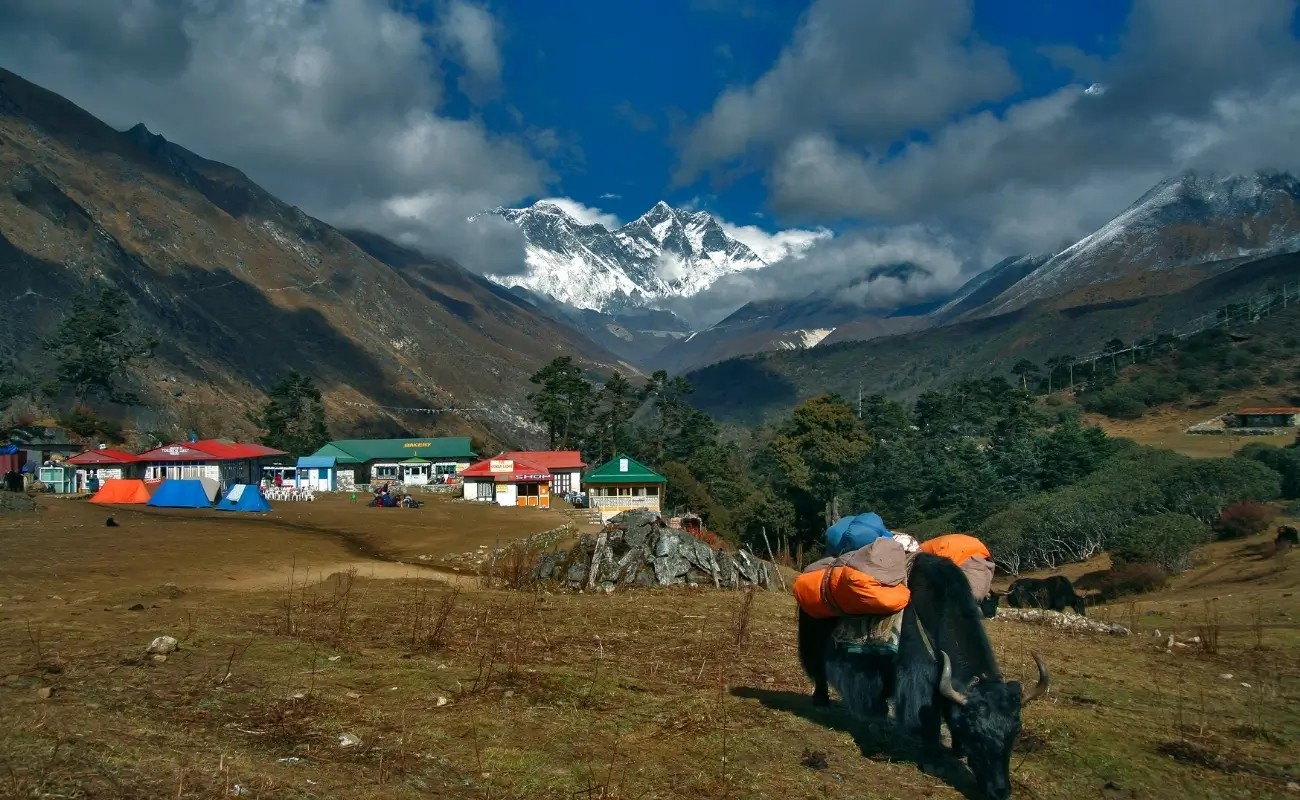 This guide explains everything you need to know about getting to Everest Base Camp in 2026, from traveling between Kathmandu and Lukla to selecting the best trekking season, following the standard itinerary, obtaining the required permits, managing altitude sickness, estimating trekking costs, packing the right gear, and deciding whether to travel independently or with a licensed guide. By the end, you'll have a complete roadmap for planning a successful Everest Base Camp adventure while minimizing risks and making informed decisions at every stage of the journey.
Where Is Everest Base Camp and Why Do People Visit It?
Everest Base Camp (Nepal) sits at 5,364 meters (17,598 feet) on the Khumbu Glacier, at the foot of the Khumbu Icefall on the south face of Mount Everest. It lies within Sagarmatha National Park in the Solukhumbu District of northeastern Nepal, approximately 140 kilometers northeast of Kathmandu by air.
People visit Everest Base Camp for 5 distinct reasons:
-
To witness the staging ground for Everest summit attempts at close range
-
To experience Sherpa culture and the villages of the Khumbu Valley
-
To stand at the base of the world's highest mountain without technical climbing
-
To complete one of the world's most recognized trekking routes
-
To test personal limits at extreme altitude in a structured, trail-based environment
What most visitors don't anticipate is how much the journey itself, the landscape, the monasteries, the teahouse culture, overshadows the destination. The trek from Lukla to EBC passes through 4 major altitude zones and covers terrain that changes dramatically between each village.
What Is the Difference Between Nepal's Everest Base Camp and Tibet's?
Nepal's South Base Camp sits at 5,364m on the Khumbu Glacier and is the most visited. Tibet's North Base Camp (Rongbuk Base Camp) sits at 5,200m on the north face and is accessible by road from Lhasa, requiring different permits and travel logistics entirely.
The 3 key differences between the two base camps are:
-
Approach: Nepal's EBC requires a multi-day trek. Tibet's North Base Camp is reachable by vehicle from the Tibetan Plateau.
-
Accessibility: Nepal's route is open year-round to independent trekkers with the right permits. Tibet's route requires a Tibet Travel Permit and an Alien's Travel Permit, both of which Chinese authorities regulate strictly.
-
Perspective: Nepal's EBC faces the Khumbu Icefall and the southwest face of Everest. Tibet's base camp offers a direct view of the dramatic north ridge.
Trekkers choosing Nepal get a richer cultural experience. Trekkers choosing Tibet get vehicle access to base camp and a longer view of the mountain's north face, but lose the immersive trail culture that defines the Nepal route.
What Are the Different Ways to Get to Everest Base Camp?
3 primary methods exist for getting to Everest Base Camp: trekking the classic Lukla-to-EBC route on foot, flying directly to Gorak Shep by helicopter, or combining a multi-day trek with a helicopter return from EBC. Each option suits a different budget, timeline, and fitness level.
Can You Trek to Everest Base Camp?
Trekking is the standard and most common method. The classic route starts in Lukla at 2,860m and takes 8 to 14 days to reach EBC at 5,364m, covering approximately 65 kilometers one way. Trekkers use a network of teahouses, locally run mountain lodges, for accommodation and meals along the entire route.
No ropes, crampons, or technical mountaineering experience are required. The trek demands strong cardiovascular fitness, heat and cold tolerance, and the psychological discipline to move slowly when your body urges speed.
This method costs between $1,200 and $3,500 depending on whether you travel with a guided group, an independent guide, or fully solo.
Can You Reach Everest Base Camp by Helicopter?
A helicopter can fly from Kathmandu or Lukla directly to Gorak Shep (5,164m), which is the closest landing zone to EBC, followed by a short 45-minute walk to base camp. The full helicopter tour from Kathmandu, including a landing at Kala Patthar or near EBC, takes approximately 4 to 5 hours total.
Shared helicopter tours cost between $1,000 and $1,500 per person in 2026. Private helicopter charters cost $4,000 to $6,500 for the full craft.
The critical limitation: helicopter access does not allow sufficient acclimatization. Passengers arrive at extreme altitude in minutes rather than days, which triggers acute mountain sickness in a significant percentage of visitors. Helicopter EBC trips are primarily suited for scenic overflights, not extended base camp visits.
Can You Combine Trekking and a Helicopter Return?
Yes. The hybrid approach is the most practical option for trekkers with limited return time or those who want to skip the repetitive descent. You trek from Lukla to EBC over 8 to 10 days, acclimatize properly, then fly back by helicopter from Gorak Shep to Lukla or Kathmandu.
This approach costs an additional $350 to $600 for the return helicopter seat on top of trekking costs. Helicopter returns from Gorak Shep to Lukla depart daily during peak season, weather permitting. Booking in advance through a licensed operator prevents last-minute unavailability during the April–May rush.
How Do You Travel from Kathmandu to the Everest Region?
The standard route from Kathmandu to the Everest region involves a 35-minute domestic flight from Tribhuvan International Airport (KTM) to Tenzing-Hillary Airport in Lukla (LUA) at 2,860m. This flight is widely documented as one of the most technically demanding commercial airport approaches in the world.
Ground transport to Lukla does not exist by conventional road. A rough jeep track reaches Salleri (2,200m), which serves as an alternative starting point for trekkers who want to avoid Lukla flights or reduce costs, but this adds 2 to 3 days of walking.
How Do You Fly to Lukla?
Lukla flights depart exclusively from Ramechhap Airport (RMK), approximately 132 kilometers east of Kathmandu, from late March through June and again from September through November during peak season. Outside those periods, flights operate from Kathmandu directly.
The Ramechhap routing, which became standard practice in 2019, exists because of Kathmandu Valley congestion. Trekkers drive 4 to 5 hours from Kathmandu to Ramechhap before dawn to catch morning flights, the only viable window before valley winds make afternoon departures dangerous.
Domestic airlines operating Lukla flights include Tara Air, Summit Air, and Sita Air. Ticket prices range from $180 to $220 USD per person one way. Flights fill up weeks in advance during April and October, the 2 peak months. Book a minimum of 6 weeks ahead.
What Happens If Lukla Flights Are Rerouted?
Lukla flights cancel or divert with significant frequency. Weather disruption affects approximately 30% of scheduled Lukla departures during monsoon fringes. When flights are grounded, trekkers face 3 options:
-
Wait in Ramechhap or Kathmandu for weather to clear (1 to 4 days is common)
-
Trek from Salleri after jeep transport from Kathmandu, adding 3 trekking days
-
Charter a helicopter at $350 to $600 per seat for private or shared Lukla transfers
Build a 2-day buffer into your itinerary specifically for Lukla flight disruptions. Trekkers who arrive in Nepal with rigid return schedules regularly lose their EBC window to airport delays. Travel insurance that covers flight cancellation and helicopter evacuation is essential, not optional.
What Is the Standard Trekking Route to Everest Base Camp?
The standard EBC trekking route runs from Lukla northeast through the Dudh Kosi River valley to Namche Bazaar, continues through Tengboche and Dingboche, then ascends through Lobuche and Gorak Shep to reach Everest Base Camp at 5,364m. The total distance from Lukla to EBC is approximately 65 kilometers. For the full stage-by-stage breakdown, see our Everest Base Camp day-by-day route guide.
Which Villages Will You Pass Along the Way?
The 8 primary stopping points along the classic route are:
-
Lukla (2,860m): The starting point. Acclimatization begins here.
-
Phakding (2,610m): First night's stop, 3 hours from Lukla. Lower altitude allows an easier first day.
-
Namche Bazaar (3,440m): The Khumbu's commercial hub. Most trekkers spend 2 nights here for mandatory acclimatization.
-
Tengboche (3,860m): Home to the famous Tengboche Monastery, the highest gompa in Nepal, with a direct Everest view.
-
Dingboche (4,410m): Another key acclimatization stop, usually 2 nights, with a popular side hike to Nangkartshang Peak (5,083m).
-
Lobuche (4,940m): A stark, exposed settlement near the Khumbu Glacier moraine. One night.
-
Gorak Shep (5,164m): The final lodge before EBC. Also the base for Kala Patthar (5,644m), which gives the best above-ground Everest view on the route.
-
Everest Base Camp (5,364m): The destination. Not a permanent structure, a seasonal tent city during expedition season (April–May).
How Many Days Does the Trek Usually Take?
The standard guided Everest Base Camp trek takes 12 to 14 days return from Lukla. The breakdown is: 7 to 8 days ascending (with rest days at Namche and Dingboche), 1 day at EBC and Kala Patthar, and 4 to 5 days descending back to Lukla.
Descents are faster because acclimatization is already complete and teahouse options are familiar. Most trekkers complete the return journey in 3 to 4 days rather than the 7 to 8 days of the ascent.
How Long Does It Take to Get to Everest Base Camp?
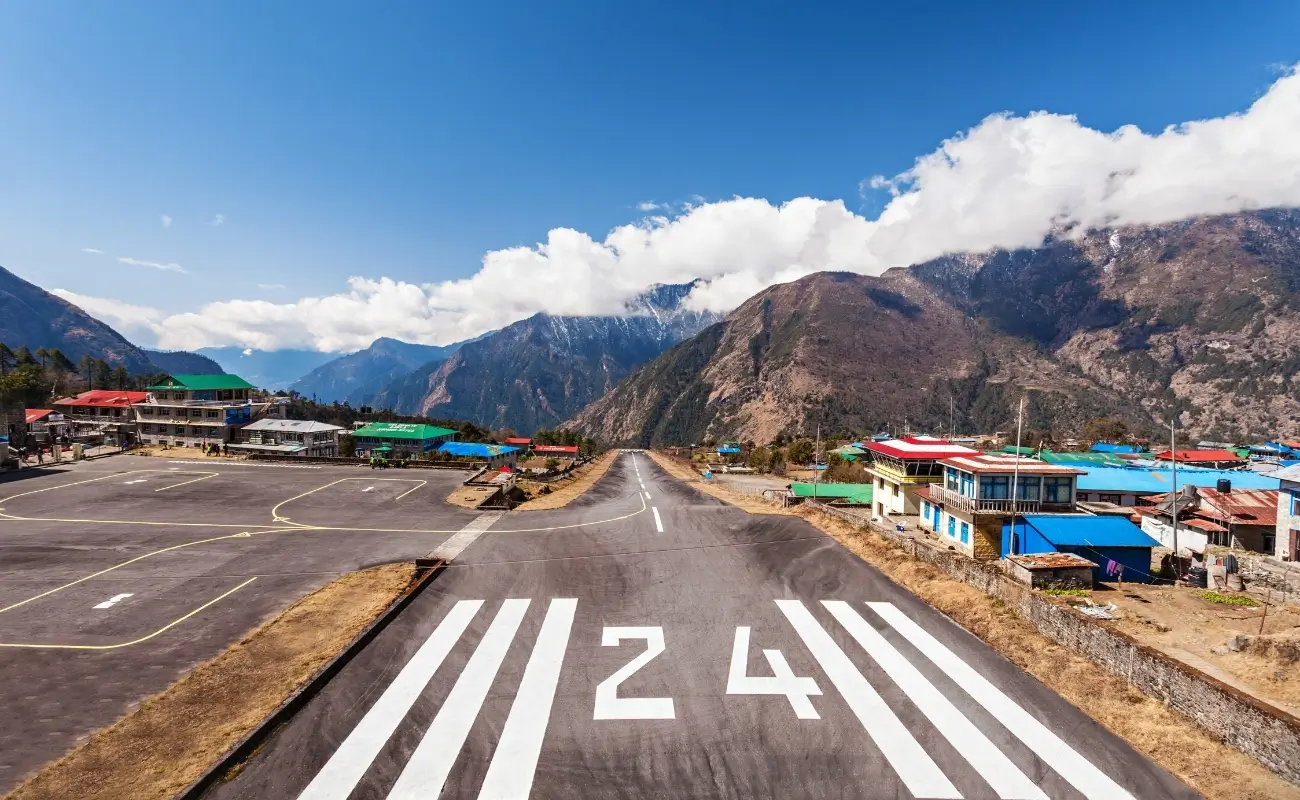 Including travel from Kathmandu, the total time to reach Everest Base Camp is 9 to 12 days at minimum, or 12 to 16 days for a well-paced schedule with proper rest days. The flight to Lukla takes 35 minutes. The trek from Lukla to EBC takes 8 to 10 days with acclimatization stops.
Can You Complete the Trek Faster?
Technically yes, experienced trekkers at peak fitness have reached EBC in 6 days from Lukla. This pace is medically inadvisable for the vast majority of visitors. Getting to Everest Base Camp is a structured, well-supported journey completed by tens of thousands of visitors each year, Nepal's Ministry of Culture, Tourism & Civil Aviation recorded 49,372 foreign entries to Sagarmatha National Park in 2024 alone.
The body requires a minimum of 2 to 3 full rest days above 3,500m to allow red blood cell production to increase and plasma volume to adjust. Compressing the schedule below 8 days from Lukla to EBC elevates the risk of Acute Mountain Sickness, High Altitude Pulmonary Edema (HAPE), and High Altitude Cerebral Edema (HACE), the latter two being life-threatening conditions.
Speed records belong to elite athletes with extensive high-altitude experience. For everyone else, faster means higher risk, not higher reward.
What Is the Best Pace for Acclimatization?
The medically established rule for high-altitude acclimatization is "climb high, sleep low." Apply it by spending 2 nights in Namche Bazaar, taking a day hike to the Everest View Hotel at 3,880m on rest days, and adding a 2-night stop in Dingboche with a hike to Nangkartshang.
The specific acclimatization protocol used by the Himalayan Rescue Association (HRA) recommends:
-
Ascend no more than 300 to 500 meters of sleeping altitude per day above 3,000m
-
Rest for 1 full day for every 1,000 meters gained above 3,000m
-
Descend immediately at the first sign of worsening AMS symptoms
Trekkers who follow this schedule reach EBC with significantly lower rates of altitude illness than those who push to keep up with faster companions.
When Is the Best Time to Visit Everest Base Camp?
The best time to visit Everest Base Camp is October and November (autumn) or April and May (spring). These 4 months deliver the most stable weather, clearest skies, and most reliable Lukla flight conditions. Post-monsoon October is widely regarded as the single best month for mountain visibility.
Which Seasons Offer the Best Trekking Conditions?
The 2 optimal trekking windows each have distinct characteristics:
Spring (March to May):
-
Temperature at EBC ranges from -10°C to 5°C during the day
-
Rhododendron forests bloom below 3,500m in March and April
-
Expedition teams are active on the mountain, giving EBC an energetic atmosphere
-
May brings the highest summit attempt concentration and the largest tent-city
-
Lukla flight reliability is strong in March and April, weaker in May as pre-monsoon clouds build
Autumn (September to November):
-
Post-monsoon skies are exceptionally clear and dry
-
October offers the best combination of stable weather, clear views, and moderate temperatures
-
Trails are quieter than spring after October's peak week passes
-
Daytime temperatures at EBC drop to -15°C to -5°C by November
-
Lukla flights are most reliable in October
What Is Trekking Like During the Monsoon and Winter?
Monsoon season (June to August) brings heavy rainfall below 3,000m, leech-infested trails on lower sections, and persistent cloud cover that obscures mountain views. Trails above 4,000m are drier but fog makes photography difficult. Trekkers who visit during monsoon face approximately 60% fewer fellow hikers, lower teahouse prices, and greener landscapes, but also frequent trail damage, swollen river crossings, and disrupted Lukla flights.
Winter (December to February) is technically possible but harsh. Temperatures at EBC drop to -35°C at night. Most teahouses above Namche close or operate with minimal services. Lobuche and Gorak Shep lodges close entirely in January. Trail passes above 5,000m accumulate deep snow. Winter trekking to EBC suits only experienced cold-weather trekkers with proper equipment and a full support team. For a month-by-month comparison, see our guide to the best time for EBC.
What Permits Do You Need to Reach Everest Base Camp?
2 permits are required to legally trek to Everest Base Camp: the Sagarmatha National Park Entry Permit and the Khumbu Pasang Lhamu Rural Municipality (KPLRM) Permit. Both are mandatory and checked at multiple checkpoints along the route. (Note: The TIMS card is no longer required or accepted in the Khumbu region). The Sagarmatha National Park Entry Permit costs NPR 3,000 per person for foreign nationals, confirmed on the Nepal Tourism Board's official park entry fee schedule, with reduced rates of NPR 1,500 for SAARC nationals and NPR 25 for Nepali citizens.
The 2 permits and their 2026 costs are:
|
Permit |
Cost (2026) |
Issued By |
|
Sagarmatha National Park Entry Permit |
NPR 3,000 per person |
Nepal Tourism Board |
|
KPLRM Local Permit |
NPR 3,000 per person |
KPLRM office, Lukla |
The Sagarmatha National Park permit fee remains a flat rate year-round, with no seasonal price fluctuations. Confirm current fee structures with the Nepal Tourism Board, as permit pricing has adjusted multiple times since 2020.
Where Can You Get the Required Permits?
Permit are available from the Nepal Tourism Board office in Kathmandu's Pradarshani Marg or from the TAAN office in the Maligaon area. Most licensed trekking agencies handle all 2 permits as part of their package fees, which is the fastest and most reliable method. See our full permit cost breakdown for exact 2026 fees by nationality.
The KPLRM local permit can be obtained immediately upon arrival at the local municipality office in Lukla, or at the park entrance checkpoint in Monjo (2,835m). Rangers check both permits at the Monjo gate, the entrance to Sagarmatha National Park, and again at the Namche checkpoint. Traveling without valid permits results in fines and mandatory backtracking to obtain them.
How Difficult Is It to Reach Everest Base Camp?
.webp) Reaching Everest Base Camp is rated as a moderately strenuous trek. It requires no technical climbing, but demands sustained aerobic effort over multiple days at altitude, the ability to manage discomfort in cold and exposed conditions, and enough mental resilience to slow down when the body signals stress. Altitude is the primary challenge, not terrain.
Reaching Everest Base Camp is rated as a moderately strenuous trek. It requires no technical climbing, but demands sustained aerobic effort over multiple days at altitude, the ability to manage discomfort in cold and exposed conditions, and enough mental resilience to slow down when the body signals stress. Altitude is the primary challenge, not terrain.
What Fitness Level Do You Need?
Trekkers with 3 specific fitness benchmarks are well-prepared for EBC:
-
Cardiovascular endurance: Comfortable hiking 5 to 7 hours per day on uneven terrain for 8 consecutive days
-
Leg strength: Capable of sustained uphill effort with a 6 to 10 kg daypack
-
Cold tolerance: Functional in temperatures as low as -15°C with appropriate clothing
A practical pre-trek test: complete a 15-kilometer hike with 800 meters of elevation gain while carrying a 7 kg pack. If that effort feels manageable, you are physically prepared for the Lukla-to-Namche section, which is the first real test of the route. Building this level of conditioning takes a structured lead-up; see our full guide on how to train for EBC.Trekkers over 60 and those with cardiovascular or respiratory conditions complete the trek successfully, but only after obtaining medical clearance and building a conservative itinerary with extra rest days.
How Does High Altitude Affect the Journey?
Above 3,500m, atmospheric oxygen concentration drops to approximately 65% of sea-level values. Above 5,000m, it drops to approximately 53%. The human body responds with predictable physiological changes: increased respiratory rate, elevated resting heart rate, reduced appetite, disrupted sleep, and reduced cognitive speed.
AMS is common on this route: a peer-reviewed Xtreme Everest field study following trekkers to 5,300m on the EBC trail recorded a 73.5% overall AMS rate, with just over half of all cases classified as moderate-to-severe. AMS symptoms include persistent headache, nausea, fatigue, and dizziness. HAPE (fluid in the lungs) and HACE (swelling of the brain) are rare but fatal without immediate descent and evacuation.
Diamox (acetazolamide) at 125 to 250mg twice daily is the medically established preventive medication for AMS, with FDA prescribing information recommending it be started 24 to 48 hours before ascent and continued for 48 hours at high altitude. Consult a travel medicine physician before the trek to determine whether Diamox is appropriate for your health profile.
What Should You Pack for the Everest Base Camp Trek?
The core packing list for Everest Base Camp includes a 4-season sleeping bag rated to -20°C, insulated trekking boots, layered clothing for temperatures from 20°C to -20°C, and a 30 to 40-liter daypack. Gear quality at altitude is not a comfort issue, it is a safety issue.
Which Essential Gear Should You Bring?
The 10 essential gear items for the EBC trek are:
-
Sleeping bag: Down or synthetic rated to -20°C (-4°F)
-
Trekking boots: Waterproof, ankle-supporting, broken in before the trek
-
Trekking poles: 2 adjustable poles reduce knee stress by approximately 25% on descents
-
Headlamp: With spare batteries, teahouses frequently lose power above Namche
-
Sunglasses: CE4 or equivalent UV protection rated, mandatory above 4,000m to prevent snow blindness
-
Water purification: Iodine tablets or SteriPen, water above Namche is safe to treat but not to drink untreated
-
First aid kit: Including Diamox, ibuprofen, blister care, and a digital pulse oximeter
-
Portable power bank: Solar charging is unreliable above 4,000m due to cloud cover
-
Down jacket: 700-fill power minimum for warmth above 4,500m
-
Daypack: 30 to 40 liters, porters carry the main load (up to 30 kg per porter) while you carry daily essentials
Porters carry the main load (with the Trekking Agencies' Association of Nepal stipulating a 30 kg limit per porter) while you carry only your daily essentials.
What Clothing Works Best in Different Seasons?
A 3-layer clothing system performs best across all EBC trekking seasons:
-
Base layer: Merino wool or synthetic moisture-wicking material. Avoid cotton, wet cotton accelerates hypothermia at altitude.
-
Mid layer: Fleece jacket (200–300 weight) or light down jacket for stationary warmth in teahouses and rest stops.
-
Outer layer: Waterproof and windproof hardshell jacket and pants. Gore-Tex or equivalent laminate is worth the investment above 4,000m.
Spring-specific additions: Sun protection (sunscreen SPF 50+, sun hat, lightweight gloves for cold mornings) and gaiters for snow patches above Lobuche.
Autumn-specific additions: Heavier insulation layer for November, wool balaclava, and overmitts for pre-dawn Kala Patthar summit attempts. For every item broken down by category, check our full EBC packing list.
How Much Does It Cost to Get to Everest Base Camp?
The total cost of an Everest Base Camp trek ranges from $1,200 to $4,500 USD depending on the level of support, quality of gear, group size, and time of year. A budget solo trek costs approximately $1,200 to $1,800. A guided group trek with a reputable agency costs $1,800 to $2,800. A premium private guided trek costs $3,000 to $4,500.
What Are the Main Expenses to Expect?
The 8 primary cost categories for an EBC trek are:
|
Expense Category |
Budget Range (USD) |
|
International flights to Kathmandu |
$500–$1,200 |
|
Domestic Lukla flights (return) |
$360–$440 |
|
Trekking agency/guide/porter fees |
$400–$1,500 |
|
Permits (all 3 combined) |
~$46 |
|
Teahouse accommodation (per night) |
$5–$20 |
|
Meals along the route |
$20–$40 per day |
|
Gear (if purchased new) |
$400–$1,500 |
|
Travel insurance with helicopter evacuation |
$100–$250 |
Food and accommodation costs escalate significantly with altitude. A dal bhat meal (the standard local trekking meal) costs $5 to $7 in Lukla, $10 to $14 in Namche, and $15 to $18 in Gorak Shep. Tea costs $1 in Phakding and $4 near EBC. Budget accordingly, underestimating food costs is one of the most common planning errors.
How Can You Reduce Trekking Costs?
3 strategies reduce the total cost of an EBC trek without compromising safety:
-
Travel in shoulder season: March and late November see lower teahouse prices and reduced permit demand, cutting accommodation costs by 20 to 30%.
-
Hire a local guide and porter directly in Lukla or Namche: This costs 20 to 40% less than booking through a Kathmandu agency, though you lose the advance planning support. Confirm guide licensing before hiring independently.
-
Rent gear in Kathmandu's Thamel district: High-quality trekking boots, down jackets, sleeping bags, and trekking poles are available to rent at $2 to $8 per item per day. Renting saves $400 to $800 for first-time trekkers who may not trek again.
Budget trekkers commonly skip the national park permit in the mistaken belief that checkpoints won't catch them. Rangers at Monjo and Namche check all documents systematically. Missing permits result in fines of NPR 10,000 to 20,000 plus return-trip costs to Kathmandu to obtain the documents.
What Safety Tips Should You Follow on the Way to Everest Base Camp?
6 safety practices apply on every EBC trek: carry a pulse oximeter, follow the "no ascent with AMS symptoms" rule, maintain hydration above 3 liters per day, arrange helicopter evacuation insurance before departure, keep rescue agency contact numbers accessible, and always travel with a licensed guide above 4,000m.
Everest Base Camp is not inherently dangerous by high-altitude standards, but it sits above 5,000m, an elevation where physiological problems escalate rapidly if ignored.
How Can You Prevent Altitude Sickness?
The 5 evidence-based methods for preventing Acute Mountain Sickness are:
-
Acclimatize gradually: Follow the 300 to 500m sleeping altitude gain limit per day above 3,000m
-
Hydrate consistently: 3 to 4 liters of water per day at altitude, more during exertion
-
Avoid alcohol above 3,500m: Alcohol suppresses respiratory drive, exacerbating oxygen deprivation
-
Consider Diamox prophylactically: 125mg twice daily, starting 1 to 2 days before ascent above 3,000m
-
Monitor oxygen saturation: A pulse oximeter gives objective data. SpO₂ values below 80% at rest above 4,500m indicate the need for medical assessment
The Himalayan Rescue Association operates clinics in Pheriche (4,371m) and Manang. Both clinics provide AMS assessment, altitude medicine consultation, and emergency protocols for trekkers. The Pheriche clinic is 1 day's walk below Lobuche, plan to stop for an assessment if any AMS symptoms appear.
What Should You Do in an Emergency?
In a high-altitude medical emergency, 3 immediate actions apply:
-
Descend immediately: descent of 500 to 1,000m typically reverses AMS, HAPE, and early HACE faster than any medication
-
Contact your guide and the nearest HRA clinic: the Pheriche clinic (tel: +977-01-4416516) maintains emergency protocols and helicopter evacuation coordination
-
Activate helicopter evacuation: rescue helicopters reach most EBC-route locations within 30 to 90 minutes. Every trekker above 3,500m needs active helicopter evacuation insurance, budget for it ahead of time using our breakdown of emergency evacuation costs. CIWEC Hospital in Kathmandu is the standard referral point for altitude-related emergencies
Portable Altitude Chambers (PAC bags / Gamow bags) are available at the HRA Pheriche clinic and at several teahouses above 4,000m. Guides trained in their operation can administer 15 to 30 minutes of simulated descent while evacuation is arranged.
Never wait to see if symptoms improve above 4,500m. The correct response to any neurological change, persistent vomiting, or labored breathing is immediate descent, not rest.
How Should You Plan Your Everest Base Camp Journey with a Trekking Agency?
Planning the EBC trek with a licensed Nepali trekking agency provides 6 key advantages: pre-arranged permits, acclimatization-optimized itineraries, licensed Sherpa guides with first-aid training, guaranteed teahouse reservations during peak season, porter support for load management, and emergency evacuation coordination.
The Nepal Tourism Board maintains a directory of registered trekking agencies at ntb.gov.np. Choose an agency that holds the TAAN (Trekking Agents' Association of Nepal) or NMA (Nepal Mountaineering Association) membership certificate, employs guides with wilderness first aid certification, and provides transparent pricing without hidden fees for permits, meals, or equipment.
Can a Guided Everest Base Camp Trek Make Your Trip Easier?
A guided trek specifically eliminates 7 planning stressors that independent trekkers regularly encounter:
-
Lukla flight booking and rerouting management
-
Real-time itinerary adjustment for weather or altitude issues
-
Permit procurement in Kathmandu (saves a half-day minimum)
-
Teahouse reservations at Namche, Dingboche, and Lobuche, the 3 bottleneck stops during peak season
-
Translation at checkpoints, medical clinics, and teahouses
-
Porter management, including porter welfare standards compliance (licensed agencies must ensure porters carry no more than 25kg and have adequate clothing and insurance)
-
Emergency response coordination, guides are your primary contact in a medical crisis
Independent trekking is legal and viable for experienced trekkers who know the route and speak basic Nepali. For first-time EBC trekkers, the financial premium of a licensed guided package, typically $400 to $900 over the independent cost, reduces risk and significantly reduces planning effort.
What Are the Key Takeaways About Getting to Everest Base Camp?
Getting to Everest Base Camp is a structured, well-supported journey that roughly 35,000 to 40,000 people complete each year without mountaineering experience. The 8 most important facts to carry into your planning are:
-
The route is Nepal, not Tibet: unless you specifically plan the North Base Camp approach via Lhasa, the classic EBC experience is Lukla to the Khumbu Glacier
-
The Lukla flight is your most time-sensitive logistics point, book it 6 to 8 weeks in advance and budget a 2-day weather buffer
-
12 to 14 days is the correct timeline: anything shorter compromises acclimatization and increases medical risk
-
2 permits are mandatory and checked: the Sagarmatha National Park permit and KPLRM permit are all verified at multiple checkpoints
-
Altitude is the primary challenge, not fitness: even elite athletes get AMS; acclimatization protocol compliance matters more than physical conditioning
-
October and April are the 2 best months: each offers a different experience, with October being drier and April being warmer and more socially active
-
A pulse oximeter and helicopter evacuation insurance are non-negotiable safety items: both cost under $50 and represent your primary safety infrastructure above 4,000m
-
A licensed guide makes the journey easier, safer, and culturally richer: Sherpa guides provide expertise that no guidebook fully replaces
Everest Base Camp is not a destination you arrive at by luck or impulse. It rewards methodical planning, conservative pacing, and genuine curiosity about the Khumbu region's culture and landscape. Begin your preparation 3 to 6 months before your intended departure, book your Lukla flights, select your season, obtain your permits, and start building weekly elevation hikes into your training. The mountain has been there for 60 million years; it rewards patience.
If you'd rather have permits, acclimatization, and logistics handled for you, explore our guided Everest Base Camp trek package.
More About Author

Khilak Budhathoki
Travel Director
Khilak Budhathoki is the co-founder and lead trekking guide at Himalaya Trekking Nepal, a locally owned and operated adventure company based in Kathmandu. Born and raised in the foothills of Nepal, Khilak developed a deep love for the mountains from an early age. With over a deca...

USD$1,600 pp
Our Recommendation
Related Blogs
Feb 08, 2026
Pokhara 2026: Top Attractions & Adventure Tips


Nov 21, 2025
Everest Base Camp Trek Weather: Guide 2026
