- 14, Jul 2026 | Khilak Budhathoki
Mount Everest is the highest mountain on Earth and one of the coldest environments accessible to climbers. Its extreme altitude, low atmospheric pressure, thin air, powerful jet stream winds, and year-round sub-zero temperatures create conditions unlike those found on any other major mountain range. Cold on Everest is far more than a weather statistic, it influences every stage of an expedition, from acclimatization at Base Camp to survival in the Death Zone, affecting climbing performance, equipment selection, and the risk of frostbite, hypothermia, and altitude-related illness.
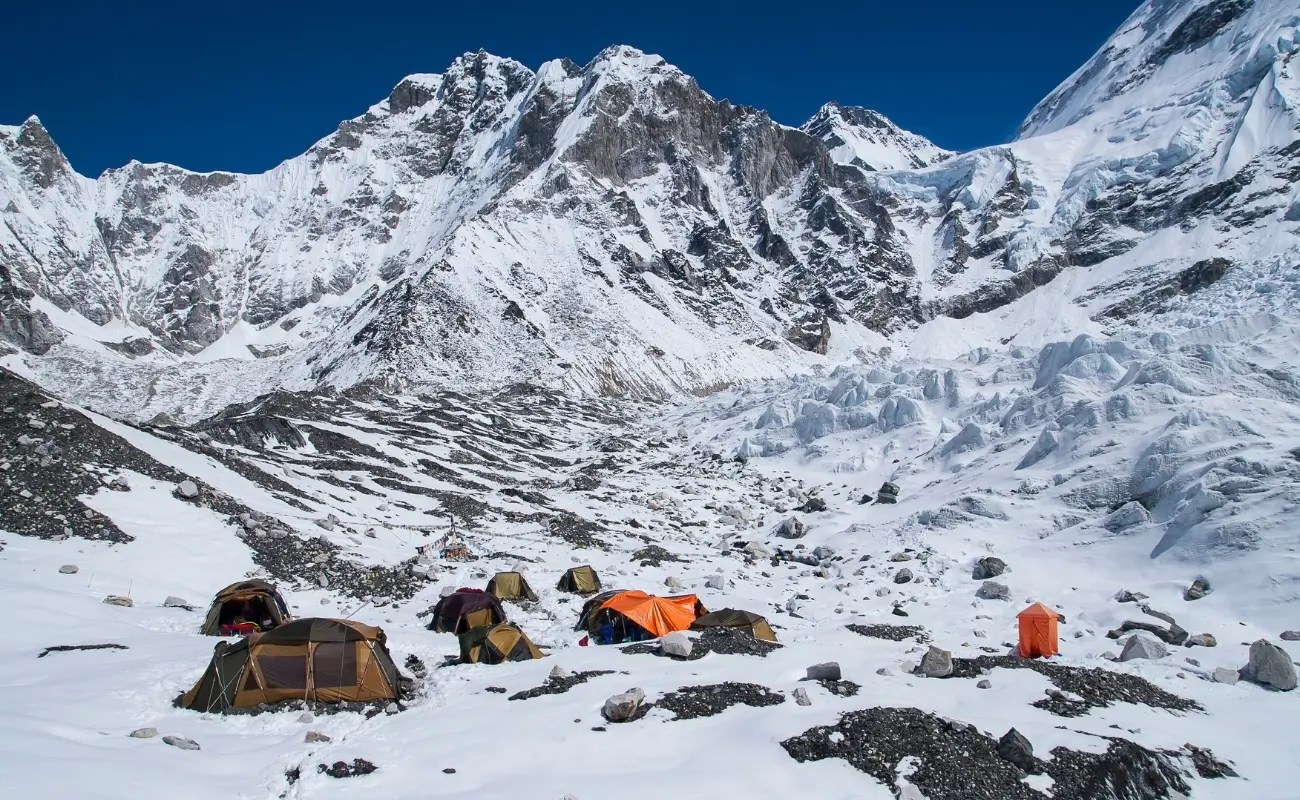 Understanding how cold Mount Everest becomes requires more than looking at summit temperatures alone. Temperature changes dramatically with elevation, season, wind speed, and time of day, while wind chill often makes conditions far more dangerous than the air temperature suggests. This guide explains Everest's temperatures from Base Camp to the summit, examines seasonal weather patterns, explores the science behind the mountain's extreme cold, compares conditions with other high peaks such as K2 and Denali, and outlines the clothing, gear, and preparation climbers need to safely face one of the world's harshest alpine environments.
What Is the Average Temperature on Mount Everest?
The average temperature on Mount Everest ranges from -6°C (-21°F) at Base Camp (5,364 m) during spring nights to -36°C (-33°F) at the summit year-round. No single average represents the full picture, temperature changes dramatically with elevation and season across a vertical rise of more than 3,484 meters between Base Camp and the summit.
The standard atmospheric lapse rate, 6.5°C per 1,000 meters of altitude, explains how Everest produces such extreme cold at its upper reaches. A climber ascending from Base Camp (5,364 m) to the summit (8,848.86 m) crosses a theoretical temperature drop of approximately 22.6°C based on lapse rate alone. In practice, the actual drop is more severe due to radiative cooling, wind exposure, and jet stream influence.
The table below presents verified average temperatures by camp and season:
|
Location |
Elevation |
Spring (May) Avg |
Winter (Jan) Avg |
|
Base Camp |
5,364 m |
-6°C (21°F) |
-20°C (-4°F) |
|
Camp II |
6,400 m |
-13°C (9°F) |
-29°C (-20°F) |
|
Camp III |
7,162 m |
-35°C (-31°F) |
-45°C (-49°F) |
|
Camp IV (South Col) |
7,906 m |
-40°C (-40°F) |
-50°C (-58°F) |
|
Summit |
8,848 m |
-19°C (-2°F) |
-60°C (-76°F) |
Temperatures at each camp fluctuate significantly between day and night. During daylight in spring, solar radiation pushes Base Camp temperatures above 0°C. After sunset, the same location drops to -16°C. At the summit, day-night variation is compressed because the atmosphere is too thin to retain any heat from solar radiation once the sun falls below the horizon.
How Cold Is Everest at the Summit?
Everest's summit averages -36°C (-33°F) across all months, dropping to -60°C (-76°F) in winter and rising briefly to -19°C (-2°F) during the warmest May summit windows. The summit sits permanently above the troposphere's warmest air layers, receiving no buffering effect from dense atmospheric mass.
The coldest summit period runs from December through February, when the polar jet stream positions itself directly over the Himalayan crest. Wind speeds during these months regularly exceed 150 km/h (93 mph), transforming an already lethal air temperature into wind chill values below -73°C (-100°F).
Even in May, the primary summit window, climbers experience temperatures between -15°C and -30°C at the summit, with wind speeds averaging 40-70 km/h (25-43 mph). A brief calm window of 6-12 hours is all that separates a successful summit from a forced descent.
How Do Temperatures Change Throughout the Year?
Everest summit temperatures follow a predictable annual cycle: coldest in December-January at approximately -60°C, warmest in July-August at around -14°C, with the 2 safe climbing windows occurring in May and October. The year divides into 4 distinct thermal phases, the spring warming window, the monsoon period, the autumn cooling window, and the deep-winter freeze.
The warming trend begins in March as the jet stream migrates north of Everest. By April, summit temperatures climb from -40°C toward -25°C. The May summit window reflects the highest annual upper-altitude temperatures of the climbing season. When the monsoon arrives in June, humidity increases and precipitation begins, but summit temperatures stabilize between -14°C and -20°C rather than warming further. September marks the monsoon's retreat, and summit temperatures drop steadily from -20°C toward -35°C by October, then plunge below -50°C by December.
Why Is Mount Everest So Cold?
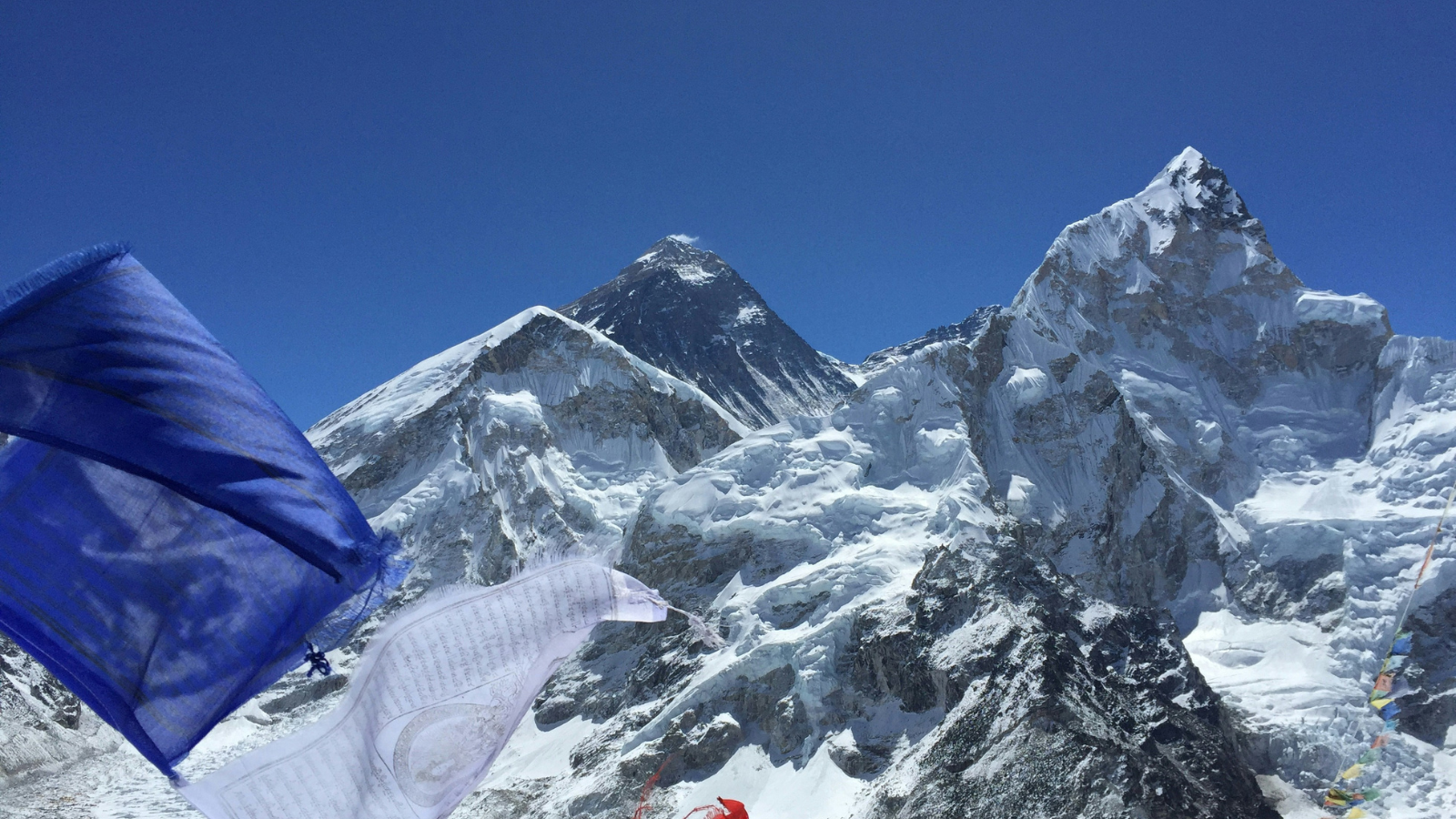
Mount Everest is so cold because of 3 compounding physical factors: extreme elevation causes reduced atmospheric pressure, thin air absorbs minimal solar heat, and the polar jet stream delivers sustained high-altitude winds that strip warmth from any exposed surface. No single factor produces Everest's cold in isolation, all 3 act simultaneously and reinforce each other.
How Does Elevation Affect Temperature?
Every 1,000 meters of altitude gained on Everest reduces air temperature by approximately 6.5°C (11.7°F), placing the summit roughly 22.6°C colder than Base Camp and 48°C colder than Kathmandu (1,400 m) on the same day. This relationship, defined by the environmental lapse rate, operates because air pressure decreases with altitude, causing air molecules to expand and cool.
At Everest's summit, atmospheric pressure measures approximately 33.7 kPa, one-third of sea-level pressure (101.3 kPa). This pressure reduction produces 2 critical thermal consequences: air holds less heat per unit volume, and less atmospheric mass sits above to trap infrared radiation from the Earth's surface.
The summit receives intense solar radiation, the thin atmosphere filters out less ultraviolet energy, but this radiation heats rock and snow surfaces, not air. Dense air at sea level traps surface-radiated infrared heat. The thin atmosphere above 8,000 meters allows this warmth to escape immediately into space, leaving the surface cold regardless of solar intensity.
How Do Wind and Thin Air Make Everest Feel Colder?
Wind and thin air on Everest combine to produce effective (wind chill) temperatures 20-40°C lower than actual air temperature, because convective heat loss accelerates in direct proportion to wind speed. Wind strips the boundary layer of warm air from exposed skin 8-12 times faster at summit altitudes than at sea level.
The jet stream, a band of westerly winds circling Earth between 8,000-12,000 meters, impacts Everest for approximately 7 months per year. During peak jet stream months (December through March), summit wind speeds average 87 km/h (54 mph) and regularly gust above 161 km/h (100 mph). At these wind speeds, even -20°C air temperature produces effective temperatures equivalent to -40°C or below.
Thin air amplifies the cold danger because the body generates less metabolic heat at altitude. Hypoxia, the oxygen deficiency caused by low partial oxygen pressure above 8,000 meters, impairs thermogenesis (body heat production) by 15-20%. A climber's body is both losing heat faster and generating heat less efficiently than at sea level, a double thermal deficit that accelerates hypothermia onset.
How Cold Is Mount Everest During Each Climbing Season?
Mount Everest has 2 primary climbing seasons, spring (April-May) and autumn (September-October), with winter and monsoon periods effectively closing the mountain due to extreme cold and hazardous weather. Temperatures, wind conditions, and survivable weather windows differ significantly across all 4 seasonal phases. Trekkers heading only to Base Camp rather than the summit face milder but still serious cold, covered in detail in our Everest Base Camp trek weather guide.
How Cold Is Everest in the Spring Climbing Season?
Spring (April-May) delivers the most accessible thermal conditions on Everest, with summit temperatures ranging from -15°C to -30°C and wind speeds dropping to 40-70 km/h as the jet stream retreats northward. The spring window opens in mid-April and narrows to a 2-3 week period in May, typically between May 10-25, when jet stream displacement creates stable, lower-wind summit conditions.
At Base Camp during April, temperatures swing from -6°C at night to +5°C during the day. Camp IV on the South Col (7,906 m) records average nighttime temperatures of -40°C in May, occasionally dropping to -50°C during unsettled periods. Summit temperatures during the optimal May window hold between -15°C and -25°C with winds below 50 km/h, producing wind chill values of -35°C to -50°C. Data from automatic weather stations placed near Everest during the 2019 and 2022 National Geographic Perpetual Planet Expeditions confirmed mean summit temperatures on successful summit days averaging approximately -21°C, with recorded wind speeds around 42 km/h producing effective temperatures near -43°C. Data from the automatic weather station network installed during the 2019 National Geographic and Rolex Perpetual Planet Everest Expedition (Matthews et al., 2020, Bulletin of the American Meteorological Society) confirmed mean summit-day temperatures near -21°C during optimal May windows.
How Cold Is Everest in the Autumn Climbing Season?
The autumn season (September-October) produces summit temperatures between -20°C and -40°C, colder on average than spring due to decreasing solar angle and post-monsoon atmospheric reconfiguration. The autumn window is shorter and less predictable than spring, typically offering 1-2 viable summit windows per season.
Autumn temperatures at Base Camp drop from -8°C in September to -18°C by late October. Camp IV records nighttime temperatures of -33°C to -42°C during October summit attempts. Summit temperatures during autumn range from -20°C on favourable days to -40°C during colder periods, with wind chill values consistently reaching -50°C to -60°C.
Autumn presents specific cold risks absent in spring. Post-monsoon moisture, residual humidity from the retreating monsoon, condenses rapidly at altitude, coating fixed ropes and equipment with ice. Ice-covered gear at -35°C becomes dangerous to handle with gloves, and bare-skin contact with metal surfaces at these temperatures causes frostbite within 30 seconds.
How Cold Is Everest in Winter?
Everest in winter (December through February) reaches summit temperatures of -40°C to -60°C (-40°F to -76°F), with sustained winds above 100 km/h generating wind chill values below -73°C (-100°F), rendering survival at the summit virtually impossible without emergency shelter. Only a handful of expeditions have reached the summit in winter, with Krzysztof Wielicki and Leszek Cichy completing the first winter ascent in February 1980.
Winter Base Camp temperatures average -25°C at night and -10°C during the day. Camp IV in January records temperatures below -50°C with regularity. The jet stream positions its core directly over the summit for most of the winter season, with jet stream speeds of 200-300 km/h recorded above the Himalayan crest during this period.
How Cold Is Everest During the Monsoon?
Monsoon season (June through August) delivers summit temperatures of -14°C to -22°C, the warmest of any season at the summit, but heavy snowfall, whiteout conditions, and avalanche risk close the mountain to climbing despite the relative warmth. The monsoon creates a thermal paradox: warmer air temperatures coincide with the most dangerous climbing conditions of the year.
Base Camp during the monsoon records daytime temperatures of +5°C to +10°C. At higher camps, temperatures hover between -10°C and -20°C. The relatively warmer conditions do not make climbing safer because 80% of Everest's annual precipitation falls during the monsoon, loading slopes with unstable snow that generates avalanche cycles every 24-48 hours.
How Does Temperature Change at Different Elevations on Everest?
Temperature on Everest decreases by approximately 6.5°C per 1,000 meters of elevation gain, creating a 22.6°C temperature differential between Base Camp and the summit under standard atmospheric conditions. Each camp on the standard South Col route represents a distinct thermal environment with specific hazards.
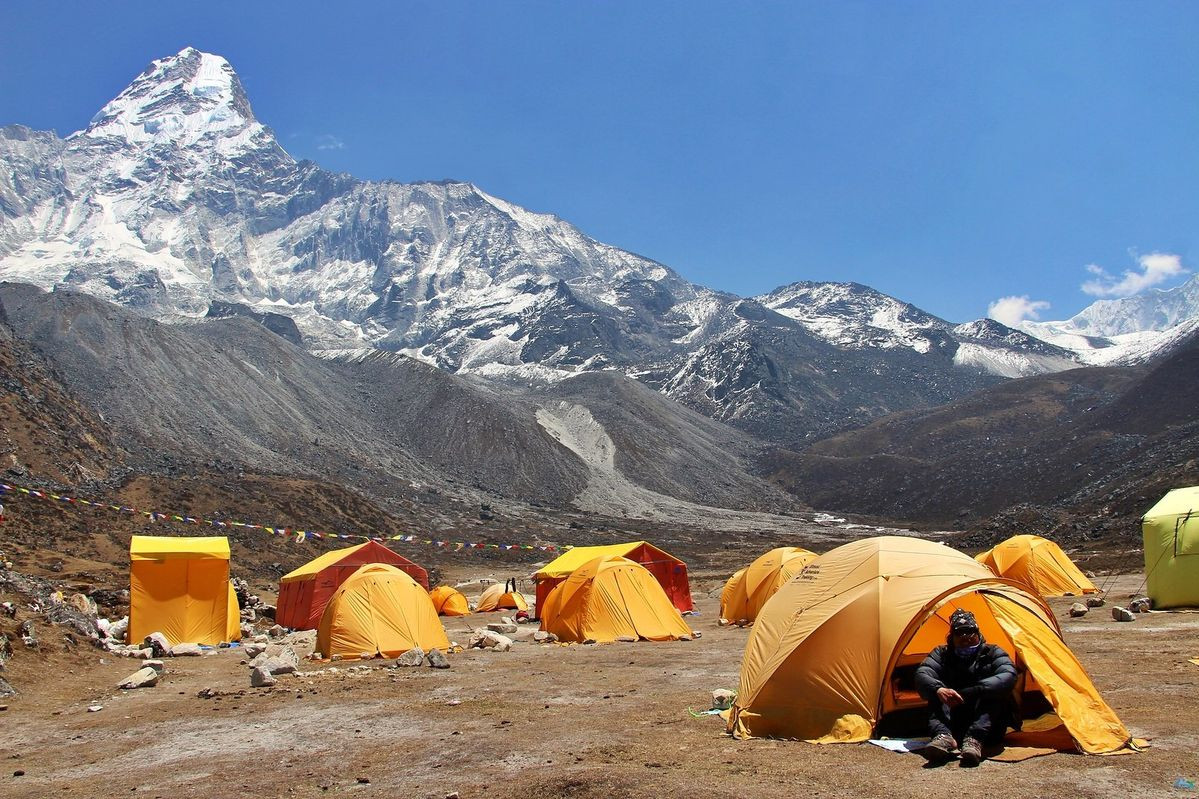
How Cold Is Everest Base Camp?
Everest Base Camp (5,364 m) records average temperatures of -6°C during spring nights to -20°C in winter, with daytime temperatures reaching +5°C in spring under clear skies. Base Camp on the Khumbu Glacier serves as the 6-8 week acclimatization hub for all South Col expeditions, and climbers experience the full range of Base Camp temperatures during this period.
The diurnal temperature range at Base Camp in spring, roughly 21°C between night minimum and afternoon maximum, forces active layering management. Overheating during load carries to Camp I, followed by rapid cooling after sunset, creates conditions that accelerate moisture absorption in insulation layers. Wet insulation at -15°C loses up to 90% of thermal efficiency, a risk that most climbers underestimate at Base Camp before the hazard becomes critical at higher elevations.
How Cold Is Camp I, Camp II, Camp III, and Camp IV?
Each successive camp records lower temperatures across the South Col route: Camp I averages -18°C, Camp II averages -22°C, Camp III averages -35°C, and Camp IV (South Col) averages -40°C to -50°C during spring nighttime conditions.
-
Camp I (5,943 m): Located above the Khumbu Icefall. Average spring nighttime temperature: -18°C. Situated in the Western Cwm, which channels cold air drainage from the upper mountain after sunset.
-
Camp II (6,400 m): Advanced Base Camp on the South Col route. Spring nighttime average: -22°C. The Western Cwm's bowl shape traps solar radiation during the day, briefly warming the camp above -5°C in the afternoon before temperatures plunge rapidly after sunset.
-
Camp III (7,162 m): On the Lhotse Face. Spring nighttime average: -35°C. Wind exposure increases sharply as the camp is positioned on an exposed ice slope above the Cwm's sheltering walls. Tents at Camp III must be anchored against 80-100 km/h gusts.
-
Camp IV (7,906 m, South Col): The highest camp and final summit launch point. Spring nighttime average: -40°C. Winter nighttime average: -50°C. Wind speeds at the South Col average 60-90 km/h, producing wind chill values of -55°C to -70°C. Summit day begins here between midnight and 2:00 AM, meaning climbers depart into the coldest hours of the night.
How Cold Is the Summit Compared With Base Camp?
The Everest summit averages 30°C colder than Base Camp during spring (-36°C vs. -6°C) and 40°C colder in winter (-60°C vs. -20°C). This vertical temperature gradient across 3,484 meters represents one of the most compressed thermal ranges accessible to mountaineers anywhere on Earth.
The practical implication: gear rated for Base Camp provides zero protection above Camp III. A down jacket suitable for Base Camp winter nights (rated to -20°C) is a liability at Camp IV, where it provides less than half the required insulation. Summit gear must account for wind chill, not just air temperature, requiring equipment rated to -60°C or lower before the wind factor is applied.
What Is the Coldest Temperature Ever Recorded on Mount Everest?
.png) The coldest scientifically recorded air temperature near Everest's summit is approximately -42°C (-43°F), measured by automatic weather stations installed at 8,430 meters on the Southeast Ridge, though theoretical estimates suggest deep winter temperatures reach -60°C (-76°F). This project placed the world's 5 highest-elevation automatic weather stations on Everest, replacing decades of estimated temperatures with instrument-verified data. The most extreme air temperature verified on Everest's summit during a successful climb reached -49°C with winds up to 80 m/s (Szymczak et al., 2021, Frontiers in Physiology), underscoring why wind chill, not air temperature alone, defines survivability at the top of the mountain.
The coldest scientifically recorded air temperature near Everest's summit is approximately -42°C (-43°F), measured by automatic weather stations installed at 8,430 meters on the Southeast Ridge, though theoretical estimates suggest deep winter temperatures reach -60°C (-76°F). This project placed the world's 5 highest-elevation automatic weather stations on Everest, replacing decades of estimated temperatures with instrument-verified data. The most extreme air temperature verified on Everest's summit during a successful climb reached -49°C with winds up to 80 m/s (Szymczak et al., 2021, Frontiers in Physiology), underscoring why wind chill, not air temperature alone, defines survivability at the top of the mountain.
How Low Can the Temperature Drop at the Summit?
While instrument data at 8,430 m has recorded temperatures dropping to -42°C, theoretical winter estimates suggest the summit drops to -60°C, and wind chill calculations at concurrent winter wind speeds of 120-150 km/h produce effective temperatures between -80°C and -95°C (-112°F to -139°F), beyond the rated operational range of all currently produced summit gear.
No commercial mountaineering gear is rated for the combined wind chill conditions recorded at the Everest summit in winter. Premium summit-specific down suits produced by manufacturers such as Feathered Friends and PHD are typically tested to -65°C air temperature. This provides approximately 3°C of air-temperature margin above the measured record, with no margin remaining once wind chill is factored in.
What Weather Conditions Cause Extreme Cold?
4 specific weather conditions produce Everest's most extreme cold: polar jet stream alignment directly over the summit, clear-sky radiative cooling at night, high-pressure systems that eliminate insulating cloud cover, and cold air drainage from the Tibetan Plateau. These conditions most commonly converge simultaneously during December and January.
The polar jet stream carries cold polar air at speeds of 200-300 km/h when positioned over the Himalaya. Clear skies in winter high-pressure systems eliminate cloud cover that would otherwise trap some thermal radiation from the mountain surface. Tibetan Plateau cold air, formed over a high-elevation land mass with no oceanic heat buffering, drains downslope toward Everest's northern flanks. When all 4 factors converge, summit temperatures reach their recorded minima and conditions become incompatible with survival outside protected shelter.
How Does Wind Chill Affect Climbers on Mount Everest?
Wind chill on Everest amplifies effective cold exposure by 20-40°C, transforming survivable air temperatures of -30°C into life-threatening effective temperatures of -55°C to -60°C, with maximum danger occurring above Camp III where sustained winds average 60-120 km/h. The wind chill factor is the primary reason why air temperature alone is an insufficient measure of cold danger on Everest.
Why Is Wind Chill More Dangerous Than Air Temperature?
Wind chill is more dangerous than air temperature alone because it measures the actual rate of heat loss from exposed skin, the physiological mechanism that causes frostbite and hypothermia, rather than the ambient thermal energy in the surrounding air. An air temperature of -30°C in calm conditions allows a properly equipped climber to maintain safe body temperature through metabolic heat generation. Wind at 80 km/h in -30°C air strips heat from exposed skin faster than the body produces it.
The National Weather Service's official wind chill formula (NOAA/NWS Wind Chill Chart) calculates effective temperature as a function of wind speed and air temperature. At -30°C and 80 km/h, typical Camp III conditions, the effective temperature is -50°C. At -40°C and 100 km/h, representative of Camp IV, effective temperature reaches -62°C. At -50°C and 150 km/h, consistent with winter summit conditions, effective temperature falls below -80°C, outside the operational range of all available survival equipment.
How Can Wind Chill Increase Frostbite Risk?
Wind chill reduces the frostbite onset time on bare skin from 30 minutes at -20°C in calm conditions to under 5 minutes at -40°C combined air temperature and 60 km/h winds at Camp IV and above. Frostbite begins when skin temperature drops below 0°C, causing ice crystal formation in extracellular fluid that ruptures cell membranes and blocks microcirculation.
On Everest, the body prioritizes blood circulation to vital organs by constricting peripheral blood flow. Extremities, fingers, toes, nose, and ears, receive reduced circulation and reach skin temperatures 10-15°C below core temperature within minutes of cold exposure. At -50°C effective temperature, exposed fingers reach frostbite threshold in 2-3 minutes.
Climbers performing technical tasks above Camp III, fixing ropes, adjusting oxygen regulators, operating camera equipment, risk momentary bare-skin exposure that produces frostbite before the nervous system registers pain signals. Cold impairs nerve conduction velocity by 15-20% below -20°C, delaying the pain response that normally triggers a withdrawal reflex. Frostbite in these cases occurs silently and is often noticed only after the climber re-enters shelter.
What Health Risks Does Extreme Cold Create on Mount Everest?
Extreme cold on Everest creates 4 compounding health risks: frostbite, hypothermia, high-altitude cerebral edema (HACE), and high-altitude pulmonary edema (HAPE), with cold accelerating and worsening all 4 by reducing blood oxygenation and impairing the thermoregulatory responses the body uses to protect itself. Each risk escalates with elevation, and each risk interacts with the others. Cold makes these risks worse, but altitude triggers them on their own; our guide to altitude sickness symptoms on the standard trekking route explains the early warning signs to watch for.
How Does Extreme Cold Affect the Human Body?
Extreme cold affects the human body through 5 sequential physiological responses: peripheral vasoconstriction, reduced nerve conduction velocity, degraded muscle function, cardiac arrhythmia risk, and core temperature collapse, with each stage occurring faster above 7,000 meters because hypoxia impairs the thermogenic processes that slow this progression at sea level.
The sequence begins with vasoconstriction, narrowing of blood vessels in the extremities, to preserve core temperature. Fingers, toes, ears, and nose lose adequate circulation within 15-30 minutes of extreme cold exposure without insulation. Muscle function degrades below a core body temperature of 35°C (95°F), slowing reaction time and grip strength at precisely the point where technical climbing demands exact coordination. Cognitive function impairs below 33°C core temperature, creating decision-making deficits that cause objective errors on exposed terrain. Below 28°C, cardiac arrhythmia risk becomes significant. Below 25°C core temperature, survival requires external rewarming.
Hypoxia above 8,000 meters accelerates every stage of this sequence. Shivering, the body's primary voluntary thermogenesis mechanism, is an energy-intensive muscle activity requiring adequate oxygenation. At 8,000 meters, where available oxygen is approximately one-third of sea-level concentration, the body's capacity to maintain thermogenesis through shivering is severely compromised at the precise elevation where thermal protection is most critical.
How Can Climbers Prevent Frostbite and Hypothermia?
Climbers prevent frostbite and hypothermia through 5 integrated strategies: wearing gear rated to -60°C effective temperature, maintaining a caloric intake of 4,000-6,000 calories per day, monitoring extremity sensation every 20-30 minutes above Camp III, eliminating bare-skin contact with metal surfaces, and descending immediately at the first symptoms of cold injury.
Hydration is the most commonly overlooked cold-injury prevention measure. Dehydration increases blood viscosity, reducing circulation to extremities and accelerating frostbite onset by 30-40%. At altitude, respiratory water loss alone reaches 1-2 liters per day from breathing cold, dry air. Climbers above Camp II require 3-4 liters of daily fluid intake to maintain adequate hydration, even when altitude-suppressed thirst signals mask the deficit.
Forced caloric intake above 7,000 meters is a medical requirement. Altitude-induced anorexia, appetite suppression caused by hypoxia, makes eating physically difficult. Climbers burning 4,000-6,000 calories per day on summit pushes enter dangerous caloric deficit if they rely on hunger to drive food intake. Fat metabolism directly fuels thermogenesis, and a climber in caloric deficit loses cold tolerance faster than one who maintains intake through discipline rather than appetite.
What Clothing and Gear Protect Climbers From Everest's Cold?
Everest-rated cold-weather protection centers on 3 engineering principles: total thermal insulation sufficient for -65°C effective temperatures, moisture management systems that prevent sweat-induced insulation collapse, and windproof outer layers that eliminate convective heat loss at wind speeds above 100 km/h. The layering system used on Everest is the most technically demanding cold-weather clothing application in civilian mountaineering. Trekkers on the standard route need a lighter version of this system; our full Everest Base Camp packing list covers gear suited to that lower-altitude cold.
What Layering System Works Best for Everest?
The 4-layer system performs best for Everest: a moisture-wicking base layer, a mid-layer fleece or lightweight down jacket, a high-fill-power down suit rated to -40°C to -60°C air temperature, and a windproof outer shell rated to prevent wind penetration at 150 km/h or greater. Each layer serves a distinct thermodynamic role, and the system's effectiveness depends on maintaining all 4 layers functional from Camp III upward.
-
Base layer: Merino wool (150-200 gsm) or synthetic moisture-wicking fabric. Transfers perspiration away from skin. Wet skin in -40°C air conducts heat away from the body 25 times faster than dry skin, making moisture management at this layer the single highest-stakes clothing decision of the expedition.
-
Mid-layer: 600-800 fill power down jacket or 400-weight fleece. Traps an insulating air layer without adding significant weight. Compresses for storage inside the summit pack.
-
Down suit (primary insulation): 800-1,000 fill power ethically certified down. Industry-proven models include the Feathered Friends Aiguille EX, PHD K2000, and Rab Neutrino Pro. Rated to -40°C to -60°C air temperature.
-
Outer shell: Gore-Tex Pro or Pertex Shield membrane. Blocks wind and precipitation while allowing moisture vapor to escape outward. Rated to resist sustained wind penetration above 150 km/h.
What Cold-Weather Equipment Is Essential?
7 categories of cold-weather equipment are essential for surviving Everest's cold: a high-fill down suit rated to -60°C, supplemental oxygen at flow rates of 2-4 litres per minute, double boots rated to -65°C, insulated gloves with liner gloves, a full-face balaclava with UV-protective goggles, chemical or battery-powered extremity warmers for summit day, and a tent rated to withstand 150 km/h sustained winds at high camp.
Double plastic boots with removable insulated inners, such as the Scarpa Phantom 8000 or La Sportiva Olympus Mons Cube, provide insulation rated to -65°C through a combination of foam insulation layers, vapor barrier systems, and inner boot linings that prevent internal moisture from degrading insulation capacity during multi-day wear above Camp II.
Supplemental oxygen at 2-4 litres per minute restores available oxygen to the functional equivalent of 6,000-6,500 meters of altitude. This restores partial thermogenic capacity, reducing the hypoxia-amplified cold risk that accelerates frostbite and hypothermia onset above 8,000 meters. Most guided summit attempts use supplemental oxygen continuously from Camp IV onward.
How Does Everest Compare With Other Cold Mountains?
Mount Everest records the coldest summit air temperatures of any mountain above 8,000 meters, but Denali (6,194 m) in Alaska holds the absolute lowest confirmed mountain air temperature. Denali's National Park Service–verified record low is -54°F (-47.8°C), recorded at park headquarters on February 5, 1999 (NPS, Weather and Climate, Denali National Park & Preserve) This is significantly colder than Everest's recorded -42°C minimum (and its estimated -60°C theoretical minimum) despite Denali being 2,654 meters lower, because Denali's subarctic location places it within direct exposure of the polar vortex. K2 (8,611 m) actually records even colder temperatures than Everest at equivalent altitudes due to its extreme northern latitude.
Is Mount Everest Colder Than Denali?
Denali records the coldest confirmed air temperature of any mountain at -73°C (-100°F), exceeding Everest's recorded -42°C minimum by 31°C (and its estimated -60°C minimum by 13°C), despite Denali's summit sitting 2,654 meters lower at 6,194 m. Denali's location at 63°N latitude, within the regular influence of the polar vortex, produces temperatures far below what tropical-latitude altitude alone creates.
The practical cold experience comparison differs significantly by elevation zone. Denali's Base Camp (2,194 m) averages -52°C in winter, 27°C colder than Everest's Base Camp in the same season at -25°C. This makes acclimatization on Denali significantly colder at lower elevations than Everest. At summit level, Denali's absolute temperature record exceeds Everest's, but Everest's summit elevation keeps climbers exposed to extreme altitude cold for longer cumulative periods during acclimatization rotations.
Is Mount Everest Colder Than K2?
K2 (8,611 m) actually records summit temperatures roughly 9°C colder than Everest at equivalent altitudes, primarily because K2's 8-degree higher northern latitude places it more directly in the path of extreme polar air masses, more than offsetting its slightly lower elevation. K2's greater technical difficulty and higher climber fatality rate, approximately 1 death per 4 summits historically, make it more dangerous overall than Everest, but raw cold is not the primary differentiating factor.
K2 is located at 35.9°N latitude versus Everest's 27.9°N, positioning it closer to cold polar air masses. This partially offsets the elevation difference. Both mountains expose climbers to the Death Zone above 8,000 meters, defined as the altitude at which available oxygen is insufficient to sustain life indefinitely, where temperatures remain below -30°C and wind chill values consistently fall below -50°C regardless of season.
How Should You Prepare for Mount Everest's Extreme Cold?
Preparing for Everest's extreme cold requires 6 months of targeted physical conditioning, 4-6 weeks of in-country acclimatization above 3,000 meters, gear selection rated to -65°C effective temperature, and verified high-altitude experience above 6,000 meters before the summit push. Cold preparation is not a separate process from overall expedition preparation, it is integrated into every phase of training, gear procurement, and on-mountain logistics.
Physical cold tolerance correlates directly with cardiovascular fitness. A higher aerobic base increases metabolic rate and thermogenic capacity, giving the body greater resources to maintain core temperature under thermal stress. Targeted altitude training at 3,000-4,500 meters, either at high-altitude locations or through structured hypoxic training tent sessions, pre-adapts the body to reduced oxygen availability, preserving thermogenic processes that cold undermines above 7,000 meters.
Pre-expedition gear testing at temperatures of -30°C to -40°C identifies equipment failures before they occur on the mountain. Boot fit in cold conditions reveals whether inner boots maintain warmth without causing circulation-restricting pressure points. Sleeping bag ratings verified against EN 13537 European standards identify comfort ratings appropriate for specific camp levels, not just summit day.
Nutritional cold-tolerance preparation includes increasing dietary fat intake 4-6 weeks before departure, fat oxidation is the primary fuel source for thermogenesis, and practicing disciplined high-calorie eating at reduced appetite, simulating the altitude-induced anorexia that compromises caloric intake above 7,000 meters. For trekkers who want to feel Everest's extreme cold without a summit attempt, the pre-dawn Kala Patthar sunrise offers the closest comparable exposure on a standard itinerary.
Can Our Trekking Agency Help You Prepare for Everest Conditions?
Our trekking agency provides comprehensive cold-weather preparation for Everest expeditions, backed by IFMGA-certified guides with a collective record of more than 150 high-altitude summit experiences on 8,000-meter peaks. Our team has guided successful Everest summits in spring and autumn conditions, accumulating verified knowledge of thermal conditions at each camp level across multiple seasons.
Our pre-expedition consultation delivers 3 core services: gear audits calibrated against current temperature data from Everest's automatic weather station network, customized caloric planning that accounts for altitude-induced anorexia and cold-driven thermogenic demands, and acclimatization schedules built around verified physiological adaptation protocols for high-altitude cold exposure.
During expeditions, our experienced guides conduct structured frostbite and hypothermia assessments at each camp transition above Base Camp. Our teams carry field emergency cold-injury response kits, including chemical rewarming packs, emergency vapor barrier systems, and high-flow supplemental oxygen, for every member above Camp II.
Contact our expedition planning team to begin your Everest preparation consultation and build a cold-weather strategy matched to your fitness profile and summit objectives. If you're planning the classic trek rather than a summit attempt, explore our guided Everest Base Camp trek itinerary built around safe, cold-ready acclimatization.
What Are the Key Takeaways About How Cold Mount Everest Is?
Mount Everest is the coldest high-altitude environment accessible to mountaineers, with summit temperatures ranging from -19°C in optimal May conditions to estimated lows of -60°C in January, and combined wind chill values reaching -80°C or below during severe winter weather. Cold is the most consistently present danger on Everest, present at every camp, during every season, and at every hour of the climbing day.
The 8 most critical verified facts about Everest's cold are:
-
Average summit temperature: -36°C (-33°F) year-round
-
Coldest recorded temperature near summit (8,430 m): -42°C (-43°F) recorded during winter monitoring.
-
Maximum calculated wind chill: -80°C (-112°F) or lower during winter jet stream events
-
Base Camp average (spring nights): -6°C (21°F); daytime can reach +5°C (41°F)
-
Camp IV average (spring nights): -40°C (-40°F)
-
Temperature drop per 1,000 m gained: 6.5°C (11.7°F)
-
Bare-skin frostbite onset time at Camp IV conditions: Under 5 minutes
-
Optimal summit window air temperature (May): -15°C to -25°C
Cold on Everest is the single most controllable environmental danger on the mountain. Unlike acute mountain sickness, which responds to acclimatization but cannot be fully prevented above 8,000 meters, cold injury prevention responds directly to gear quality, body temperature monitoring, caloric maintenance, and informed decision-making. Climbers who understand Everest's thermal environment precisely, rather than treating it as abstract danger, eliminate cold as the primary cause of summit failure and injury.
The mountain's cold is measurable, predictable, and manageable within the framework of proper preparation. Approach it with precision, build your cold-weather system around verified temperature data, and Everest's most constant environmental factor becomes a controllable element of your summit strategy rather than an unpredictable threat.
More About Author

Khilak Budhathoki
Travel Director
Khilak Budhathoki is the co-founder and lead trekking guide at Himalaya Trekking Nepal, a locally owned and operated adventure company based in Kathmandu. Born and raised in the foothills of Nepal, Khilak developed a deep love for the mountains from an early age. With over a deca...

USD$1,600 pp
Our Recommendation
Related Blogs